
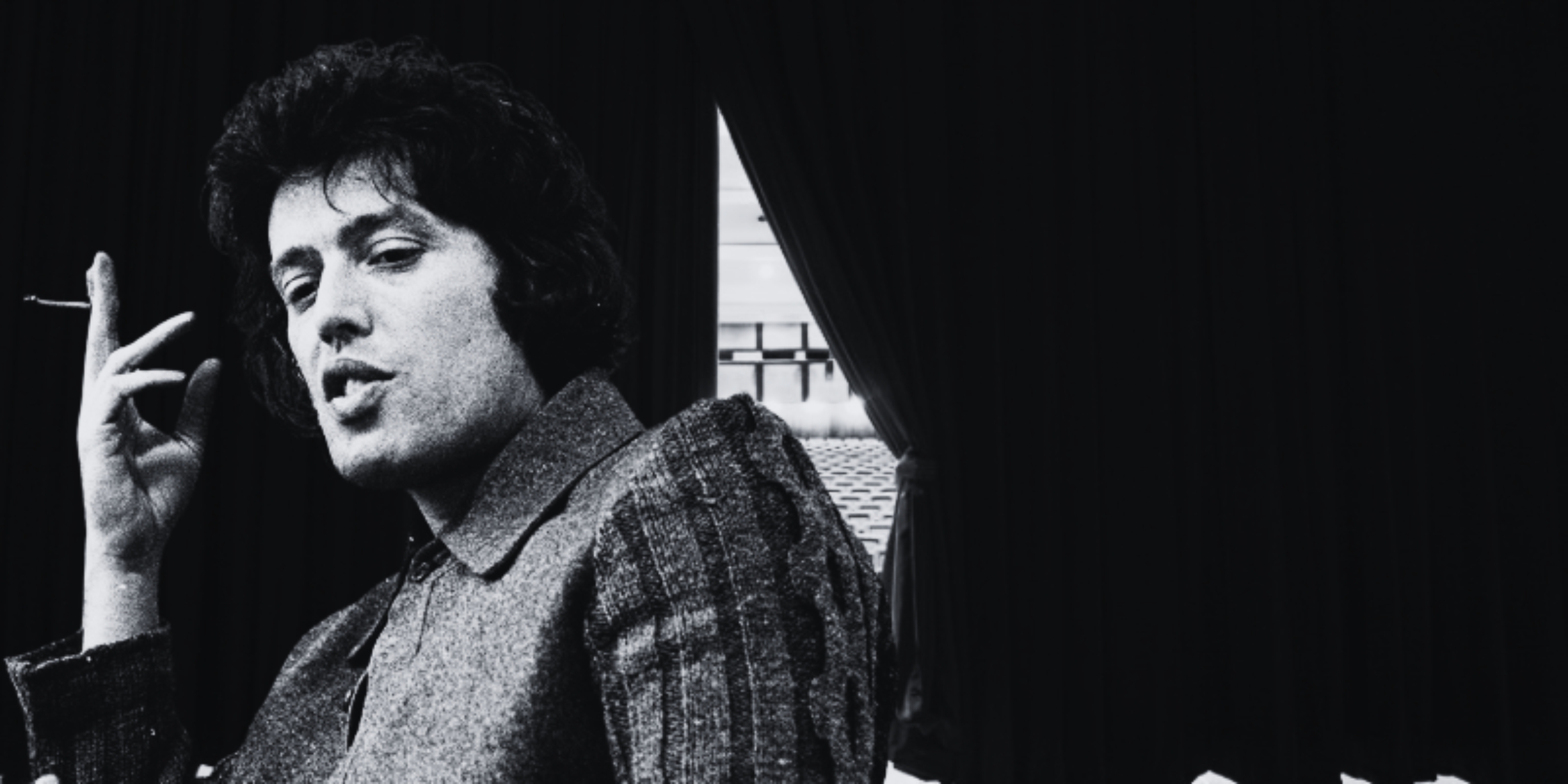
Today in London, a luminary-filled gathering from the literary world will mark what could become the first official memorial day for the late dramatist Tom Stoppard. The ceremonies revolve around the renaming of the Duke of York’s Theatre in his honor, timed to accompany a lively West End revival of his celebrated play Arcadia. The news of his passing last November, at the age of 88, prompted a wave of tributes, and today’s events aim to reinforce his new standing in the canon of English theatre.
In The Observer, Hermione Lee, Stoppard’s biographer, reflected on the playwright’s seemingly inexhaustible vitality. Lee was compiling Tom Stoppard: A Life when Stoppard and his wife, Sabrina, welcomed her to their Dorset home for what would become years of in-depth conversations. She recalls him as a subject of extraordinary energy. (From this admirer’s vantage point, this is unsurprising, given how much his characters love to talk.) “I would be ready with my notebook at 9am,” she recalls in her account.
He would appear around eleven, having, as was his habit, read late into the night. The conversations grew more animated as the day wore on, with him smoking, nibbling sweets, and telling stories, and by eleven o’clock he would become genuinely absorbed in the exchange while she—tired but attentive—began to fade.
The playwright and director Patrick Marber, a longtime collaborator, recently paid tribute to Stoppard in The Guardian, emphasizing the multi-faceted nature of his personality. “He was among the rarest of men,” Marber wrote, adding, “Very few can carry off polite English gent and Jewish mensch simultaneously.” Marber’s homage also acknowledged a quiet tension within the man: outwardly courteous and politically minded on stage, yet, behind the curtain, a devout craftsman who sometimes overwhelmed others with his drive. He cites two landmark collaborations—the revival of Travesties and the early rehearsals for Leopoldstadt—as evidence of both Stoppard’s brilliance and the pressures of creation. There are hints of friction in the rehearsal room, including moments when Sir Tom told the cast, “I hate this.” Nevertheless, the production endured.
Marber’s reflection also insists that reducing Stoppard to a portrait of generosity would do him a disservice: “And this is the thing,” he said, “it does Tom a disservice if his generosity of spirit, his kindness, his charm are the only story.”
Terry Gilliam, the insurgent filmmaker famed for his surrealist journeys through cinema, described the pleasure of writing with Stoppard. While revising a pass on Gilliam’s Brazil script, Stoppard reportedly “took everything to a greater height, he had a better approach to the paranoia and madness of bureaucracy.” Gilliam notes that such praise is coming from a founding member of Monty Python. After that collaboration concluded, the two often ran into one another, sharing coffee and conversation. “We did keep bumping into each other, having coffee, talking,” Gilliam said.
There is a memorable vignette about two immigrants conversing, one a monosyllabic Minnesota farm boy and the other a Czech-born youngster whose early years had unfolded in Singapore and India. As Gilliam described it, a foreigner’s grasp of English can sometimes exceed that of the typical native speaker—and with Tom, language became a playground. “For him, English was discovering this wonderful world that could be played with—and he played better with the language than anybody else, as far as I was concerned.”
Perhaps this very openness helps explain the broad esteem in which he was held. For many who knew him, it is difficult to locate a genuinely unkind word about Stoppard in print. Yet Carey Perloff, another longtime collaborator, captured how his personality shaped his work in a thoughtful remembrance for American Theatre magazine. “With each new play, he conjured a world we’d never been to,” Perloff wrote. “Colliding people together who would never actually have met, detonating ideas that bounced off each other with the delightful music of his vast imagination.”
In sum, Tom Stoppard elevated English theatre to new heights—and did so while remaining a true mensch. A day of tribute seems fitting, stretching from the East Coast to the West End. May this not be the last such homage. And in the spirit of the occasion, a performance of his work seems a fitting tribute to a life spent expanding the possibilities of language and stage.