I began exploring Grace Paley in the weeks that followed the publication of my second novel, seeking shelter from the endless churn of Goodreads and from the anxious waiting for a call from the Booker Prize committee. I opened the five-page piece called “Love,” and, after reading it again and again, tears sprang to my eyes. It struck me as a flawless depiction of tenderness, something ineffable, true, strange, and both small and immense at the same time.
My initial encounter with the story brought me up short with a sudden reminder of why I write in the first place. There is certainly some ego involved, naturally, yet that egoic impulse alone cannot sustain years of labor on a book I am deeply proud of, a book that never earned a Booker nomination, nor did it ignite Goodreads into a glittering avalanche of fairy-dust. I write because I fall in love with people, because I am captivated by language, because I hope this world can become kinder and a touch more just; I write to carve toward the unknown, I write to play, I write to mourn, I write to share a conversation with those who came before me.
I write because I am in love with people, because I am drawn to language, because I long for a world that is gentler and fairer, and Paley’s writing resonated with me in exactly that way. Discovering Paley’s oeuvre felt like meeting an ancestor. In a Paris Review interview, Paley described how readers often compare her work to that of Isaac Babel, yet she insisted the influence ran in another direction altogether. People say I write like Isaac Babel, she said, but it isn’t that he shaped me. I hadn’t read him before I began writing. It’s our shared origins—our common grandparents—who have shaped us, in terms of rhythm, what we notice, and what we value. It’s not so much a literary influence as a social, linguistic, and musical one.
I hadn’t read Paley before or during the process of writing my second novel, but once I did, I heard in her pages the voices of our shared grandparents—though their voices sounded a bit muddier with the passage of generations, they were still present in my work, still tangible. One of the central aims of my novel is to resist the sneaky habit of retroactively shadowing history, a term borrowed from historian Tony Michels. I’m wary of writing characters who should have known what we know only in retrospect, whose lives are reduced to the facts of their eventual grim deaths.
I did not want to construct a shtetl where every moment is defined by the looming tragedy yet to come; I did not want to write Yiddish speakers whose only emotional hues are nostalgia and sorrow. I craved Yiddish vitality, yearning for Yiddish flair, poetics, and sexuality; I wanted figures who kiss, who release noxious wind in the open, who argue about politics, who create odd art, and who don’t pretend to know what they were supposed to know in the kumendike tzayt, the future that has not yet arrived. In this sense, Paley also stands as my ancestor, my predecessor, my fellow traveler who is sometimes defiantly pacifist: one of Paley’s narrators in A Conversation with My Father insists on spurning “the absolute line between two points”—the plot—as a literary device. Not for literary reasons, but because it erases all hope. Everyone, whether real or fictitious, deserves the open destiny of life.
This is another facet of Paley’s life and craft that I admire deeply: her devotion to political action, and her conviction that creative work and political engagement are linked yet distinct, two endeavors that a person does not have to choose between across an entire life. Returning to the earlier tale, “Love,” I am reminded of the narrator and her old friend Margaret, who end up at odds after many years of political accord, a rift rooted in disagreements about the Soviet Union.
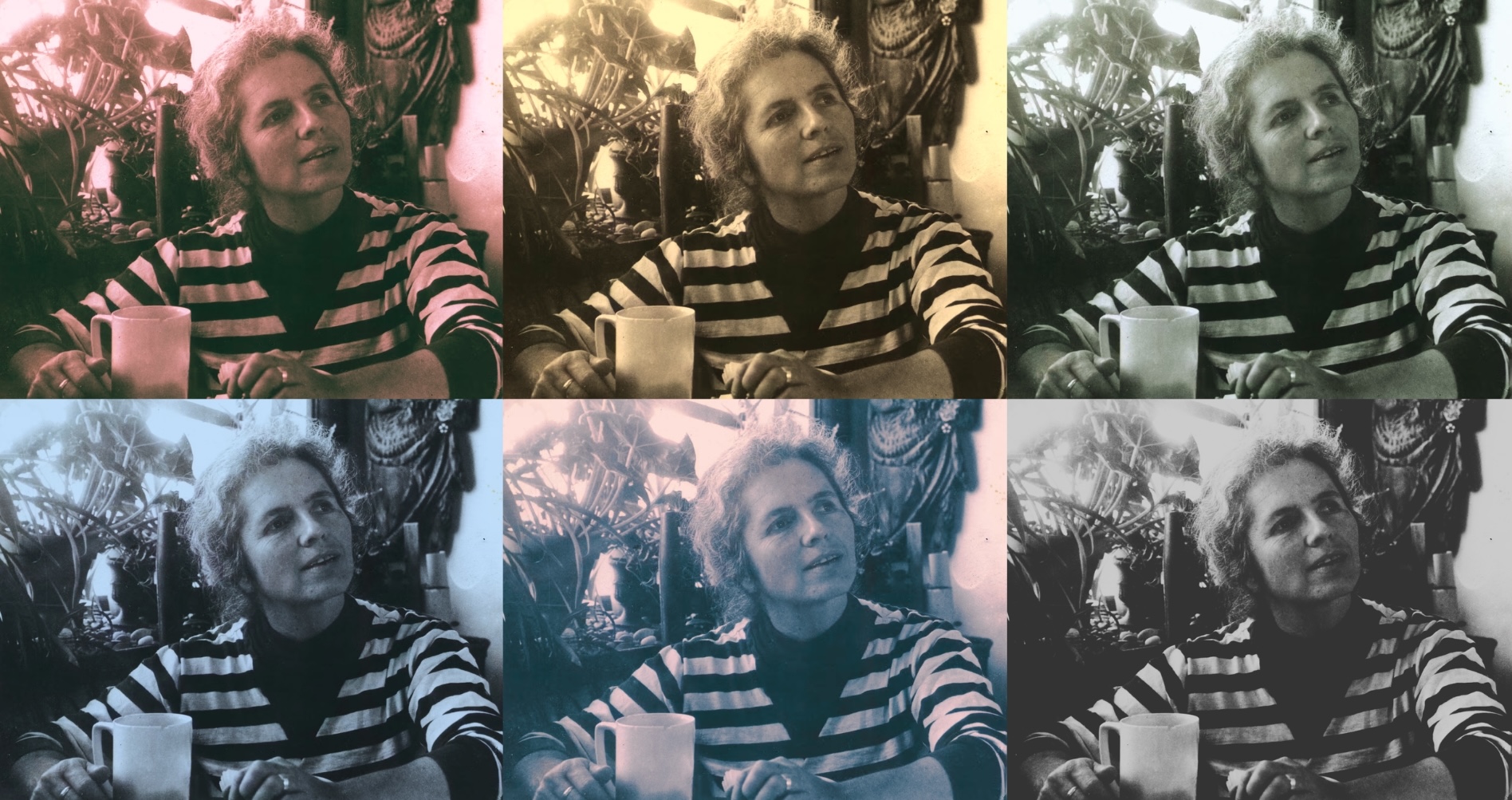
So I turn again to my teacher, my elder, my ally Grace Paley, and ask how to be a writer, a poet, a person, and, most often, how to love. In my view, this is exemplary fiction writing, excellent art. The prurient reader may press to know who took which side, who held the truth, who believed what. And a fiction writer who uses their craft merely as a vehicle for scoring political points will inevitably want a verdict, to declare who was right. Yet Paley’s approach often welcomes ambiguity: We had many years of political accord before certain matters related to the present-day conflicts we might name today—say, Palestine and Israel—divided us. This is part of Paley’s project of fiction: to observe the world as it is and to portray people as they are. It does not imply that Paley’s fiction dodges ethical or uplifting political stances. Far from it.
Alongside her fiction, Paley lived activism across decades: she was jailed for civil disobedience, arrested at sit-ins, spent time picketing outside draft boards, protested against atomic testing; she traveled to El Salvador and Nicaragua to meet mothers of the disappeared; she helped found the Jewish Women’s Committee to End the Occupation of the West Bank and Gaza. According to Alexandra Schwartz, just three months before Paley’s death from breast cancer in 2007, she went to a protest against the American War on Iraq.
All too often, the conversation frames this as a choice we must make in America: either you are an activist or you are an artist. Yet I refuse to accept such a binary in my own life. I am deeply committed to many of the same causes Paley championed—pacifism, antiwar work, racial and gender equality, an end to occupation, and a world that nurtures children and young people. “It’s one of my beliefs,” the narrator of The Long-Distance Runner remarks, “that children do not have flaws, even the worst among them.” And I remain committed to making art that is truthful, beautiful, strange, and slippery—art that acknowledges that none of us truly knows everything, art that remains loyal to something deeper than mere polemics or campaign points. This leads me to the question of genre, and, in particular, to the realm of poetry.
In American culture, writers are often nudged, subtly or overtly, to “stay in their lanes”—either in politics or in form: Are you a fiction writer or a playwright, or a poet? Paley refused to bow to that pressure. I recently encountered a poem of hers, “Responsibility,” in which she deliberately and subtly rejects every binary: Poet or fiction writer. Activist or artist. Leafleteer or literary practitioner. Man or woman. Hopeful or hopeless. Happy or heartbroken. It is the poet’s duty, she writes, to be allowed to be a poet by society. And she continues:
It is the responsibility of the male poet to be a woman
It is the responsibility of the female poet to be a woman
It is the poet’s responsibility to speak truth to power
as the Quakers say
It is the poet’s responsibility to learn the truth from the powerless.
If I extend the idea, the obligation of poets—indeed of poets in the broadest sense—is to read and keep reading Grace Paley. The poet should not be confined by the narrow expectations of what a poet or an artist can or cannot accomplish, nor deterred by society’s prescriptions. The poet should be capable of mischief and starkness, cornered by the world yet still in love with it, affected by its strangeness, and always seeking ways to love and be in love with people and the world we inhabit—precisely as Paley wrote in another poem, “Proverbs”:
A person should be in love most of
the time.
And so I turn again to my mentor, my elder, my ally Grace Paley, determined to learn how to be an artist, a poet, a person, and, above all, how to be in love, most of the time.