
If you were asked to name the most familiar narrative arc circling humanity, you’d likely land on something like this: a protagonist receives a summons to venture forth—perhaps to slay a monster or safeguard a homeland—then crosses into unfamiliar territory, confronts a series of ordeals, overcomes a decisive obstacle, and returns bearing wisdom or a reward. They grow, acquire new skills, and leave the world better than they found it. They win the prize; they rescue the kingdom. Yet the archetype is frequently male.
That’s the hero’s journey—a classic shape that easily adapts to various settings. It feels almost universal, right?
Joseph Campbell, a writer who explored myth and philosophy, named this journey in his 1949 work The Hero with a Thousand Faces. He argued that it was widespread and present in every culture he studied.
During the 1980s, Maureen Murdock, a Jungian psychotherapist who studied with Campbell, proposed a counterplot called the heroine’s journey. In her clinical work she found that the hero’s arc didn’t capture everything her patients—especially women—were experiencing. It didn’t address where their struggles came from or what happened after they reached a summit and still felt unfulfilled. Or when another, different ascent appeared on the horizon.
The final realization is that there isn’t really a dragon to defeat, nor a moment when the quest ends. The journey simply continues.
Like the hero’s arc, the heroine’s journey unfolds in stages. The heroine begins by rejecting feminine values, unsure how to acheive fulfillment as a woman. Triumphs look like masculine ideals—grand adventures, top positions—so she pursues those. Then, as with the hero’s path, she encounters tests and triumphs; she conquers her own beasts. But the trajectories diverge from there.
Murdock explains that outwardly the voyage may appear successful, yet inwardly the heroine can feel empty, as though she isn’t living in alignment with her true self. A growing sense that something essential is missing emerges. She may feel constrained, even oppressed, and the source of that oppression might be internal rather than external. She might slide into crisis despite having earned the world’s approval.
From that point, the heroine must recalibrate and bring the ideals she chased into harmony with what she genuinely values. Murdock describes this as “healing the wounded masculine.” I interpret it as reconciling the pressure to achieve with a core sense of self—an undertaking that isn’t easy for anyone, regardless of gender.
The concluding notion is again that there’s no final dragon, and no definitive end to the journey. Instead, it persists.
Murdock discovered that many of her clients found this idea meaningful. Yet when she presented it to Campbell in the early 1980s, his reply was, “Women don’t need to complete the journey. Within the entire mythic tradition, the woman is already present. All she must realize is that she is the destination others strive to reach.”
Would I be allowed to call them heroes if they never attained the prize, or if they behaved imperfectly along the way?
That’s precisely the sort of dynamic that unfolds on the heroine’s journey. You’re marginalized or sidelined. You encounter dead ends, suspicion, and whispers that your voice doesn’t matter, even when you’re convinced you’re right.
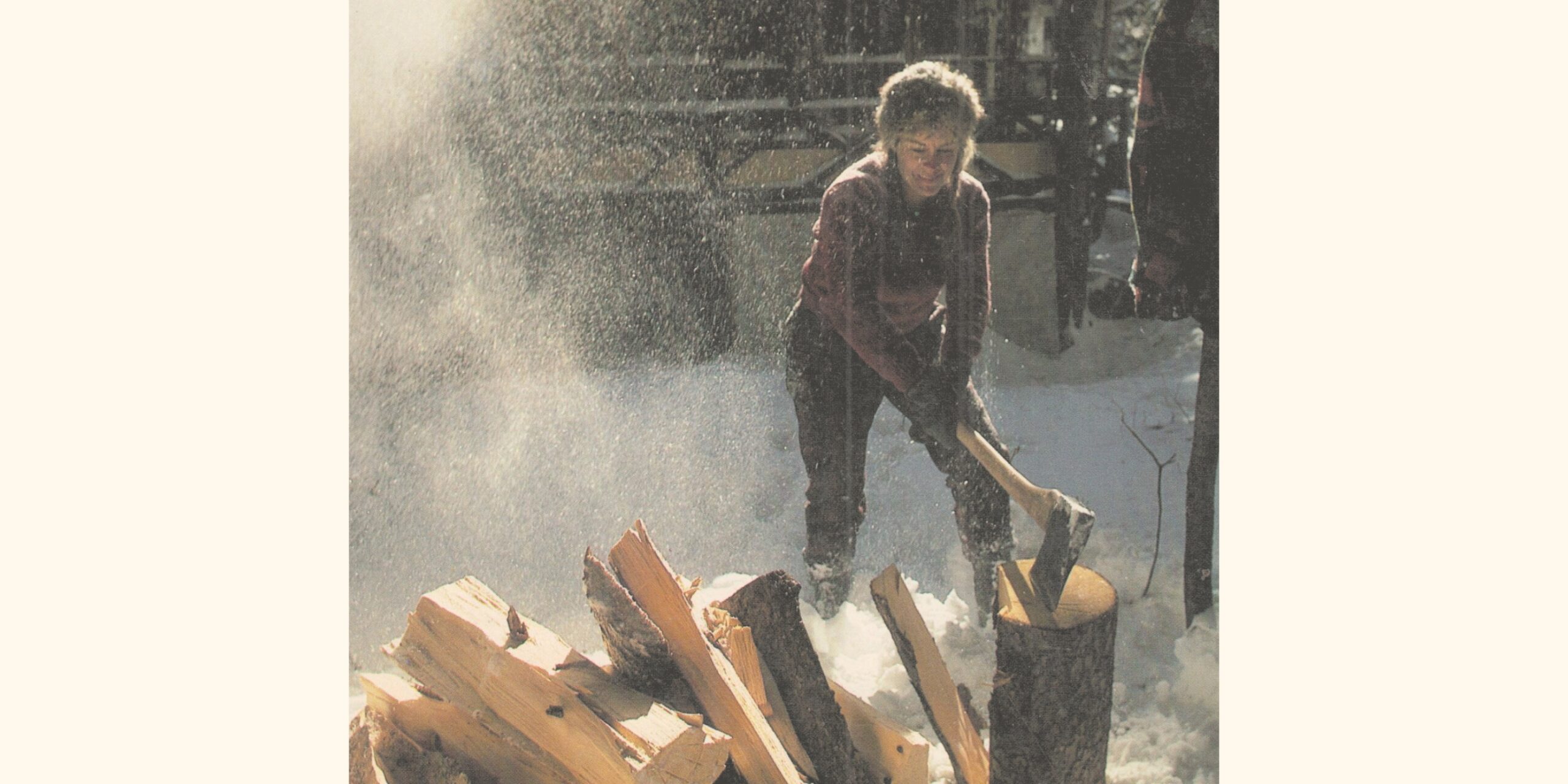
My own discovery of the heroine’s journey happened while I researched my book Fierce Country, which profiles three women who reshaped American outdoor life and conservation but never received widespread acknowledgment. I had spent years exploring the landscapes they helped create—from New England’s highlands to the river corridors of the Southwest—seeking thrills and a sense of belonging outdoors. Yet after more than twenty years, I realized I lacked role models or clear paths forward, partly because I had believed the hero’s ethos of bootstrapping and raw prowess was the only route. I hadn’t allowed room for other kinds of stories. And once I saw what I’d missed, I felt compelled to fill the gaps.
I became preoccupied with the idea of heroes—whose stories mattered, and why mine hadn’t shown up in the canon. I kept tripping over the knot Murdock described: I’d only encountered hero tales that fit Campbell’s mold. But my own dragons weren’t simple or easy to vanquish. Many lived inside my own head.
So I started seeking heroines who seemed more pertinent to my experience, women whose narratives had been overlooked or sidelined in the grand lineup of canonical stories.
I found three remarkable figures who left a lasting mark on me: Georgie White, the sole female guide who steered the Grand Canyon for many years and who challenged dam projects; Anne LaBastille, a mountain guide who conducted climate science from a remote cabin in the Adirondacks; and Dolores LaChapelle, a trailblazing backcountry skier and environmental thinker who helped shape the radical environmental movement of the 1970s. They were all crafting fulfilling outdoor lives, deeply connected to the land they loved, and actively defending it. Yet they also presented a challenge: could I deem them heroes if they never secured a conventional prize, or if their actions were sometimes controversial?
I realized I had remained stuck in Murdock’s second stage, trying to squeeze myself into masculine norms, frustrated when that fit didn’t feel right for me or for the women I admired, because I expected a clear arc of achievement.
The women I studied were pioneers—bold, adventurous, and committed to ideals I consider crucial—but they could also be sharp, blunt, and willing to bend the truth. Their journeys didn’t conclude with neat endings; their missions, from Anne’s push to reduce carbon emissions to Georgie’s fight to preserve the landscapes she valued, remain unfinished, stubbornly ongoing. They didn’t receive tidy resolutions, and they faced constant resistance and dismissal, yet their stories feel more honest and compelling as a result.
One friend described the heroine’s journey as if the hero’s path had gone to therapy—reflective, contextual, and ongoing. That description might be accurate, yet it also suggests the hero keeps surviving beyond a single quest. These women are heroes because they didn’t stop fighting after one victory; they kept challenging power and prejudice, even when rewards were hard to grasp and their stories were not neatly polished.
I want to replace the familiar, comforting sense that good will triumph over evil with a more realistic view of life—messy, imperfect, and unending. I don’t want to cram every narrative into the constraints of the hero’s journey. I want to let these stories breathe—to be complicated, unruly, and ongoing.
__________________________________
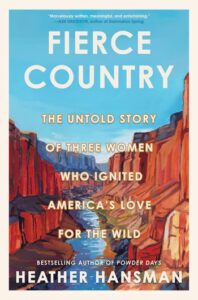
Fierce Country by Heather Hansman is available from Hanover Square Press.
