
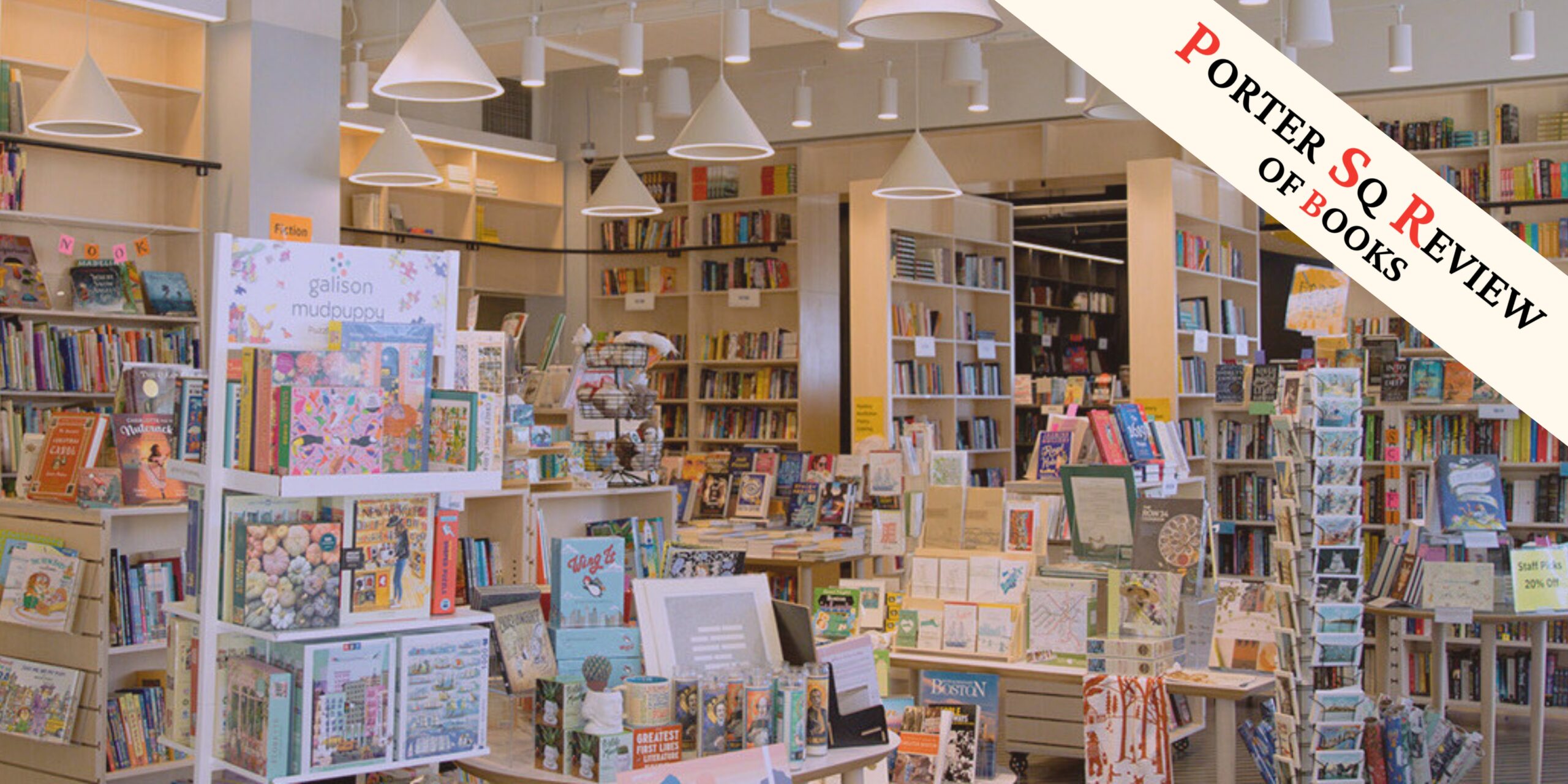
From my desk at the bookstore where I work, I can see most of fiction and all of our new releases, the poetry section by the front door, the edge of world history. I watch people bend down to examine shelf talkers and I hear them chat with their friends (or family, or lovers, or even sometimes strangers) about this recent book they devoured or what they’ve heard about that beloved classic. From my desk at the bookstore, most days, it doesn’t feel like the industry is in the middle of a crisis.
From behind the counter at the shop I work in, I can take in nearly all the fiction, every new release, the poetry shelf near the entrance, and glimpses into global history. I observe customers stooping to read shelf notes and overhear conversations with friends, family, partners, or even strangers about a book they just raced through or a cherished classic they’ve heard rumors about. From this vantage, most days it doesn’t seem as if the industry is teetering on a crisis.
But for all of the good vibes, there is a specter haunting books and bookselling—several of them, really. Sales at indies might be better than ever, but we’re still climbing out of the Amazon-shaped hole. The list-ification of the few remaining major outlets for literary criticism troubles even its purveyors while a generation of readers has come up on Goodreads and learned the worst habits of critical thinking (or the lack thereof) from it. The publishing industry is beset by AI, from within and without. And that’s to say nothing of the very real threats to free expression coming from Republicans at every level of government right now.
Yet alongside the optimism, a few specters linger over the world of books and bookselling. Indie shops may be thriving, but we’re still digging out from an Amazon-driven gap. The narrowing emphasis on lists in the few remaining outlets that provide literary criticism unsettles even their advocates, while a generation has grown up on Goodreads and picked up some troubling patterns of critical thinking (or their absence) from it. AI is casting its shadow over the publishing industry from every side. And that’s not even touching on the tangible threats to free expression coming from Republicans at every rung of government today.
In the early days of the second Trump administration, Josh Cook of Porter Square Books in Boston wrote a series of essays for this website about ways that the publishing industry—all facets of it, from writers to publishers to bookstores—could step up in the face of these threats both internal and external. I have been waiting since then to see who might answer the call, what it might look like for a publisher or a bookstore to actually try something bold and new—and it shouldn’t come as a surprise that one of the first people to step up is Josh himself: Porter Square has recently announced, under his guidance, the Porter Square Review of Books.
In the initial months of the second Trump term, Josh Cook of Porter Square Books in Boston penned a series of pieces for this site exploring how the entire publishing ecosystem—authors, publishers, and bookstores alike—could rise to the challenges both inside and outside the industry. Since then I’ve been waiting to see who would respond, what a publisher or bookstore might do that was truly audacious, truly new. It should not surprise anyone that one of the first to answer is Josh himself: under his leadership, Porter Square has launched the Porter Square Review of Books.
“ Papers cutting book review inches has always struck me as odd because people who read newspapers are people who are reading!” he said as we chatted a few weeks ago from the back of our respective bookstores. “But that made me think that this was something we could do, because essentially all of [our booksellers] do a little bit of the book review process all the time, whether it’s preparing for hand-selling or choosing staff picks or the buyers actually making selections.”
“It has always struck me as odd that newspaper space for book reviews keeps shrinking, since those who still read newspapers are precisely the readers we want,” he noted during a conversation a few weeks ago from the back of our respective stores. “Yet that realization suggested this could be feasible, because nearly all of our booksellers are already engaged in some form of reviewing literature—whether they’re gearing up for hand-selling, selecting staff picks, or the buyers determining selections.”
“Booksellers are already readers, already applying critical thought to what makes a book successful and why it resonates with them.”
Indeed, a neighborhood bookseller is often the community’s best surrogate critic, particularly as most local newspapers have scrapped arts coverage and major outlets have done the same. Yet chances for booksellers to truly exercise their critical faculties are scarce: even platforms like the Indie Next list, a few publishers who ask for blurbs from booksellers, or a stout staff-picks section don’t venture beyond the surface—the quick “I loved this!” endorsements. Moreover, none of these spaces typically undergo editorial oversight—something we both know firsthand from seeing Indie Next blurbs printed with typos.
It’s true that your friendly neighborhood bookseller is probably the closest thing your community has to a local book critic, especially now that nearly all local papers have eliminated arts criticism of any kind and the major papers have followed suit. But outlets for booksellers to actually flex their critical muscles are few and far between: even opportunities like the Indie Next list or the handful of publishers who solicit bookseller blurbs or even a particularly robust staff picks section aren’t really going beyond the superficial, the couple-of-sentence “I loved this book!” cheerleading. What’s more, none of those spaces are traditionally edited—as both of us are aware, having both had Indie Next blurbs go to print with typos.
For Cook, opening the staff’s work to an editorial process has been a joy in its own right. “There’s something that shifts when another mind gets involved with your writing,” he explained, then turned off-camera to praise a staff member’s latest draft and urge them to push deeper. “And one of the main reasons this could succeed is that booksellers already read and engage critically with what makes a book work and why it resonates with them, so that part isn’t extra effort for anyone. The real task is elevating the review itself to a professional standard, and that’s what we’re compensating for.”
Allowing the staff to participate in an editorial cycle has, by Cook’s account, been a source of genuine delight. “There’s something that shifts when another mind gets involved with your writing,” he explained, then turned off-camera to praise a staff member’s latest draft and urge them to push deeper. “And one of the main reasons this could succeed is that booksellers already read and engage critically with what makes a book work and why it resonates with them, so that part isn’t extra effort for anyone. The real task is elevating the review itself to a professional standard, and that’s what we’re compensating for.”
The fact that the Review offers compensation at all is a welcome development—fifty dollars per piece, which, depending on your view, ranks among the more generous rates for online criticism today. Cook has always led by example, and he’s taken on the editor-in-chief role himself, though he notes that this label is somewhat misleading since he does not intend to appoint formal titles yet. He envisions the project being guided solely by Porter Square’s bookselling staff and their Writer-in-Residence program.
The fact that the Review offers compensation at all is a plus—$50 a review, which is (wonderfully or horrifyingly, depending on your angle) one of the better going rates for criticism on the internet these days. Cook has long espoused not suggesting anything he wouldn’t do himself and he’s rolled up his sleeves as editor-in-chief, although that (he tells me) is a bit of a deceptive title as, at present, he has no plans to start assigning people titles and instead hopes the Review will be driven entirely by the whims and interests of Porter Square’s bookselling team as well as their ongoing Writer-in-Residence program.
He sees the largely positive tilt in critical tone as a strength. When asked about negative reviews, he looked away for a moment and then shrugged. “If a bookseller really wanted to read the entirety of a book they are not enjoying, that is not feeding them, and then write about it in a review, I’d absolutely take a look at that. Because the thing about a really well-done negative review is that it will sell the book to different types of readers.” He cited former NYT critic Michiko Kakutani as a great example of a critic whose pans could still sell a book, ”could still describe [it] in such a way that I could see the things that I would connect with, even though she had her own qualms or disagreements.”
He views the generally favorable tilt as a strength. When asked about the possibility of negative reviews, he hesitated, then shrugged. “If a bookseller truly cannot engage with a book they did not enjoy and still writes about it, I’d consider it. A well-crafted negative review can reach different readers,” he argued. He pointed to Michiko Kakutani as a notable example—her unfavorable takes could nonetheless convey aspects that resonate with him, even if she disagreed with the book’s merits.
But he doesn’t anticipate a flood of such reviews for PSRB—and when pressed about broader goals, he stays hopeful. “There aren’t nearly enough reviews out there, so we’re trying to change that. If it catches on and boosts sales, wonderful. If it gains a modest following and nudges others or deepens our staff’s engagement with the books we read, that’s also valuable. And if it doesn’t work… many ventures fail. We’ll simply retire the site and launch something new. But the act of building something is worthwhile.”
Yet he doesn’t expect much, if any, of that for the PSRB—and when I asked him more broadly about his hopes and expectations, he remained open. “There aren’t enough book reviews, so we’re going to try to do something about that. If it takes off and sells a ton of books, fantastic. If it, like, “mids” off and sells some books, but mostly influences other people or helps the booksellers here have a deeper engagement with some of the texts that they read, also great. And if it fails… lots of things fail. We’ll just take the website down and go try something else. But it’s nice to build something.”
Bookshops tend to be bursting with optimism—it’s almost contagious. Since this chat, I’ve found myself wondering how I could replicate a similar venture in my own store or region. I suspect I’m not alone in that feeling. Perhaps the Porter Square Review of Books will inaugurate a chain of bookstore-driven reviews that strengthens the nation’s critical ecosystem, or perhaps it will prove to be a modest experiment for the staff of PSB and the communities they serve in Boston and Cambridge. Either way, it feels good to have created something. I hope others follow suit.