
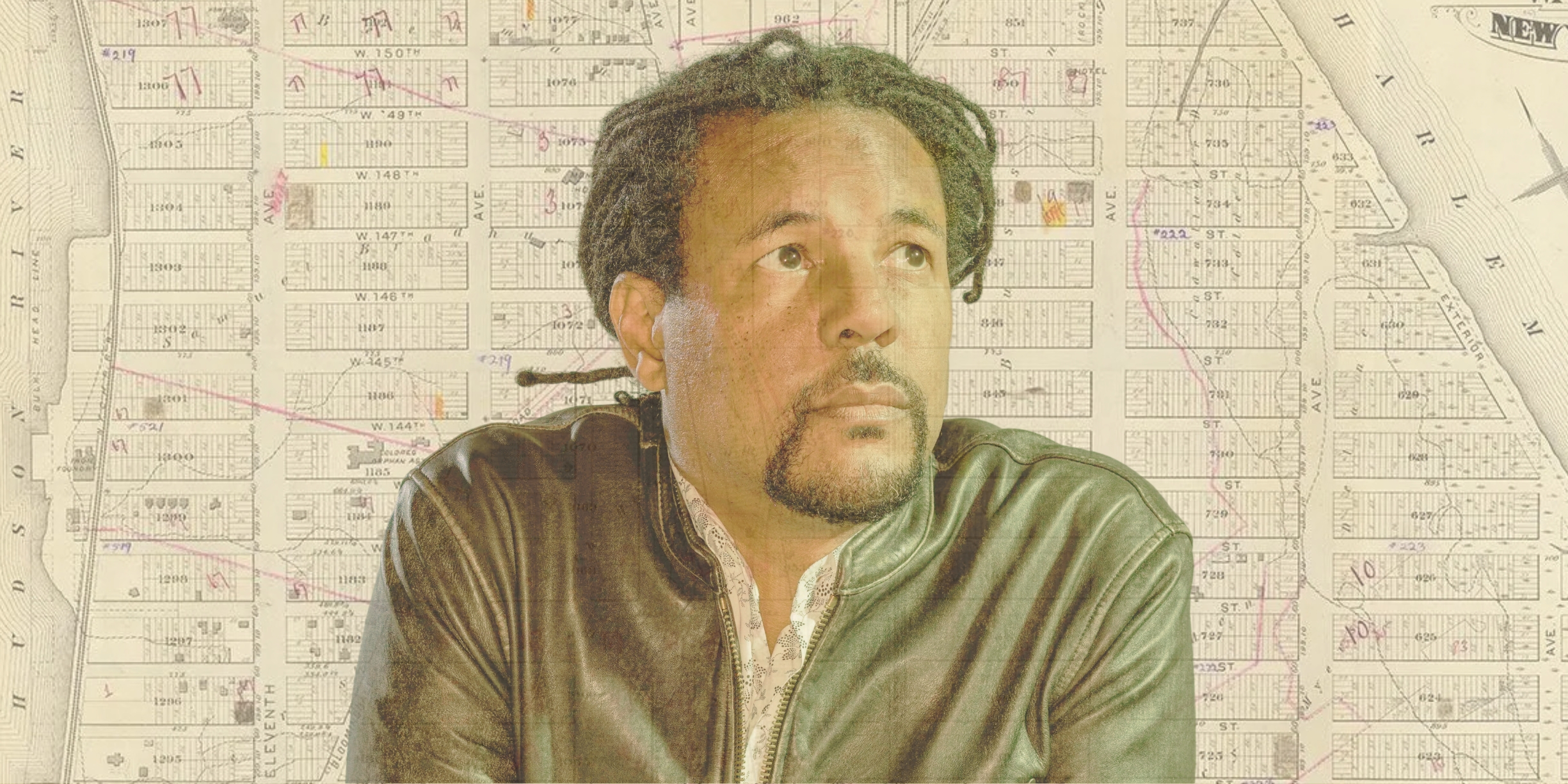
Colson Whitehead stands as a transitional figure in the annals of literature, one of the luminaries emerging in the wake of Toni Morrison’s era, shaped by elite schooling (Trinity School, Harvard) and finely tuned to the subtleties of racial and gender bias. He wields a remarkably fertile imagination and a rebellious urge to experiment with any form needed for a given project. As a member of Gen X, he grew up alongside video games, early Marvel comics, horror cinema, D&D, punk, funk, electronic sounds, and hip-hop, absorbing the currents of political radicalism, technology, and mechanics that were remaking culture. His sensibility tends toward skeptical irony and postmodern texture, enriched by his stint as a cultural critic for the Village Voice, and he has mastered an astonishing range of modes—satire, spoof, noir, awkward adolescence, and grave seriousness—each underscored by a persistent rhythm. (Curious readers can explore his playlists, especially the one titled “Music for the First 100 Pages of Writing a Book.”)
Above all, he chronicles New York City, composing odes to that nearly magical machine that keeps turning, despite it all, stubbornly persisting through a swamp of impossibility. “They were completely hopeless out there, and unstoppable,” he writes about the city in his latest novel, Cool Machine. “Broke-ass, chasing jackpots, cooking schemes, pushing through. The nameless heroes of an asphalt romance.”
I have spent the past month wandering through a Colson Whitehead obsession, tracing the arc of his genius across his evolving body of work. His debut novel, The Intuitionist (1999), arrived as a philosophical mystery about the first woman to hold a position inspecting elevators in a city not unlike New York (Whitehead has said he started out aiming to write a fake detective story, with Stephen King among his early influences). The Intuitionist won praise for its originality and drew comparisons to Ellison, Morrison, Orwell, and Pynchon. It introduced motifs that would recur throughout his career, from the “unsettling darkness” of elevator wells (which foreshadow his later literal underground railroad and the scenes of a private rail beneath Grand Central in Cool Machine) to Lila Mae’s childhood fascination with Fanny Briggs, the enslaved woman who learned to read and escaped North (an underground railroad inspiration as well). The Intuitionist positioned him as a writer to watch, and he soon received a Whiting Award the following year.
In 2001 Whitehead returned with John Henry Days, an extended riff on the legendary steel-driving hero anchored to a modern-day media-tour device in which a young press flack visits a West Virginia town where John Henry is celebrated with a stamp and a festival. John Henry Days lampooned press junkets while probing enduring questions about the man behind the myth. The novel earned a Pulitzer Prize finalist citation and a nomination for the National Book Critics Circle Award. Whitehead’s MacArthur fellowship, a sign of his burgeoning genius, came the following year.
He’s a chronicler of New York City, crafting rhapsodies to that near magical machine that chugs and churns along despite everything, through a mire of impossibility.
Apex Hides the Hurt, his satirical 2006 third novel, follows a “nomenclature consultant” hired to rebrand a town (his claim to fame is inventing the name “Apex” for a Band-Aid line that now comes in multiple skin shades).
These first three Whitehead novels read as ironic and postmodern explorations, each bearing a distinct flavor of satirical humor. “There are different kinds of humor in my books, and whatever fits the job at hand is the one I go with,” he told me in a 2009 Daily Beast interview. “When you’re writing about former slaves who drive themselves into the ground on the railroad, you’re using a different kind of humor than when you’re writing about corny hip-hop lyrics.”
After a decade of sophisticated, postmodern risk-taking, Whitehead’s work shifted toward autofiction in Sag Harbor (2009). “I try to keep each book different from the ones that went before,” he explained to me. “The protagonists of my first three novels are ‘writers’ in various senses—so I was drawing from my life in that way, but I’d avoided drawing too directly from personal experiences. It felt a little tacky to dwell on teenage angst when you can unleash Giant Robots—that was my motto. Yet one weekend I had friends come to Sag Harbor, and as I tried to describe the community to them, I realized I had a trove of material too good not to use. The thing you’re avoiding writing about—the thing you’re avoiding addressing—often becomes the best avenue to explore in the end.”
Whitehead begins with the thoughts of fifteen-year-old Benji upon arriving for Memorial Day weekend. “Same sun wrapped in shiny paper, same soft benevolent sky, same gravel road that sooner or later skinned you,” he writes. “We were grateful to be standing there in that heat after such a long bleak year in the city.”
Sag Harbor drew from Whitehead’s family summers in the Hamptons. “Part of growing up there is realizing there aren’t many black enclaves like Azurest elsewhere in the country,” he remarked. “You don’t fully grasp that Sag Harbor was a stop on the underground railroad, nor its earlier whaling heritage. A challenge of the novel was capturing the history and atmosphere accurately in the mid-80s—what it felt like before the Hamptons became dominant—and preserving that serene era. I brainstormed with my younger brother Clark to recall all the stores I used to visit and how quiet it used to be.”
In Sag Harbor Whitehead revisits 1985 (an era of Run-D.M.C., Miami Vice, The Cosby Show, and Stouffer frozen dinners). He layers the work with chapter headings such as “Notions of Roller Rink Infinity,” “Breathing Tips of Great American Beatboxers,” and “If I Could Pay You Less, I Would,” which follow Benji’s summer job at Jonni Waffle, a wharf-side ice-cream shop with a “waffle-cone aroma” and an all-you-can-eat ice cream option that tests the patience of employees.
With a glow of affectionate nostalgia, Sag Harbor marks Whitehead’s most tender tone to date. “You choose the right tool for the job,” he explained. “Tone Setting: Kinda Wistful wouldn’t fit a mystery involving intrigue in the Department of Elevator Inspectors. And Tone Setting: American Panorama wouldn’t be suitable for a book about teenagers hanging out in the summer of 1985, though it might work for a novel about the steel-driving legend John Henry.”
Of course, darker undercurrents remain. Benji avoids a corner where a truck bearing a Confederate flag is parked. Standing on the edge of the Atlantic, he muses, “It was the Edge of Things, and the Edge loves to grab you, pull you in. I wasn’t even ankle-deep when I heard my mother’s warning in my ears, ‘Watch out for the undertow!,’ which wasn’t a bad philosophy, really, applicable to most situations in a metaphorical sense….”
Whitehead also explored his youthful hunger for horror cinema in Zone One (2011), a zombie-apocalypse novel set in a post-9/11 Lower Manhattan amid a global pandemic. It weaves together Isaac Asimov’s and Stephen King’s sensibilities and serves as a satirical mirror of “post-racial” America. Whitehead linked Zone One to his subsequent work, The Underground Railroad, in an interview with John Freeman. “Both novels are animated by people who, despite everything opposing them—the apocalypse and the vast machinery of slavery—believe somehow that there is a place of safety and the means to make it happen. I think we’re still confronting this in our country.” In 2013 he earned a Guggenheim fellowship.
Whitehead secured his place in literary history with back-to-back Pulitzer Prizes for two stark, painfully revelatory examinations of America’s brutal origins of racism. The Underground Railroad (2016), which also won a National Book Award, turned the history of abolitionist activism into a literal railroad with engines, tracks, tunnels, and secret entry points. Each state on its path has its own rules—a “different state of American possibilities.” A courageous enslaved woman named Cora escapes a Georgia plantation with her companion Caesar, pursued by the massive Ridgeway in a scorching epic that rejects any sentimental slant on a slave narrative. (The novel drew from oral histories collected by the Federal Writers’ Project in the 1930s, actual runaway slave advertisements, Harriet Jacobs’ Life of a Slave Girl, and Frederick Douglass’s autobiographies.)
His 2019 novel, The Nickel Boys, drew inspiration from a notorious Jim Crow-era Florida reform school and its “secret graveyard” where young Black inmates, marked as runaways, were buried. Elwood, a young man raised to be proper by his grandmother (who gives him Martin Luther King at Zion Hill for Christmas in 1962 and celebrates the passage of Brown v. Board of Education in 1954), is hitchhiking toward his first year of college when a driver in a stolen car abducts him, and that encounter sets everything in motion. He ends up at Nickel.
“If you choose to write about institutions of racism and our capacity for evil,” Whitehead told The Guardian, “you could set it in 1850 or 1963 or 2020, and the truth would hold — it’s ongoing and will continue for many years.”
Then came the Harlem trilogy, Whitehead’s reimagining of crime fiction, partly inspired by the subway-heist film The Taking of Pelham One Two Three (1974), told as nine novellas, three per volume: Harlem Shuffle (2021), Crook Manifesto (2023), and Cool Machine, published this year.
The Harlem novels are steeped in Whitehead’s deft knowledge of his hometown. “No matter how many years you’ve lived here, you’re a New Yorker the first time you say, That used to be Munsey’s, or That used to be the Tic Toc Lounge,” Whitehead wrote in The Colossus of New York (2003). “You are a New Yorker when what was there before is more real and solid than what is here now.”
The Harlem trilogy brims with such precise nostalgia that it reads like a scrapbook of a time long vanished: H&H bagels and Barney Greengrass, a dive bar with décor “inspired by an old leather shoe that lived in a drainage pipe,” the New York Telephone Building with its art deco elegance, “a graceful, granite rebuke to the steel-and-glass upstarts around it,” and the billboard for “Escape from New York.”
And then there is the World Trade Center. “The twin towers still stand because we saw them, moved in and out of their long shadows, were fortunate enough to know them for a time,” Whitehead wrote two months after 9/11 in the New York Times, as New Yorkers mourned. “They are a part of the city we carry around.” His homage continued throughout the Harlem novels.
Whitehead…is at his ironic best, offering a portrait of a more innocent time when viewed from the sadistic chaos of today.
At the close of Harlem Shuffle in 1964, Carney surveys the World Trade Center complex from the street, noting how the neighborhood had vanished and how the city’s former bones loomed over the shattered patch of ground, a wound in itself. In the final section of Cool Machine, set in 1984, Carney and his wife Elizabeth share a dinner at Windows on the World for the first time. “They gave us a white-person table,” he recalls with a wry smile after they are seated. “From the 106th floor, the teeming boroughs and all those who lived and bled in them were transformed into a vast, scrabbling miniature—insignificant, pitiable even—and ennobled at the same time, because you could discern the true breadth of their ambitions, stretching as far as the eye could see.”
The central motifs of each Harlem installment spring from real events. Harlem Shuffle unfolds against the era of Donald Manes’ leadership in Queens, with Rudy Giuliani serving as U.S. Attorney pursuing corruption by tracing the web of Mafia operations and indicting top bosses with the aid of the RICO statute. It also weaves in the 1959 Hotel Theresa theft and the Harlem riot of 1964.
Carney’s motive for taking on extra cash in Crook Manifesto, set in the 1970s, centers on a Jackson 5 concert that his daughter wants to attend. Walter Mosley lauded Crook Manifesto as “a dazzling treatise, a glorious and intricate anatomy of the heist, the con and the slow game” in his New York Times review. “The presence of the Black Panthers and the Black Liberation Army adds edge to the age-old struggle between the neighborhood and the white police officers patrolling its streets. From behind his store’s plate-glass window Carney takes in: the throb of car engines, the shouts and taunts, the stand-downs of Black men facing searches, the headlines of police officers killed. Sirens slice through conversations; people move through the potent river of sounds and smells that mark Harlem.”
Crook Manifesto traced the corrupt networks that prey on urban renewal funds and the wave of arsons of the 1970s. By the final pages, Carney’s shop is burned to the ground. “Well, [arson] was a major part of New York history at that time, especially in poor communities: the Bronx, parts of Harlem,” Whitehead told Dwyer Murphy.
The trilogy’s concluding volume, Cool Machine, arrives this month and offers a painstaking recreation of the moral and physical degradation of New York’s infrastructure during the 1980s, in the wake of Ronald Reagan’s election. The opening lines distill the essence of the first two books and establish a masterful plot frame: “In all of Ray Carney’s years as a fence—he had been a reluctant fence and a ruthless fence, at times imperiled by his choices and at others the embodiment of crooked intelligence—there was only one occasion where he participated in the theft itself, and that was in the summer of 1981, when Uncle Rich came back to town.”
Carney resided on Strivers’ Row, where his in-laws once lived during Harlem Shuffle. His two children are grown and out of the house. He takes pride in being named the Northeast Regional Dealer of the Month (August) for Sterling Furniture, a business he has marketed for thirty years from his shop at 125th and Morningside. “Its storefront had displayed three decades of culture, capturing fashion, the temper of the times, and the ever-shifting desires of people,” he muses.
As for his side enterprise, Carney offers his own assessment. “An outside observer might conclude that Carney traded stolen goods quite often, but that’s not how I’d phrase it,” Whitehead writes in Harlem Shuffle. “There’s a natural flux of goods in and out and through people’s lives, from one place to another, a perpetual churn of property, and Carney acted as an intermediary—legitimately.” In Cool Machine, Carney observes that urban development is essentially city hall’s remedy for financial distress. “It worked. Development drew in new players and forced the old parasites to move on, the newcomers created jobs and generated tax revenue that funded still more development. Churn, baby churn.”
Carney’s wife is launching her own travel business and needs capital the banks won’t provide. He cannot resist the lure. Uncle Rich persuades him to join one last heist. The Hotel Theresa, once called the “Waldorf Astoria of Harlem,” becomes the target in Harlem Shuffle. This time the goal extends beyond money: “I aim to right a historical wrong,” Uncle Rich proclaims. Their plan is to recover Jesse Owens’s Olympic gold medal from the 1936 Berlin Games, which they can reach through a private Grand Central track that leads straight to the Waldorf. The covert station is protected by an encampment of unhoused residents, who ultimately emerge as sympathetic figures within the action.
In this finale to the Harlem sequence, Whitehead presents a New York City marked by brutality, cronyism, and entrenched corruption, powered by unrestrained capitalism. He excels at irony, offering a portrait of a city that once felt more innocent when viewed from today’s chaotic brutality.
Finishing Cool Machine and the Harlem trilogy evokes a sense of “radiant calm,” the odd relief Uncle Rich describes as “basking in the afterglow of a heist.” It’s also a recognition that the heist is gradually stripping New York City away from its people. It hints at the thief who could be just around the corner, and yet it remains a city Whitehead clearly loves even as it confronts ongoing upheaval. Fortunate for readers, he has already begun a new novel, poised to capture everything and tell the truth through fiction.