In July 2020 my twin sister Madelynn and I reached a decision to end the ache of separation, choosing to sever the pattern of quarantined solitude that separated us—myself in Syracuse, New York, where I pursued an MFA and drafted a nascent “novel,” and her in East London—being isolated during a pandemic whose end then seemed impossible to foresee. We resolved to break through confinement by embracing the act of hiking. That was simply who we were. Not the sort to shrink from danger or obsess over death.
We had never climbed anything more imposing than a modest hill, yet we carried the conviction that Big Slide Mountain would be a straightforward endeavour. Admittedly, Big Slide loomed large enough to earn a place among the Adirondack 46 High Peaks, standing at 4,420 feet. And, yes, AllTrails claimed the round trip would span 9.4 miles and eight hours, but we trusted our pace would carry us quickly. How difficult could it actually be?
We purchased hiking boots, rented a car, and drove four hours northeast from Syracuse to Lake Placid. We arrived at the trailhead at dawn, the day’s heat already hinted by swarms of mosquitos and rising humidity. I left behind the large water jug I’d brought along because surely we wouldn’t need it.
And I know writing a creative nonfiction essay like this one means mining life experiences and packaging them into meaningful lessons but truthfully, like mountains, I’ve got little clue exactly how essays should be navigated.
Instead, I tucked a small water bottle into my pack. Madelynn snapped photos of me beside a sign nailed to a gnarled tree. In yellow letters: TRAIL TO BIG SLIDE MT. 3.9 miles (Total ascent 2800 ft.). The July sun hung high, gilding the treetop canopy with an orange glow. I smiled into Madelynn’s iPhone. Behind her lay the cramped parking lot where weathered hikers shuffled toward their cars. Pussies, I thought. It’s a two-hour hike up a “mountain.” How hard could it be? After all, Madelynn and I had already endured months cooped up at home, separated by an ocean, swallowed by fear of what lay ahead.
“Ready?” Madelynn asked, bracing herself on the damp woodchips along the path.
I knew that hiking a mountain meant ascending, but I didn’t know how much water to take or how to negotiate rocks slick with moss. And I know writing a creative nonfiction piece like this requires mining life experiences and shaping them into meaningful lessons, but honestly, like mountains, I had only a hazy sense of how to steer such essays. After all, I was a fiction writer. And in July 2020, when we set out to conquer Big Slide, I was drafting a novel at about 200 pages and unsure if I should simply burn it.
Unlike my shaky grasp of hiking, I understood precisely how little I knew about writing novels. I felt the same anxiety while writing in Lake Placid, hours away from my laptop. Each day that I failed to write that summer felt like a finger plugging an exploding faucet. The novel seemed insurmountable, yet I could not resist the magnetic pull to press forward. It was a coming‑of‑age tale about family dysfunction that I felt compelled to tell because I had lived it so intimately. Perhaps a similarly magnetic impulse drew Madelynn and me toward Big Slide. After all, hiking felt like the one thing we could control; the thing that, despite the omnipresent threat of illness, made us feel alive.
I held the damp straps of my backpack as Madelynn and I pressed up a wood‑chip path. The air smelled of pine bark, mosquito repellent, and the rustle of leaves seemed to murmur secrets. For the first time in months, my eyes no longer strained at screens, and my fingers were no longer cramped from typing. A gentle breeze brushed my cheeks, and the soft crunch of leaves and soil underfoot accompanied us.
After about twenty minutes, voices and steps reached us from above. Other hikers descending wore grins smeared with dirt and sweat, and they offered cheerful admonitions to reach the summit because the view would be worth it. We returned their smiles and watched their weariness melt into light in their eyes. They were buoyant and kind. Hiking, they seemed to say, was wonderful! Yes, I was already getting winded and the path was steepening, but this was undeniably good. The whispering leaves seemed to approve as well.
Madelynn and I exchanged glances, our eyes revealing a twin mix of fear and awe. Could we vanquish this seemingly unbeatable barrier?
Beneath the shade of gnarled trees, bolstered by the passing hikers, we trudged another twenty minutes along the forest path, eyes fixed on the mossy rocks beneath our feet as we performed the quiet arithmetic of choosing each next step. The aim was simple: avoid falling. Each slippery rock became a small gamble, and I could not help but think about the arithmetic of writing a novel. Every sentence felt like a precarious leap; land it, and you soar, miss, and you fall. Like hiking, writing remained unpredictable. Yet as the pandemic raged, writing became the sole anchor keeping me tethered to life. It felt almost absurd to worry about craft while climbing, but every successful foothold on a stone hinted at the intoxicating draw of navigating uncharted terrain.
Gradually the shade thinned and the sun burned brighter. Madelynn trailed behind me as I stepped onto a flat rock and lifted my gaze briefly down the route. Yet as soon as I looked upward, a towering wall of boulders unexpectedly blocked the view.
“Are we headed the right way?” I asked Madelynn, whose face mirrored a mixture of concern and disbelief similar to those we’d passed earlier.
I studied the tawny surfaces of the colossal rocks right in front of me. I noticed white streaks of paint curving upward over each boulder and, closer, grooves meant to grip hands and feet. Were we meant to climb these things? Trembling, I tilted my head and glimpsed the faint silhouettes of other hikers scrambling ahead.
“Is there another route around?” wondered Madelynn.
We were hikers, not climbers. We hadn’t even reached the mid‑point of this trek, and already we confronted a formidable barrier. My heart thumped in my chest, lit by the sun and the altitude. I found myself momentarily wishing I had stayed in Syracuse to write, while my limbs were suddenly pressed by a wall of rock. Madelynn and I exchanged a glance, our nerves agitated and fearful. Could we push through this intimidating obstacle?
During the early COVID lockdown it was nearly impossible to imagine life beyond walls of uncertainty—stalwart barriers filled with questions: How much longer would this last? Would the death toll keep rising without end? While I stood trapped in my bedroom with a manuscript I could not finish, I mourned everything I had lost. I had moved to Syracuse to be among writers, not to write in solitude as the world unfolded around me, wallpapered with fragile hope that kept faltering. Yet every time the roses on the wallpaper blurred into focus, my mind emptied.
Madelynn and I froze before that towering wall. Still, we stood there with heavy packs and heavy breath, our minds blank.
“Should we turn back?” I asked.
We kept quiet for a moment. My heart sank into my stomach.
“Let’s try it,” Madelynn finally said.
I gripped the first boulder, twice my height, planted my slippery hands into two grooves, and heaved one foot upward, then another. I spotted the top of the rock a few feet ahead. If I could climb a little more, hoist my legs over the edge, and clear the horizon of rock and sky, I’d be there. I held on as hard as I could, and my body dangled high above the ground on a rock hundreds of feet up.
I swung my leg over, gathering every ounce of strength, and landed exhausted on the summit of the boulder. I reached down to pull Madelynn up, and together we collapsed in a shuddering heap, astonished and slightly stunned.
Knees shaking, we rose and saw the world from a fresh vantage point. We shaded our eyes from the sun and studied the sweeping panorama of forests and mountains. Birds glided past, seemingly at ease in the vast blue. The trees we’d passed en route appeared as tiny blades of grass from this height. We could observe narrow roads cutting through acreages of farmland, and distant, hurried cars that looked like ants. I adjusted my hat and felt a storm of pride mixed with fear. What other challenges would stand between us and that glorious, promised view at the summit?
As we stood, quietly, atop the rocks, letting the wind’s music wash over us, I listened for the sound of birds and the cadence of the valley far below. Then, a gust brushed past my ear, and I swear I heard two sudden words: Keep going. I snapped my head toward Madelynn; she did not appear to hear the same whisper. It felt otherworldly and undeniable all at once. I could not tell if the words came from some unseen force or from a voice my mind created—perhaps the thirst or the delirium born of heat and doubt. I only knew they lodged deep inside me.
I did not know what lay ahead, but I kept going.
A favorite mentor of mine, Dana Spiotta, once explained that writing a novel is like driving along a dark highway with your headlights on. On Big Slide I felt I was driving, but my headlights were dim. After the boulders, hours dragged on in dim, monotonous motion—over rocks, mud, streams, gnats, and branches. In writing my book, the headlights were even dimmer. The Word document resembled a trail smeared with mud after a downpour. Another mentor of mine, Chanelle Benz, once said that editing a novel is akin to a sculptor chiseling away at a block of stone. As Madelynn and I continued along the forest path, cautiously moving forward, I remembered the boulders and thought: We are indeed chipping away at something solid.
“I just hope there aren’t any more boulders,” I said into Madelynn’s back as she pressed ahead. Or anything worse, I added inwardly. My water bottle sloshed guilt‑lessly in the pack, now only half full. We were far from the summit, and the trees concealed what lay ahead, but we trusted that we were still in the thick of the journey.
“Come on,” urged Madelynn. She forged onward into the winding woods.
I didn’t know what would come next, but I kept moving.
Nine taxing hours of climbing and descent later, as daylight ebbed, we finally stepped out of the shadowed trail and staggered toward our car in the lot. For the last three waterless hours we endured a parching thirst, to the point where I resolved to drink my own saliva if needed. I ripped open the car door and guzzled from the water jug left on the seat. Six years later, I still recall the relief of that first swallow, scorching and sublime at once. I collapsed in the driver’s seat, planning the twenty‑minute drive to the motel. I opened the vanity mirror, seeing a sunburned, dirt‑streaked face with a shell‑shocked look in the eyes. I shut the reflection, closed my eyes, and returned to the smiling photo Madelynn had captured at the trailhead. That earlier version of me was cleaner and smelled nicer, but I found this banged‑up, tired version more honest—and perhaps more alive.
When we eventually returned to Syracuse a few days later, I knew the next time I climbed a mountain I would do more homework, perhaps bring a map, and definitely carry more water. If I could conquer that damn mountain, then I could carry a manuscript to completion. In moments of laptop‑throwing frustration, I would think of the brutal thirst, and of the pure relief that jug of water delivered. When I rewrote the book for the eleventh time, I pictured the summit, Madelynn beside me, basking in the view. Across the six years of drafting, revising, and polishing, I kept returning to those two, almost mystical words. I kept returning to Big Slide.
What does it mean to persevere through an uncertain future, to keep at a grueling writing project or to scale a peak even as the world continues to crumble under illness and death? We often push through hardship and cope with unknowns simply because we must. But sometimes we push through and persist, like writing a book or conquering a mountain, because we want to—because a reward awaits at the end, in a vista that might stop us cold with awe. Remember, I am a fiction writer, after all—a lover of stories—which means I’m still not entirely sure whether that wind’s message was a real signal or a fiction my mind invented out of fear about telling stories. Being a fiction writer also means craving drama, so I’ve saved the most striking part of this tale for last.
Five hours into the hike, Madelynn and I finally reached the summit:
“TRAIL TO —> BIG SLIDE Mtn —> 0.3 Miles”
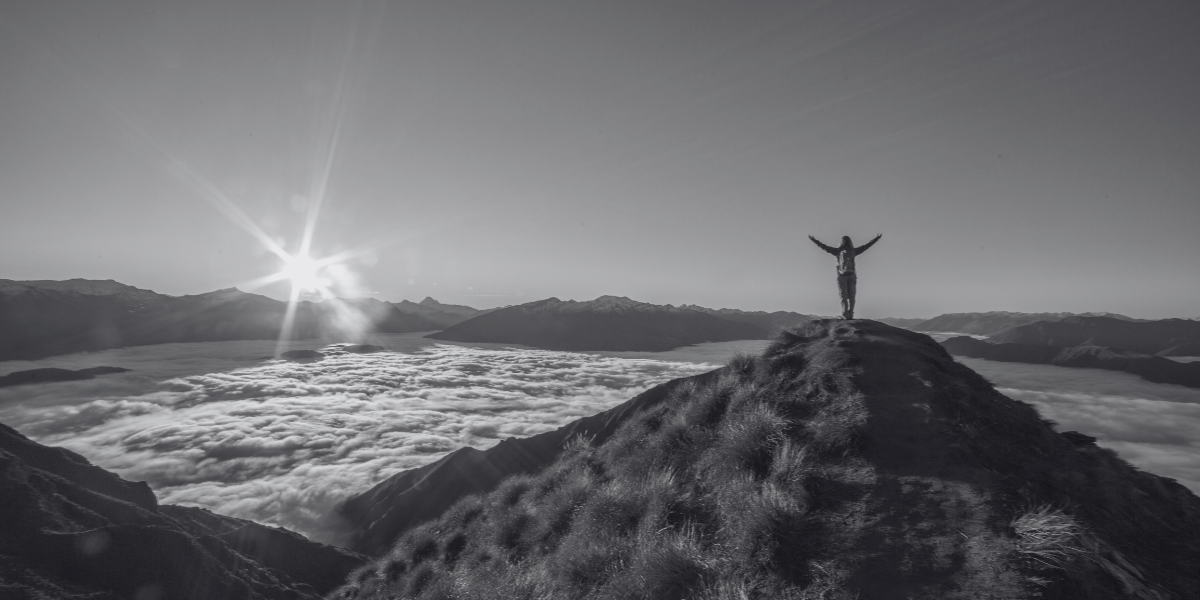
We stood at the edge, parched, but a rush of energy returned when we glimpsed the sign. Would the promised glory of the view be worth the struggle? Would the effort prove meaningful? A crowd gathered at the peak. The wind whipped through, and the sky opened with just enough clouds to frame the moment. We settled on a rock, sharing the space and the breath, drinking in the vast panorama. Keene Valley—the “Home of the High Peaks”—unfolded below, and the Adirondacks’ Great Range stretched into the distance in a quilt of mountains. We sat side by side and drank in the silent, elevated hush. This is what the passersby had urged us to see. More mountains rose in the distance. We captured photographs, savoring the stillness that comes with altitude. Birds wheeled overhead, and the sense of being far removed from the ground—where all our fears and the specter of disease had lived—felt unreal and radiant.
I had once felt guilty about choosing a hike over writing, but as I watched the winding silhouettes of distant peaks, I understood that stepping into the world is essential to continuing a story. I hadn’t believed I would reach the summit; the boulders and thirst had threatened to defeat me, and I’d imagined the wind’s whisper as a trick of thirst. Perhaps at the top, the wind’s message was simply true. Sometimes signs appear in the world or in the wind, and though uncertainty remains, there is a deep faith that a view worth having will emerge. And in that moment, the summit proved to be precisely that: a chance to rest, to listen, and to chart the path ahead. I realized this ascent was not merely about proving a point to myself but about proving something larger—to continue living in the presence of fear, doubt, illness, and death.
__________________________________
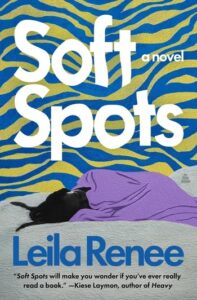
Soft Spots by Leila Renee is available from Amistad.