
Royan lies along France’s southwestern coastline, right where the Atlantic breaks upon its shores. A town of roughly twenty thousand residents, it serves as a bustling fishing hub with five sandy aprons for beachgoers. In the heat of summer, its population swells to about ninety thousand visitors, drawn by sun and the lure of coastal leisure, including beaches famous for their free-spirited atmosphere. Yet Royan also attracts a curious crowd of architectural enthusiasts, intrigued by the modernist language that defines many of its 1950s-era structures. The town’s long arc—from an ancient settlement to a modernist showcase—poses a striking question: why study this place not as an archaeological relic, but as a living panorama of mid‑century design? The answer lies in a darker chapter: Royan was a refuge for Picasso in earlier years, and it was reduced to rubble in a bombing campaign just weeks before the war’s end. France had been liberated, but Royan was said to harbor a last-resort cadre of Third Reich holdouts, operatives who clung to the town’s strategic value on the coast.
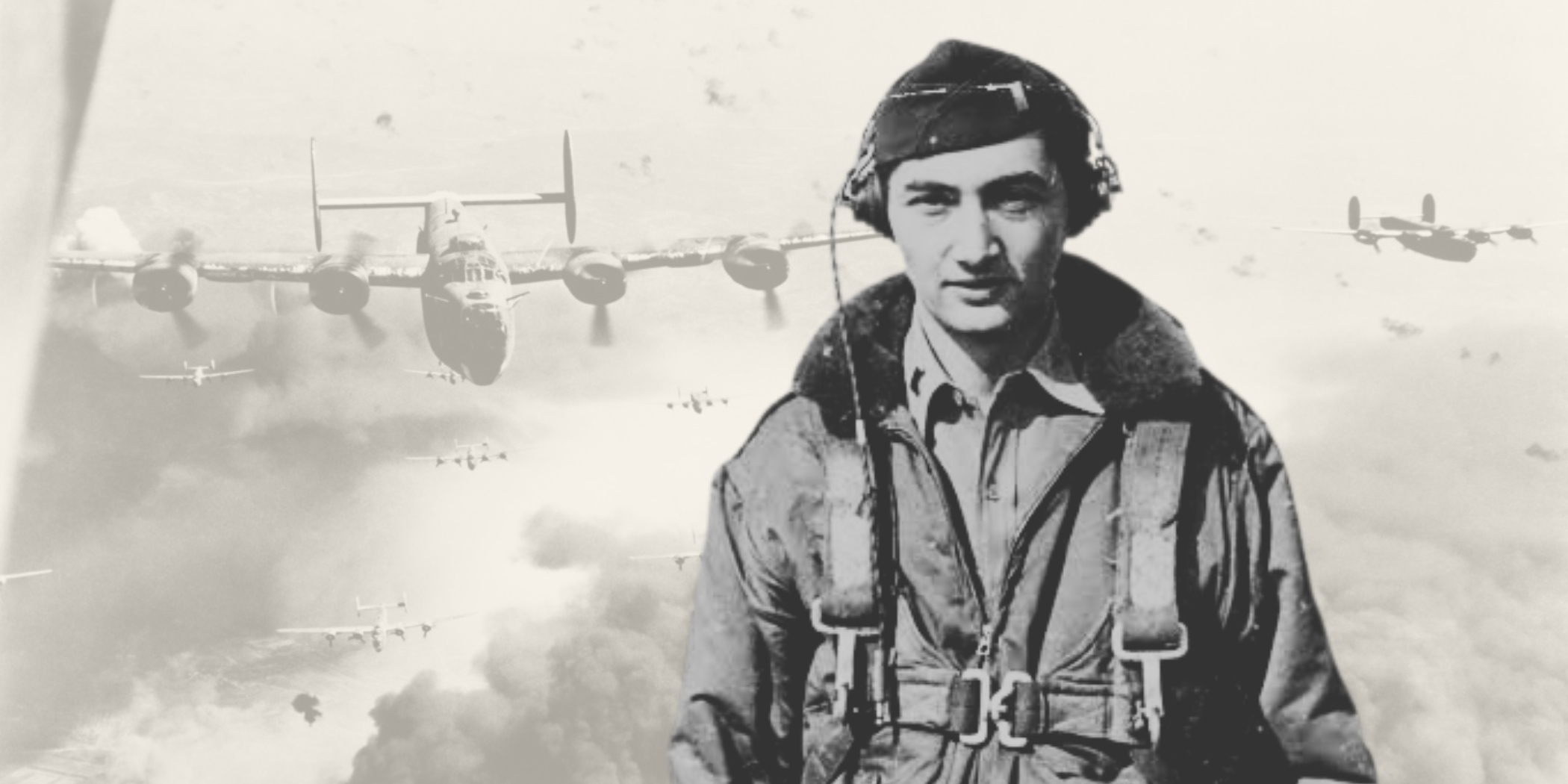
What might have begun as a routine police action escalated into a full-scale assault that killed three thousand civilian lives and left only a handful of German soldiers alive. Howard Zinn was among the airmen who delivered the strike over Royan. The bombing marked a turning point in wartime brutality, introducing a new method of warfare. The bombs used by Zinn and his fellow crews carried what officers described as “jellied gasoline,” a substance that clung to skin and burned to the bone, impervious to most amounts of water. It wasn’t until years later, during America’s Vietnam era, that Zinn recognized what he had once helped unleash: the fallout of napalm. In his book The Politics of History, he would recount: “At the time, it seemed just another bombing, with a slightly different target and a slightly different cargo of bomb… I remember distinctly seeing, from our great height, the bombs explode in the town, flaring like matches struck in a fog. I was completely unaware of the human chaos below.”
Zinn in the years to come was vexed both morally and politically by the impersonality of the killing as a bombardier.
From that moment, Zinn wrestled with the questions: what had he done in Royan, why his superiors could order such an assault, and why he had complied. The result was a personal moral crisis that lingered long after he left service, even as he entered a new life as a conscientious objector—or at least as someone who questioned the means by which political objectives were pursued through war.
“I could have remained in the Brooklyn Navy Yard, where I had been working for three years, and where our building of battleships and landing ships kept us exempt from military service,” he would later say. “But I could not bear to stay out of a war against fascism. I saw the war as a noble crusade against racial superiority, militarism, fanatic nationalism, expansionism.”
Without telling his parents, Zinn enlisted in the air corps. He preferred fighting fascism to protecting his family from financial strain, since his father and mother already bore concern for their other son, Bernie, who was overseas. When he received his induction notice, he walked it to his local draft board in Brooklyn instead of mailing it, choosing to present himself directly to the authorities.
Entering the air corps came easily. The tests suited him, his years laboring in the shipyard and playing on the union basketball squad had kept him in good shape, and his height—well over six feet—combined with a delicate frame. “I was skinny,” he recalled, “but the military scarcely minded.”
He became a bombardier and quickly embraced the role, finishing flight school as a first lieutenant with gold insignia resting on his lapels.
The bombardier stands as a cultural symbol of wartime heroism—the fearless airman who risks everything to wage war from the heavens. Yet, looking in the mirror later, Zinn would feel a kinship with a different kind of bombardier, one who challenges the narrative of skyward valor. In fiction as in life, the quintessential antihero—John Yossarian from Joseph Heller’s Catch-22—refuses to glamorize warfare. Yossarian, a figure of wary self-critique, resents the concept of courage and honor as abstractions that imperil those around him. By the close of that novel, heroism is reassessed, not through victory, but through a stubborn resistance to a system that demands loyalty at any cost. Zinn would come to share this tension: a sense that the most celebrated “bombardier” could also be a vehicle for brutal, impersonal killing. His later reflections would align with Heller’s critique, recognizing the tension between duty and morality that war can impose on those who serve.
In Boston University’s orbit during the 1970s, one of Zinn’s teaching assistants, Cheyney Ryan, recounted a memory that hints at his evolving consciousness: “If you were a bombardier, you were responsible for your own bombing equipment, so you had to ensure it functioned. They would line you up each morning and ask, ‘Who wants to volunteer to go?’ And you had spent so long doing this that you’d think, ‘I might as well volunteer. I don’t want to go through the hell of getting ready again.’”
A bombardier as a literary protagonist served as a fitting vehicle for Heller’s argument: a story about how the most elite heralds of war are not the grunts in the mud, but those who rain death from high altitudes, rarely confronting the consequences of their actions. The years to come haunted Zinn with the impersonality of such killings, a sentiment he would later articulate with startling clarity when contemplating the minds of drone operators stationed at bases like Creech Air Force Base in Nevada, who drop bombs on distant theaters of war. He recognized that wielding death from afar carries a price, a price that would be reflected in rising suicide rates among drone pilots in subsequent eras.
War’s justification—whether there could ever be a truly “good” war—was not the only new idea taking root in Zinn while he was in his early twenties. Although he encountered Black coworkers in the Brooklyn shipyard’s informal labor world, his early view of racism remained largely shaped by the stories of Richard Wright and a form of color line that felt invisible at first glance. The segregated basic training at Jefferson Barracks in Lemay, Missouri, kept Black soldiers out of sight, out of mind, until a moment of clear sight shattered his innocence. While on a long walk around the base, he suddenly realized he was the only white person amid a company of Black soldiers.
“Suddenly I looked around and there were black people!” he wrote. “I was astonished! I wasn’t aware of their existence [on the base]. It was America; it was really America where here are the blacks and there are the whites in a white neighborhood and they’re not even aware of blacks living twelve blocks away.”
That moment of awareness, quiet and profound, became a stark symbol of a broader truth he would carry: a recognizable Black fellowship he observed in the absence of noise—a memory that would shape his sense of allyship in the years ahead.
Later, overseas, as white and Black soldiers shared a crowded vessel—the Queen Mary, a massive liner repurposed for troop transport—racial segregation remained painfully visible. The Black troops slept near the ship’s engine room and ate last, facing the coldest, least appetizing rations. The white officers occupied the highest deck, reinforcing the social order even as men from different backgrounds stood shoulder to shoulder in the same mission. Zinn’s experience crystallized a commitment to allyship that he would carry forward, confronting injustice even within the military machine.
“In the dining hall, there were four shifts for eating for sixteen thousand men,” he recalled. “Imagine the huge dining hall that seats four thousand. It’s hard to imagine, right? Three shifts were white and the fourth shift was black. Each shift had to wait until the previous shift was finished. But one day the black shift came down before the third white shift had finished.”
When a white sergeant escalated the situation, berating Black soldiers who already had their trays, Zinn stepped forward to defend them. He warned the sergeant that he could stay and finish his meal or leave and throw out his food. In that moment, he challenged the war’s declared purpose, asking aloud, “What in the hell is this war all about, Sergeant?” It was a poignant sign that his understanding of the conflict diverged from the government’s and the armed forces’ official aims. For many, the war against fascism came to symbolize a broader struggle against racism and anti‑Semitism and the project of white supremacy itself—a belief that would, for many, unravel under the weight of later revelations.
In his youth, Zinn wore blinders about the injustices the United States pursued during what many called the “Good War.” He would later chronicle mass internment of Japanese Americans and the refusal to shelter Jewish refugees fleeing Nazi terror. He has described himself as war-hungry, a state of mind that pushed him to chase mission after mission, sometimes without fully grasping that more flights increased the odds of catastrophe.
Combat missions were a routine of endurance: early wake-ups, hours of briefing, frigid aircraft that demanded heated suits and heavy flak vests, and parachutes that, fortunately, seldom saw use. He earned the Air Medal and two battle stars for distinguished service and was listed as a qualified marksman with a pistol, a difficult feat in a war that tested every nerve.
As months wore on, Zinn sought out comrades to discuss radical politics, and many were eager to engage. The wartime era drew more than a million people to the Communist Party USA and its allied groups, whose adherents often supported the war against Nazism as part of a broader commitment to fighting fascism and defending the international workers’ movement. By 1941, Stalin’s stance shifted—the USSR abandoned any truce with Hitler after the invasion, recognizing the imminent threat to the Soviet Union. In a November 1941 speech, delivered just before Pearl Harbor, Stalin described the German invaders as scourging the land and murdering civilians, and he urged unity against a shared menace.
Zinn’s illusions in the war, challenged already by lefties in the ranks and by seeing his friends killed, were permanently put to rest due to the bombing of Royan.
Many CPUSA members and ex-members joined the armed forces with zeal, and Zinn found himself debating with individuals whose analyses extended beyond a simple fight against Hitler. He encountered a bombardier who argued that the war was not a fight against fascism but a cause of empire—that England, the United States, and the Soviet Union were morally corrupt leaders seeking to police the world, not to resist Nazism alone. “If that is so,” Zinn asked, “then why are you here?” The reply was blunt: “To talk to guys like you.”
This encounter—an insurgent critique from within the ranks—seeded a doubt in Zinn that would deepen in the days ahead. He found himself confronted by someone who risked his life not merely to defeat Nazi forces but to advance his own political argument inside the military. Two weeks after that conversation, the bombardier and his crew went down, and all were killed. The line—“There is no flag large enough to cover the shame of killing innocent people”—would become a remark he would recall decades later, after Reagan’s bombing of Tripoli.
That moment began a longer process of rethinking the rhetoric of war: the oft-asserted claims that nations fight for democracy, liberty, and protection against aggression could also be used to mobilize populations for violent campaigns. Was war ever justified? Was there such a thing as a “good” war? Zinn would press these questions as he watched a nation mobilize for conflict, often in the name of higher ideals that masking more complex, less noble calculations.
He felt a sense of camaraderie with the other “good guys” while sailing through skies that carried him far from the ground. Yet, even in moments of humanitarian duty—dropping food and medical supplies to besieged populations—he saw the fragility of moral clarity. When his crew later flew low enough to aid starving communities as Holland’s dams were breached and crops destroyed, he glimpsed a moment of humanity—“Thank You” spelled out in tulips—before the hard logic of war prevailed again.
As the years passed, Zinn began to doubt the simplistic story of Allied virtue. How could the Allied powers be seen as paragons when their histories were steeped in racism, colonialism, or forced labor camps? And what of fascism’s elimination? Was the way to defeat fascism to wage a bloodbath that claimed tens of millions of lives? These questions haunted him, especially in light of the two friends who did not survive the war. Joe Perry and Ed Plotkin, both comrades from basic training, died in the last weeks of the conflict. When Zinn returned to New York, he sought the family of Ed Plotkin and learned that Plotkin’s wife would one day place their daughter in touch with him—a personal reminder of what war costs those who survive it.
Hopes for a straightforward triumph dissolved as the bombings continued. The atomic blasts that ended the war on Hiroshima and Nagasaki would deepen Zinn’s sense of complicity in acts that felt like a war crime, an impression he would later reflect on during a journey to Hiroshima in 1966 at the invitation of a peace group. “I look back at Hiroshima, I look back at the bombings I participated in, and I feel sick,” he wrote afterward. “I learned a lot about how it is possible to commit atrocities. Hiroshima and Royan were crucial in my gradual rethinking of what I had once accepted without question—the absolute morality of the war against fascism.”
Throughout the following decades, Zinn pressed the Defense Department for access to the records of his bombing missions. Some files he obtained; others remained closed. He kept the documents he did receive in a folder labeled “WWII Photos of Bombings and Planes,” preserving pictures of Royan and other targets. At the bottom of that folder, he wrote two stark words: “Never Again.”
____________________________
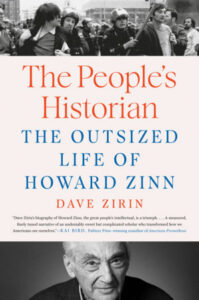
From The People’s Historian: The Outsized Life of Howard Zinn by Dave Zirin. Published by Dutton, an imprint of Penguin Publishing Group, a division of Penguin Random House, LLC. Copyright © 2026 by Dave Zirin.