
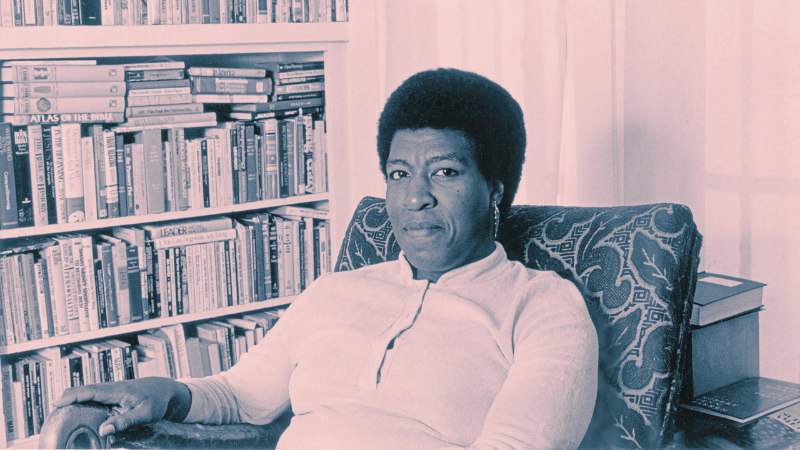
For most of my life, I’ve nurtured a fierce, enduring love for speculative fiction, and like many who follow the worlds of science fiction and fantasy, I count Octavia E. Butler among the figures I admire most. Since her debut Patternmaster appeared in 1976, Butler has consistently centered Black lives—especially Black women—in stories that travel from interstellar clashes to themes of vampirism. She produced remarkable work at a moment when Black authors were rarely published in the genre, making her achievements all the more remarkable.
I encountered Butler in person during the mid-2000s, years before her sudden passing in 2006. I was employed as an associate editor at Random House and attended a signing for a new edition of her short-story/essay collection Blood Child. The turnout was modest, and I felt a little stunned by the chance to meet a master of craft up close. She stood tall and memorable, her words carrying gravitas, thoughtfulness, and warmth as she spoke about her books. A touch starstruck, I spoke with Butler briefly at the event. When I told her I worked as an editor and loved her genre deeply, she immediately urged me to write, saying, “we need your voice.”
Butler’s titles would eventually reach a level of acclaim and fame she’d never experienced when she was alive.
It took more than ten years before I began writing my own novels, and I can trace much of my own literary voice to her unconventional approach to storytelling. I first encountered Butler’s work through Wild Seed during a college seminar on Black fiction. The cover portrays Anyanwu, a Black woman with several animals emerging from her head, signaling she’s a shapeshifter; to me, that image also stood for the vast range of possibilities within the Black experience itself.
Butler’s repertoire would eventually attain a level of recognition she hadn’t known in life. Kindred and Parable of the Sower have become especially beloved: Kindred uses time travel to probe the horrors and paradoxes of American slavery, while Parable of the Sower, Butler’s New York Times bestseller, envisions a near-future dystopia torn apart by class conflict and political demagoguery. (Sound familiar?) Both works are extraordinary, yet among almost all of her eleven novels, my favorite remains Mind of My Mind, the entry in the Patternist sequence.
In Mind of My Mind, we follow Mary as she awakens to extraordinary telepathic powers and builds her own society of psychics. Her centuries-old father Doro (who also features in Wild Seed) remains a constant threat, wary that his ambitious daughter might seize his power. The novel traverses recurring themes across Butler’s other works—ambivalence in relationships, resilience, and adapting to change—while offering a refreshing interiority that relies on multiple viewpoints to illuminate the layered interpersonal struggles of people striving to move beyond a tyrannical patriarch. It demonstrates how a writer can balance inner motivations with outward stakes, a balance that would later become a hallmark of my own storytelling approach.
I was so captivated by the breadth of Mind of My Mind and its dramatic ending—essentially unfolding within the main character’s inner world—that I penned the climactic moment of my second novel, The Broken Hearts Agency, as a tribute to Butler’s vision. In Broken Hearts, psychic private investigator Linda Villanueva discovers that there’s a pattern-like dimension to her empathic gifts, compelling her to dive into her own consciousness and deepen her connections to others in order to confront a shadowy, lethal threat.
And while the publishing industry certainly needs to do a far better job of supporting Black speculative fiction, I’m also encouraged by the breadth of stories that are now available—many that did not exist when Butler wrote her first tale.
When Butler urged me to write my own books, I didn’t have the presence of mind to press for more guidance, or to better understand her perspective. Yet I suspect her nudge sprang from a wish not to see herself alone in the field, envisioning a time when a wide range of Black experiences would be showcased. That diversity is precisely what readers deserve.
Indeed, while I remain inspired by my heroine, I have chosen my own path in crafting novels—rooting paranormal drama in West African spiritual traditions while exploring varied forms of intimacy. And although the publishing world still has a long way to go to support Black speculative fiction, I take heart from the abundance of stories now available, many of which did not exist when Butler wrote her earliest work.
Authors such as Tananarive Due and Cebo Campbell have achieved strong bestseller status as they blend real-world history with hauntings or imagine alt-histories that reveal an America transformed in unexpected ways. Sci-fi/fantasy writer Veronica G. Henry, whose work I’ve edited, tackles topics from the climate crisis to holographic library systems in narratives some classify as Afrofuturist. Young adult writers portray dragon bonding, spell-casting witches, and orisha lore, all centering Black experiences and benefiting from Butler’s trailblazing path.
By chance rather than design, The Broken Hearts Agency appeared on shelves on the same day as a rerelease of Mind of My Mind, part of a broader reissue of the Patternist series arriving soon after Butler’s birthday. I take this as a small, celestial nudge and a reminder of Butler’s enduring wisdom, forever grateful for her encouragement. I like to think this simultaneity is a sign from above, that perhaps somewhere she’s offering her quiet approval.
__________________________________
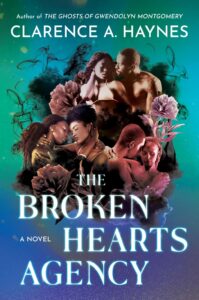
The Broken Hearts Agency by Clarence A. Haynes is available from Legacy Lit, an imprint of Hachette.
