
I’ve spent my life seeking fiction by women. My favorite narratives tend not to be romances but rather journeys of women who strive to understand how they can occupy lead roles in their own stories, even as those around them assign them supporting parts. While growing up in Seattle, I would hop off the bus a few stops early to explore the shelves of B. Bailey Books. I chased titles with the distinctive Virago green spine, ravenous for tales of women’s lives. I devoured Antonia White’s Frost in May, a vivid portrayal of a discontented schoolgirl, and I was left unsettled by Radclyffe Hall’s The Unlit Lamp—a piercingly intense exploration of having a crush on a teacher.
As I worked on my volume, Her Own Voice: Eight Women Who Rewrote Life and Art (Beacon 2026), I kept note of books that mirrored my book’s central concerns and spoke to the ideas and preoccupations of the women I was focusing on. The eight figures I explore fall into four broad roles: wanderers, rebels, explorers, and mentors. Those categories push us beyond the narrow aim of finding a suitable spouse. The works listed here broaden our sense of what a woman’s life can be and what narrative art can accomplish. So, here are titles that continue these themes in a different voice.
WANDERERS
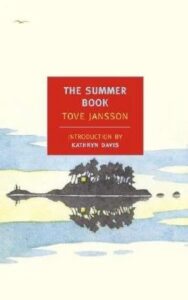
Tove Jansson, The Summer Book
The children’s author Margaret Wise Brown, who is among the figures I study, divided her life between the bustle of New York City and a Maine island. Brown cherished summers spent on that Maine island nearly as much as Tove Jansson, the Finnish-Swedish creator of the Moomin tales, cherished her island time off the coast of Sweden. It’s a pleasure to visit Jansson’s imagination—swimming in chilly waters, savoring long summer days, and watching for the mail boat. This work offers a northern island vacation tucked into a single volume.

Jenny Erpenbeck, Kairos
Hailing from the former East Germany, Erpenbeck writes with a lyric precision about the oddness of living in the interludes before and after a divided country. The novel follows an age-gap romance from the vantage point of a young woman who consciously chooses an affair with a married man. Her resolve to seek connection and experience resonates with another figure I study, Eileen Chang, whose Civil War-era escapades reveal female longing without apology. Both Chang and Erpenbeck illuminate the ordinary, careful steps lovers must take while living under surveillance.
REBELS
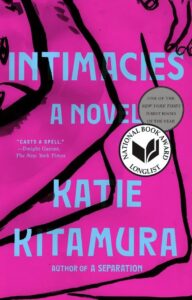
Katie Kitamura, Intimacies
Vera Brittain’s Testament of Youth moves toward the admission of the many scars she carried as a nurse during World War I only gradually. She speaks of courage and resolve, and only after the conflict can she admit how grief-stricken, exhausted, and disheartened she has become. In a similar arc, Kitamura’s unnamed heroine slowly reveals the traumas she endures as a translator at the International Court of Justice in The Hague. Her assignment is to render words, not to think, revise, or voice opinions. Each workday, she listens as a notorious former president—an individual responsible for egregious war crimes—speaks through her headphones. The experience profoundly shapes her. These are women who place themselves at risk, live amid denial, and only gradually reckon with the price of their choices. The elegance and restraint with which Brittain and Kitamura tell their stories heighten the impact as the narratives unfold.
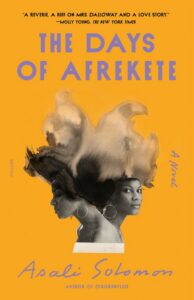
Asali Solomon, Days of Afrekete
Solomon’s narrative largely looks back at Liselle’s earlier romance with her former girlfriend. It reads as a bold yet self-questioning act, as Liselle, who is Black, hosts a dinner party on the eve of her white husband’s political downfall. The tension and the hesitations—teetering between boldness and fear—summon some of what drew me to Muriel Rukeyser’s Savage Coast. While Rukeyser is often read as fearless, Solomon and Rukeyser both convey the charged pauses just before a moment of bravery. Days of Afrekete also riffs on Virginia Woolf’s Mrs. Dalloway—another single-day novel centered on a powerful woman’s social gathering. Rukeyser admired Woolf and mentored Black writers such as Alice Walker, making the ties between Rukeyser, Woolf, and Solomon rich and resonant.
EXPLORERS
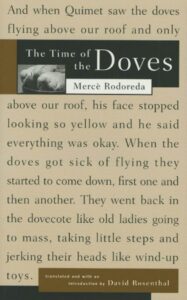
Mercè Rodoreda, The Time of the Doves (La plaça del Diamant)
A lucid, unsentimental realist in her daily life, Sylvia Townsend Warner excelled at portraying people caught in the sweeping currents of history. The distinguished Catalan writer Mercè Rodoreda faced exile during the Spanish Civil War. Exiled in France as a refugee, she endured such poverty and menial labor that she could not write for years. When she resumed writing, she told the story of a young shop girl whose husband resolves to keep pigeons on the roof as the Civil War erupts. Plagued by pigeon droppings and unsure about her husband’s whereabouts—fighting with the Republicans in the mountains near Barcelona—Colometa must feed her children with little money and determine her own place and path with minimal assistance from anyone.
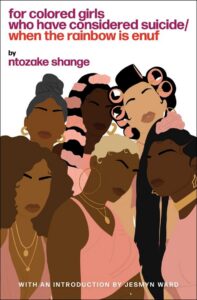
Ntozake Shange, for colored girls who have considered suicide when the rainbow is enuf
The Jamaican poet, playwright, editor, journalist, and broadcaster Una Marson would have celebrated the abundance of Shange’s landmark play. This sequence of interwoven monologues on Black womanhood speaks with clarity and fullness to the richness of Black women’s experience. In my youth, this work was a staple in repertory theaters, college campuses, and high schools. I’ve begun teaching it again, and my students find it revelatory. In her poems, Marson gives voice to many moods of the Jamaican diaspora, and Shange’s multivocal choreopoem serves as a fitting successor to that tradition.
MENTORS
Heidi Ardizzione, An Illuminated Life
Jessie Redmon Fauset could not pass as white, nor did she want to, yet her novels frequently reflect on the cruel imbalances of racial hierarchy. In Plum Bun, Angela changes her name to Angèle and moves to New York to pursue painting lessons she is barred from pursuing in Philadelphia. For a Black woman in the early twentieth century, opportunities were slim; for a Black woman, they were vanishingly narrow. Belle Da Costa Greene, the daughter of Richard T. Greener—one of the first Black graduates of Harvard—considered her options and chose to live as white. As Belle Greene (no longer Greener), she became J. P. Morgan’s librarian and one of the world’s preeminent experts in rare books, especially medieval manuscripts and early printing. Greene balanced professional achievement with family commitments and romantic entanglements. Heidi Ardizzione’s biography offers an indulgent, vivid account of a life richly lived.
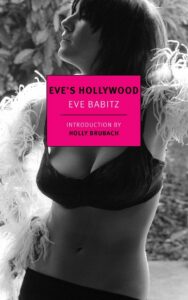
Eve Babitz, Eve’s Hollywood
Hollywood tends to favor a polished surface, yet it also gathers a cast of bigger-than-life personalities who push the boundaries of the screen with their drama. Lili Anolik’s contrast between the messy, affectionate Eve Babitz and the perpetually composed Joan Didion—an idea explored in Didion and Babitz—suggests a more nuanced take on the era. Director Dorothy Arzner might seem to align with a Didion-like persona—hair thick and controlled, skirts impeccably tailored—but to overlook the sheer joy Arzner drew from her stars and the backstage theater of the studios would be a mistake. Eve’s Hollywood, light on gossip yet rich in anecdote, captures a more recent thread of the kinds of conversations Arzner would overhear in her father’s Hollywood restaurant.
BONUS TRACK
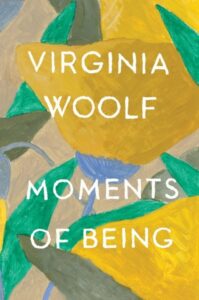
Virginia Woolf, Moments of Being
Woolf left behind an unfinished autobiography, yet it remains a treasure and a delight. This collection gathers essays from different phases of her life, with the lengthy piece “A Sketch of the Past” weaving contemporary observations of London during the Blitz with memories from childhood. It offers one of the most intimate routes to understanding Woolf as a person. Her recollections are precise and richly detailed, and she does not shy away from childhood losses. (Her mother died when she was thirteen.) Nor does she hide the abuse she endured from her half-siblings. It is a survivor’s story and a meditation on memory.
__________________________________
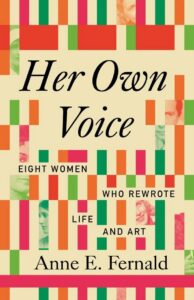
Her Own Voice: Eight Women Who Rewrote Life and Art by Anne E. Fernald is available from Beacon Press.
