
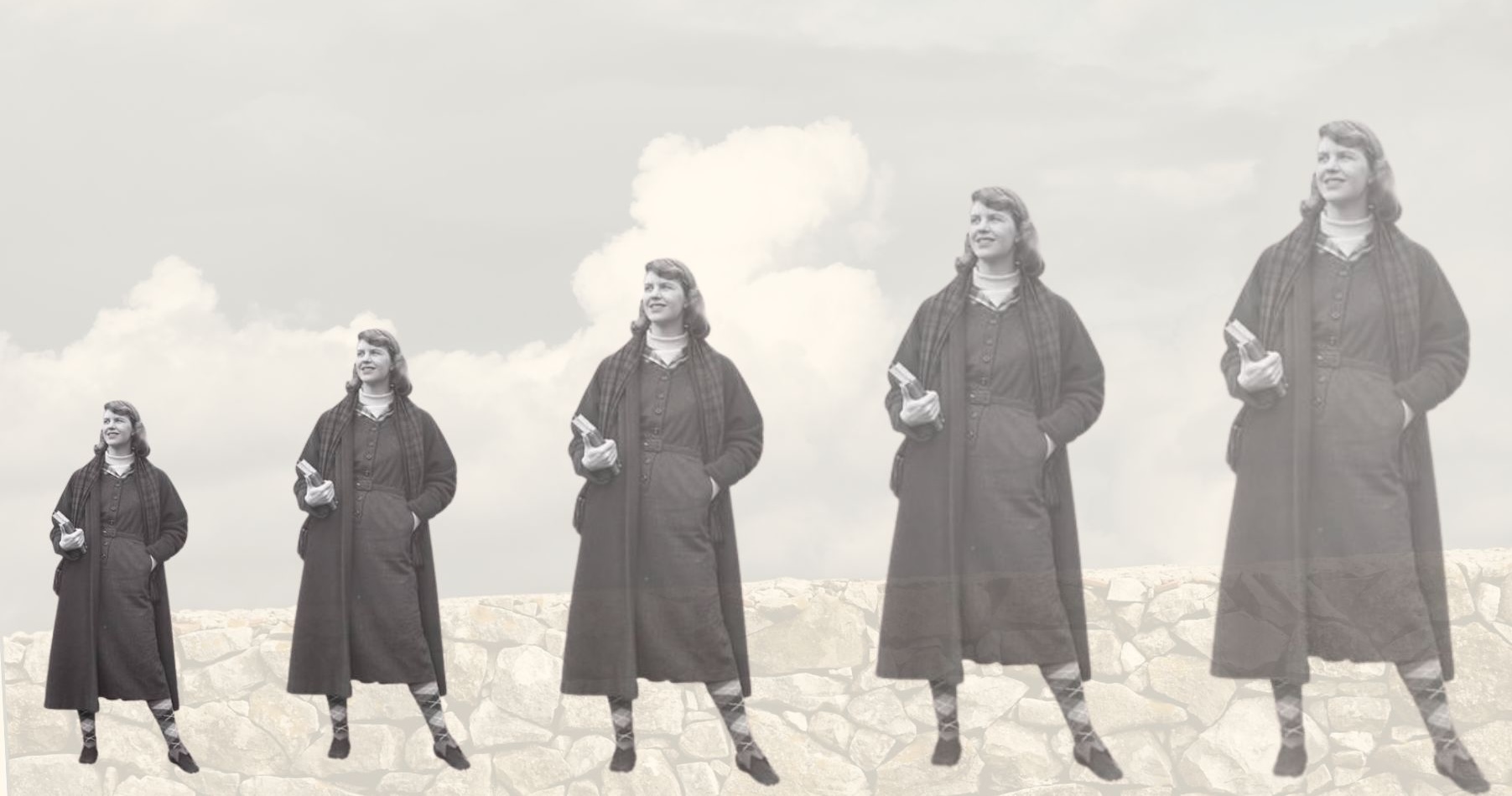
Even before Sylvia Plath’s specter began lingering in the yellow house perched on the bluff in my book White Rabbit, she already haunted my thoughts. I was a twenty-four-year-old graduate student, weighed down by the death of my father’s second wife, a woman who had served as a maternal figure for much of my childhood. While strolling across campus, the ache of that loss felt almost tangible—visible, and relentlessly trailing behind me.
I was at the dawn of my writing life, repeatedly drawn to motifs of sorrow and endurance that I would go on to explore further. Although I couldn’t name it at the time, my craft was fashioning a shelter for grief, and within that shelter the specter of Sylvia Plath first crossed my path.
Plath already knew grief well. Losing her father at a tender age taught her early on that life could be harsh. In her writings, she molds sorrow and mortality into something legible, a way for us to travel through pain, imperfectly perhaps, yet with some clarity. Even if she suffered from grief herself, her words endure as the specter she left behind.
Writing was carving out a niche for sorrow, and it was inside that niche that Sylvia Plath’s ghost first crossed my path.
To Penelope — the eleven-year-old lead in White Rabbit — Sylvia Plath’s apparition isn’t something to dread but a presence that alleviates loneliness. Not so much a specter as a kind of imagined companion.
Two weeks after Penelope’s father departs the yellow house on the bluff, the specter of Plath materializes. As they grow close, the ghost fills a void in Penelope’s life unnerved by her father’s exit. Penelope, a neurodivergent child, grapples with making sense of sadness and fear, often choosing to sidestep painful feelings and to inhabit spaces where her loss remains unacknowledged.
When I was eighteen, my stepmother—who had helped raise me for much of my youth—left as well. For many years I hid my pain and avoided naming my loss. Like Penelope, I couldn’t coexist with my grief without it threatening to overwhelm me. Because I couldn’t chart a path through it, I pretended it wasn’t there. The ache nevertheless found me.
Only via that which haunts Penelope does she start to comprehend her loss, arriving at clarity and calm. This is the lesson shared by Penelope and Plath: being haunted isn’t something to dread but to welcome. The specters we carry need not wound us; they can steer us through the challenges we cannot face unaided.
Plath faced her father’s death at eight; Penelope’s father departs when she is eleven. In the void left by such absence, both girls turn to language and storytelling, not merely to bear their sorrow but to build resilience. If the specter of Sylvia Plath can embody Penelope’s sadness, it can equally signify Penelope’s own budding fortitude as a child navigating a harsh, unfamiliar world.
Though the reasons behind her father’s departure remain unclear to Penelope, the personal myths she constructs around his exit offer her the most solace. This mirrors a common childhood truth. In my own youth, coping with loss, I found refuge in imagination—a means to traverse a world marred by confusion and injustice, to navigate the grief’s potholes. Yet fantasy is fragile; its comforts crack when confronted with real life. As Penelope can no longer suppress what she has buried, the weight of her sorrow becomes almost insurmountable, and it is the haunting presence that forges a path ahead for her.
Even when flight seems tempting, these specters often prove to be the only guides through painful spaces.
The white rabbit, a figure born from Lewis Carroll’s Alice’s Adventures in Wonderland, likewise guides a girl through an unfamiliar, sometimes perilous landscape. Alice follows the rabbit into a realm that blurs the line between real and surreal. Penelope is asked to inhabit a setting that scares her—not only due to her neurodivergent nature but because she now stands within an adult world. There’s a shared sense of grief in this—entering unknown spaces costs childhood innocence.
Everyone carries their own phantoms; we are all in some sense haunted. Even when we long to escape fear, it is often these very ghosts who enable us to traverse the uncomfortable corners of sorrow. Traditionally, ghosts are imagined as straddling life and afterlife, but for Penelope—and for me—these apparitions aren’t merely in-between beings; they are here, tangible. They become guides, navigators, like a white rabbit carving a tunnel through grief, inviting us to pass through the wound and arrive on the far side to witness a world that remains capable of wonder.
Across decades, scholars, writers, and readers have dissected Plath’s intellect, prose, and sorrow. Yet by listening to her own voice—through journals and letters—she has become the pursuing specter in my life: the echo of my personal sorrow, Penelope’s, and the one that guided us back toward the light.
_______________________________
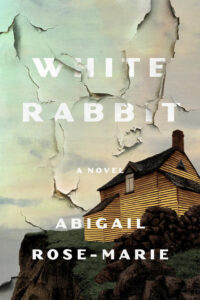
White Rabbit by Abigail Rose-Marie is available from Union Square and Co., an imprint of Hachette Book Group.