
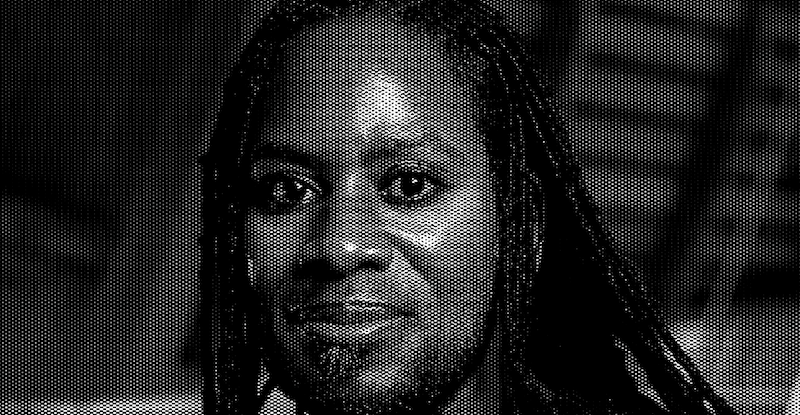
Although I have largely vanished from my usual summer social-media hiatus, I watched the Jason Arday narrative unfold with mounting dread over recent weeks. Traditional outlets produced hundreds of features, and a flood of texts arrived as people saw parallels between his experience in higher education and mine, making the connection nearly inescapable.
I never met Jason personally, yet I have spoken at Cambridge twice recently—while still finding my own path out of the academy—and, like many Black academics, I recognize the small circle of colleagues who share skin tone similar to mine while navigating spaces that remain predominantly white.
Jason’s life ended in a moment of catastrophe, and although our stories converge in some respects, I am fortunate to depart academia on my own terms, not in a body bag. May Jason finally find the peace that eluded him in the last weeks of his life.
Suicide is a tangled, multifaceted phenomenon, yet it’s undeniable that the vicious pursuit of this gentle soul helped seal his fate. Jason was not merely pushed out of Cambridge or away from academia; he was driven out of the labor force, and essentially erased. In this grim Western order—so vividly illustrated by the distortions of what passes for “higher” education—we are taught to believe that we exist to be exploited, and that those who struggle against exploitation deserve punishment. This framework targets Black bodies, mental illness, and disability, insisting that failure to manage one’s own oppression warrants a fatal penalty.
I refuse to accept that narrative.
I want to examine Jason’s case in conversation with my own, yet without centering myself. Instead, I want to embrace Jason warmly, because there is a harmful tendency in discussions about the decline of Black and brown scholars to categorize them as either “worthy” or “unworthy,” or to frame their struggles as either “good trouble” or “bad trouble.” It’s the same mindset Chris Rock encapsulated when he yelled “I love Black people but I hate niggers” in 1999—a sentiment often wielded to determine who should be admitted to these spaces. It’s the kind of logic that gatekeepers in Primarily White Institutions (PWIs) wish they could apply to every situation.
Nothing Jason was accused of doing justified the way he was treated
I don’t know, and I don’t pretend to know, whether Jason did or did not engage in what he is alleged to have done. And it isn’t the point. He came across as a gentle soul who confronted disability, racism, and cruelty with tenderness and perseverance—an individual wrestling with mental illness whose cries for help were ignored. As my friend Greg Gonsalves asked, “Who bore the duty of care for Jason Arday? From where I stand, everyone around him failed to respond, watched what he endured, and walked away. I don’t care what allegations exist; it is monstrous that no one stepped in. He died alone.” (Greg works at Yale, a university that is actively re-segregating itself and, some say, colluding with the Trump administration to undermine higher education. “Whatever you think about universities,” Greg added, “they are not places of justice or kindness.”)
Nothing Jason was accused of doing justified the way he was treated: being pursued to the point of death (even after he stepped back) by a chorus of petty, cruel, and often overtly white-supremacist voices who compiled hundreds of stories about him—and a deluge of tweets. I found myself receiving multiple breaking-news alerts about his passing—about the death of someone who deserved to be widely known for his humanity, not for his ruin. But that is the currency of contemporary academia: it compels writers, journalists, and scholars to ascend precarious ladders in order to obtain a foothold, only to be pulled down when they falter.
The treatment of Jason in the press as a “Blackademic” is a pattern so familiar that it has become a recognizable subgenre. Recently, another well-known Blackademic faced allegations of shaky citational practice (I will not name them or link to the coverage to spare them unnecessary attention). The similarity between that coverage and what Jason endured was striking, as were the targeted abuses, underscoring a broader structural crisis.
The real transgression that prompted investigations of both figures was simply being a star in a PW I, and having a crossover book published by a major trade house. This was their true sin. It triggered a level of scrutiny that cost them their careers—and, in one instance, their lives.
“Dare to enter these spaces,” they warn, “dare to claim some of the resources we’ve hoarded, and this could happen to you, too.”
I’m reminded of the case of Juan M. Thompson, a Black journalist who was fired from The Intercept in 2016 for fabricating sources before later tampering with a string of bomb threats against Jewish Community Centers, serving five years in prison, and dying at 39, likely due to a drug overdose. Thompson’s fabrications—and his serious mental health issues—raise questions about how rare Black journalists and professors in PWIs must be to secure entry. When the bar for believability seems impossibly high, is storytelling even a prerequisite for getting through the door?
And what does it mean when many of us who don’t resort to lies also feel compelled to present heroic self-narratives as the price of admission?
What if we stopped blaming individuals for not solving a system, and stopped treating their shortcomings as justification for a lynch mob?
What if we instead posed questions like:
Why are there so few Black people filling roles in well-funded institutions?
Why must a Black or brown student possess almost superhuman traits—such as claiming to run 30 marathons in 35 days—to gain admission to one of these places?
Why are Black and brown institutions—like HBCUs or universities in Africa or Latin America—characteristically under-resourced?
Why do people who fail to maintain the exact pedestal others have placed under them end up as the sole targets from marginalized communities who succeed in elite spaces?
Jason, others at PWIs, those excluded from PWIs, and those attempting to act honorably in under-resourced nonwhite institutions are victims of a form of systemic violence. When so much vitriolic rhetoric is directed at a single individual, it functions as a deterrent—an effect that is precisely what this “Dare to step into these spaces” rhetoric seeks to enforce. The phrase has always carried a warning: join, take a slice of the resources that have been accrued, and you may pay a heavy price. Public shaming has long served this purpose, and this case was no exception. The danger of “first narratives” and of Black people becoming the sole exemplars in The Overseer Class is not only that it trains people to police one another, but that it exposes them to relentless scrutiny, exclusion, and, ultimately, ruin.
The journalists who participated in Jason’s downfall can be described as mediocre in their craft. To call them merely journalists would be a disservice to the profession. While he was a target of their obsession—and while their malice contributed to his demise—their broader aim was to intimidate nonwhite populations who seek to wrest away resources from PWIs. “Dare to enter these spaces,” they claim, “dare to claim some of what we have hoarded, and this could happen to you, too.” Every public lynching has served this purpose of deterrence, and this case was no exception. One reason I caution against a reliance on “first narratives” and on the idea that Black people should be the sole faces of The Overseer Class is that such dynamics push individuals toward becoming overseers themselves, exposing them to intense scrutiny, ostracism, and eventual ruin.
The so-called “mediocre” reporters covering Jason’s decline are, in truth, scavengers. His death became a breaking-news moment for major outlets like The New York Times, The Guardian, and the BBC—publications I know have recently overlooked the work of many brilliant Black academics while readily announcing tragedies. What does it reveal about the pattern when our misfortunes—rather than our breakthroughs—become the only things these voracious outlets care to catalog?
In The Viral Underclass, I argued that racism found a way to claim George Floyd—whether through policing, pandemics, or poverty; the form it took was not fixed, but inevitable. I examine how racism grinds Black and Brown lives within PWIs, using people up and discarding them as a systemic tool. As Afeef Nessouli and I reported in The Intercept, Black and Brown individuals with HIV are often discarded by public health frameworks worldwide—after performing the essential labor that enables white researchers in PWIs to accumulate wealth and advance careers in the global north.
On Halloween of 2024, shortly after I myself was suspended from teaching for my stance on Palestine, I was invited to participate in a Cambridge Union Debate. The motion we faced was “This House Welcomes the Decline of America.” Staying at Jesus College, where Jason Arday once taught, I used the moment to speak about one student I taught early in my career—Andres, a gay, Latino student who was a challenging but brilliant presence. He immigrated from Colombia and was the first adult I told privately that he was HIV-positive. He turned to sex work to cover NYU’s exorbitant costs. By the time he completed law school, his debt had swelled to roughly $300,000. He had hoped to pursue scholarly work, but his debt overshadowed that dream, and he died at 27 from a drug overdose.
That night at Cambridge, I said that it is obscene that America could not build a space for my beautiful, queer, brown, stubbornly brilliant student—and that America took him from us long before he could fulfill his aspirations. And yet—America does not hold the monopoly on lethal racism; the UK, its press, and its universities constantly remind us of this truth.
Andres was only one of many I mourned during a brief stretch in academia. In the United States, during my graduate studies, there were few Black or Brown PhD students in my field (and none in my NYU cohort). Yet we found one another at conferences and online, stayed connected through chats and networks, and supported one another as best we could.
But among those few, three scholars died before I completed my degree: Doria Johnson (cancer, like Johanna Fernandez and Audre Lorde, at 47), Jesus Estrada Perez (confined to jail, suicide, 28), and Andrew Dowe (age 34, circumstances unknown).
Racism, in the precise terms Ruth Wilson Gilmore uses—“the state-sanctioned or extralegal production and exploitation of a group’s vulnerability to premature death”—is a mechanism woven into Western society’s fabric, and universities in particular contribute to it by failing to make space for the many brilliant people who have so much to offer and by exploiting the vulnerability of those who cannot escape.
As a friend put it to me, “The moral of this unbearably tragic tale is that a ‘post-racial’ university and the elite that sustain it are essentially weapons of death.”