

Achievement in sports, unlike many other spheres of life, happens with unmistakable finality. There are victors and defeats; rankings are fixed. This binary setup easily fuels fixation. In my debut novel, Daytona Teddy Riggs, the protagonist aches to conquer the World’s Strongest Man contest. When he isn’t training, he devours calories and rehearses victory in his mind. His fixation grows as he becomes more isolated: he’s the odd one out in his family, and his increasingly erratic conduct pushes away the few friends he still has. He cycles motivational tapes, crafting a mental echo chamber that repeats the conviction that greatness awaits him.
I have long cherished the obsessed-athlete narrative. A story gains momentum whenever a central figure chases a visible objective with relentless tenacity. Every incident is measured by its relation to the aim. Each moment either brings the person closer to the goal or pushes them farther away, fueling energy or sowing unrest. The tale can function on two planes—as a straightforward arc that often leads to a climactic match or event, and as a slowly unfurling portrait of a character. I am drawn to both approaches. Over time we discover what fuels these athletes—the injuries they carry, the insecurities they harbor, the longings they seek to satisfy. Here are several exemplary instances where obsession and sport intersect.
*

Gabe Habash, Stephen Florida
In the second chapter of this wrestling novel, the narrator declares his aim with almost clinical certainty: he plans to clinch the Division IV NCAA Championship in the 133-pound weight category. That fixation pushes the narrative forward. In a small North Dakota college town, Stephen’s options are limited to long runs and devising strategies against future foes. With such intense concentration, he seems on track to attain his target, yet the self-imposed strain gradually unthreads him. What I admire about this book is its quiet tonality. Achieving total commitment and unshakable confidence is essential here. It’s a hidden treasure—though beware the Frogman who haunts Stephen’s thoughts and surfaces on every page.
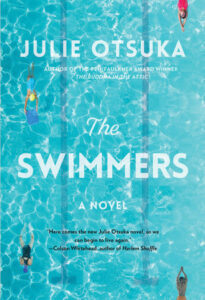
Julie Otsuka, The Swimmers
This work follows a cohort of swimmers who discover refuge within their neighborhood pool. The facility becomes a sanctuary from reality until a mysterious crack in the pool’s floor forces its closure. The latter portion shifts to Alice, a senior woman battling dementia. Stripped of the pool’s anchor, she begins to unravel and is moved to a memory-care setting where her daughter observes the decline of her mother’s mind. The novel deftly balances multiple viewpoints, weaving a remarkable mental tightrope act.
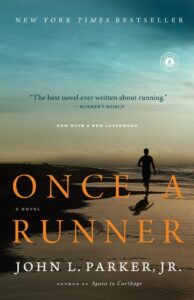
John L. Parker, Jr., Once a Runner
Quenton Cassidy envisions a sub-four-minute mile as the pinnacle of running. His intense daily regimen is laid out in meticulous detail, and the novel largely speaks to those with a sustained interest in the sport. It’s a straightforward homage to running—unadorned and sincere. It does not profess to probe for deeper meanings; for Parker, the act of running itself suffices as a complete universe.

Emily Thomas Mani, The Church of Wrestling
With glory now behind him, a father redirects his wrestling dreams toward his eleven-year-old daughter, Jenny. For them, wrestling becomes a welcome distraction from the grim truth that Jenny’s mother is dying of cancer. After the mother’s death, father and daughter search for a way to outmaneuver death itself. The book offers a powerful look at how fixation can function as an escape from life’s complexities.

Ashton Politanoff, Dad Had a Bad Day
In this somber portrait of a father, tennis becomes a symptom of Ned’s emotional decline. The narrator—a former top-tier athlete now middle-aged—grapples with unemployment, a wife, and a son. He views a comeback as his path to reclaiming self-worth. The tight, self-contained world of the tennis club provides the perfect setting for his unraveling as he drinks at the club bar, pursues an affair, and belittles his fellow players. The storytelling is lean and brisk, with no extraneous moments; I read it in a single sitting.
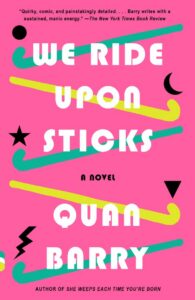
Quan Barry, We Ride Upon Sticks
A girls’ high school field hockey squad goes to extreme lengths to capture the state title, even dabbling in witchcraft. The narrative uses sport as a lens to examine friendship and the pressures placed on young women by society. This is a great pick for anyone who enjoys a healthy dose of ’80s nostalgia.
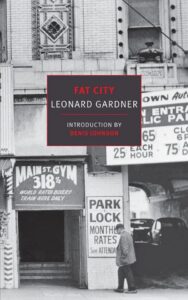
Leonard Gardner, Fat City
Against the backdrop of grim postwar Northern California, two men—a raw newcomer and a faded prizefighter—find an improbable escape from poverty within the brutal arena of boxing, and perhaps a chance at significance. It seems almost a betrayal to detail the plot any further; read it. I was stunned by the book’s terse, muscular prose and, more deeply, by Gardner’s keen insight into human psychology. I found myself pausing because I recognized parts of myself in the characters’ inner monologues. Gardner’s sole novel stands as a phenomenal achievement.
__________________________________
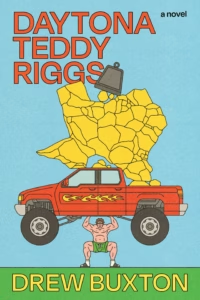
Daytona Teddy Riggs by Drew Buxton is available from Hub City Press.