
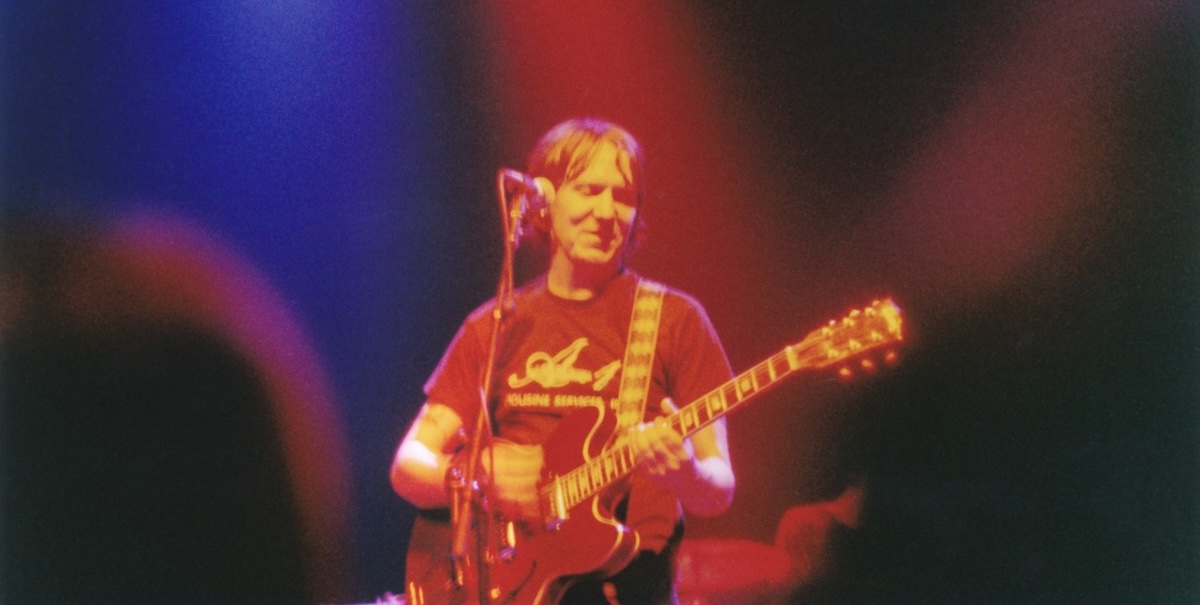
One of the last videos captured Elliott Smith at the Fonda Theatre in Los Angeles shows him perched in a metal stackable chair, dressed in worn, dark jeans and a T‑shirt bearing the slogan i <3 metal, slightly hunched over his guitar. A leather cuff cinched around his wrist. His hair cascades over his face, as it tends to do.
The performance begins with a jagged rhythm. His voice comes out thin and heavy, as if he might be under the influence or withdrawing. Roughly forty‑five minutes in, after he finishes “Pretty (Ugly Before),” a spectator from the crowd calls out, and Elliott isn’t sure what was said. “Get a what?” he asks. “A back-bone?” He runs a hand through his hair as the remark sinks in. “Get a backbone?” he repeats. “What the fuck?… I could tell you a dream I had last night; otherwise, I can’t be more fuckin’ for real.”
He appears upset, disbelief flickering across his face, and then, tracing the guitar’s neck, he contemplates the line, letting the thought settle. The anger dissolves. He apologizes. “I’m not trying to pick on you,” he says. “Maybe I didn’t understand what you were saying.” Who knows what the heckler is really thinking? Perhaps they’re simply having a rough night.
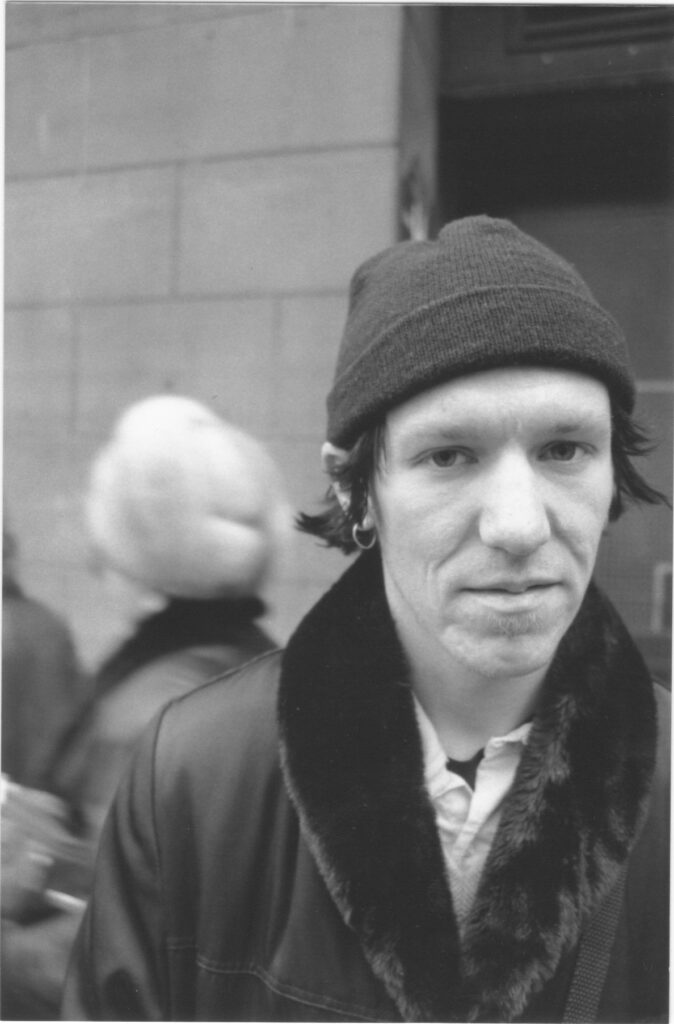 Elliott in Paris, December 1996. “I think it was more my romantic idea,” Joanna says. “When we went there, it wasn’t so easy.” Photographs by Joanna Bolme.
“I’m very healthy now,” he tells the audience amid whistles and cheers. “So don’t get bummed out.”
He treats the crowd with tenderness—“I want to play new things,” he had announced earlier, turning down a request for “The Biggest Lie,” “and they might seem dark, but they’re not from now, necessarily… I’m fine, really”—and aside from the heckler, the audience is forgiving.
Then he begins to play “Plainclothes Man”:
you’re everybody’s second
home always trying to get me
alone an easy way to lose it all
It’s a number about addiction, probably heroin, but like most of Elliott’s songs about addiction, it isn’t strictly about drugs. It’s about transformation and need. When he wrote it in the mid‑nineties, he was leaving his band and stepping into a solo career that would define him. It stands as one of the first songs to reveal the maturity of Elliott’s voice, not only as a songwriter—clear, economical phrasing and a knack for commonplace expressions used without affect—but also in the way he sang. The adolescent rasp of Roman Candle is gone, the growling, metallic timbre of Dead Air replaced by something softer, steadier, and more assured.
He wrote sad songs but didn’t want to make anyone sad. He had the kind of shy, exaggerated empathy of someone who’s always afraid of hurting people but never afraid of hurting himself.
On the Los Angeles stage, Elliott is singing as if he’s on the cusp of a personal metamorphosis. The show marks the start of a tentative comeback tour and an anticipated sobriety. His voice grows stronger as the set progresses, yet it shatters with emotion. He pulls every vibration from the vowels, every breath, until his singing becomes a trembling wail. It’s both a counterargument to the heckler and validation of the heckler’s point, or perhaps a blend of both. Elliott’s talent has always thrived on coexistence—of opposites.
He finishes the chord, then glances at the crowd and frowns. “That one was too sad to stop on,” he says. He’s not willing to end with a sorrowful note.
*
Twenty‑three years have passed since that performance was captured—the video remains one of Elliott Smith’s most iconic documents, packed with meaning both inside and around it. Filmed in January 2003, and by October of that year he was no longer among the living. The footage stands as a contradictory record of recovery for those who argue about such things. More than anything, it captures his artistry and his empathy, inseparably intertwined. He understood people’s feelings, at least to the extent that he tried. He wrote songs that were sad, yet he did not want to reduce listeners to sorrow. He possessed a shy, intense empathy, someone perpetual afraid of causing others pain but not of harming himself.
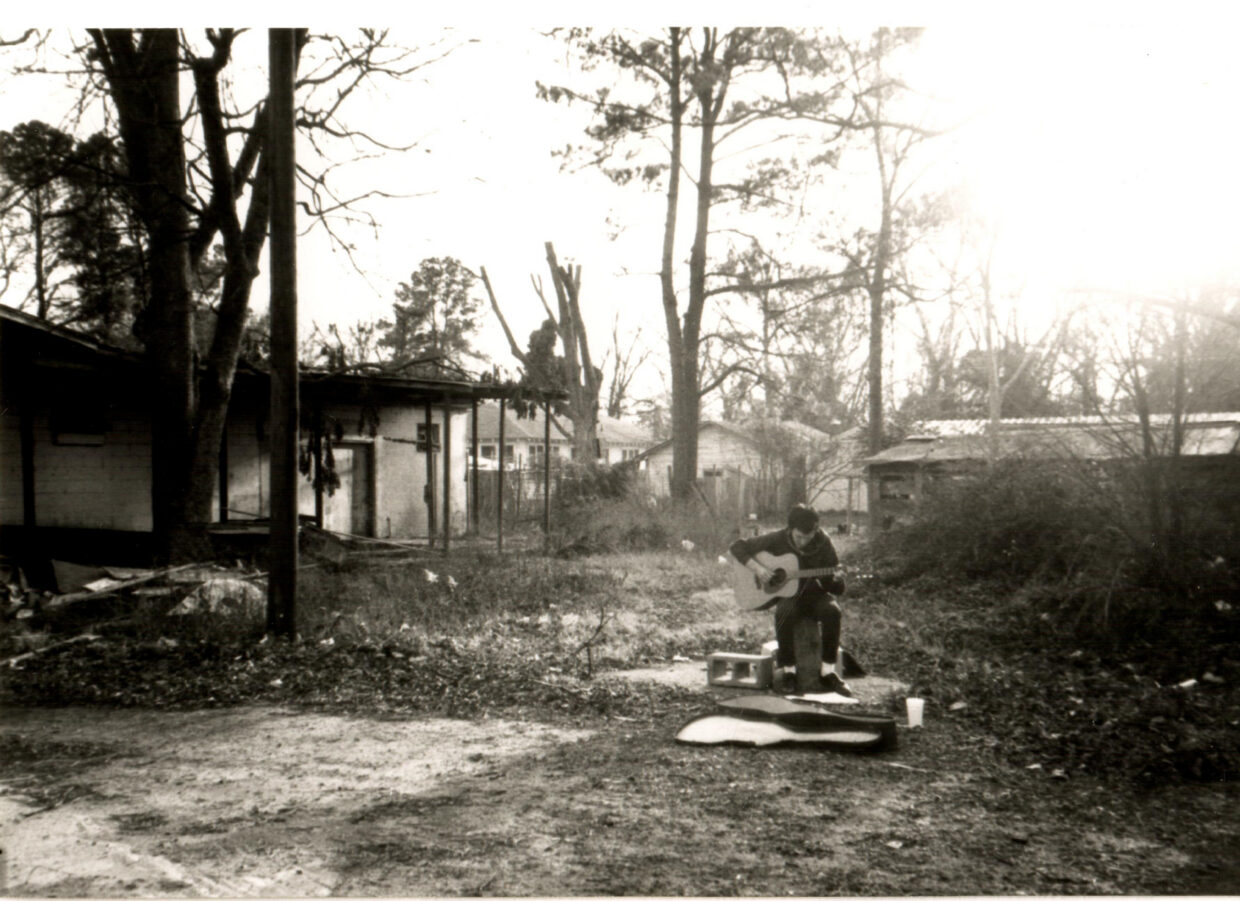 Elliott working on “Angeles” in early 1996, on tour with the Softies in Louisiana. “Anytime we had days off, he would just be working on songs,” Rose Melberg says. “I remember feeling dumbfounded by its beauty.” Photograph by Jen Sbragia.
Even twenty‑three years after his passing, Elliott remains not widely known or fully understood, yet he remains deeply loved. The task of grasping and safeguarding his legacy has become a communal project. There are YouTube accounts such as I Remember Elliott; his old fan site Sweet Adeline, stubbornly rooted in Web 1.0; oral-history blogs like so flawed and drunk and perfect still; Smiling at Confusion, a site for posting guitar tabs and fingering guides. Fans exchange bootlegs and unreleased songs, reflections on his lyrics, and they speculate grimly about his death. Underneath their videos you’ll see hundreds of comments—praising his fingerpicking, debating whether he might have been under the influence at a given show or simply exhausted but clean, thanking him for accompanying them through depression or addiction, for helping them feel less alone.
“Come here when I’m close to the edge, almost always these days.” “A few summers ago a good friend of my dad’s killed himself and I used to come downstairs at night when I couldn’t sleep and listen to this. I love you, Elliott.”
“He’s been saving me during this Covid insanity and the profound loneliness that’s come with it. Then again he’s been saving me for over twenty years.”
“Love you, Elliott. Wherever you are.”
Elliott inhabited a liminal era: late enough to benefit from easy recordings and portable video cameras, early enough that what we have feels spare. Much of it has degraded—tapes rotten into eerie hiss, videos with blurry images and pale, washed‑out faces. It makes his fragility tangible. We celebrate warm, clear performances where you can picture Elliott bouncing his leg and whispering a quiet “Thanks” after a song, as if he were right beside you; we also celebrate performances where the flaws of a poor recording give his voice a rough edge, tapes that sound like they belong to the dawn of sound recording. We prize anything that feels like presence, because facing his absence is almost intolerable.
On r/elliottsmith, fans post photos of themselves wearing Elliott Smith shirts bought on Etsy or TeePublic, designs for Elliott-inspired tattoos, pictures of Figure 8 painted on their bedroom walls, or updates about the original Sunset Boulevard mural. They share memes about depression and leave heartfelt notes about listening to Elliott during deep despair or recovery, and they debate with others about his death. “Daylight Saving Time ending just means I get an extra hour to cry in bed to Elliott Smith,” one post reads. “Is this what this sub has become?” another user laments below.
We argue and we love like a large, unruly family gathering.
Once I shared a recording of Elliott improvising a tricky Moorish‑tinged passage before sliding into “LA” at the Black Cat in February 2000, a small motif that nobody seemed to notice, and within minutes someone begged for the tabs. Of course I don’t have the tabs, I thought. No one has the tabs. This is the kind of delirious enthusiasm Elliott Smith inspires.
*
When fans debate, we’re ostensibly arguing with one another, but we’re also contending with competing versions of Elliott. Some view him as a relentlessly morose figure—the “sadcore” persona the press often pinned on him. Others treat his lyrics as a map to his relationships and life experiences, with nearly every line tracing a real event or person. As Elliott once described, nearly apologetically, “There are pieces of me in other people and I don’t really always know how much of a song is really me and how much is other people.” Listening to “Christian Brothers,” the second track on his self‑titled album, I found myself asking the same question: the rising guitar line, the vocal crescendo of the chorus, and the soft, ominous curses all made the track feel like a personal mirror. While the song addresses confronting a father figure, it instantly echoed my own relationship with mine. It felt like peering into a mirror Elliott offered and recognizing a familiar face.
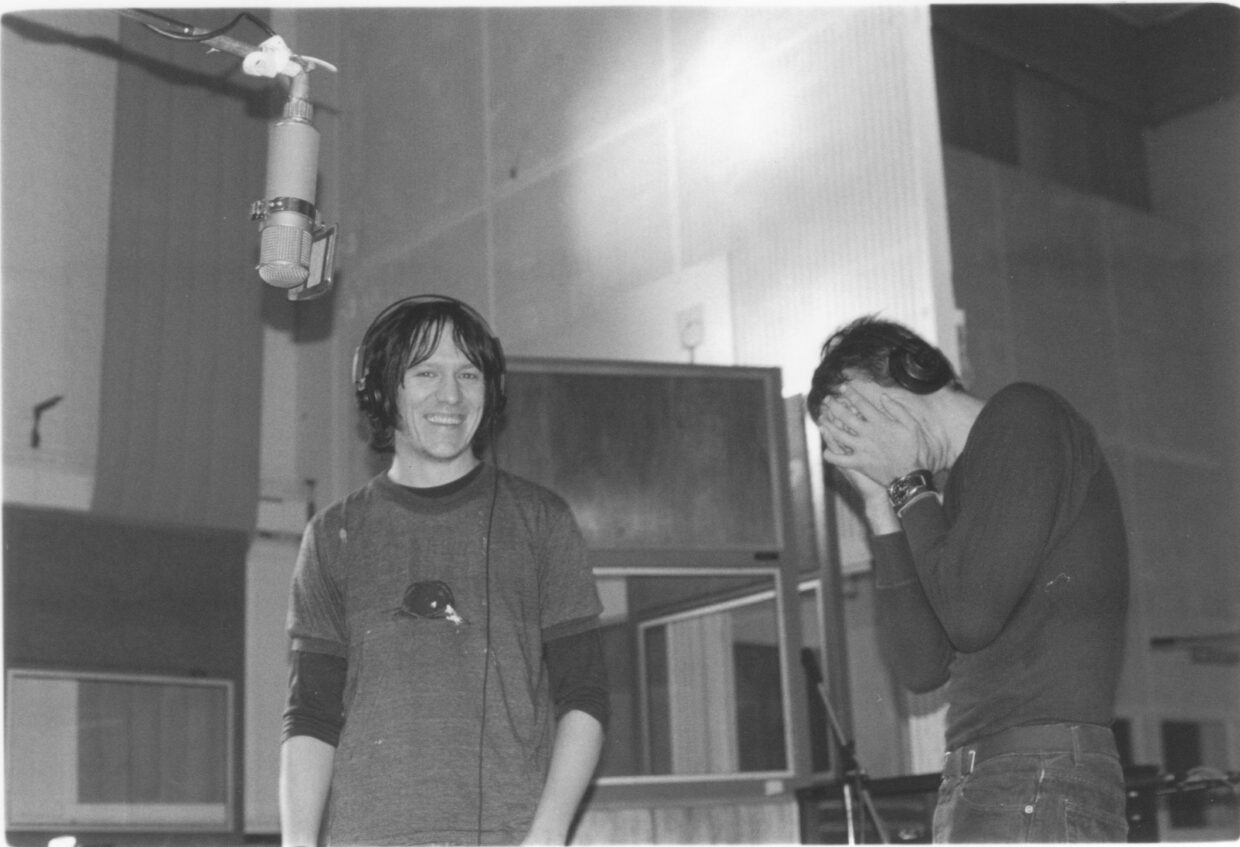 Elliott and Sam Coomes at Abbey Road, October 1998. Elliot described Sam as his only contemporary. Photograph by Joanna Bolme.
Even now, more than two decades after his death, Elliott remains not especially famous or fully understood, yet he is deeply cherished. The project of comprehending and safeguarding his legacy has become a shared endeavor. There are YouTube channels like I Remember Elliott; his old fan site Sweet Adeline, stubbornly beholden to the early web; oral-history blogs like so flawed and drunk and perfect still; Smiling at Confusion, a forum for posting guitar tabs and fingerings. Fans exchange bootlegs and unreleased songs, meditate on his lyrics, and gossip about the circumstances of his passing. Beneath YouTube videos there are countless comments praising his fingerpicking, debating whether his performance suggested intoxication or fatigue yet praising his honesty, thanking him for guiding them through depression or addiction, for making them feel less alone.
“Come here when I’m close to the edge, almost always these days.” “A few summers ago a good friend of my dad’s killed himself and I used to come downstairs at night when I couldn’t sleep and listen to this. I love you, Elliott.”
“He’s been saving me during this Covid insanity and the profound loneliness that’s come with it. Then again he’s been saving me for over twenty years.”
“Love you, Elliott. Wherever you are.”
Elliott inhabited a liminal era: late enough to benefit from accessible recordings and portable video cameras, early enough that what remains feels spare. A great deal has degraded—tapes turning to eerie muffled noise, videos with fuzzy images and pale faces. This fragility makes us cling to concerts where you can see Elliott’s leg bounce, hear his shy “Thanks” after a song as if he’s right beside you; we treasure performances where the roughness of a poor recording adds grit to his voice, or tapes that sound like they belong to the dawn of sound recording. We cherish anything that conveys a sense of presence because the stark absence is nearly unbearable.
On r/elliottsmith, people post pictures of themselves wearing Elliott Smith shirts bought on Etsy or TeePublic, designs for Elliott‑inspired tattoos, images of Figure 8 painted on bedroom walls, updates about restoring the Sunset Boulevard mural. They share memes about depression and leave heartfelt comments about listening to Elliott during depressive episodes or recovery, and they debate about whether he was on something or simply weary but clean, thanking him for guiding them through heartbreak or addiction, for helping them feel less alone.
We are both combative and affectionate the way a big family reunion tends to be.
Once I shared a recording of Elliott working through a tricky Moorish‑tinged improvisation before launching into “LA” at the Black Cat in February 2000, a tiny motif that I wasn’t sure anyone had noticed, and immediately someone requested the tabs. Of course I don’t have the tabs, I thought. No one has the tabs. This is the kind of delirious enthusiasm Elliott Smith sparks.
*
When fans argue, we’re ostensibly squaring off with one another, but we’re also contending with different versions of Elliott. Some perceive him as relentlessly morose, the “sadcore” singer the press hoped to cast him as. Others view his lyrics as a code to his relationships and life—nearly every line mapping to a real moment or person. As Elliott once explained, almost apologetically, “There are pieces of me in other people and I don’t really always know how much of a song is really me and how much is other people.” Listening to “Christian Brothers,” the second track on his self‑titled album, I found myself confronting the same question: the rising guitar melody climbing toward a confrontation; the high‑pitched hiss in his chorus; the soft threat of his swearing. The song is about facing a father figure, yet it instantly became a reflection of my own bond with my father. It felt like looking into a mirror that Elliott offered and recognizing a familiar face.
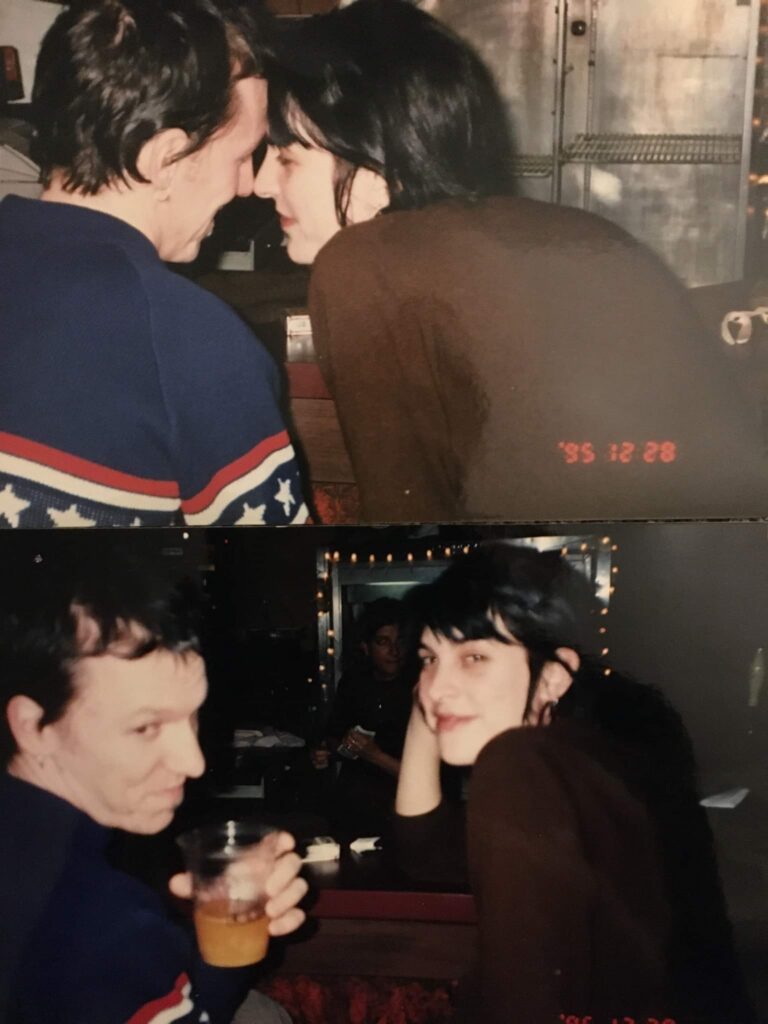 Elliott and Joanna Bolme at Satyricon in 1995. “I love that she loved him,” Neil says. “That she saw him and understood right away what his beauty was.” Courtesy of Bruce Greif.
When a creator passes away, who gets the credit for the art they produced and who becomes trapped in the shadow of their death? Endurance can help; Picasso outlived his Blue Period and Guernica for decades, yet his later years keep him perceived as a singular painter of mood rather than a broader poet. Leonard Cohen, at eighty‑two, kept producing profoundly melancholic albums—his last, You Want It Darker, arriving only months before his death—but because he wore a suit and spent time as a monk, he’s remembered more as a poet who wrote of melancholy than as a man defined by it. Elliott has been taken by a darkness that only fully consumed him at the end. It feels unfair, almost childish to mention, but he once quipped, “There’s kind of an inordinate amount of focus on whether I’m personally happy or not. If you have a bad dream, does that mean that you’re not a happy person? I mean, that’s the same place that songs come from.”
Elliott has been swallowed up by a darkness that fully consumed him only at the end. It’s never seemed—to use a childish word—fair.
People tend to remember him as a candid, almost diary‑like poet. That’s partly a misreading born of productivity; during the nineties he produced dozens of flawless songs at a rate that challenges comprehension. His close friend for many years, Neil Gust, recalls being astounded by the volume, recalling a remark by Allen Ginsberg about Dylan—how Dylan had become one with his breath, “a column of air.” “That’s where Elliott got,” Neil says. “He reached a point where everything lined up and he couldn’t miss.” Yet Elliott’s art was not merely spontaneous; like Elizabeth Bishop, he refined his phrases over years; like Chekhov, he examined his characters with a careful, compassionate distance, turning them over in his hands. Critics noted that his songs were “as full of mystery and suggestion as overheard conversations.” In the years after his passing, demos and early takes performed in concert reveal how meticulously Elliott trimmed and reshaped his words, sometimes altering lines after an album had already been completed. Luke Wood, his A&R rep at DreamWorks, recalls watching him draft four or five versions of the same lyric, revising pronouns each time. His longtime producer, Rob Schnapf, remembers Elliott discarding a finished song from XO because he disliked the word the. “That’s not even a word!” Rob jokes.
Elliott was miscast as a folk singer during his lifetime, which puzzled him; his music carries a strong pop backbone and a broader architecture that is distinctly Elliott’s own. Jazz pianist Brad Mehldau, who issued a tribute album last year, emphasized that Elliott was “deeply original” as a harmonist, with songs that move not by Dylan’s influence alone but by echoes of the Zombies, Fauré, and Wayne Shorter. “The ultimate effect is emotional,” Mehldau notes. “It’s an emotional landscape that isn’t limited to primary colors, but filled with pastels and soft blended hues.” Producer David McConnell, who worked on Elliott’s final album, describes a typical song as a sprint around a track; Elliott’s approach resembles a cross‑country journey—ongoing exploration with the terrain forever shifting. “He wasn’t predictable,” McConnell says. “He would even fool himself, and that’s exactly what he wanted to do. He wanted to fool everybody.”
Elliott left no single, comprehensive archive. Most correspondence vanished through old email accounts; he rarely kept documents. In interviews, he often bent the truth. One of the more complete collections consists of about 150 scraps—napkins and slips where he jotted lines. The rest of the material I collected from friends, former lovers, producers, scattered set lists, and material released for the first time. My account is also shaped by hundreds of bootlegs and access to unreleased recordings granted by his estate.
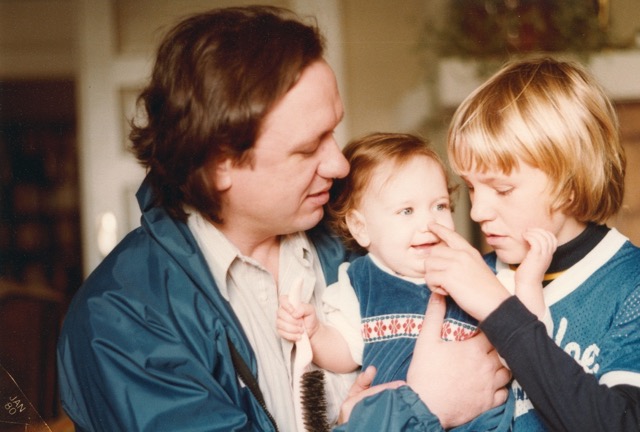 Gary, Elliott, and Rachel ca. 1979. Courtesy of the Smith family.
These scraps are precious and essential, yet not enough on their own. A proper biography of Elliott Smith must instead be built from oral history, from memories, and from interviews with roughly 140 people who knew him at different life stages—a mosaic that gradually reveals the contours of a human being. Elliott offered different faces in every encounter. “People are really kaleidoscopic,” he once noted, and I’ve tried to capture that quality in him. As his friend James Clark told me, “I don’t think anyone really understands him completely, which is how he’d want it.”
I’ve felt moved throughout this process by everyone who placed their trust in me. To some degree, that trust was earned slowly—typically taking a year, sometimes two or three, before many people agreed to speak with me—but it was freely given in the belief that a stranger who didn’t know Elliott could still tell his story. As Elliott’s friend Scott McPherson told me, “I thought you would be a good caretaker for this story.” “I think we all feel that way,” Larry Crane, the estate’s archivist, added.
I’ve aimed to give Elliott the biography he might have wanted, while recognizing that he may not have desired a biography at all. Consequently, I’ve written a book that centers on Elliott’s music and the music that mattered to him—the songs and artists that made him feel the way many of us feel about him. And I’ve written a book that places his life within the circle of people he cared about, including his family and nearly all of his romantic partners. I suspect he would have wanted that emphasis on the people he loved. Sometimes that has meant facing up to the heartbreaks he caused, including his own.
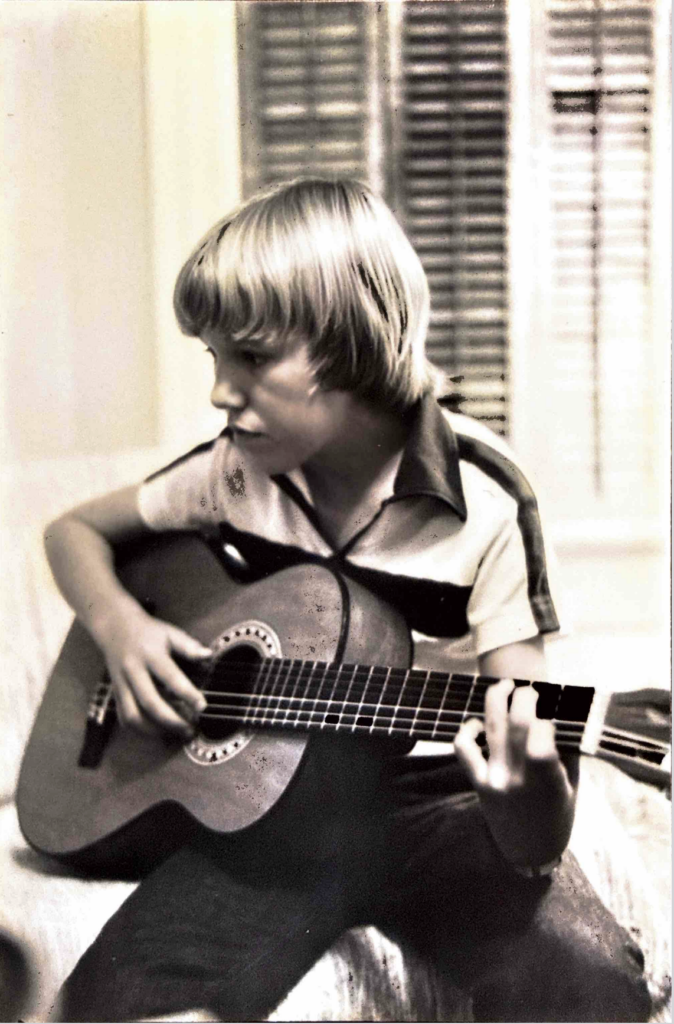 Elliott with the guitar his father gave him, ca. 1981. “When I was about twelve or thirteen, my dad gave me an inflatable raft and a nylon-string guitar for my birthday,” he said. “I liked the raft a lot better at first.” Courtesy of the Smith family.
Elliott’s lyrics acknowledge that some truths are hard and never quite improve. The brightness in his songs—the places where light finds a crack—emanates from his willingness to shine a light on difficulty, a line that feels like a fishing lure: “using all your strength to keep the world at an arm’s length”; “people you’ve been before / that you don’t want around anymore.” His songs trace our own inner contradictions and debates, the impulses that push us toward becoming the people we never intended to be or pull us back from the edge. The joy within his music—the counterpoint to its sorrow—resides in the melodies themselves. “I wrote a lot of sweet, happy melodies this time,” Elliott quipped about XO. “The songs aren’t really happy. But you can pretend they’re happy.”
At the Fonda in 2003, where he vowed not to finish on a sad note, he was more earnest. “Some songs are sad, but they make you happy anyway,” he says, looking delicate, knees drawn in, fiddling with the opening chords to “Strung Out Again.”
The tenderness of his voice, the comforting drone in “Roman Candle,” the eerie beauty of “Waltz #1,” the moment in “Pitseleh” when he reminds you that “no one deserves” the pain they endure, followed by a cascade of piano that sweeps you into compassion and human understanding—that is not merely pretend happiness; that is happiness.
______________________________
From Nobody Broke Your Heart: An Intimate Biography of Elliott Smith by Jamie Fisher, to be published on August 25th, 2026 by Dutton, an imprint of Penguin Publishing Group, a division of Penguin Random House, LLC. Copyright © 2026 by Jamie Fisher. Featured image: Elliott at the 9:30 Club in DC, May 2000. Photograph by Meagan Perkins