
In anticipation of the publication of my novella, American Moon, I’ve been thinking a great deal about the form. Novellas are tiny within the literary landscape, yet they can be incredibly well suited to readers who have to contend with time constraints. We all recognize how attention spans have narrowed in this era defined by social media and rapid gratification. So, could there be a moment more fitting for the novella—a literary form that first gained widespread traction during the Italian Renaissance (the 14th century)—to reenter the cultural conversation with renewed vigor?
As a former broadcast journalist, I’ve always favored compression that carries weight. Brevity paired with substance has been my hallmark. Through writing novellas, I’ve discovered a form that aligns more naturally with how I shape stories. For me, the conventional novel—especially something sprawling at 400 pages—can feel like an encumbrance, overwhelming for today’s reader.
That’s where the novella shines. It invites you to carve out a couple of hours on a rainy afternoon to immerse yourself in a strong tale, with time left over for a gym session, laundry, or a home-cooked meal.
There have always been short books, some widely recognized as novellas—ranging roughly from 20,000 to 40,000 words—yet they haven’t always been marketed as such. Publishing houses have historically treated the novella as an outsider, a stepchild to the “real” book—the novel. But attitudes seem to be shifting. As an author already circulating with two novellas—The Islander (Outpost19) and Sandman (Collective Ink Fiction)—and another on the horizon, I could not be more delighted, and readers should share in that excitement.
Now is the moment to welcome stories that carry genuine literary heft while respecting the fact that life demands your attention elsewhere. I urge you to try one or more of these contemporary novellas, settle into your favorite chair, and have faith in the potency of concision.
*
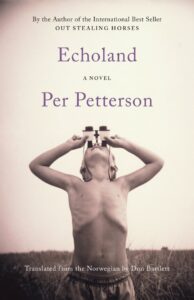
Echoland by Per Petterson (160 pages)
This coming-of-age narrative centers on a boy’s summer journey to Denmark with a family reeling from loss, a compact book that concentrates on a handful of days yet bears a heavy emotional load. The central figure, a boy named Arvid, grapples with misgivings about his family and the daunting task of facing grief that isn’t openly spoken. The tale delivers intimate, piercing moments that reveal the awkwardness of growing up, while Petterson’s prose turns the surrounding landscape into a living force that subtly interacts with the boy’s trauma.
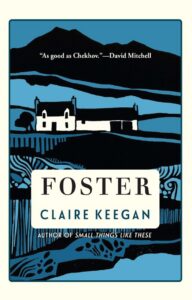
Foster by Claire Keagan (90 pages)
To me, Keagan’s strength lies in what she leaves unsaid—the hidden depths, the unspoken truths, and the inner life that remains guarded. Foster—so brief that some classify it as a short story, yet widely published as a standalone novella—is narrated by a young Irish girl, quiet to the point of almost breaking, whose family—mired in poverty—sends her to another household so her mother can give birth to another child. Secrets accompany the girl to her temporary home, while the family confronts inconceivable grief. The heartbreak remains largely unspoken, kindness surfaces in restrained actions, and love emerges from the margins of family pain.
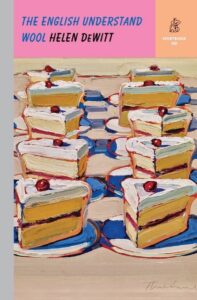
The English Understand Wool by Helen DeWitt (65 pages)
DeWitt’s narrator is a teenage girl whose exacting mother demands flawless upper-class behavior, the hallmark of a young woman from a privileged English milieu. One of these expectations involves how to conduct a fashionable life—the English interpretation of it—which her mother believes only the English truly grasp, particularly when it comes to wearing wool. Yet as the narrative unfolds, it becomes clear that the girl is trying to craft a memoir, a manuscript her editor insists must feel more intimate. The English Understand Wool is deft, humorous, and, through its twists, exposes the quirks and pretensions of the gilded class, fame, and the publishing world.
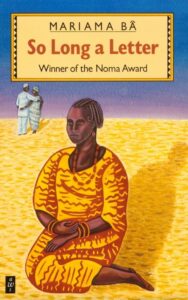
So Long a Letter by Mariama Bâ (90 pages)
Dating back to 1979, this novella stands as the oldest in the set, yet its force remains undiminished. The tale unfolds as a semi-autobiographical account from a Senegalese writer, presented as a letter from the protagonist, Ramatoulaye, to a dear friend, in the wake of her husband’s death. The letter discloses a betrayal rooted in a secret marriage and interrogates the trials of a single Muslim mother with several children. The narrative interrogates Islamic cultural currents, colonial history, and the pressures of society.
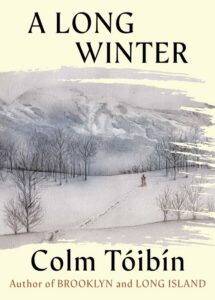
A Long Winter by Colm Tóibín (135 pages)
Similar to Foster in its trajectory, Tóibín’s work began life as a short story and appeared in 2005. In 2025, it was issued as a standalone novella, carrying the weight and resonance of a full-length novel. Set in the foothills of the Spanish Pyrenees, the narrative follows a missing alcoholic mother—likely to have departed her home during a ferocious snowstorm and returned to the village of her youth. A desperate search unfolds to locate the mother or, failing that, to uncover her frozen fate. The prose is musical yet economical, and the tale is a heartrending meditation on loss and regret.
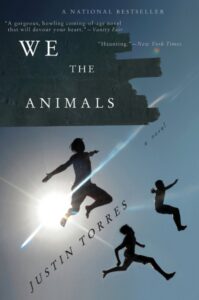
We the Animals by Justin Torres (128 pages)
This is a fierce coming-of-age tale. It concentrates on the lives of three unruly brothers as they navigate questions of identity amid a chaotic family landscape and the rough edges of boyhood. Told from the perspective of the youngest sibling, who grows up with his brother and their Brooklyn-born mother and father in upstate New York, the family’s dynamics—especially the mother’s graveyard shift and the father’s volatile temper—shape the narrative. The eldest brother even hatches a plan to harm their father and attempts to recruit the younger siblings to participate. Torres’ prose can be lyrical and at times austere, but it remains magnificently expressive throughout.
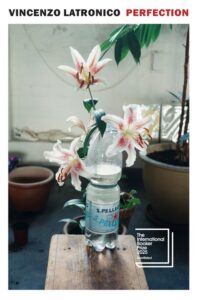
Perfection by Vincenzo Latronico (136 pages)
Chasing the ideal life can be admirable, yet the chase risks becoming all-consuming. Latronico’s tale follows a young couple who pursue a final, flawless existence amid a world saturated with glamorous images and technology that fuels the illusion of happiness. Split between a Southern European origin and life in Berlin, they drift further from the people and places they once called home as they struggle to turn the glossy dream into reality. Perfection, a contemporary tragedy in many respects, earned a longlisting for the 2026 Booker Prize. Read it, and you’ll understand why it’s resonant.
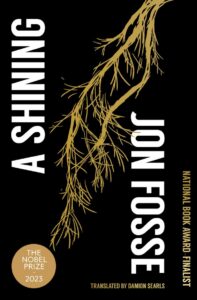
A Shining by John Fosse (112 pages)
The opening of this novella unfolds like a chilling fable: a battered car stranded in a remote forest, its driver venturing on foot through deep snow in search of help, passing deserted rural dwellings as darkness closes in. Fosse, a Norwegian writer who received the 2023 Nobel Prize in Literature, writes with a tenderness that honors both the tangible and the spiritual realms. The tale unsettles as the protagonist hears whispers in the night, encounters eerie visions of his parents, and imagines a solitary man walking barefoot in the cold. A Shining sits somewhere between a parable and a luminous mystery, all told in a little more than a hundred pages.
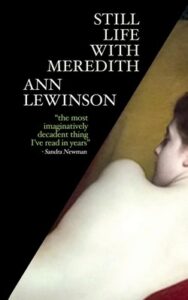
Still Life with Meredith by Ann Lewinson (104 pages)
This is far from a reserved work. Lewinson blends sexual provocation, sharp humor, outlandish behavior, and, quite strikingly, an assemblage of dead birds, delivering a literary ride that feels electric from start to finish. The prose carries a current of energy, a dangerous undercurrent that extends beyond the narrative and into the very way language moves. One reviewer even compares Still Life with Meredith to a funhouse mirror—deceptions and realities blur, and the message runs deeper than the page count would suggest.
_______________________________
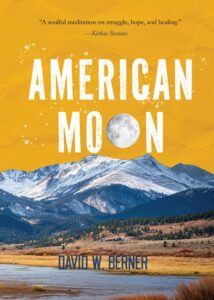
American Moon by David W. Berner is available from Regal House Publishing.