September is my birthday month, so this latest crop of sci-fi, fantasy, and speculative books feel especially like presents for me, but also for you! Fantasy heists, magical spy thrillers, dystopian abortionists, parallel-universe marriage stories, deepfake Dorian Grays, houses dying to be haunted—what more could you want? Let’s not forget the extra goodies from our 2026 SFF preview, Freya Marske’s Bodies of Magic and Emily St. John Mandel’s Exit Party!
*

Scott Hawkins, Blacktail
(Crown, September 1)
The first book in more than ten years from the author of the beloved modern horror cult classic The Library at Mount Char arrives with fanfare and a wry, unsettling pulse. In a forest where a long-standing, rigid order governs the hunter-prey dynamic—wolves clashing with feline hunters, hybrids alternately accepted or rejected by their own groups—the intrusion of humanity disrupts all those old grudges. Out of this upheaval steps Blacktail, a half-wolf who ascends to become the Dark Champion of the Forest God. His reign of violence begins as a personal vendetta against humankind but grows toward an edge-of-apocalypse scale. Along his journey, he encounters a host of animal allies who are determined to see the human world come to an end.
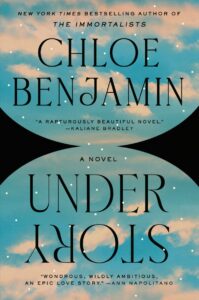
Chloe Benjamin, Under Story
(Putnam, September 1)
Laurel Salter, a thirtysomething scientist studying mycelium, flees her work and the collapse of her marriage for the isolation of Antarctica’s McMurdo Station. Beyond its borders lies the Arc, an otherworldly glow that captivates a crowd of physicists—Eli, her ex-husband, among them—urging him to probe its effects. His findings lend credence to a theory of the antiuniverse, a parallel realm where time runs in reverse. Yet it is Laurel who feels the strongest pull toward that alternate reality, drawn by the chance to mend the shattered bond between them. This reads as a speculative riff on The Last Five Years, and I’m already bracing for the emotionally charged payoff.
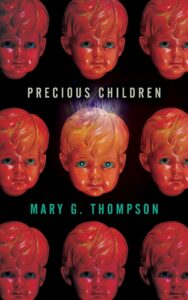
Mary G. Thompson, Precious Children
(Tachyon Publications, September 1)
This dark speculative novel could pass for a Black Mirror episode with its stark examination of parents willing to do anything to reclaim a child, paired with a bleak portrayal of the privilege that festers in such desperation. In a future where a child’s lifespan is tragically shortened, the fertility company Generations, Inc. offers a ruthless remedy: the cloning of the child and the uploading of the original consciousness into a new vessel. These doubles have minds of their own and are raised by foster families who’ve cared for them. When the Blakes request the third iteration of their teenage son Geoff, the mind of a boy named Nathan Donovan must be swapped into a new form—and the transfer fails, leaving two consciousnesses fighting for survival. Meanwhile, Geoff’s sister Di grows convinced that Geoff 2.0 may be a con artist. The narrative nods to legendary tales of missing children who turn out to be impostors, all while probing the murky ethics surrounding embryo donation and related fertility gray areas.

Premee Mohamed, Wickhills
(Tor Books, September 8)
A fantastical spy thriller set on the streets and subterranean passages of a magical city? Count me in. Wickhills centers on Vycol Ferec, a field-smart operative for Seaborne, an intelligence outfit that handles top-secret missions. When his latest mission yields a defecting scientist who may be concealing an apocalyptic device, the mission backfires on him, forcing him to flee the city he’s supposed to master. Now he must navigate a world where he barely recognizes the reality around him, reconfiguring his ideas of right and wrong and wondering who truly qualifies as the good guys. The book promises a setting that lingers long after you close the pages, from Wickhill’s living, quirky foundations to the city’s centuries-old residents who may hold the key to the empire’s true nature.
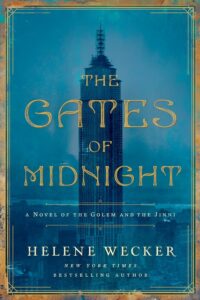
Helene Wecker, The Gates of Midnight
(Harper, September 15)
Helene Wecker’s historical fantasy trilogy—begun with The Golem and the Jinni—draws to a close in 1930s New York. Three decades have passed since Ahmad the jinni hidden the flask containing the captured Yehudah Schaalman in the Syrian desert. When Schaalman tricks a stranger into unearthing the flask, he returns to the city with a vendetta against Chava the golem, who simply wants to nurture her Brooklyn garden sanctuary in peace. At the same time, Ahmed has fallen on hard times after the 1929 stock-market crash, and a riveter working on the Empire State Building is not without his own ties to the others. The pieces start to collide as the city faces a new, dangerous convergence.
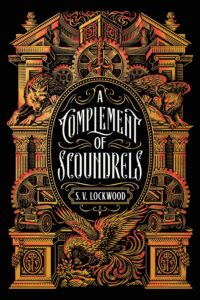
S.V. Lockwood, A Complement of Scoundrels
(Bindery Books, September 22)
I have a soft spot for a clever heist, and I’m buzzing to see more female-led capers this year, with C.L. Polk’s The Feywild Job joining S.V. Lockwood’s debut. The main player, Myria, a thief with a long record of loyalty to herself, is plotting to extract revenge on her former master who languished her in Carintheum’s jail. Her plan includes reuniting the old crew, persuading a crafty ally to join the scheme, and deciding if a new partner’s feelings muddy the task. It’s shaping up to be a tangled, high-stakes misdirection—in the best possible sense.

Alma Katsu, Incarnate
(G.P. Putnam’s Sons, September 22)
A contemporary spin on The Picture of Dorian Gray filtered through social-media algorithms, Alma Katsu’s latest work feels very much in dialogue with Yesteryear. A failed influencer, Dorothy Wagner, resolves to reinvent herself as Isabella, a remarkably lifelike deepfake who quickly racks up millions of followers. But what happens when so many people insist that Isabella is real—is it possible that the illusion gains enough traction to become dangerous to her creator? Much like Frankenstein, will Isabella press for her own existence, independent of her origin?
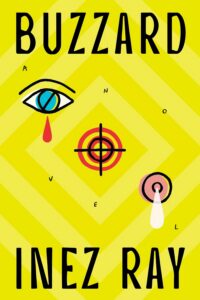
Inez Ray, Buzzard
(Bindery Books, September 22)
In 2086, fertility is monitored by corporations and abortion is prohibited. Midwife Mae Bastet, serving a sentence for infanticide, has spent seven years away from her children in Buzzard, the private prison overseen by the paramilitary conglomerate Obsityan. Her official duties involve keeping an eye on the health of teenage drone pilots, but when one of these adolescents becomes pregnant, Mae faces a deeply personal dilemma: should she fulfill her obligation as a caregiver at the risk of losing contact with her own children, or align with Obsityan’s misdeeds and potentially betray her own family?

Micaiah Johnson, The Unhaunting
(Putnam, September 29)
From the author of The Space Between Worlds comes a horror debut that begins with a timely premise: three lifelong friends attempt to build a home together after inheriting a Civil War–era manor. Shantell approaches the prospect of Abernathy House with warranted skepticism—bequeathed to her friend Avery and his contractor brother Tobias, the place seems dreamy at first. Yet the moment they step inside, something disquietingly tender begins to erase their anxieties. Is it a harmless calming effect, or something far more insidious? The plot thickens as echoes of Abernathy’s past—ghosts from the home’s 170-year history and a Confederate-era daughter who longed for a safe, stable dwelling—hint that the house itself might be yearning to shed its calm-and-comfort image and transform into something altogether different…