During graduate school, I finished the novel that found me an agent—but when my agent submitted it to publishers, all twenty of them turned the manuscript down. Truthfully, it was closer to a collection of loosely-linked short stories, and the feedback from editors was consistent: Pretty sentences. But nothing really happens.
This is not to impugn books in which little happens! I love those books, which is why I tried to write one. As a teenager, I revered realist literary fiction, stories whose epiphanies emerged from quiet, interpersonal moments—stories that needed no pyrotechnics to move me as a reader. I wanted to write like that, and to be taken seriously in the way of those writers. I feared allegations of sentimentality, avoided melodrama, and wrote characters so faint that even my agent once delicately suggested that a protagonist “get a hobby.”
Of course, I was devastated when my novel-in-stories died on submission. After I recovered, though, I saw the truth of the feedback. Many writers do a beautiful job with subtle fiction. I just wasn’t one of them. I thought, too, of the books that shaped my brain as a young reader, like A Wrinkle of Time and His Dark Materials: epic science fiction and fantasy that introduced me to other worlds while also paying close attention to prose and character. What if I tried to write a book like that?
My first two novels are ultimately realist, though each has a speculative element. The Anatomy of Dreams follows two dream researchers working beneath a charismatic but ethically-questionable professor. In The Immortalists, four siblings visit a fortuneteller who claims to be able to tell anyone their date of death. But Under Story, in which a divorced couple discover a time-bending parallel universe, is the first time I committed fully to genre fiction.
I felt intimidated. To write about our world well is challenging enough; to write well about an imaginary world is a different, riddle-strewn gauntlet. There were so many issues to brainstorm, so many problems to solve and reversals to think through. By the end of the day, I was often so mentally exhausted that I struggled to think of words. But the process was thrilling, too. I wrote the first draft over five years, immersing myself in its worldbuilding, crosshatching real science with invented elements. I wanted to be meticulous enough that readers could give themselves permission to believe—to do a magic trick so airtight that it would feel real even to me.
But I didn’t want the worldbuilding to overshadow the heart of the novel: the story of a single couple’s grief and healing, their under story. In many ways, it’s the story of my healing from years of chronic pain, though there isn’t a migraine in the book. Still, Under Story is about the devastation of a life that breaks down and the miracle of the life that blooms from those ashes. It is a tribute to the fact that existence is always both/and, not either/or: pain and pleasure, loss and love.
In early interviews, I’ve been asked whether I received any pushback from my publisher about the cross-genre nature of the novel. I’m glad to be able to say that I haven’t. In the past, genre titles and authors were often shunted into discrete lanes—but I have the sense that this changing. Perhaps it has to do with the success of films like Christopher Nolan’s Inception or TV like Zal Batmanglij and Brit Marling’s The OA, both of which are high-concept and beautifully-executed. Or maybe it relates to the fact that the real world feels increasingly surreal, even genre-bending itself. Our political system vacillates between absurdism and horror. Developments in AI drag us, willingly or unwillingly, into a technological landscape that often feels like science fiction. (I am among the unwilling; I refuse to believe that my life would be better if I’d just outsource my mind.) In this context, science fiction and fantasy offer a mirror as well as a line of hope. Perhaps it isn’t too late to change our trajectory—and perhaps alternate visions of the world, and of the future, can give us ideas.
Below are some of the literary-leaning science fiction and fantasy titles that inspired me along the way.
*

Jorge Luis Borges, Ficciones
These fantastical tales blend multiple genres—from the magical realism often associated with Borges to the detective form. Borges is relentlessly imaginative: I admire the almost lawyerly rigor with which he defends his inventions, challenging us to believe him. In “Tlön, Uqbar, Orbis Tertius,” he conjures an “undocumented country” that combines intellectual rigor with playful whimsy, from that nation’s language (“There is no word corresponding to the noun moon, but there is a verb to moon or to moondle”) and its views on literature (“The concept of plagiarism does not exist; it has been established that all books are the work of one single writer, who is timeless and anonymous”) to its notion of hrönir—“secondary” versions of lost objects that appear only a little larger than the originals—and its musings on time, with one school insisting that the whole of time has already occurred and our life is a vague memory of a distant, unreliable process, while another school posits that the universe’s history is the handwriting of a minor god used to converse with a demon. It’s impossible not to feel both enlightened and delighted.
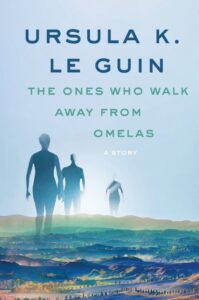
Ursula K. LeGuin, “The Ones Who Walk Away from Omelas”
I don’t know that a perfect novel exists (they are simply too large, too richly textured by nature), but I do believe the apex of short fiction can be achieved: “The Ones Who Walk Away from Omelas” is one of those rare five-page masterpieces, economical and metaphorically brilliant—a fable about capitalism that invites numerous readings.
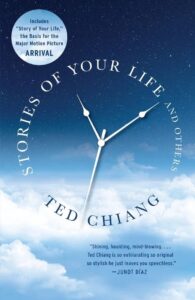
Ted Chiang, Stories of Your Life and Others
Ted Chiang’s short stories feel like thought experiments, each crafted with meticulous care and integrity. They engage science without dryness, and they probe moral questions without becoming pedantic. The centerpiece novella of the collection (“Story of Your Life”) ranks among my favorite writings—perhaps the finest example I know of in the realm of soulful science fiction. As a writer drawn to aliens but weary of narratives that end in war, I was captivated by how Chiang interlaces time and language while imagining a new species. I still regard this piece as a gold standard for moving, soul-deep science fiction.
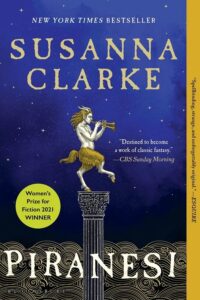
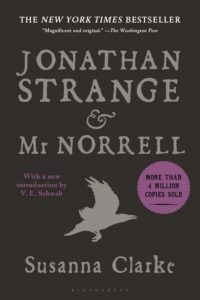
Susanna Clarke, Piranesi and Jonathan Strange & Mr. Norrell
There is something I need to admit. The first time I began reading Jonathan Strange & Mr. Norrell, I stopped after about seventy-five pages. Even though friends whose taste I trust urged me on and the prose sang to me, a stretch about naval magic slowed me down, and I worried the rest of the book would lean more toward military fare than I typically enjoy. Years later, after falling for Piranesi, Clarke’s other novel, I concluded I had to give Strange & Norrell another chance. I would have missed something remarkable otherwise. This is a top-tier favorite of mine; it spans almost nine hundred pages, and I would happily reread it twice over. Strange & Norrell blends political and scholarly satire with a sincere, radiant belief in magic, mystery, and art. It’s also technically audacious, even risky (Jonathan Strange, the titular figure, is introduced after pages of narrative, even in a footnote), and it’s filled with heart and humor.
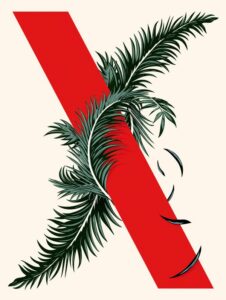
Jeff VanderMeer, The Southern Reach Series
VanderMeer’s haunting series has earned labels like “eco-horror” and “cli-fi”—neologisms that feel fitting for how contemporaneous the books feel, even though they swirl in fantastical elements. They chronicle investigations into Area X, a stretch of coastline where nature behaves in uncanny ways. Saying more would spoil the thrill of this ride, which remains wildly inventive, often surreal, and utterly original. I’ve never encountered anything quite like it.
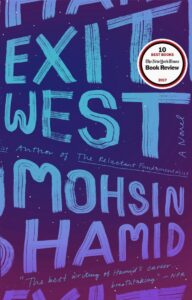
Mohsin Hamid, Exit West
Exit West envisions the refugee crisis through a potent magical-realist lens. Saeed and Nadia inhabit an unnamed nation torn by civil strife—and meanwhile, rumors swirl of strange doors, portals that transport people elsewhere. The fusion of gritty realism with a fantastical mechanism offers a parable-like reframing of the world. At the same time, Hamid carries a light touch and moments of humor, even as his characters endure the unbearable. Grief accompanies these people, yet it does not erase their capacity for other emotional experiences. When I finished Exit West, a line from Samuel Beckett—“I can’t go on, I’ll go on”—felt especially apt for human resilience.
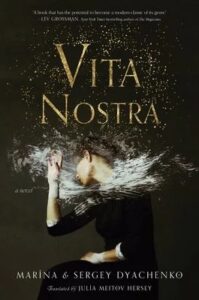
Marina and Sergey Dyachenko, translated by Julia Meitov Hersey, Vita Nostra
My friend Brittany Cavallaro provides some of my favorite recommendations because she knows I crave immersion. Reading Vita Nostra—authored by a Ukrainian couple and set in Russia—means stepping into a metaphysical academy where rain lashes the streets, streetlamps glow, radiators clank, enigmatic professors lecture, gold coins glint, overnight trains fracture time, damp leaves fill the air, danger is mortal, and a mind-bending transformation awaits. The narrative follows teenager Sasha Samokhina as she begins at the Institute of Special Technologies. The professors there teach something nearly indecipherable, and for years neither Sasha nor her peers can quite grasp what it is. While reading Vita Nostra, I felt as though I, too, were a student at that institution, poring over their texts and undergoing my own metamorphosis. The full revelation is as satisfying as any fantastical idea I’ve encountered.
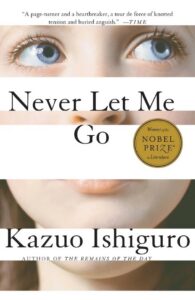
Kazuo Ishiguro, Never Let Me Go
My first novel, The Anatomy of Dreams, drew a great deal from this one. Kathy’s voice hooked me—the quiet turmoil beneath a calm surface, nostalgia pressing against melancholy—and something clicked in my own writing. It’s fair to say Ishiguro handles these kinds of questions better: Never Let Me Go grapples with science, ethics, and creativity in a way that shatters affectations. Ishiguro often blends literary and genre modes, from the uncanny fantasy of The Buried Giant to the noirish suspense of When We Were Orphans. The way he shapes memory makes it feel like a genre of its own—never quite realist, with edges that ripple and an unsettling flexibility about what is real.
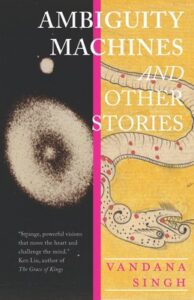
Vandana Singh, Ambiguity Machines and Other Stories
Singh, who is also a physicist, grew up in New Delhi, and many of her stories fuse Indian myths and landscapes with otherworldly phenomena. There’s a strong environmental current in her work that reminds me of Robin Wall Kimmerer: in one story a newly invented energy grid depends on fungal networks; another imagines a planet where beings connect through kinship. Each tale packs a novel’s worth of plot and character, and the prose is lush yet precise—musical, surprising, and deeply moving. For reasons I can’t fully explain, reading these stories often moves me to tears, even as they fill me with hope. In particular, the final tale, “Requiem,” envisions an anti-corporate uprising in which humans ally with animals. Singh’s collection reinforces my belief that collective imagination can be a mighty force and that creativity remains a potent instrument for change.
__________________________________
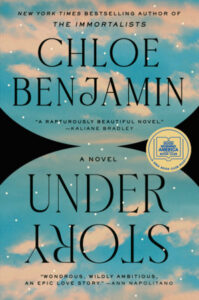
Under Story by Chloe Benjamin is available from Putnam.