
Is there a German term that functions as the opposite of “doppelgänger” — not the eerie, clone-like twin, but the secretly aligned foe who embodies everything one detests and, in turn, detests what one stands for? If such a word existed, Bertolt Brecht might have embodied it for Vladimir Nabokov. It would be hard to imagine two writers more dissimilar interiorly, living in the same city at roughly the same historical moment. While Nabokov longed for a vanished aristocratic ancien régime, Brecht actively promoted a proletarian future in which the oppressed would finally triumph over their exploiters. And where Nabokov kept his political leanings (if any) tightly shuttered, Brecht displayed them openly — or, more precisely, hoisted them on banners thrust before his audiences.
Brecht, born in Augsburg in 1898, was only a year Nabokov’s senior, placing them at roughly the same age during those two defining years of youth: the Great War and the Russian Revolution. For Nabokov, the war was a historic happening distant in time while the Revolution remained a permanent catastrophe; for Brecht, the reverse was true. Although he never formally joined the Communist Party, Brecht was known to feel sympathy for the Soviet revolutionary project, and he wove those class sympathies into most of his work. Yet his leftist politics did not keep him from engaging deeply with aesthetic questions as well. Like Nabokov, he began as a poet, and in the end, perhaps ironically, his lifelong devotion to poetry proved more consequential for German letters than Nabokov’s early verse was for Russian literature.
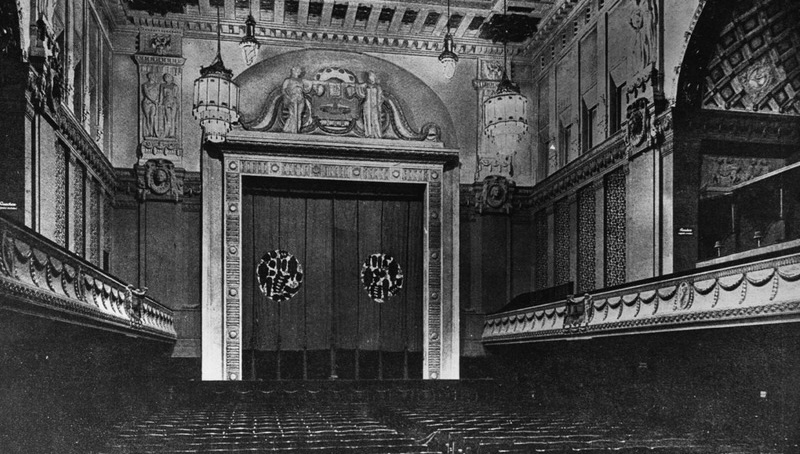
But it was not as a poet that Brecht became renowned, either in the Berlin of his day or in the wider world. His fate was to be celebrated as a playwright and as a theatrical collaborator, first with the dramaturgical innovator Erwin Piscator and later with the composer Kurt Weill. Brecht’s instant fame arrived soon after he turned thirty, when his second (or perhaps third) collaboration with Weill, The Threepenny Opera, opened at the Theater am Schiffbauerdamm on August 31, 1928.
The work’s profound effect on the world that came after it…has been so far-reaching as to obliterate any possibility of seeing or hearing it afresh.
Although some critics and a handful of audience members were initially startled by this odd hybrid — not quite an opera, not quite a play, not merely high art or cheap entertainment, not purely satire or straightforward political commentary, but a singular blend of all of the above — the production soon earned recognition as a major success. In his capacity as the Berliner Zeitung am Mittag’s cultural correspondent, Billie Wilder published a piece on October 22, 1928, celebrating the fiftieth performance of The Threepenny Opera and noting that the “opera’s enduring appeal owes to a fusion of outrageous wit and social criticism.” He credited Kurt Weill’s music as a major component of that charm and concluded by observing that “There was as much applause for this fiftieth performance as there had been for the first.”
About a month earlier, the aesthetically particular Count Harry Kessler had attended the show as well. “In the evening I saw Brecht’s Dreigroschenoper, music by Weill,” he wrote in his diary on September 27. “A captivating production, with minimal staging in the Piscator manner and a proletarian emphasis (apache style). Weill’s music is catchy and expressive and the performers (Harald Paulsen, Rosa Valetti, and so forth) are excellent. It is the show of the season, always sold out.”
Later that autumn, at a grand party hosted in Piscator’s apartment — an “attractive, bright flat, designed by Gropius” — Kessler could not refrain from recounting his encounter with the playwright himself. “I was introduced to Brecht,” he records on October 30, 1928. “A strikingly degenerate appearance, almost a criminal look, black hair and eyes, dark-skinned, a suspicious expression; very nearly a typical troublemaker. Yet when he talks, he loosens up and comes close to naïveté. I told him, apparently to his delight, stories about d’Annunzio. Superficially, at least, he has a head on his shoulders.” Despite that last gesture of praise, the snobbish count would not renew his acquaintance with the self-styled proletarian playwright, and indeed he did not.
From a distance, it is hard to pinpoint what made those early performances of The Threepenny Opera so remarkable. This is true of any live show, of course, but in this case the problem is intensified by history. The work’s far-reaching influence on later developments in theater, jazz, graphic art, film, and even television advertising has been so expansive that it makes it nearly impossible to experience it anew in the present.
Even in its own time, it was seen as both unusually original and a deliberate echo. Loosely adapted from John Gay’s The Beggar’s Opera, the story unfolds in a fictionalized London populated by English-sounding names like Peachum, Brown, and Macheath. All of the characters are, to one degree or another, criminals (perhaps explaining why Kessler linked Brecht’s appearance to them); even the police officers are depicted as corrupt, and the sheriff may be the most roguish figure of all. The central figure, Mack the Knife, is at once alluring and repulsive, and the part thrives when neither trait is neglected. Brecht’s affinity for his flawed hero seems clear in 1929, when he was captured on tape singing Mackie Messer’s theme, “Die Moritat von Mackie Messer,” in a flawless two-minute rendition. Or perhaps the point is simply that by 1929 the song was so ubiquitous that an author who did not sing could still help it become a hit. The Weill score, as everyone noted, was brilliant, ranging from brassy showmanship to tender restraint, all touched by a minor-key edge that gave each line a fresh memorability.
In the year following its premiere, The Threepenny Opera was staged more than three hundred times at Schiffbauerdamm alone, with another four thousand performances scattered across theaters throughout Europe. Yet nothing endures forever, and by the summer of 1929 the management of the Theater am Schiffbauerdamm was ready for a different production. And who better to supply it than Brecht and Weill?
Happy End, their first project after The Threepenny Opera, opened on September 2, 1929, and lasted less than a week. It proved to be a disaster, financially and artistically. Although numerous flaws contributed to the downfall, the central one is that the later opera could only be seen as a pale reflection of its predecessor. Set among criminal types in Chicago rather than London, it featured similarly endearing yet repellent characters, delivered in a mode as sardonic as before. Most damaging of all, the songs in Happy End tended to resemble dull, repetitive echoes of the best melodies from The Threepenny Opera. Pieces such as “Surabaya Johnny” and “The Bilbao Song” shared chord progressions and rhythms with “Pirate Jenny” — a signature moment sung memorably by Lotte Lenya, the composer’s wife — and audiences who had delighted in the original were reluctant to hear them again so soon, particularly in recycled form.
*
Meanwhile, at Piscator’s rival theater on Nollendorfplatz, a completely new current was emerging. Erwin Piscator, four or five years Brecht’s senior, had already been a major force in shaping the Weimar era’s “epic theater,” the form Brecht would later claim as his own. Piscator, who primarily worked as a stage manager and director rather than a writer (though he published a 1929 volume titled The Political Theatre), was regarded as one of Berlin’s most forward-looking theater collaborators. He had collaborated with Brecht and Weill as recently as 1928, helping Brecht adapt The Good Soldier Schweik and engaging Weill to compose incidental music for Leo Lania’s play Oil Boom, all of which Piscator directed at his own theater, Piscator-Bühne. Now, however, he enlisted a new pair of collaborators—Moholy-Nagy for set design and Hanns Eisler as the composer of the songs—to stage Walter Mehring’s new work, The Merchant of Berlin.
Mehring, a Berliner by birth who had made his name as a satirist, poet, and cabaret lyricist, identified as an anarchist and a Dadaist. He published many brief pieces in left-leaning outlets like Das Tagebuch and Weltbühne, and he was a friend of the painter Georg Grosz. Like Grosz, Mehring harbored a wary stance toward the New Objectivity’s realism while wanting to employ it as a tool to critique society. On the one hand, he and Grosz sought to expose the conditions of life endured by the disenfranchised and to advocate for the oppressed. On the other hand, they longed to break from strict realism into the territory of satire and metaphor. As Grosz confided to Harry Kessler (in the same conversation where Kessler first met Brecht), “Reality as such does not interest me… what I aspire to is the fabulous. The camera can capture many intriguing scenes, but never the magical effects of drawing.” Mehring, in his own medium, seems to have aimed for a similar magic in words.
This was shocking, but of course it was meant to be. And where did one draw the line, anyway, between allowable excess and disruptive public discourse?
Der Kaufmann von Berlin deliberately alluded to Shakespeare’s Merchant of Venice in its title and in aspects of its plot. This echo would have been familiar to educated Germans, given the long-standing claim that Shakespeare belonged to German culture — a notion reinforced by the nineteenth-century translations of Schlegel. Mehring’s updated version of the tale follows an Eastern European Jew named Kaftan who arrives in Berlin in 1923 with a mere hundred dollars and promptly maneuvers himself into immense wealth by capitalizing on the era’s hyperinflation. Like Shylock with his Jessica, Kaftan has a daughter named Jessi whom he adores. Like Shylock, he is persuaded by a Gentile to embark on an imprudent and dangerous venture. But unlike Shylock — a fully formed, morally intricate figure capable of eliciting both repugnance and sympathy — Kaftan becomes a caricature, or at least a type, designed to symbolize the entire category of shtetl Jews. He is portrayed as credulous almost to the point of silliness, easily misled by others’ temptations and schemes, and the antisemitism directed at him comes not only from the Gentiles who deceive him but also from the assimilated Jews he encounters in Berlin. In this sense, Mehring’s drama echoes Einstein’s critique of wealthy German Jews who scorned their poorer eastern countrymen.
The plot lurches between the fantastical and the plausible. The brutal inflation of 1923 and the ascent of nationalist forces are depicted in their stark reality, yet the extent of profiteering and the orchestration of right-wing coups are exaggerated for dramatic effect. Mehring populates his world with petty criminals, unscrupulous lawyers, Galician Jews, Freikorps heavies, global and local businessmen, Prussian generals, and the ordinary denizens of Berlin’s older, somewhat shabby center. No one escapes censure; if anything, the pretentious Jewish elites appear almost more vicious than the right-wing conspirators, who are portrayed as mercenary and power-hungry rather than ideological.
The dialogue itself brims with the language of its era and setting, mixing Berlin street slang with high-society clichés, casino banter and capitalist jargon, Yiddish, and literary German. The Yiddish, especially in the exchanges between Kaftan and his daughter, is so pervasive that it may have been beyond the grasp of a conventional German stage audience. The daughter, by the way, is a tuberculosis patient in a Swiss sanatorium (a nod to Thomas Mann’s The Magic Mountain, which had already enjoyed acclaim five years earlier). Her medical fate becomes the lure that the schemers use to trap Kaftan, though Mehring’s satirical style affords little emotional resonance for such humane ground.
For Mehring—who was Jewish himself, though not religiously observant—The Merchant of Berlin may have served as a vehicle for addressing antisemitism not only as a broad social ill but also as it manifested within Berlin’s Jewish community. For Piscator, coming to the play from a strongly Marxist vantage, the central concern was class conflict. He staged the work on a four-tiered set that spatially separated the strata of society, stressing how the money-driven exchange that underpins commerce corrodes human ties. Mehring’s choice to situate the drama in 1923 was a deliberate move to underscore the volatility spawned by runaway inflation. In a moment when money has no steady value, everyone’s social standing is precarious: even the wealthy, whose cash usually shields them, find themselves skating on thin ice, uncertain when they might be pulled under. Kaftan’s possession of American currency, rather than German money, turns out to be essential to his success — a fact he only grasps after foolishly flaunting his dollars in a tavern to gain service from an antisemitic proprietor.
When the production premiered on September 6, 1929, it immediately provoked a substantial scandal. Mehring faced accusations in various newspapers of promoting pro-Jewish agitation and of uttering antisemitic hate speech. Guided by Joseph Goebbels, the Sturmabteilung — the SA — staged a large protest outside the theater. In addition, Goebbels prepared and distributed a pamphlet titled “To the gallows!” that directly attacked Mehring and his work. Although some Berlin writers offered muted, potentially mixed defenses (one satirist, Kurt Tucholsky, praised Mehring as “the first plane over Berlin”), Mehring ultimately judged it necessary to leave Germany, first for Paris and then for Vienna.
The Goebbels pamphlet in question seems to have vanished, but another of his 1929 screeds, published under the satirical heading “Those Damn Nazis,” gives a sense of its tone. “The Jew is the cause and beneficiary of our slavery. He has exploited the social misery of the broad masses to widen the terrible rift between the right and left of our people,” he writes. “The Jew caused our problems, and lives from them… He has ruined our race, corrupted our morals, hollowed out our customs and weakened our strength… Where he finds filth and decay, he surfaces and begins his butcher’s work among the nations… The Jew is uncreative. He produces nothing; he only deals in bargains.” At one point, as if answering Shylock’s exasperated cry “Hath not a Jew eyes?” he concedes that “the Jew, after all, is a human being. Certainly, none of us doubts that.” But after conceding that much, he retracts it: “We only doubt that he is a decent human being… If someone slaps your mother in the face, do you say: ‘Thank you! He is, after all, a human being!’ That is not a human being, it is a monster. Yet how much worse has the Jew done to our mother