
This first appeared in Lit Hub’s Literary History newsletter—sign up here.
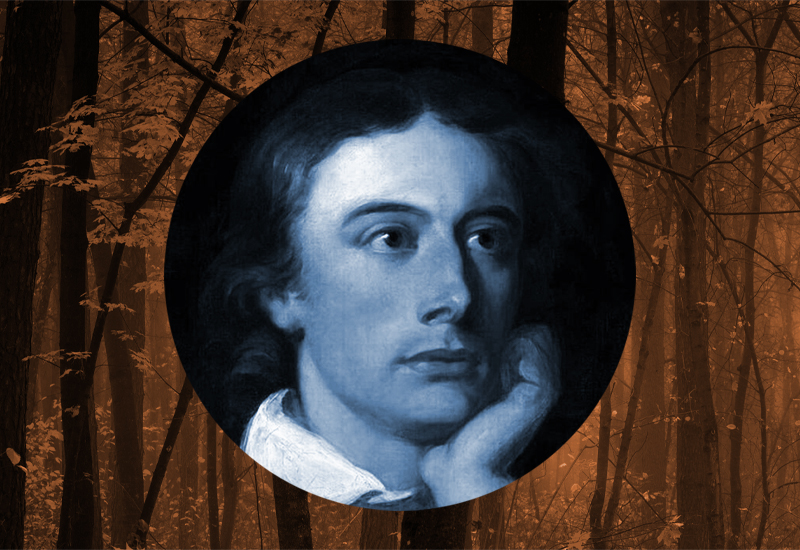
On September 19, 1819, after wandering along the River Itchen in Hampshire, England, the 24-year-old poet John Keats—who had, earlier that year, completed “Ode on a Grecian Urn,” “Ode to a Nightingale,” and other now-celebrated works—brought forth what would become one of the most cherished autumn poems in the English language: the aptly titled “To Autumn.”
We know this because on Tuesday, September 21st, Keats wrote about the moment to his friend John Hamilton Reynolds:
How beautiful the season is now. How fine the air – a temperate sharpness about it. Really, without joking – Dian skies. I never liked stubble-fields so much as now – aye, better than the chilly green of the Spring. Somehow, a stubble plain looks warm, in the same way that some pictures look warm. This struck me so much in my Sunday’s walk that I composed upon it.
The poem that resulted was later included in Keats’s 1820 collection Lamia, Isabella, the Eve of St. Agnes, and Other Poems, and it continues to be read widely today, for legitimate reasons. “The poem is well-rounded in every sense—all five senses, to be exact,” writes Caitlin Kimball. “Visions of abundance and frantic industry yield to delicious indolence, and the poem’s luxuriously light touches, fragrances, and tastes culminate in a delicate but persistent chorus.” Yet he is equally forthright about autumn’s tragedy as well. “As much as the poet has absorbed his senses in an essence apart from himself, making no evaluations or claims for transcendence, he has taken pains to rescue and preserve the season whole—diminishment and all.”
Soon after drafting the piece, alas, Keats would commence recognizing the signs of tuberculosis in his lungs, an illness that had already claimed his younger brother Tom; he would succumb to it less than two years later.
Read “To Autumn” here.