
When he was three, my son often said his heart was wounded.
The reasons for these heart wounds were varied: someone didn’t want to be his best friend; I accidentally swept his latest artistic masterpiece into the recycling bin; we ran out of bananas.
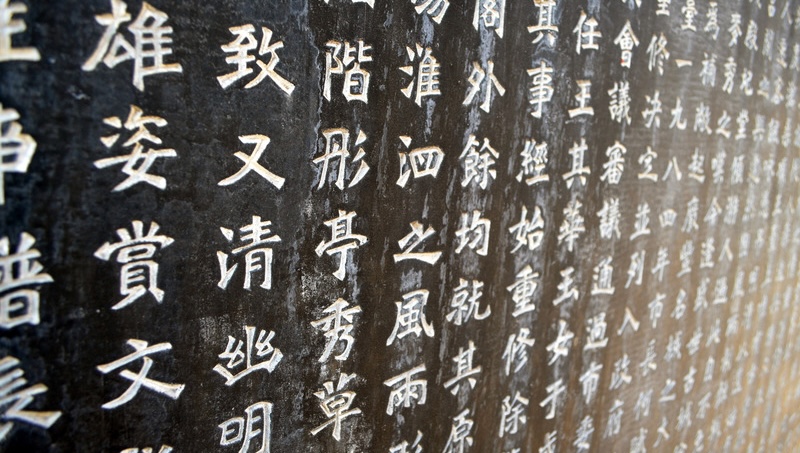
The first time he told me this, I had to restrain myself from laughing. From his three-year-old perspective, these were legitimately momentous events. But even without the context of age, he wasn’t being melodramatic. He was translating—literally. In Mandarin, the language in which we converse with each other, the word “sad” is created by putting the characters for wound (伤) and heart (心) together.
Before I had my son, I never thought much about the first language I learned to speak. I was born and raised in Cincinnati, and by the time I was in elementary school, English wasn’t just my go-to language but the language through which I fell in love with the written word. But when my son was born, I knew I wanted to raise him bilingual. Partly, I thought speaking Mandarin would be an advantage in the future. Mostly, I felt that if he didn’t grow up speaking Mandarin, he would miss out on a critical connection to his heritage. I couldn’t explain why I felt this way. My parents and all of my living extended family speak English fluently. I think in English, write in English, and speak to almost everyone in my life in English.
I didn’t want to lose the poeticism of direct translation, yet I also wanted to ensure meanings weren’t lost or misconstrued. I wanted neither to perpetuate stereotypes, nor to erase cultural truths.
In fact, I hadn’t spoken Mandarin regularly since I was in high school. I was rusty! Every time I spoke to my son, I had to translate my English thoughts into Mandarin words. I had to translate when I read to him, too. It’s hard to find children’s books with pinyin—the Romanized transliteration of Mandarin—which I needed, because my Chinese literacy is on par with that of a second-grader.
Suddenly, I found myself translating all the time, and thinking about the complexity of translation, especially between two languages that were so fundamentally different not just in mechanics but in spirit. English, which could create endless configurations of letters, proliferated with synonyms that allowed for nuance: sad, downcast, unhappy, miserable, melancholy, sorrowful, depressed. In contrast, Chinese, which combined Hanzi characters with existing meanings to create new words, seemed at once spare and poetically conceptual. I could say my heart was wounded (伤心), or that I was experiencing a difficult pass (难 过).
At the same time that I was translating Frog and Toad and Olivia for my toddler, I was writing The Chinese Lady, a historical novel told from the perspectives of four characters who think and communicate in English, Cantonese, or both—though I wrote almost all their internal and spoken words in English. When I had first started writing the novel a couple years before, I had randomly sprinkled passages with pinyin to flex my cultural bona fides. (It was a faulty flex, because my characters would have spoken Cantonese, and Mandarin is a different language!) But with bilingualism now constantly on my brain, I began to reexamine how and when to include Chinese in the novel, and why.
It didn’t make sense to transliterate into Chinese when I could easily translate into English. For example, instead of referring to one protagonist as 珍珠, I called her Pearl. But sometimes, the translation wasn’t straightforward. Sometimes, words were complicated by the context in which they would be read. As much as I like to think that I write to satisfy my own craft, I also write for a majority English-speaking, American audience.
When I was in college, I wrote a short story about a Chinese mother and daughter for a creative writing class. Whenever her daughter disobeyed her, the mother character would demand: “Don’t you know I cut back on eating so you can have everything?” Or, she would declare: “I’ll beat you to death and then give birth to another!”
There was a lot to criticize about my eighteen-year-old scribblings, but my classmates’ criticisms of how I characterized the mother character stuck with me: she was too melodramatic; I was caricaturizing bipolarism; I was writing with flippancy about an abusive relationship. In retrospect, I had given my character the words of my own mother whenever I fell short of being a dutiful daughter. My mother didn’t really cut back on eating (省吃), and I never once feared she would beat me to death (打死) and then birth my successor (再生一个). We both knew what she meant: she scrimped and saved on my behalf, and it was my duty as her offspring to make her sacrifices worthwhile. We also understood that her sacrifices and my duty were part of a long family tradition.
I worried that by translating my mother’s speech literally, I had made my character into a caricature—albeit of an immigrant martyr mother rather than of a person with bipolar disorder. And yet, if I’d had the character demand: “Don’t you know how I scrimp and save? It is your responsibility to make my sacrifices worthwhile!” something intangible and true would have been lost.
Learning Mandarin—or any language—isn’t just about learning vocabulary, grammar, and syntax. It’s about learning a different way of thinking and knowing.
I thought a lot about that story as I watched my toddler make sense of the world using his two languages. I thought about it while I wrote, after he had gone to bed. In writing my Chinese characters in The Chinese Lady, I had to decide when to translate words and when to translate meaning. I didn’t want to lose the poeticism of direct translation, yet I also wanted to ensure meanings weren’t lost or misconstrued. I wanted neither to perpetuate stereotypes, nor to erase cultural truths.
For example, the literal translation of 妹仔 is “a young girl.” Yet the meaning of this word in Chinese is “little slave girl,” referring to little girls who were sold into service. Yet again, the word “slave” holds a whole different meaning in the United States. The situation of two characters in the novel to whom that word might be ascribed—a Cantonese child and a formerly enslaved Black woman—were not the same. So, instead of translating or transliterating, I used the Hanzi 妹仔.
Another example. Part of the novel takes place in San Francisco’s Chinatown, when Chinese immigrant associations called 堂s were increasing in power and influence. The literal translation of 堂 is “hall,” probably referring to the associations’ physical gathering spaces. As these associations expanded their endeavors into gambling, prostitution, and vigilante justice, English-speaking Americans began to describe the tongs as Chinese gangs. I was unconvinced that my Chinese characters would have described them as such. Ultimately, my white characters use the transliterated tong and translation “gang,” while my Chinese characters use the Hanzi 堂.
In writing The Chinese Lady, I realized why I had been so doggedly stumbling through raising a bilingual toddler, why I’d instinctively felt it was so crucial to his heritage. Learning Mandarin—or any language—isn’t just about learning vocabulary, grammar, and syntax. It’s about learning a different way of thinking and knowing. Just as I wanted my son to understand the possibility of an alphabet-based language that borrows freely from other languages, I also wanted him to experience the creativity of a language that must create new meaning from old things.
_______________________________
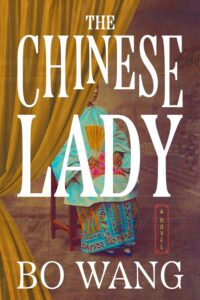
The Chinese Lady by Bo Wang is available from HarperVia, an imprint of HarperCollins Publishers.