
If the old Ernest Hemingway maxim about courage equaling grace under pressure proves true, Anna May Wong (1905-1961) embodied it in spades. Wong stood as a living blueprint for reinventing oneself when confronted with the most intimidating social barriers. Across more than three decades spent writing about Wong, I continually возвращаюсь to how she remains a standard of resilience for us today.
Anna May Wong Cabaret Cross-dressing. Photo by Carl Van Vechten. Beinecke Library, Yale University. Courtesy of the Carl Van Vechten Trust.
If Hemingway’s famous assertion about courage under fire holds any weight, Wong’s life repeatedly demonstrated that same poise in the most trying moments. She offered a template for how to reconfigure oneself amid daunting social barriers. Throughout more than three decades of writing about her, I keep discovering anew how her example remains instructive even now.
Anna May Wong Cabaret Cross-dressing. Photo by Carl Van Vechten. Beinecke Library, Yale University. Courtesy of the Carl Van Vechten Trust.
In her era, Wong attracted a broad circle of admirers. Anne Frank pasted not one but two photographs of Wong on the bedroom wall of the secret annex in Amsterdam, where she and her family hid from the Nazis during World War II. At Harlem’s 1930s balls—the same gatherings that inspired today’s Tony-nominated sensation Cats: The Jellicle Ball—drag performers paid homage to Wong by recreating her dance moves from the British film Piccadilly (1929). At England’s Royal Ascot horse races, members of high society dressed as Wong as well, donning imitations of the Coolie Hat she helped popularize as a coveted fashion item.
The pressures Wong endured were enormous. She was, by birth, American—a passport stamped with proof of citizenship. Yet, as a Chinese American, she found her ability to travel curtailed by the Chinese Exclusion Act (1882-1943). Every departure from the United States required laborious steps: filing Form 430, colloquially known as the “Application of Alleged American Citizen of the Chinese Race for Preinvestigation of Status,” followed by a face-to-face interview. A single error or violation could lead to detention or deportation. Born in Los Angeles, she should have had full birthright privileges, but that was not her lot. Her life resonates with us even today.
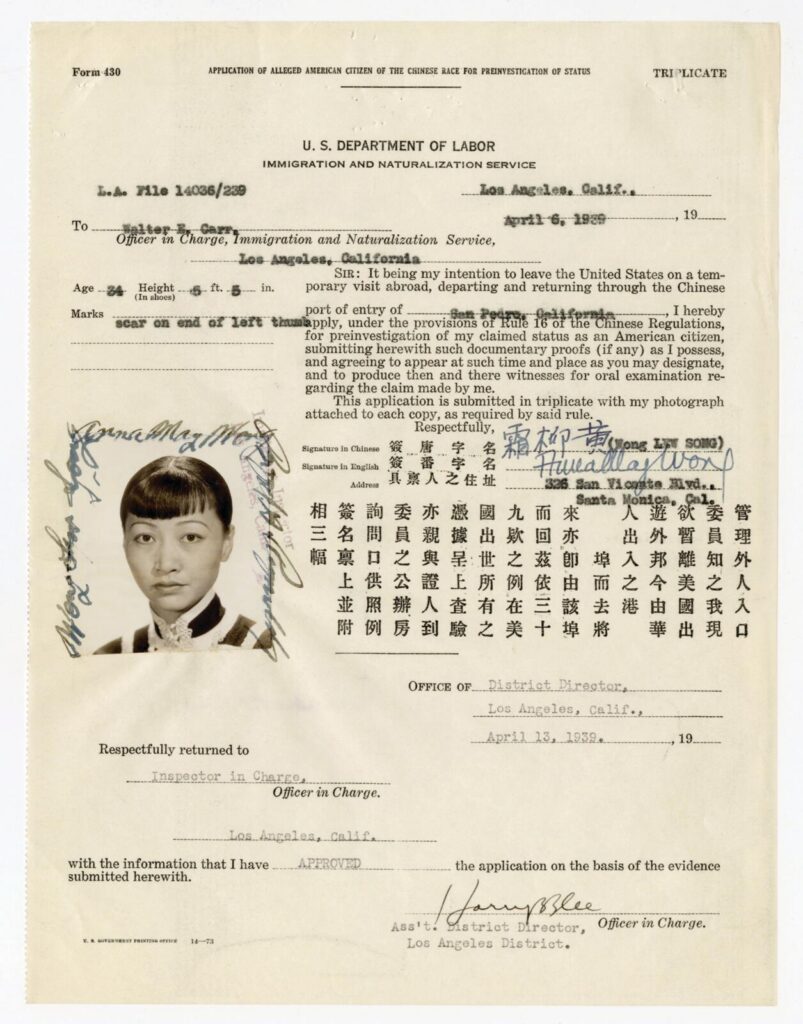 Anna May Wong’s Form 430 April 6, 1939. Courtesy of the National Archives and Records Administration, Records of the Immigration and Naturalization Service.
The list of pressures only grew. The photographic record shows Wong arm-in-arm with various admirers, many of whom were lovers. Yet in California, laws barred marriage to a white person, a prohibition she openly condemned in interviews. In 1946, while seeking a new domicile in Los Angeles, she confronted covenants that barred sales to “Orientals” and could not locate a willing seller. Fame and money did not suffice to overcome housing segregation.
Perhaps no moment better illustrates Wong’s poise under pressure than her handling of the casting crisis at The Good Earth (1937). The Depression-era epic, adapted from Pearl S. Buck’s novel about impoverished yet steadfast Chinese peasants, held enormous significance for Hollywood’s top studios. MGM planned a landmark production with one of the era’s largest budgets, amounting to two million dollars. Capturing the lead role of O-lan would have catapulted Wong onto the cinema’s elite.
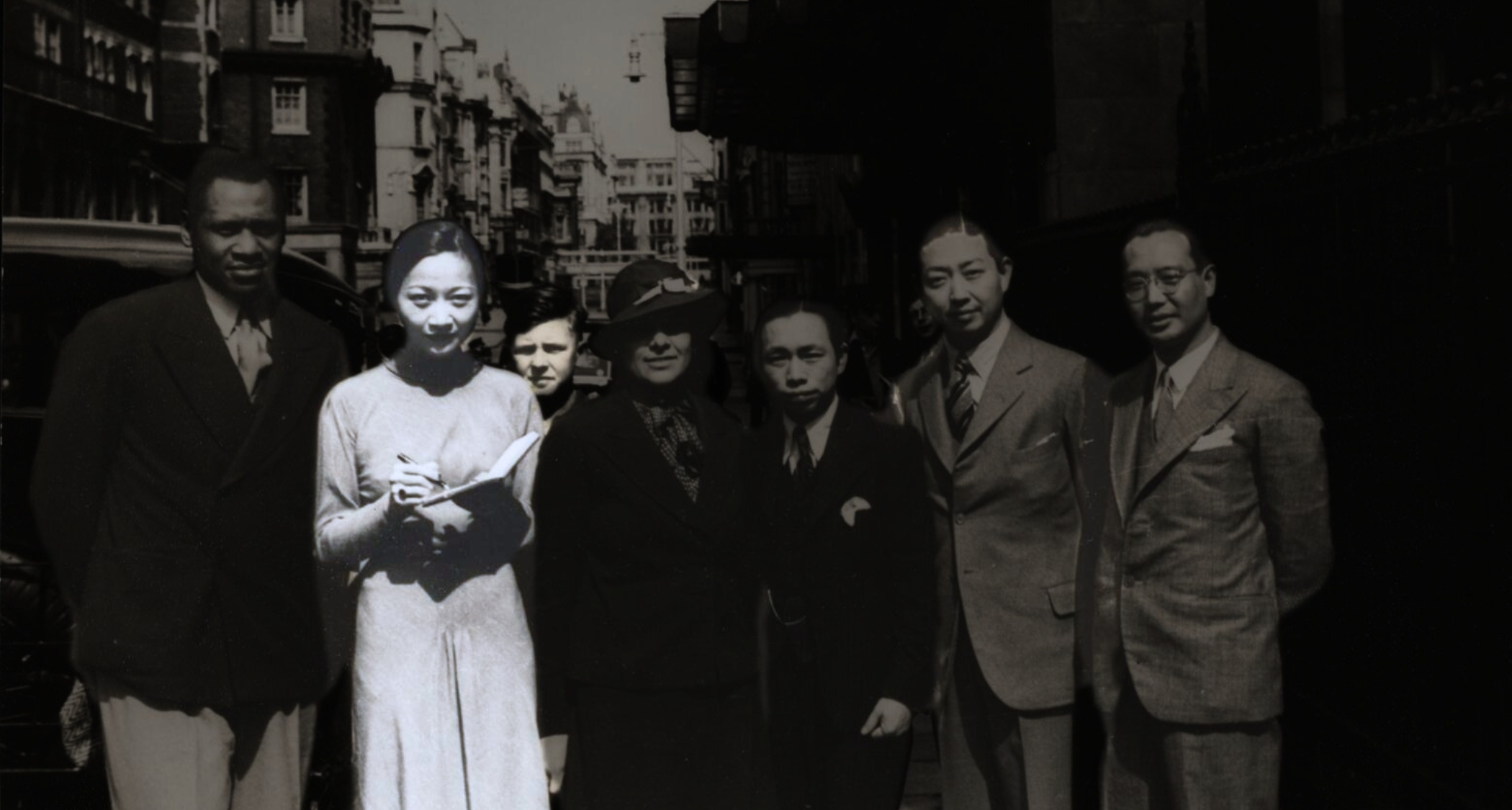
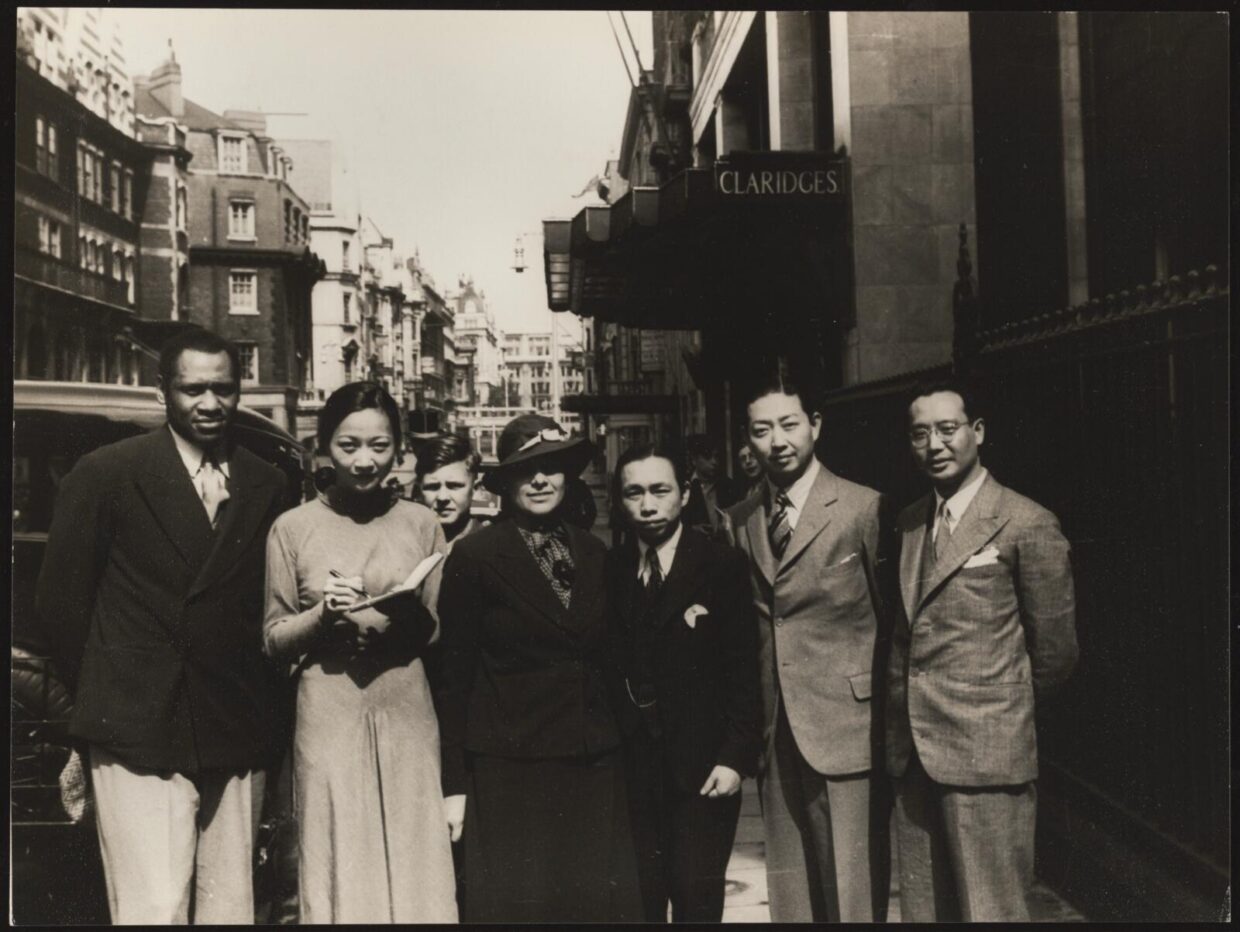 Wong Writing in London. With Paul Robeson, Eslanda Robeson, S. I. Hsiung, Mei Lanfang. Photo by Fania Marinoff. Beneicke Library, Yale University. Courtesy of the Carl Van Vechten Trust.
Wong had publicly stated in the Los Angeles Times that she wished to play the lead role of O-lan and would refuse to attend a Lotus casting because it represented “the only unsympathetic role” in The Good Earth. Her correspondence, which I rely on to chart her life, reveals a gap between her public stance and private thoughts. She confided to her closest friend, Fania Marinoff, that since Luise Rainer had secured O-lan, MGM had instead invited her to screen-test for Lotus, the wife who undermines the family. As Wong wrote: “Practically everyone, including my friends, seem [sic] to feel that I should take the Lotus part ‘if there is enough money in it.’” In the same missive, candid Wong admitted that, contrary to her LA Times proclamation, she auditioned for Lotus not once but twice.
“Wong embodied a model of how to reinvent oneself in the face of the most daunting societal obstacles.”
MGM’s notes from Wong’s second screen test are blunt: “[d]eserves serious consideration as possibility for Lotus—[but] NOT as beautiful as she might be.” For MGM, no Chinese American possessed the “correct” look for a Chinese role. Lewin’s casting memos for others such as Keye Luke similarly asserted that they did not align with his vision of how “Chinese people looked.” Lewin recommended using them primarily as ‘atmosphere’ rather than as leads. Predictably, Wong was rejected for Lotus, with the studio instead hiring the Viennese actress Tilly Loesch. Chinese Americans, numbering in the hundreds and even thousands, were consigned to supporting roles and background ambiance.
Public culture has often fixated on Wong’s supposed failure to land a starring role in The Good Earth as the catalyst for a purported downward spiral in her life. In Netflix’s Hollywood (2020) and Amanda Lee Koe’s Delayed Rays of a Star (2019), Wong’s supposed O-lan tryout (the letters indicate she never auditioned for that part) is portrayed as the moment that irreparably ruined her, steering her toward a life of alcohol-soaked stagnation.
Wong’s letters to Marinoff, by contrast, reveal a markedly different narrative—one of courage and resilience. After the MGM dismissal, she proclaimed a strong desire to pursue her original plan of traveling to China. She was thrilled by “my first trip to the land of my fore-fathers” and refused to linger in self-pity. In a striking turn, just over a month after the Good Earth rejection, Wong departed for China to fulfill a lifelong dream.
What makes Wong extraordinary is that she did not approach China as a mere tourist. This was no vacation; this was work. It presented her with a chance to reimagine herself as a journalist. In the month before her departure, Wong arranged a commission with the New York Herald Tribune to produce a series of articles about her journey through China. For a woman who left school after two years of formal education, this achievement was nothing short of remarkable. Not one to waste an opportunity, Wong published her first dispatch while still en route.
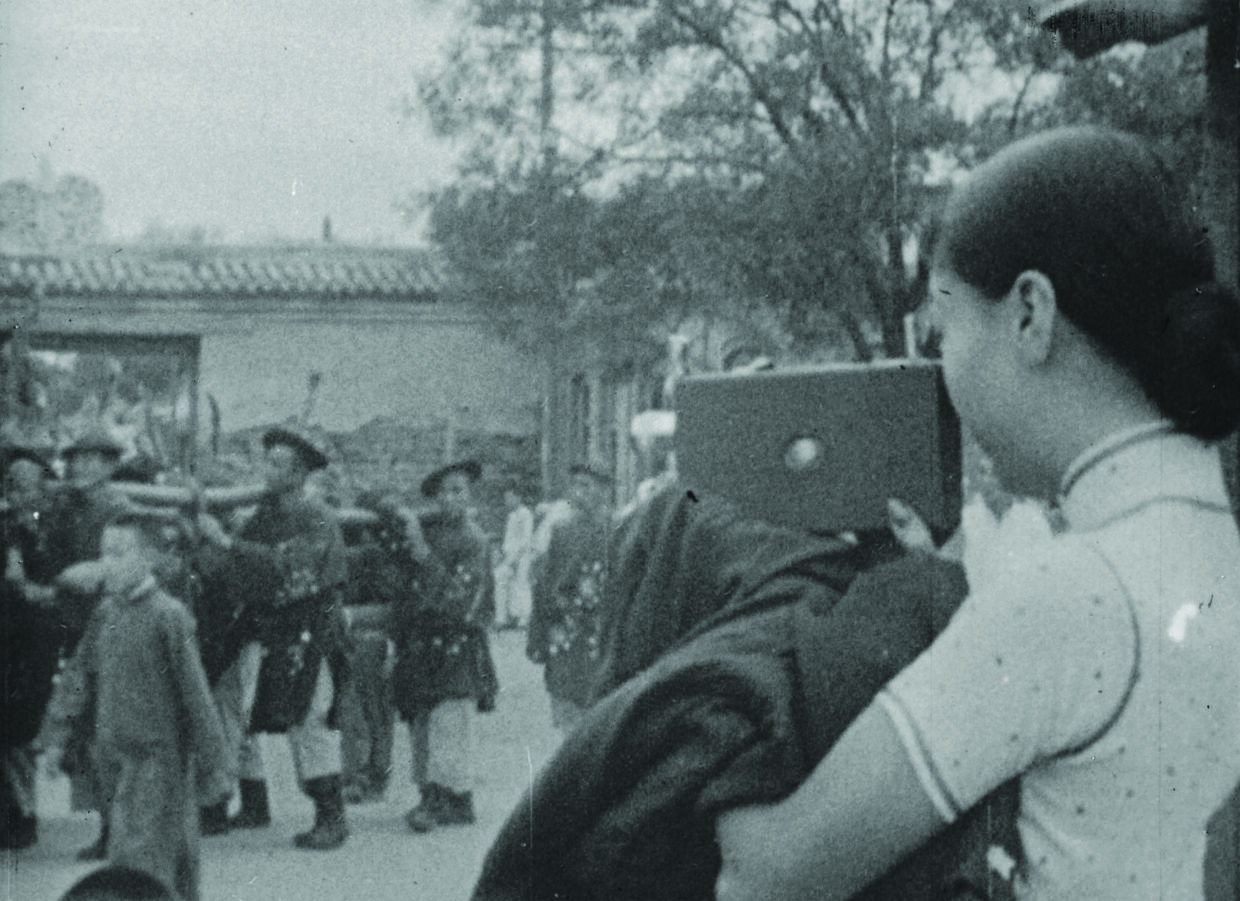 Anna May Wong Behind the Camera in China. Courtesy UCLA Film and Television Archive.
Even more impressively, she transformed the most threatening moment of her entire career into a groundbreaking milestone: she seized the means of production to become a filmmaker. Wong crafted a counterstatement to MGM’s caricatured China in The Good Earth by producing a real China-focused film featuring someone with authentic Chinese heritage—herself. Before leaving Los Angeles, she arranged for her experiences to be documented by a cinematographer—Haisheng “Newsreel” Wong (no relation). Wong starred in, wrote, directed, and produced her own travel documentary, a remarkable feat at a time when Dorothy Arzner and Ida Lupino were two of the very few female directors in Hollywood. After decades of promoting the project, Wong’s short film about her China trip finally aired across the United States on ABC television on February 14, 1957. Grace under pressure, indeed.
Today Wong continues to offer a roadmap for advancing in the face of daunting odds. Many people navigate life differently because who they are does not align with what society esteems. I hope that my forthcoming book will demonstrate that we all, in some sense, share a fragment of Anna May Wong’s spirit.
_______________________________
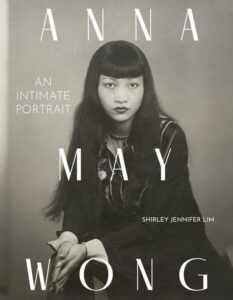
From Anna May Wong: An Intimate Portrait by Shirley Jennifer Lim. Copyright © 2026. Available from Abrams Books.