
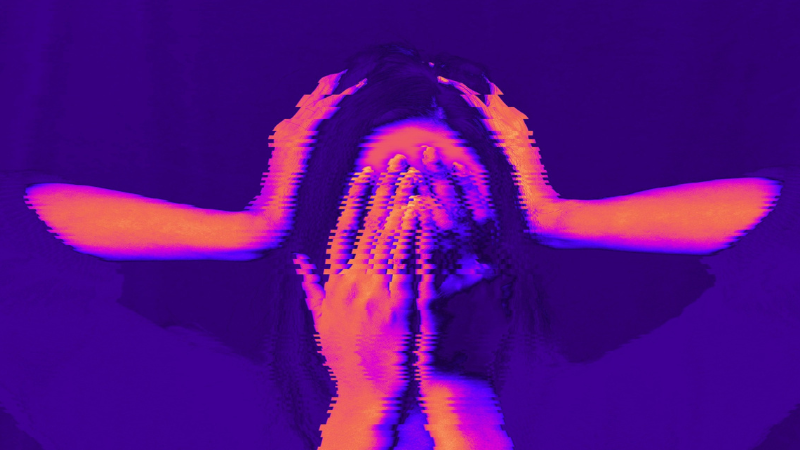
When the torment first arrived, it announced itself during a surprisingly mild Chicago summer more than ten years ago. It began as a faint tingle in the right side of my jaw, hardly noticeable as I wandered past the red-bricked town houses of Hyde Park during a summer seminar at the University of Chicago. Only the following morning, once I could pinpoint a sensation in my teeth that I couldn’t quite name, did the real pain begin. A suffocating, burning ache erupted along every one of my upper and lower lateral incisors, canines, and molars, and it felt as if a heated iron rod had been driven into the skin at the back of my neck, threaded through my jaw, and forced to emerge through my right cheek.
That image has persisted in recollection over the years, but in the midst of the pain there was no metaphor, only the piercing, heightened sensation that expanded to eclipse every other concern. For roughly 36 sleepless hours, I smeared thick, sticky globs of Benzidine on my teeth and gums, mistakenly assuming the problem originated in the mouth.
If I had stepped out of Kevin Brockmeir’s novel The Illumination, where a mysterious shift makes everyone’s pain visible as a kind of radiant glow, I might have been bathed in light in that moment. With no dental insurance, my fevered mind didn’t merely imagine but accepted that the pain would endure forever—until, on the second day, I woke from exhausted half-sleep to discover that, somewhere near dawn, the uninvited guest had departed, leaving me with no language to grasp the experience and mostly forgetting the sensation. That is, until it would return.
We grasp towards our meager and incomplete descriptions of ineffable pain, we inevitably fall short, and yet like anything our words still serve us, even if only as a half-measure.
“It is the intense pain that destroys a person’s self and world,” writes philosopher Elaine Scarry in The Body in Pain: The Making and Unmaking of the World, “a destruction experienced spatially as either the contraction of the universe down to the immediate vicinity of the body or as the body swelling to fill the entire universe,” or, paradoxically, sometimes both. Scarry’s book remains the greatest theoretical treatment of the unintelligible experience of pain; not its physical symptoms or its biological etiology, but the actual subjective feeling, for she writes that pain “does not simply resist language but actively destroys it.”
That sentiment, I believe, is universal. Is your pain burning or aching, throbbing or cutting, stabbing or radiating? Pain renders poets of all of us, as we frantically search for imperfect metaphors to convey severity to anyone who might help. Consider the anemic Numerical Rating Scale, which asks patients to rate their pain from 1 to 10, as if suffering were a Rolling Stone album ranking, or the Wong-Baker FACES Scale, in which the afflicted map their agony onto abstracted faces ranging from a bright, unconcerned cartoon to a grimacing, pained person, with numerous gradations in between. How can one ever convey George Orwell’s observation from Nineteen Eighty-Four that “nothing was so bad in the world as physical pain” if you haven’t visited Room 101 yourself? Has anyone found that the little frowning man perfectly matches the sensation of an iron rod piercing one’s head?
Such methods do not indicate a defect in medicine, but rather the far larger failure of language. The experience of pain—whether itches from a sunburn or the slick sting of a paper cut—soars beyond the reach of conventional description that tools falter when confronted with such singular sensations. Yet, as Scarry argues, once the pain wanes, it begins to tell a story. Although halting, incomplete, and tentative, the realm of narrative—of making meaning—tries to re-enter.
My own memory of the Chicago agony, with that image of my tender skull punctured by a metal spear, has evolved over time as the guest would periodically reappear. This marks what Emily Dickinson called the “Element of Blank,” the state in which in pain we “cannot recollect / When it begun—or if there were / A time when it was not.” Strangely enough, it’s not only pain that resists memory; ecstasy does so as well. Teresa of Ávila, the sixteenth‑century mystic and Spanish nun, described a theophany in which an angel pierced her soul with a “long spear of gold… thrusting it at times into my heart… to pierce my entrails,” so that she burned with love for God; the line between pain’s abasement and ecstasy’s transcendence seems remarkably porous. Yet ecstasy is all too fleeting, whereas pain often lingers longer.
We, imperfect beings, struggle to grasp that even this shall pass; my next encounter with the guest occurred in Washington, DC, where I found an emergency dentist who seemed genuinely frightened to admit that the pain did not stem from an impacted tooth or a root infection. Later, in Pittsburgh, the pain spiked my blood pressure above 200, and I ended up calling an ambulance. In the ER, resisting morphine out of fear of addiction from my past, I finally yielded to the narcotic reverie (which only took effect after a second dose), a sensation that invites its own poetry—where Bulgakov, a physician himself, described pain as vanishing “without a trace as though it had never been.” I also felt a warm float of relief, and wondered if I had peed myself, though in such a state I could not bother with such mundane concerns (as Bulgakov, who had his own struggles with addiction, would note in Morphine, “Then comes pain, horror, darkness”). Pain arrives in many guises, sometimes masked as pleasure.
Various diagnoses have been proposed for my intermittent jaw pain, with my GP ultimately suggesting a variant of trigeminal neuralgia, a nerve condition akin to migraine pain and nicknamed the “suicide disease.” Ironically, another medical emergency produced an incomplete remedy when a late‑night vagal reaction from dehydration and blood pressure medication triggered a seizure, landing me in the hospital for a week. During that stay, I quit coffee cold turkey—an ordeal for someone who previously drank two to three pots daily—and, to my surprise, discovered that my blood pressure no longer ran high.
Consequently, the long stretches of jaw pain faded after I reduced caffeine (though I still drink black tea in moderation), yet the trigeminal neuralgia did not disappear. Today, I experience the old familiar iron rod at least once daily, and sometimes more, if my blood pressure climbs; a truly indescribable pain that would be insufferable were it not for the knowledge that its duration will likely end after a minute. These brief returns to hell are my small cautions.
How fortunate then are we to have metaphor, incomplete though it is, to turn pain into words, rather than transmuting our words into pain.
“Whereof one cannot speak,” declared the Austrian philosopher Ludwig Wittgenstein in his Tractatus, “thereof one must be silent,” and although he framed his claim around metaphysical assertions, it aptly applies to the limits of description when confronted with pain as well, even if literal silence is not always the outcome. Instead, there can be screams and gasps, choked breaths and grit, the abstract poetry of pain—what Scarry calls an “immediate reversion to a state prior to language, to the sounds and cries a human being makes before language is learned.” Perhaps for this reason there are precious few masterworks about the subject. Virginia Woolf observed that literature can convey the thoughts of Hamlet and the tragedy of Lear, yet “has no words for the shiver or the headache.”
Violence, certainly; from The Iliad to Tim O’Brien’s The Things They Carried, literature has long explored the universal theme of pain and its consequences, but the intimate subjectivity—the solitary heat of the experience—arrives only obliquely. David Budbill, in a 2017 poem from his collection Tumbling toward the End, skirts the boundary of description with lines like, “When the pain you’re in // is so great you can’t think about or pay attention to anything / but your own pain,” and while the poem is strong, the focus is less pain itself and more the impediments of expression. We can only point to pain by shadows cast on a wall.
Nevertheless, the charged function of literature—as opposed to the rigid diagrams of the Wong-Baker FACES Scale—is that, even if it cannot bridge the chasm between sensation and description, it may at least gesture across it. I have no uterus to know endometriosis, yet Sally Rooney conveys some shape to that condition in Conversations with Friends; lacking lupus, I cannot fully imagine the experience of a rebellious immune system, but in Megan Cummins’s If the Body Allows It: Stories, there is an invitation to feel how “joints were swollen,” when her central character Marie “awoke with the sense that her insides were swollen, ready to break through the skin.” I have not endured the mercyless horror of being hunted by a fan, nor had my foot wrecked by an axe and cauterized with a blowtorch, yet I tremble at Stephen King’s Misery when the captor wrenches the blade with a scream of bone and metal.
In moments of pain, we regress to a basic, animal state; we become mere material. We are meat that “must eat and breathe air and sleep,” as Wisława Szymborska writes, beings with “think skin and blood beneath,” “a sufficient supply of teeth and nails,” and bones that can break and joints that can stretch. To endure torture, whether by a jailer or by one’s own body, is to reside at the nihilistic edge of existence, like Job scraping his boils with broken shards of pottery.
Regarding descriptions of pain and illness, Susan Sontag famously urged in Illness as a Metaphor that “We are not being invaded. The body is not a battlefield. The ill are neither unavoidable casualties nor the enemy,” and while her warning about rhetoric remains valid, there is also a need for the metaphors we deploy, even if they are imperfect. We strive for our meager, incomplete renderings of ineffable pain, and we inevitably fall short, yet, like all human expression, our words still perform a function, if only as a provisional measure.
Before the incommensurability between language and pain, we should at least be grateful we are not like Kafka’s condemned in In the Penal Colony, strapped into a machine whose needles carve its verdict into the skin, testifying in flesh to what the mind cannot grasp, so that what’s difficult to interpret in thought can be deciphered by wounds.
How fortunate then are we to possess metaphor, however imperfect, to turn pain into language rather than letting language become pain. We persist in articulating a sour ache in a cracked cuticle, the rasping of a calcite nodule along tendon, or the electric shocks of trigeminal neuralgia. The poetry of pain may fail, yet it remains poetry all the same.