
Genre-bending books have greatly influenced my own work. I’ve written about my mother’s self completed death in a new memoir called O Mother, out with McSweeney’s on September 1. In it, I used the diagnostic material about my mom I’d found after her death, my own diagnostic material that was filtered in with hers–ADHD, Autism, CPTSD, Ehlers Danlos, all of it we shared–as well as pieces of ephemera, notes about her arrest preceding her death, and my baby book, which was a journal of her being my mom that I was meant to open only when she was no longer here. I just never thought it would be so soon. The language of bureaucracy often is the language that speaks for our most marginalized. The books on this list are all ones that wrest humanity back from this language. I hope my book does the same.
*
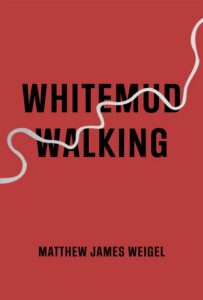
Whitemud Walking by Matthew James Weigel
Weigel, a Dene/Métis writer writes within and between treaty documents, land scrip records and his grandmother’s enfranchisement file in order to fulfill this purpose: “This book began as thoughts on treaty and my obligations to the land in this time. But it spiraled outward into a journey of understanding of all my relations.”
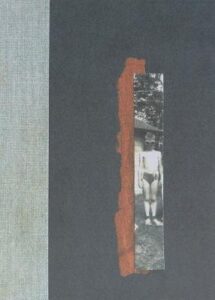
Nox by Anne Carson
A singular elegy assembled from fragments, poems, family photographs, torn letters, and stamps, spilling out of a box that houses Carson’s grief for her deceased brother. Anyone who has mourned recognizes these kinds of boxes. I feel a deep kinship with the act of sorting through a loved one’s printed mementos, and Carson’s handling of it is wonderfully quiet and powerful.
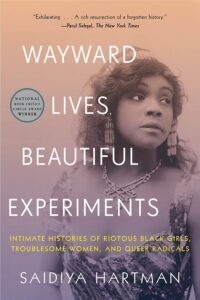
Wayward Lives, Beautiful Experiments: Intimate Histories of Riotous Black Girls, Troublesome Women, and Queer Radicals by Saidiya Hartman
Hartman turns to the casefiles, court dockets, and photographs used to police and criminalize Black women in early-twentieth-century Philadelphia and New York, then writes against the intentions of those records. Through what she calls “critical fabulation,” she imagines these women’s interior worlds with vivid speculation, forcefully resisting the flattening logic of the archive that tried to hold them in place.
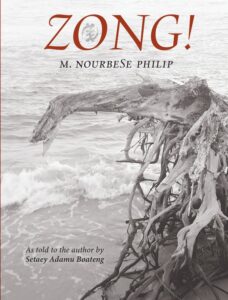
Zong! by M. NourbeSe Philip
Philip’s book-length poem is a monumental achievement. Crafted entirely from the language of Gregson v. Gilbert, a single-page 1783 judgment that records the shipping of cargo for insurance, the “cargo” is human beings—enslaved Africans murdered in the process. She fractures and scatters the document’s legal wording across the page in a act of art and prayer, an ancestral summons. If you ever have the chance, attending a live reading of Zong! with M. NourbeSe Philip is highly recommended.
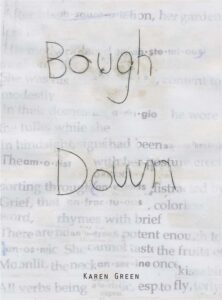
Bough Down by Karen Green
Written after the death of her husband through a self-inflicted end, Green’s volume moves in compact prose-poem fragments interlaced with collage, assembling grief in the present rather than recounting it afterward. It stands as an intimate, unflinching chronicle of the ordinary and intolerable details that accompany sudden loss—pill bottles, crackling static, unfinished sentences—assembled the way memory processes life.
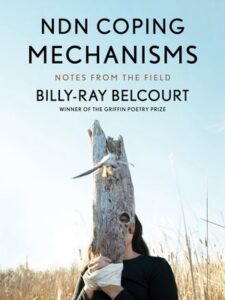
NDN Coping Mechanisms: Notes from the Field by Billy Ray Belcourt
Belcourt’s poems catalog the tactics, irony, sexuality, tenderness, theory, and humor that sustain life under ongoing settler colonial violence. The collection reads like a living archive of what it takes to keep a queer Indigenous life livable, choosing resilience over despair and avoiding tidy resolutions.
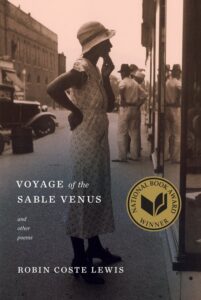
Voyage of the Sable Venus and Other Poems by Robin Coste Lewis
The collection’s centerpiece, Voyage of the Sable Venus, is a found-poem composed entirely from the titles, catalog entries, and museum descriptions of Western artworks that depict a Black woman. Lewis upends the official language that catalogs the Black body and resists settling on a single interpretation of what it surfaces.
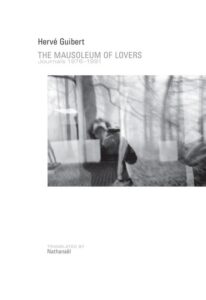
The Mausoleum of Lovers by Hervé Guibert
Derived from more than twenty years of Guibert’s private diaries, this work moves through desire, friendship, illness, and mortality with startling candor, initially written without any plan for publication. Its fragmentary, undated entries resist memoir’s shaping arc, offering instead a raw private archive of a life, left open for a reader to step into without invitation.
_______________________________

O Mother by Emerson Whitney is available from McSweeney’s.