
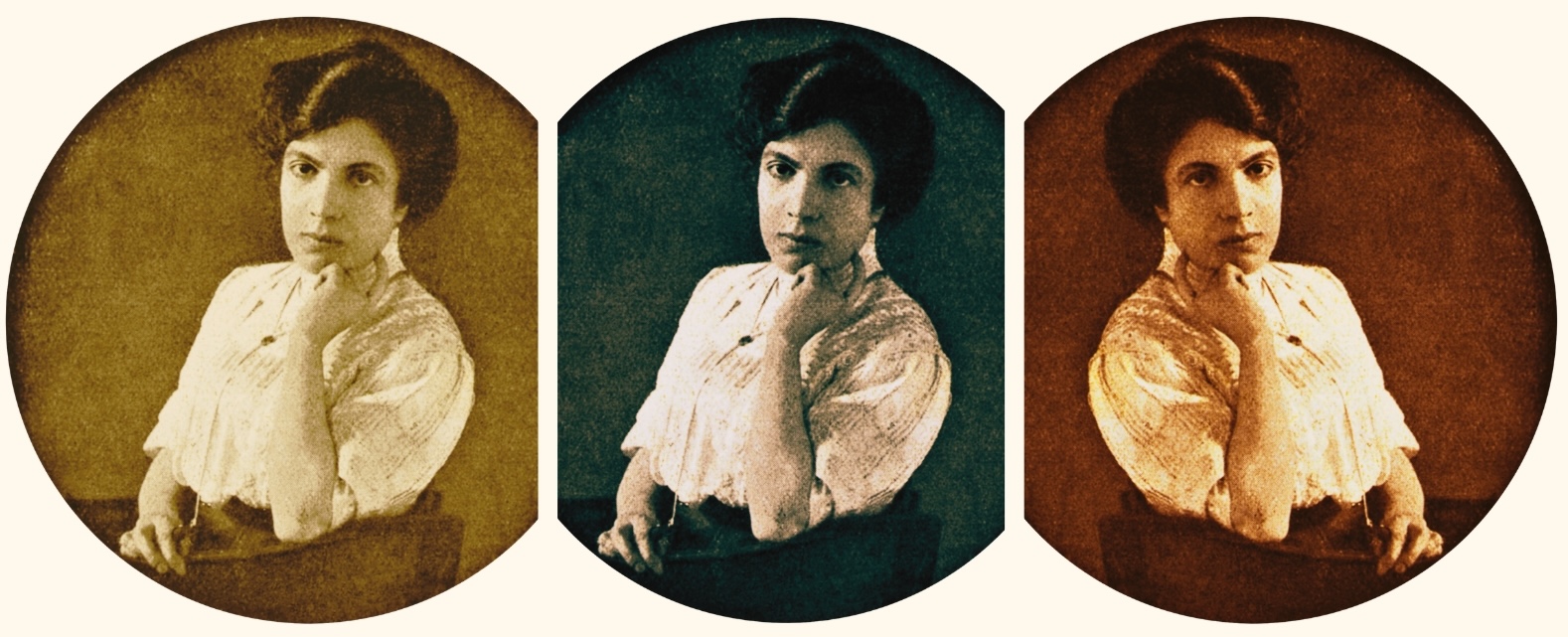
“Cross the sea,” urged a young Grazia Deledda in a 1893 letter to Americans, “and tell everyone that the island of Sardinia is still waiting to be discovered and known.”
As we mark a hundred years since her Nobel Prize in Literature, Deledda’s powerful legacy persists, almost as a spectral presence in the literary world, inviting readers in the United States and the broader English-speaking world to revisit her work.
In 1902 American newspapers hailed her as the “George Sand of Sardinia”—though the real George Sand never earned the Nobel—placing Deledda’s influence in Sardinian letters in a category of its own.
Her childhood in Sardinia around the turn of the century reveals a different origin story. After finishing elementary school, she began publishing stories as a teenager with the help of a tutor, a pursuit that alarmed her family who viewed such activity as improper for a young woman. Yet Deledda pressed on without looking back.
In American press coverage from 1902 she was celebrated as the “George Sand of Sardinia”—though Sand never won the Nobel—and Deledda’s place in Sardinian literature stood apart from the rest.
Her first novel, Fior di Sardegna (Flowers of Sardinia), appeared in 1892, when she was twenty-one. “In the ‘stranger’s room’ of the Porru house a woman sat crying,” began Deledda’s later work After the Divorce, probing the secret lives of Sardinian women, a theme tackled a century after Eleonora d’Arborea’s ascendancy. It was among the earliest novels to address the subject of divorce, published in 1902.
From there, she produced more than sixty works across fiction, non-fiction, and poetry.
In 1926 Deledda became the second woman in the world to win the Nobel Prize in Literature for “idealistically inspired writings which with plastic clarity picture the life on her native island and with depth and sympathy deal with human problems in general,” as the Nobel committee described.
An American news dispatch observed that it was “strange” she continued to write about Sardinia after moving to Rome. “Sardinia holds very little interest for the world in general. It is not rich in artistic treasures as is much of Italy. Sardinia’s charm, perhaps, lies in its isolation; civilization has not yet dulled it or reduced it to a standardized pattern.”
Such a dismissal would plague the reception of Deledda’s work for her entire life. Fellow Sardinian literary giants, such as Antonio Gramsci, Emilio Lussu, Salvatore Satta, and the contemporary writer Michela Murgia, faced similar attitudes.
Enter D. H. Lawrence in 1921, who spent less than a week in Sardinia. He claimed to have written without taking notes. From his arrival in Cagliari, described as a “naked town rising steep,” to Mandas—“where there is nothing to do”—and on to Sorgono, full of “degenerate aborigines, the dirty-breasted host” and “sordid villagers,” finally reaching Nuoro, the home of Deledda, where “there is nothing to see.”
Upon returning to his own homeland in Sicily, Lawrence produced Sea and Sardinia in a few weeks, initially considering titles like Sardinian Films or Sketches in Sardinia, and reportedly with only a single draft. Yet he infused the journey with his novelist’s eye, crafting scenes of natural beauty during the train ride through the Gennargentu mountains and praising the Sardinians as “downright” and “manly.” In many respects, Sea and Sardinia functions as a collection of entertaining yet caustic sketches, suggesting Lawrence intended more fiction than travelogue.
The book was first serialized in Dial magazine in the United States. The New York Times opened its review with a bold claim: anyone who wishes to travel to Sardinia would not find a better guidebook anywhere.
By its centenary in 2021, Sea and Sardinia remained the best-known English-language work on Sardinia—far more familiar than Grazia Deledda herself.
A century later, the Nobel laureate’s enduring legacy persists, perhaps enigmatic to many, yet it remains a literary treasure worthy of renewed consideration.
In the same year, Deledda released a novel (indeed, a trio of books) a few years before receiving the Nobel. The Italian diva Eleonora Duse had already appeared in her lone silent film Cenere (1916), adapted from Deledda’s novel.
In Nuoro, Sardinian critic and writer Giulio Angioni described the blending of history and memoir in Deledda’s stories as a form of “sardography”—Sardinia seen through the eyes of its own people, a splendor awaiting discovery by outsiders in many guises.
“To discover a prolific yet forgotten novelist feels like uncovering a new species,” noted social critic Todd Gitlin in the Chicago Tribune in 1998. After his wife found a Deledda novel tucked away in a neglected corner of a New England bookstore, he sought the rest of her works, only to find them scattered across small and university presses. He argued that a true literary resurrection of the once-renowned writer, whose novels carried an “emotional power,” was long overdue; in the end, he could locate merely five of her thirty-three novels.
When she died on August 15, 1936, relatives discovered a meticulously wrapped manuscript in her desk drawer—theCosima—the life of a young woman striving to become a writer in Nuoro amid the village and countryside’s many figures, written in ink on light-blue paper. Cosima, which was Deledda’s middle name, chronicles that struggle.
Just like Cosima, Deledda preferred to let her writing speak for itself. At the Nobel Prize ceremony in Stockholm, she accepted the award without delivering a formal lecture.
The island’s leading daily, L’Unione Sarda, gave the prize a mere few lines on the bottom-right corner of its front page. The visit of Benito Mussolini, who sought to meet the author in Rome, met with little interest; she simply asked him to free a friend from Nuoro from prison, and then she walked away.
A hundred years later, the Nobel laureate’s enduring legacy remains, enigmatic to many perhaps, but a literary treasury deserving another read.