A cluster of booksellers who are deeply worried about the state of free expression recently delivered an open letter to the American Booksellers Association and to the American Booksellers for Free Expression. The message flags an “urgent concern” regarding the Trump administration’s NSPM-7 anti-antifascist memorandum. Issued last year, the presidential security directive targets what the regime regards as leftist currents in books, zines, and related publications, raising a major alarm for anyone who values books and the freedom to think and speak openly.
“As we continue resisting book bans and other legislative hurdles, we must also prepare for the possibility that people in our industry could face criminalization,” the letter asserts.
The missive was drafted and signed by Firestorm Books in Asheville, NC; Autumn Leaves Books in Ithaca, NY; Boneshaker Books and Moon Palace Books in Minneapolis, MN; Burning Books in Buffalo, NY; Charis Books & More in Decatur, GA; Pilsen Community Books in Chicago, IL; and Word Up Community Bookshop/Librería Comunitaria in New York, NY.
“Bullies flourish where voices are silenced and where isolation is cultivated,” the letter continues, calling on national bookselling groups to take firmer, more public stances against national and local attempts to curb free speech through criminalization.
The letter takes aim specifically at NSPM-7, a Trump administration memo issued on September 25, 2025 following Charlie Kirk’s murder. It portrays the memo as an unabashed assault on liberty of expression and independent thought, justified by invoking a supposed wave of violence.
Entitled “National Security Presidential Memorandum-7: Countering Domestic Terrorism and Organized Political Violence,” the document tries to anchor its claims by drawing together disparate episodes of political violence, protests, and activism under a broad and murky umbrella of rising left-wing violence. The memo contends, without evidence of coordination, that these incidents form a cohesive, planned campaign by “domestic terrorists” to attack democratic institutions, constitutional rights, and core American freedoms.
All of these so-called “assaults” are wrapped inside the memo’s own definition of “anti-fascism,” which it brazenly equates with anti-American sentiment:
Common threads driving this violent conduct include anti-Americanism, anti-capitalism, and anti-Christianity; calls for overthrowing the United States Government; extreme positions on migration, race, and gender; and hostility toward those who uphold traditional American views on family, religion, and morality.
In its breadth, NSPM-7 becomes dangerously vague. Phrases like “traditional American views on family” are so ambiguous that they allow the government to label nearly any action, speech, or thought as a threat to national security, thereby paving the way for heavy-handed state suppression.
These concerns aren’t merely theoretical. The open letter notes a concrete case: protesters outside the Prairieland ICE detention facility in Texas on July 4, 2025, who were targeted by the memo. The Guardian reported that nine protesters were arrested and that “a jury found eight of nine protesters guilty of ‘providing material support to terrorists’ … this ‘material support’ included owning a printing press used to print anarchist zines and being part of a leftist book club, the federal government argued.”
To clarify, the so-called “printing press” consisted of little more than an office printer, a paper cutter, and supplies for book binding. The Guardian notes that the government’s focus on possession of left-wing literature—such as zines—and other simple security measures, like Faraday bags designed to block signals, encrypted messaging apps like Signal, or wearing all-black attire, alarms activists.
The expansive scope of NSPM-7 allows ordinary items to be tethered to a fabricated ideology the administration has created, turning even a stapler into an “antifa terrorist stapler” and justifying an aggressive display of state force.
The punishments meted out to the Prairieland protesters were severe—ranging from 30 to 100 years in prison, a virtual life sentence for many of them.
In an interview with The Nation, Grace Byron spoke with Autumn Hill, one of the Prairieland defendants who received a 50-year sentence (a sentence Byron notes exceeds that given to some January 6 defendants). Hill is a transgender woman who is currently housed in a men’s facility.
The interview as a whole is well worth reading, particularly for Hill’s thoughtful articulation of her beliefs and politics. She speaks with calm purpose and expresses a creed of neighborly generosity and love: “My entire life is driven by this radical love and by this urgent need to see justice done.”
This is precisely the kind of inflated, punitive charge the open letter warns about. It argues that bookstores could become the next target if this trend continues unchecked.
“We believe that if this persists unchecked, this administration could pursue similar charges against ABA members under NSPM-7’s sweeping definition of the term ‘antifa extremism,’” the letter cautions.
The authors call on ABFE and ABA to scrutinize “the Prairieland case, its ties to NSPM-7, and the consequences for bookstores and their patrons.” The letter insists that these are issues that deserve a public response from the ABA, including a commitment to defending members against prosecution.
Such government action, while shocking in its implications, rests on a historical misreading and a reflex towards punitive power driven by grievance and authoritarian impulses. Yet it is important to acknowledge that America has long been a repository for radical ideas expressed in pamphlets and small publications. (Howard Zinn’s Artists in Times of War offers a memorable defense of America’s enduring tradition of radical pamphleteering.)
pamphlets produced by concerned citizens, political dissidents, and artists are a vital American tradition. If those who fear remorse or compassion were able to inhabit this moment, the Trump administration and the law enforcement apparatus that would weaponize NSPM-7 would be hard pressed to look at themselves in the mirror.
Keep Autumn Hill’s words near the front of your thoughts: there remains an urgent need to see justice prevail.
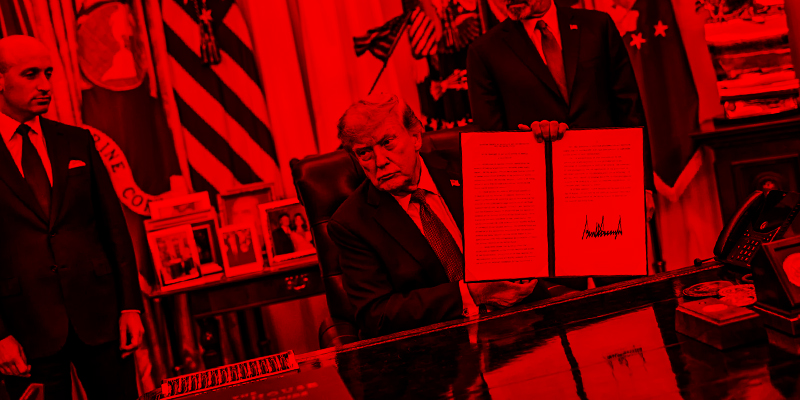
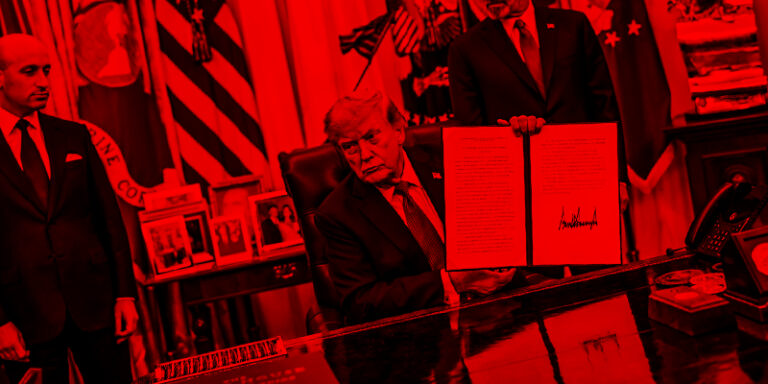
Image from whitehouse.gov