
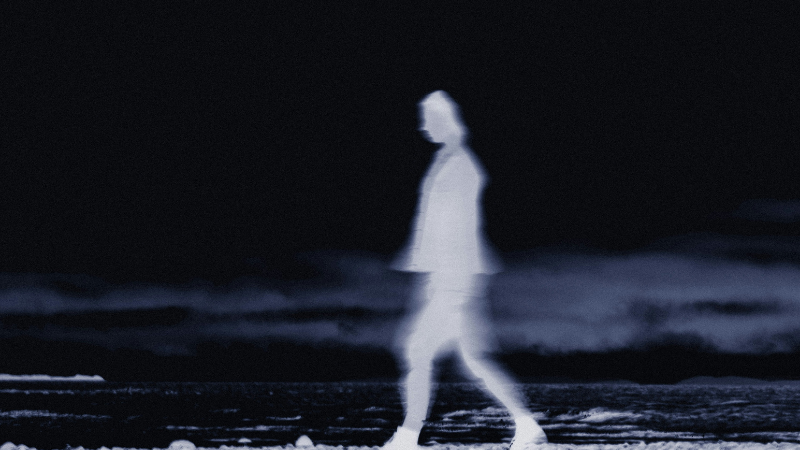
Several years ago, while COVID still pressed in on our lives with a brutal insistence, I went for a COVID test, received the expected negative, and traveled to upstate New York for a writers’ retreat. My novel’s seed was barely a sprout—a grieving widow, left to weather the aftershocks of her loss. A small group joined me: an engineer, a professor, a teacher, a published writer and mentor, a poet, and myself, the stay-at-home mother. I arrived late on Monday afternoon, veering off the main road toward a substantial stone house that carried a somber aura. This isn’t fiction.
If I showed you a photograph of it, you’d likely agree. A house built in the Victorian era, with carved timber, stonework, and stained glass—reminiscent of cathedrals that often depict devils’ faces and hellfire. I wish I could say that stepping inside immediately improved the impression, but it did not. I felt as though we were submerged in the gloomy vastness of the sea—shadows everywhere, with slivers of colored light playing overhead now and then. A number of us noted the house’s creepiness, yet we found two rooms that carried a sense of warmth—the kitchen and the dining area—where we spent our time reading aloud and critiquing one another’s drafts.
Wednesday evening, the atmosphere shifted abruptly.
To clarify: two of the women joined us via Zoom from the West Coast, unable to be physically present, while four of us gathered around the dining table. We had finally found a form of companionship and mirth that had been scarce for months. We may have sounded loud, but who was to blame? In the middle of a raucous burst of laughter, a woman across from me suddenly hushed us. “Listen,” she whispered, pointing upward. We fell silent. Each of us heard the heavy tread of feet above, then it vanished. And, like the heroine in a predictable horror plot who brushes off danger with a smile, we forgot about the noise. Before long we were talking and laughing again, only to be interrupted by the creak of furniture being dragged across the ceiling directly over us. Someone called out if anyone was upstairs. No answer, but the sounds grew more insistent.
The specters are growing louder, more insistent, more present; our stories—books and films—are catching up with that truth
Have you ever wondered how you would respond to a haunting? I hadn’t, and now I know. It felt like my emotions were chained to a roller coaster—swinging between wildly gleeful laughter and inconsolable tears. Dear reader, I became the unmoored character in a horror film, the first to be sacrificed to whatever malevolent force needed sustenance. Not a proud moment. In the midst of this, we learned our Zooming companions had been trained by shamans, and the revelation shifted our curiosity toward this detail. A shaman? Two shamans? One mentioned that perhaps our loud mirth had unsettled a resident spirit. They proposed seeking a “rose” to appease her. Rose, as in the flower. I remembered the perfume of rose, stored in my upstairs bureau for such occasions.
Picture three grown women—three because our mentor had briefly left to fetch her dogs and return with canine energy to search the house for signs of a poltergeist—ascending the endless stairs, moving down the corridor to my bedroom, and collecting the rose-scented fragrance. They moved in that tight circle, spraying it while still laughing and crying in equal measure. Meanwhile, the two Zoomers were exchanging private messages: Do you see the ghost? Yes, I see it too. It was around the moment our mentor and her three dogs appeared. Off-leash, they wandered the property, sniffing around, leaping onto beds, seeking treats. Our chorus of noise ceased. We later learned the place had a local reputation for hauntings and had once served as a home for the elderly.
That haunting reshaped my novel’s trajectory, shaping it into a narrative where a husband lingers as a grieving presence, his marriage left unsettled and unresolved, while his wife attempts to start anew. A recent wave of books and films shows I am not alone in this fixation. Today we are surrounded by ghosts and translucent visions pressing for attention, trying to tell us something essential—or perhaps trying to tell us to hush up, as in my case.
Have you noticed too? The presence of the dead seems to be magnified—louder, more insistent, more common—and our literature and cinema mirror this shift. Ghosts have moved into the mainstream, outgrowing their vampire cousins and no longer confined to the eccentric corners once shared with zombies and werewolves—the paranormal niche once seen as the domain of the macabre.
Of course, hauntings are not new to literature: Hamlet, Wuthering Heights, A Christmas Carol. More recently, Toni Morrison’s celebrated Beloved, which centers on the slave’s dead daughter haunted by a past act of escape, and Alice Sebold’s bestseller The Lovely Bones, in which the teenage narrator, Susie, remains a ghost seeking closure. Yet there is now a pronounced uptick in spectral visits. It’s as if the gates to the afterlife have swung open, and the departed are reclaiming space within our imagination and, by extension, within our stories.
Over a three-month window recently, three film adaptations of acclaimed novels featured ghosts in prominent roles. The newest cinematic take on Emily Brontë’s gothic romance, Wuthering Heights, arrived just after The Thing With Feathers, Max Porter’s award-winning novella about a talking crow that urges a widower to inhabit his sorrow. In the same month, Netflix released Train Dreams, a film adaptation of Denis Johnson’s revered novella about a logger whose deceased infant daughter visits him as a wolf.
In the week when the Pulitzer Prize for literature went to Daniel Kraus for Angel Down, in which a wounded angel appears to soldiers on a battlefield, Siri Hustvedt’s memoir Ghost Story appeared, recounting her long marriage to novelist Paul Auster and her profound grief at his death, to the point that she experiences his specter revisiting their Brooklyn brownstone. Anne Michaels’ latest novel, a Giller Prize laureate, adds a thread tying these works together: Held begins with a shellshocked WWI photographer who restarts his studio, only to discover that the sitters’ beloved dead linger in the background of their developed portraits. The narrator asks, “Perhaps the most important things we know cannot be proven.” Might this be a hint as to why so many esteemed writers are exploring realms once dismissed as peripheral—a different dimension of existence itself?
George Saunders, one of contemporary fiction’s most cherished voices, has revisited the threshold between the living and the afterlife in two distinct ways. In his fantastical Lincoln in the Bardo, he dramatizes the days after Willie Lincoln’s death, with the dead forever trapped in Oak Hill Cemetery, a place where every flavor of ghost wrestles with unfulfilled longing. His new work, Vigil, follows an angel who helps a billionaire experience remorse before crossing over. In a Dickensian homage, the specters haunt the billionaire’s room, urging him to reckon with his flaws. These two novels are examples among many that have appeared recently.
What explains this moment? What is it about the current cultural climate that draws us toward ghosts and the afterlife? I can name several possible dynamics. One is the sheer enchantment of the modern information era. For most people—let’s be honest, most of us—the foundations of technology feel beyond our grasp. Picture Thomas Watson at Bell’s elbow, summoned by a voice that travels through a clunking device, still urgent despite lacking a body: “Mr. Watson, come here. I want to see you.”
Phones, radios, televisions, faxes, cell phones, texts, video calls, AI—who truly understands the basis of it all? Yet vast, unseen “clouds” loaded with “data” and intangible lines of communication crisscross this tiny planet. And that world keeps evolving; if we can imagine communicating across space with devices, why not with the dead?
It’s as if the departed will no longer be ignored.
We are uncovering links not only on a global technological scale but also at the smallest, cellular level. In 2018 scientists uncovered the interstitium, a vast network of fluid-filled spaces just beneath the skin, maintained by a collagen scaffold. It’s a possible new organ, a discovery made possible by live imaging. While its function is still being studied, we know it acts as a shock absorber, participates in lymph flow, and may be a key route for cancer spread. By 2026, communications within the body could be observed directly.
Technology and medicine offer one clinical lens on this rise of mysticism. The sequelae of COVID and a steady retreat from formal religiosity are two additional threads. COVID thrust death into everyday view; hospitals overwhelmed with patients; beloved relatives dying isolated behind glass and masks; the rites surrounding dying were already limited and became even more restricted.
The timeless questions—why we exist and what happens after we die—took on sharper resonance during the pandemic. Those who continued to practice organized religion learned to cultivate a more autonomous spiritual practice. With churches closed, alternative avenues for meaning—search engines, podcasts, and other resources—intervened. What once seemed fixed and indisputable now accommodates doubt and inquiry. Metaphysical and existential questions have entered mainstream culture and permeated many aspects of life. And where there is a vacuum, art fills it. Literature. Cinema. Music.
Have you encountered a ghost? Not too long ago such questions belonged to the fringes of belief and speculation. Not anymore. It feels as if the departed are stepping back into our personal narratives, and we now approach them with genuine curiosity, even respect, rather than merely fear.
In that upstate New York mansion nearly four years ago, I sensed a profound liminality between life and death. It challenged me to the core, giving my novel its pulse, and it made me laugh and cry with unrestrained emotion.
Perhaps that is a fitting response to the things that haunt us.
__________________________________
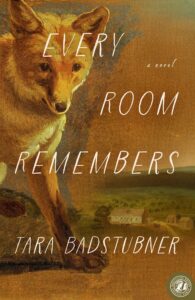
Every Room Remembers by Tara Badstubner is available from Sibylline Press.