
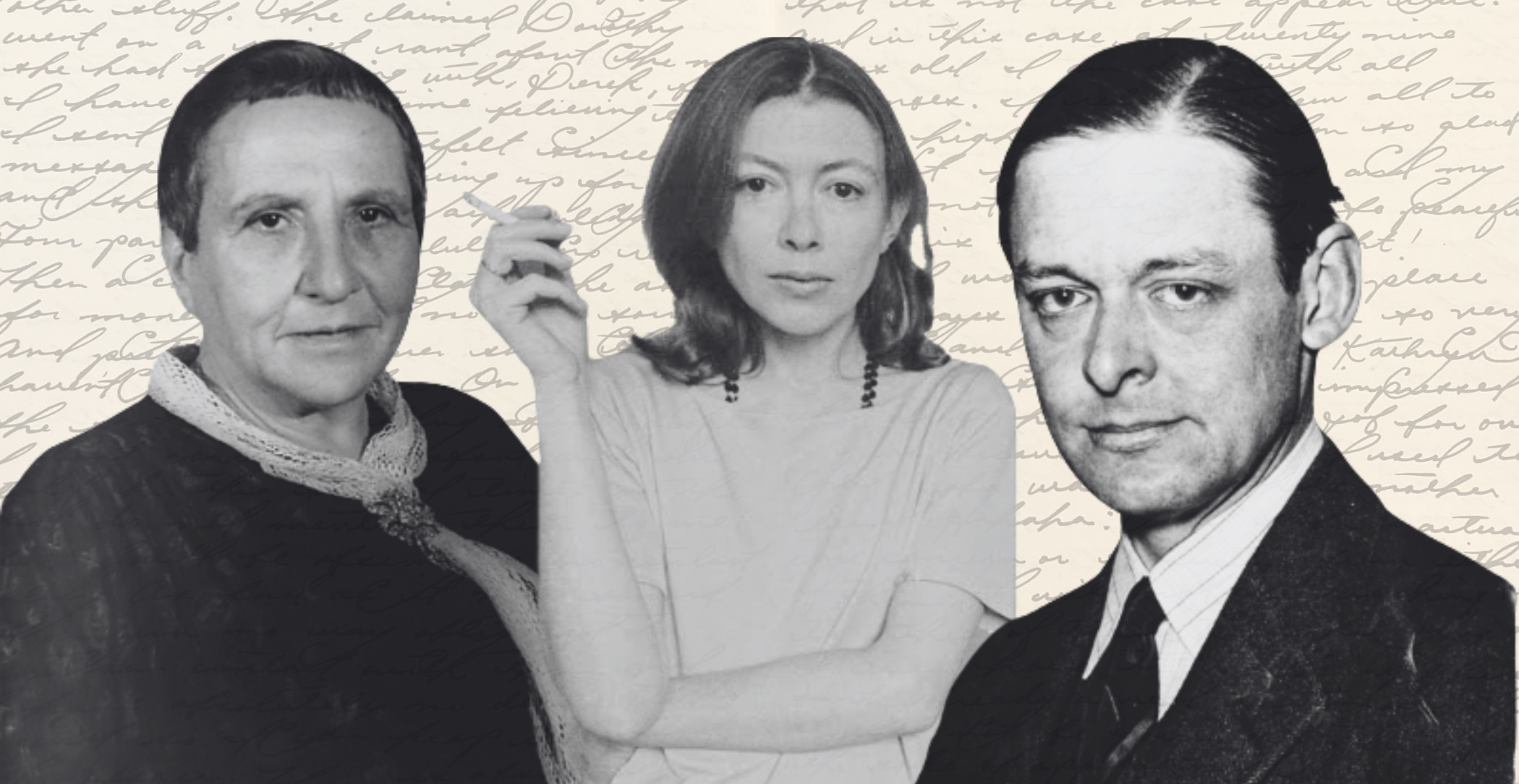
“A rose is a rose is a rose.”
–Gertrude Stein, 1913
From the linguistic acrobat who delivered a razor-edged jab at places that feel hollow (“There is no there there”) and who christened post–World War I writers with the gentlest sobriquet in existence (“The Lost Generation”), Gertrude Stein sits prominently in the record of literary history. Yet among her enigmas stands the more opaque line: “A rose is a rose is a rose.” Or, in its earliest version—since she would revise it over time—“Rose is a rose is a rose is a rose.”
As with any poem, Stein’s tautology about a flower resists straightforward prose interpretation; it resists even easy explanation, since it seems to refer only to itself and is composed entirely of itself, much like the tightly packed petals of the thing it names.
Nevertheless, we must dissect it, at least to reach what cannot be spoken within it. That, in essence, is Stein’s aim: to slam the language’s glass window again and again until we glimpse the quiet world of things on the other side. In Stein’s rapid-fire cadence, we depart from the conventional X equals Y framing of description—a rose is a flower, my love is a rose—and arrive at an unadorned X equals X idiom of repetition, as though signaling that “the final stop on the train of language is where life becomes real.”
While language can serve to outwardly point toward the world, it can also become stale, trap us, and leave us with nothing but a mountains of words. By stripping away centuries of semantic baggage—where “rose” has become so common as to fail to conjure the thing itself—Stein restored language’s power to signify beyond its own confines. Branding the flower in its most unadorned, freshly minted form, Stein later boasted, “I believe that in that line the rose is red for the first time in English poetry in a century.”
*
During a lecture at the University of Chicago, Stein was asked to clarify what she meant by her rose. She replied: “Now listen. See, when language was new—as it was for Chaucer and Homer—the poet could speak the name of a thing and the thing would seem truly present. He could utter ‘O moon,’ ‘O sea,’ ‘O love,’ and the moon and the sea and love would really be there. And can’t you observe that after centuries had passed and thousands of poems had been written, those same words became worn-out literary tokens. The thrill of pure being had receded from them; they became rather stale. Now the poet must re-enter the thrill of pure being; he must recover that intensity within the language.”
*
“Rose is a rose is a rose is a rose” first appears in Gertrude Stein’s 1913 poem “Sacred Emily” (appearing in her 1922 collection Geography and Plays) and later makes appearances in various forms across her poems and essays.
_____________________________________
“Good artists borrow, great artists steal.”
–T.S. Eliot, 1920
What constitutes originality in a work of art? Theft, argues poet and critic T. S. Eliot. The only other option, in his view, is to borrow, return with penalties, and end up pale and lifeless, like a cheap photocopy next to the source. In Eliot’s original formulation, “Immature poets imitate; mature poets steal; bad poets deface what they take, and good poets make it into something better, or at least something different.”
What about a third path—the pure invention of one’s own? Eliot dismisses it as impossible. In his essay “Tradition and the Individual Talent,” he maintains that any act of writing is inevitably shaped by what preceded it, whether we are aware of it or not. From where else would we obtain our language, our plots, our imagery, or our characters? This implies that one can either be unknowingly guided by prior literary forms and slip into cliché, or seize those sources and bend them toward new objectives. Shakespeare, after all, drew much of his material from Plutarch, Ovid, Boccaccio, and Holinshed, but what matters is that he fashions them into something his own.
How does one execute this literary theft effectively? Integration, Eliot argues: “The proficient thief fuses the borrowed material into a singular sense of feeling that is distinct from the source; the inept thief hurls it into something lacking cohesion.” In other words, immature work is a patchwork of copied phrases that fails to surpass the originals, whereas mature writers weave past ideas into a new, sensibly unified whole. It is this felt unity and the laborious craft required to convey it in language that separates a superficial derivative from a potent, transformative interpretation.
Eliot’s maxim about borrowing—often summarized as “Good artists borrow, great artists steal”—reminds us that authors do not conjure ideas from nothing, but continually repurpose old materials into fresh shapes. You can imitate without feeling, producing hollow recitations of the past, or, with careful attention, sensitive listening, and deep emotional insight, present a coherent “whole of feeling” that can jolt familiar ideas into new life.
*
Although the line remains famous, the essay it comes from is less widely discussed. In “Philip Massinger,” Eliot investigates how the Jacobean dramatist borrowed from Shakespeare and paid a price in the richness of expression by not surpassing his source. By alternating excerpts from their works with reflections on their differences, Eliot demonstrates Massinger’s tendency to imitate without the vigor of his great predecessor.
Massinger: Can I call back yesterday, with all their aids
That bow unto my sceptre? or restore
My mind to that tranquillity and peace
It then enjoyed?
Shakespeare: Not poppy, nor mandragora,
Nor all the drowsy syrops of the world
Shall ever medecine thee to that sweet sleep
Which thou owedst yesterday.
*
Eliot himself was a master thief, with a portion of his greatest triumphs—most notably in The Waste Land—hinging on phrases and images borrowed from a wide spectrum of sources, from Chaucer to Dante, Baudelaire to the Bible. Near the end of his compendium, he confesses, “These fragments I have shored against my ruins.”
*
Interestingly, Eliot’s rule about appropriation did not emerge in a vacuum. In a Gentleman’s Magazine piece from 1892 titled “Imitators and Plagiarists,” W. H. Davenport Adams analyzed how the English poet Tennyson absorbed and elevated an image or motif from a predecessor and wove it into his own resplendent fabric. He concluded with the remark that “great poets imitate and improve, whereas small ones steal and spoil.” Was Eliot’s formulation a direct lift, a stylistic nod, or merely another articulation of a timeless idea that continues to evolve?*
_____________________________________
“We tell ourselves stories in order to live.”
–Joan Didion, 1979
In the face of tragedy, the mind instinctively seeks to weave meaning. Every dark event seems to demand a narrative, every act of violence must be slotted into a larger moral or social lesson. “We tell ourselves stories in order to live,” Joan Didion writes at the opening of her essay “The White Album.” Without such narratives, existence feels too terrifying to bear.
We search for a moral in the suicides, for a message in the killings of five, and we shape our recollections around a storyline that can anchor our experience. We live by imposing a narrative thread on otherwise disparate images, by the ideas through which we have learned to freeze the shifting, phantasmagoric texture of our actual experience.
What happens when our capacity to impose meaning begins to fray? When the fermentation is too intense, the events too shocking—the violence too senseless? Didion’s account of late-1960s California captures exactly that upheaval. She moves from the Ferguson murder trial to the shooting of Huey P. Newton, from the Tate-LaBianca murders to odd episodes from her own life, painting a portrait of a era saturated with cults, drugs, militants, Scientologists, eager revolutionaries, and restless musicians, punctuated by odd phone calls and uninvited visitors, clandestine investigators and suspicious trucks. All of it swirls into a dangerous, almost lucid haze. She even describes a case in which a five-year-old girl died on a highway median, and she concludes that “these images did not fit into any narrative I knew.”
Didion’s own sense of plot unravelled as if she had been jolted out of the story of her life, felt detached from the world, until her own role in it seemed unreal.
I appeared, on the surface, to be a competent member of some community or another, signing contracts and boarding passes, a citizen by all appearances. This performance was perfectly adequate, in its way. Yet every piece of instruction I had ever received—every belief I had ever held—told me that life’s production was never meant to be improvised. I had to hear the cues, and I no longer did. I was supposed to know the plot, and all I knew was the sequence of flash images, arranged in no fixed order, with no inherent meaning beyond that immediate arrangement.
Didion recorded her perplexities in writing; they also surfaced in medical scans. After a succession of visual disturbances and a battery of tests, she received an “exclusionary” diagnosis of multiple sclerosis. The disease would remain in remission for the remainder of her life, but the preliminary findings were unsettling yet illuminating. “The startling fact was this: my body was offering a precise physiological parallel to what had been happening in my mind.”
Didion’s reflections on humanity’s need to craft meaning from chaos, and on the hollowness that can accompany failed attempts at such meaning, stand as a profound critique of how individuals and societies confront crisis. The era’s proliferating ideologies, puzzling violence, and a world in rapid transformation—where “all connections were equally meaningful, and equally nonsensical”—Didion offers no ready-made remedies for these cognitive leaps or paranoia. She does not deliver a comforting script for readers; rather, she invites continual observation, perception, and note-taking, a stubborn search for meaning, and the assembling of fragments into a coherent narrative as best as one can.
*
From her essay “The White Album,” first published in New West in 1979 and later issued in a collection bearing the same title, the piece nods—not just to a landmark album of the period, but to the charged music within, and especially to the track “Helter Skelter,” which Charles Manson misappropriated as a sign of an impending apocalyptic racial war and used to justify violence such as the Tate-LaBianca murders. By juxtaposing white and black, light and shade, hidden meanings and chaotic brutality, Didion’s title signals the spectrum of its themes: the appalling incoherence of evil, the paranoid’s compulsive connectivity, the depressive’s vacuum of meaning, and the necessary impulse to make sense nonetheless.
*
There is also a subtle ambiguity in Didion’s claim that “we tell ourselves stories in order to live.” Just as narrative can disintegrate into senseless fragments leaving us alienated and adrift, it can also harden into a comforting sermon, a political ideology, a tidy moral doctrine, or a conspiratorial creed. Telling stories may be essential—an indispensable act—but clinging to them too tightly can become a delusion and a fragile shield. Between abyss and ideology, between chaos and fragile clarity, Didion guides us through the richly ambiguous middle ground, telling the scene without prescribing a lesson, recording what she sees without smoothing over its rough edges. If we tell ourselves stories in order to live, Didion reminds us, we must also resist easy answers and prefabricated interpretations; we should strive to report what we observe as truthfully as we can.
We Tell Ourselves Stories in Order to Live later served as the title of Didion’s book of essays released in 2006.
______________________________
Excerpted from Phrased & Confused: The Curious Meanings of Timeless Quotations by Eli Burnstein. Copyright © 2026 by Eli Burnstein. Published and reprinted by permission of Abrams. All rights reserved.