
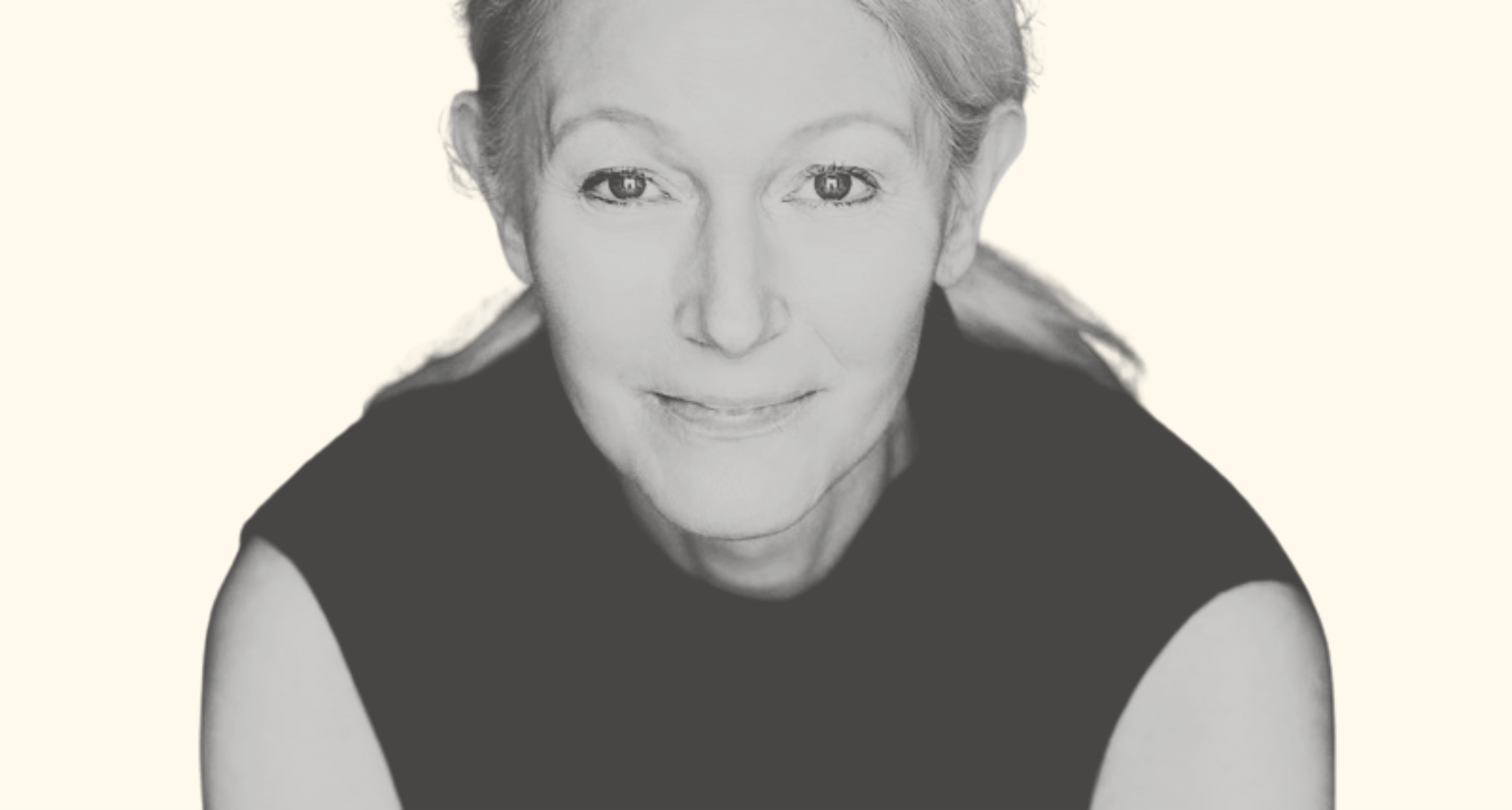
Nina Schuyler, a celebrated author in climate fiction, grew up amid the abundance of water in Washington state. Much of her childhood summers were spent at Gravelly Lake, a lake shaped by glaciers, notable for its profound depth and striking blue tint, as she describes. The shoreline is lined with Douglas firs and tucked-away residences. She learned to sail, swim, and snorkel in that water, which felt like a second home. On a paddle boat, she’d make for a buoy, secure it, and spend hours reading in the lake’s heart.
Her family also spent substantial time along Puget Sound. She and her sisters would wander the shore, building miniature “houses” for crabs and stacking rocks to create little dwellings for them. They’d collect oysters to bring to their father, who would slice them open with a knife, drizzle on lemon, and share the feast. They had a small rowboat named Rosie and would voyage out in search of sharks.
Along the Deschutes River in Oregon, the sisters rode their bicycles beside the water and enjoyed picnics on its banks. Their father taught them the craft of fly fishing there.
These experiences seeded in her a deeply rooted, intuitive understanding of the natural world, a sensibility that glows through in her latest novel, Open the Floodgates. The book opens with a central figure, the River, arriving at a small-town courthouse to face a trial about its future rights.
*
Jane Ciabattari: In our previous chat about In This Ravishing World, which earned several honors—including the PEN Oakland Josephine Miles Literary Award, the W.S. Porter Prize for Short Story Collections, and the Prism Prize for Climate Literature, while also being a finalist for the Northern California Book Award—you mentioned you were working on “something experimental-ish involving nature… I’m in that stage of letting it unfold, trying not to judge it or rein it in. I’m back to that refrain: go ahead, what am I waiting for? Let it rip.” How did that mindset work for you?
Nina Schuyler: It meant that early on, with the River pressing on the story and ready to come alive, I focused on rhythm, sound, movement, and how the text felt rather than adhering to hard-and-fast rules. Rules would have suffocated the story and steered me away from what I wanted to write, which was a prose current that swishes across the page here and there. Rather than a steady, single viewpoint, I sought an oceanic perspective—sometimes intimate, sometimes sweeping. This allowed me to shift from character to character even within a single scene. It was exhilarating and terrifying because I wasn’t sure it would work. Had I clung to many of the rules rattling in my brain, I wouldn’t have tried any of this. But a go-for-it approach (and asking: what do I have to lose?) urged me onward. Yes, go ahead. Do it.
JC: How would you trace the evolution of Open the Floodgates?
NS: While in law school, I loved a course on water law; my professor was genuinely passionate about water. Over the years I’ve tracked the legal trend of granting personhood to natural entities—rivers, mountains, forests, sea turtles, valleys. It’s fascinating not only from a legal standpoint, moving something typically treated as property into a “person” category, but also linguistically, as naming a river as a “person” jolts the brain in surprising ways and invites provocative questions. Once I encountered that shift, I started devouring material on the Rights of Nature movement and the social/legal push to recognize natural entities as having rights.
I thought, for once, instead of a river in the background and humans in the foreground, the River and humans would be on the same ground.
In real life, when a river is granted personhood, guardians—humans—are appointed to represent it in court. But why not let the River handle it itself? It’s a river that distrusts humans more than ever, and I pictured the River opting to take the reins itself. For once, the River would stand on equal footing with people.
JC: Where did the title originate?
NS: I was drafting and drafting this novel when my husband turned on a haunting, beautiful song. I paused writing and began to dance. The tune was Thom Yorke’s Open the Floodgates. He may not be singing about a river, but art invites interpretation any way you choose. For me, the refrain connected the River to the whole book, and Yorke’s line, “someone lead me out of the darkness,” kept the language bright and energized, casting a hopeful light over the story.
JC: How did you imagine the river as a character, a voice, a consciousness, a physical presence on the page, and as evoked by typography?
NS: I started with the usual process of characterization, thinking through the River’s defining traits and peculiar details. A living river is always moving, flowing toward another body of water—be it a lake, the ocean, or another river. So I imagined, in the sense of imagination itself—the heart of everything—how difficult it would be for the River to sit still in a courtroom, a rectangular shape that feels alien to it. All the River’s metaphors would conjure images from nature.
By roughly the third draft, I decided the River shouldn’t travel down the page in a straight column of prose. That would imitate the way humans flatten rivers for convenience. Instead, as the River moved, it would bend and sway across the page, a rhythm that invites the reader to feel its motion.
Time would wear a different texture for the River, which I pictured as three million years old. It became a vessel of memory, knowing every person in town, recalling their childhoods and ancestors, and remembering the cottonwood trees that once lined its banks, the fish beneath the gray stones, and the birds who came to drink and feed. It remembers Hazel and the other women who came to wash their clothes in the water, and Hazel herself—“as a toddler in diapers, a girl in a yellow summer dress, a teen walking hand in hand with James Colville, the rascal, a young woman with Ted Walker and his sturdy shoulders; when he walked the earth, the ground trembled slightly, and his abundance spread out like moss.”
JC: You note that Virginia Woolf’s stream-of-consciousness approach inspired your own “river-of-consciousness,” a technique that sways between characters. How did you assemble this cast? Which figures were easiest to convey, which the hardest, the last to take shape?
NS: After I found the River’s voice, I knew there had to be a judge, and that naturally led to the judge’s wife, the defense attorney, and pigeons perched on the courtroom’s windowsill. I showed the first twenty pages to a couple of writer friends, and they said it wasn’t working—it moved too swiftly, the waters too choppy. So I slowed things down, letting the reader linger in one consciousness long enough to care about a character before shifting to another.
The river is a force. It contains both passivity and agency, calmness and violence. These two states of being create tension and ambiguity, which is great for a story because you don’t know which one will prevail.
If the narrative started hitting rough waters (pardon the extended metaphor), I added an omniscient first-person narrator who helps map the journey for the reader: “There’s a nervous energy in the courtroom, so prepare yourself. No one has ever seen the River, or any river for that matter, in court, so the energy is flying wild in here, like a rubber ball bouncing off the walls.”
Ultimately, the guiding principle was play—experimenting, listening, and feeling the prose. In another revision I built connective tissue by passing the narrative baton from one consciousness to another through a gesture, a scent, a word, dialogue, or a vision.
It was straightforward to imagine nine-year-old George testifying on behalf of the River. I have two sons, and they both carried boundless, buoyant energy. I spent considerable time on Ed, a member of a local tribe, working and writing to steer away from stereotypes. Gary, the defense attorney hired by large agricultural interests, proved tricky; it’s all too easy for a reader to despise such a figure, so I worked to complicate him, revising until the end and giving him vulnerabilities—soft spots that invite a more compassionate reader response.
JC: Which legal cases proved most useful in shaping the novel? How did you project future cases? Which scholars helped you most? Did your legal training aid your writing?
NS: A 2006 case offered major inspiration: the Community Environmental Legal Defense Fund collaborated with the residents of Tamaqua Borough, Pennsylvania, to draft a law granting rights of nature to waterways. With state and federal approval, Lehigh Coal & Navigation Corporation planned to dump toxic sludge into abandoned coal mine pits. The community resisted, and the ordinance passed, making Tamaqua Borough the first municipality in the United States to recognize the legal rights of nature.
Ecuador learned of this case and contacted CELDF, which assisted with the country’s constitutional convention, drafting language for Rights of Nature and granting personhood to all of nature. The national constitution was ratified in 2009 by more than 60 percent of Ecuador’s population, marking it as the first country to take this step. Since then, about two dozen cases have been brought on behalf of nature in Ecuador, including a cloud forest and a river.
I think my law studies helped me grasp the profound reframing that occurs when something moves from the category of property into that of a person with rights and responsibilities. So far, no one has sued a river for damaging property, but it’s within the realm of possibility. Once you’re a person, you can sue—and you can be sued in turn. I believe this area of law is evolving, and at some point the idea of personhood will need adjustment for natural entities, perhaps removing the “responsibility” prong so they cannot be sued.
JC: Your river-focused research seems extensive. Which sources did you value most?
NS: Cindy Lowney, a river and water resources engineer, patiently explained the role of rivers in sustaining life, what constitutes a healthy river, the surrounding riparian environment, the parallels between humans and rivers, and, crucially, the damage caused by humans. Norris Hundley Jr.’s The Great Thirst: Californians and Water, 1770s–1990s, helped illuminate California’s river history and water dynamics, as did Cadillac Desert: The American West and Its Disappearing Water by Marc Reisner.
JC: Did you have specific floods in mind for the section that explores a river breaking free from its banks, distorted by development?
NS: In December 2005 my family and I lived in Fairfax, California, next to San Anselmo Creek. A Pineapple Express weather pattern, combined with a King Tide, caused the creek to swell beyond its banks. Water surged onto streets and yards, slammed into homes and businesses, and four feet of water rolled down San Anselmo Avenue, flinging cars around, shattering windows, and inundating the fire station. On December 30, the ordinarily gentle sound of the creek became a roar; we stayed up through the night watching the water climb, climbing, climbing, until it reached our yard’s edge. We hauled everything from the downstairs up to the second floor in anticipation of a flood. The water never reached our home, but for many people, the creek reclaimed their first floor and more. Yes—the creek did reclaim land in that flood zone.
JC: What draws you to climate fiction?
NS: The ecological collapse stands as humanity’s greatest existential threat, and I can’t turn away. We are a species of story-makers; we tell stories to guide us through life. Stories invite readers to step into another world and experience life from a different angle. I may not excel at many things, but I can write stories.
JC: The cover of Open the Floodgates by Luis F. Ramos is stunning. How did that design come together?
NS: Luis did an outstanding job. There was a lot of back-and-forth, but I wanted something minimal yet striking, and Luis delivered. He read the book and seemed to sense the river’s vitality; to me, the cover feels full of motion and life.
JC: Returning to Woolf. Which of her works did you encounter first, and which has left the strongest mark on you? Do Woolf’s shockingly final act—filling her pockets with stones and walking into the River Ouse near her Sussex home in 1941—cast any influence on Open the Floodgates?
NS: My introduction to Woolf was Mrs. Dalloway, a work that collapsed my preconceived notions of what a book could be. I remain in awe of her style, innovation, and mastery of rhythm, sound, and repetition. Woolf taught me how to build a coherent, polyphonic story through multiple consciousnesses. Then I read To the Lighthouse. I could speak endlessly about that novel, but I’ll point to the Time Passes section, where human lives are gathered into brackets as the night and day and the subtle currents take over, and the little airs begin to question and improvise around human-made objects. I was captivated by the idea that something besides humans could occupy the foreground of a story.
I hadn’t thought about Woolf ending her life in the River, but in my novel I emphasize the river as a force. It embodies both passivity and agency, calmness and violence. Those two states create tension and ambiguity, which works well for a story because you never know which will ultimately prevail.
JC: What are you working on now or next?
NS: I’m continuing in the climate-fiction realm, exploring the relationship between humans and the more-than-human world. With every book I aim to explore something anew, so this next project sits in a vast field, inviting me to touch dirt, trees, sky, and even a raging blizzard—and I’m loving every moment of it.
______________________________
Open the Floodgates by Nina Schuyler is available from Reverberations Books.