
I fell into librarianship in much the same way a bar regular might slip behind the bar: you linger in that spot for hours on end, day after day, admiring the person across the counter until—lacking a better option—you conclude I could probably do that for a living.
I’d put out a few books before seriously considering a librarian’s life, yet I had long admired the vocation. While composing my history master’s thesis, I spent weeks in Milwaukee’s downtown library poring over every source they possessed about the city’s old film censor board. One day, when I felt I’d exhausted most of what the library owned, a librarian tapped my shoulder and pointed toward a rolling cart loaded with dozens of boxes containing a film-by-film ledger of every movie the board had reviewed over forty years. It was more granular material than I could have imagined existed. I hadn’t spoken to this particular librarian before, but she’d heard I was looking into cinema archives. “I thought you might find this interesting,” she said. “I don’t think it’s ever been cataloged. It was in the basement. I kept it from getting discarded about ten years ago.”
The ideal researcher-librarian relationship is a mutually confounding one.
Her gesture was modest—likely less a grand preservationist move than a cautious, “Let’s hold onto it just in case.” She found a quiet shelf for the materials, and there they sat for ten years until she overheard a hint about my project and decided to bring out the cart. The day I thought I would only have a short stint left at the library stretched into another six weeks, and my small thesis blossomed into a full-length volume. It’s uncanny how a good librarian can make life more thrilling while also making it more intricate.
Yet if a writer waits passively for the librarian to complicate things, the librarian, in turn, hopes for a patron who will arrive with a question that will generate hours of additional work. The bulk of a librarian’s tasks are low-impact. In a public library, you help people sign into their email, show them how to operate the printer, place holds on popular titles. In academic settings? Here’s where you point to a source, here’s how you access a journal article, are you sure you’re signed into the VPN? (Most aren’t.) So, when someone arrives with a story they’re desperate to tell… with a research question tangled in a knot as big as a hand grenade… you truly value the moments spent chasing what they hope exists. The ideal researcher-librarian relationship is a mutually confounding one.
In 2023, I began a fresh position as a faculty librarian at Marquette University in Milwaukee. I started during the summer break, giving me ample time to acclimate to the role and familiarize myself with the library’s databases and digital holdings. I opened a digitized collection of LGBTQ periodicals and stared at the blank search field, a moment of illumination dawning as I recalled a long-abandoned book project. What was his name?
I tell people not to be shy around librarians. One of them might know about a stack of boxes in the basement.
Years earlier, I’d conceived a book about the true story behind the 1975 film Dog Day Afternoon, in which Al Pacino portrays a gay man who robs a Brooklyn bank to fund his lover’s gender-affirming surgery. It was one of my all-time favorite movies, a gritty, intertwined tale of love, violence, and a midsummer’s fever that I longed to explore further. I even named a project in progress as Dog’s Day. And that’s basically where it stayed: a concept and a two-word title. I opened the Dog Day Afternoon page on Wikipedia, copied John Wojtowicz (the real-life robber) into the search box, pressed enter, and promptly made my life more complicated.
That initial search yielded dozens of articles. Those articles led to more articles, and those led to even more. Those pieces bore bylines. A handful of reporters had donated papers to various archives and libraries. Those papers contained letters, clippings, and notes that offered a rich lens into Wojtowicz, his crimes, and his complicated lineup of lovers, rivals, and accomplices. One archival visit spawned others, while librarians along the way—thrilled to hear about my manuscript chase—contributed to my growing repository. The book, by the way, keeps the same title, and is slated for publication this month.
After completing Dog’s Day, I embarked on another project. About six months of digging later, I recognized that the idea didn’t have the footing I hoped, and I had to abandon it. That’s the nature of the work sometimes. Some books never leave the archives, and that’s perfectly fine—better stranded there than in the hands of a bored reader. As an academic librarian, I guide students regularly through their inquiries—helping them articulate the stories they want to tell and the questions they wish to answer. Most students are simply trying to survive the term, but a few have a genuine passion for the craft. So I work through the obstacles they present and, if possible, generate even more tasks for them. I remind them that dead ends aren’t wasted time and that they will always be at the mercy of their sources. And I remind them never to hesitate around librarians. One of them may well know about a stack of boxes in the basement.
__________________________________
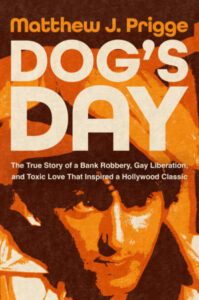
Dog’s Day from Matthew J. Prigge is published by Counterpoint.
