When I first began reading coverage about what looked like an incomprehensible scheme from the Trump administration to seize Greenland, I felt as if my sanity were slipping. Not because I failed to understand the plan, but because much of the reporting didn’t grasp the deeper reality. How had every major outlet missed the very public chatter within the “PayPal mafia”—a circle of Silicon Valley founders and investors orbiting Peter Thiel and Elon Musk—about acquiring Greenland long before Trump’s second term? Or the jubilation from Dryden Brown, founder of the Thiel-backed Praxis, on X when Trump appointed PayPal co-founder Ken Howery as ambassador to Denmark? “According to plan,” Brown wrote atop the news of Howery’s appointment. Praxis had already attempted to “buy Greenland” a year or so earlier and continued to envision building a techno-utopian, deregulated city there.
According to plan. https://t.co/qB8fg5aMiG
— Praxis (@praxisnation) December 22, 2024
Yes, Greenland contains critical minerals and yes, its strategic value grows in a warming world, but more than anything, it has been a touchstone for the “Network State” project for years. And somehow no one seemed to mention it! That omission was why I felt relief upon discovering Gil Durán’s The Nerd Reich newsletter and its accompanying The New Republic series. Durán had been chronicling the Network State—an idea that democracy has run its course and that we’d all be better off inside “special economic zones,” little fiefdoms steered by tech leaders. The concept of undermining democracy with feudalism! He had also illuminated the role Silicon Valley played in distorting the information ecosystem, a central thread in the book I was drafting. So I reached out to him, and we’ve exchanged messages ever since. I was thrilled when his book, bearing the same compelling title, The Nerd Reich, was announced last year and even more delighted to see it become a bestseller this year. It seems that even mainstream media is waking up to the possibility that tech billionaires aren’t necessarily the heroes some paint them to be.
Durán’s book traces the Nerd Reich’s worldview and its methods for harvesting political capital, while my own book, Brought to You By: How Corporations Warped the Truth, Conned the Public, and Broke Democracy, investigates how these same players have corrupted and weaponized the information ecosystem to achieve their aims, drawing on tactics the corporate world has deployed for decades. It felt like a natural moment to examine where our two lines of inquiry intersect.
Here is a snapshot from our conversation, lightly revised for length and clarity.
*
Amy Westervelt: Let’s discuss this unusual little book, The Sovereign Individual, which shaped much of Peter Thiel’s thinking. I learned from your work that The Sovereign Individual was really a simplified, secondhand take on earlier writings, which is amusing. It reminded me of another fellow, Antony Fisher, who built a worldwide network of “free market” think tanks called the Atlas Network and was similarly inspired by Friedrich Hayek’s The Road to Serfdom but never actually read the full text—only the abbreviated version.
There’s this notion, this apocalyptic vision, that instead of digging their own private bunkers, the billionaires must craft new territories to shield themselves and empower them within the bleak future they’re engineering.
Gil Durán: Sometimes a mere summary of ideas is all it takes to seed a larger movement, wouldn’t you say?
A.W.: So true. Anyway, you and I focus on different facets of The Sovereign Individual and the ideas Thiel absorbed from it. What stands out to you?
G.D.: When researching how Silicon Valley’s wealthiest figures became radicalized, it’s hard to avoid The Sovereign Individual. It’s a 1997 business doom narrative that some have described as an “apocalypse-in-a-book” that advised investors on how to prepare for the impending breakdown of democracy and the global order. It suggested that two technologies—“cyber currency,” i.e., crypto, and “advanced automation,” what we’d call AI—could trigger the collapse of nations like the United States, but that sharp observers could profit by getting ahead of the curve. It became a kind of prophetic guidepost for a handful of influential Silicon Valley billionaires, despite its rather melodramatic, doomsday tone.
A.W.: The Sovereign Individual also promotes this “public choice theory” idea—basically that no one truly cares about the public interest, and anyone who pretends to is merely selling you something. I’ve always thought of it as a way for these men to rationalize their sociopathy to themselves.
G.D.: They detest the public good and the common good, and so they assume everyone shares that contempt. Yet many people don’t. This strain of ideology—sometimes labeled libertarian or anarcho-capitalist—has clearly evolved into a form of fascism: the belief that democracy is ineffective and that a different system is the answer. But the truth remains that the democracy we have, flawed as it may be, was forged through centuries of trial and error, from the ancient Greeks onward. Oligarchy and tyranny fail; a society with a robust private sector fueling technology and defense is where Silicon Valley’s wealth largely originated.
A.W.: Right! They’ve benefited immensely from democratic frameworks and subsidies. This brings me back to Fisher, since he attacked government programs in agriculture and then collected a hefty government check when his cattle fell ill—funding his first trip to the United States to meet with early think tank founders and learn about factory farming, which he carried back to England and later profited from. He never confronted that disconnect.
G.D.: You can’t get rich off democracy and the social framework and then decide to opt out. Now that you’re wealthy, you don’t want to pay taxes and you assume you can survive on your own. As a species, we cannot thrive in isolation. This group clings to a myth that their success is self-made, while many of them are essentially public-sector beneficiaries in disguise.
A.W.: I like to joke that I first encountered this group when I was covering cleantech in San Francisco during Tesla’s early days; back then, it seemed obvious that what we’re seeing today was coming. I wrote a 2015 piece about Tesla and “closed-loop” battery recycling, while it was still uncommon to find a critical take on Musk. I’d heard from a Panasonic contact who complained that Musk overstated what they could do, and I faced pushback for reporting that story. It was difficult to convince people then that Musk might not always act in good faith and even harder to imagine he might not be a genius. Even with everything since, many still cling to the idea that these individuals are unimpeachably brilliant and staunchly anti-democracy, even when they openly say otherwise. Do you feel that resistance too? Why is it so crucial for some that these people remain uniquely brilliant?
G.D.: There’s an old Yiddish saying that seems to fit: If you’re rich, you’re also supposed to be smart, handsome, and capable of singing.
A.W.: That’s a good one!
G.D.: I think people tend to assume the wealthy master every field—and they don’t.
A.W.: Exactly, it’s the meritocracy myth again. What about the public’s reluctance to accept that these individuals are genuinely odd?
G.D.: First, the general public hasn’t really heard much of this because the mainstream press largely refrains from discussing it, often treating it as a marginal curiosity within Silicon Valley. What has happened, though, is that these ideas have moved into the political mainstream through figures like J.D. Vance. Crypto—an activity that few Americans actually use—has become a dominant donor in our political system. Why is that? Why has this dubious product become so influential? There’s a whole ideology behind crypto, the belief that it will upend and replace government. The media has largely ignored this because editors prefer not to give such ideas oxygen. Yet billionaires now wield power to impose these notions through culture, social media, and politics. There’s also a broader aversion to complex narratives and to ideological thinking.
A.W.: Oof, that last point hits hard. My book delves into a parallel media ecosystem these figures have built that allows them to bypass skeptical traditional media while still controlling much of the information flow—and thereby shaping public opinion. It’s easy to blame journalism’s waning business model for everything, but I don’t think that was accidental.
G.D.: It wasn’t accidental. They call it a parallel system—a parallel media, and a parallel education as well. They’ve long understood how influence operates in society and how opinions and decisions are shaped by information, stories, and narratives. They want to dismantle the traditional press because it acts as a counterweight to their power. They’re explicit about this, which is why they’re trying to purchase major channels or create their own media platforms.
A.W.: Now, about the Network State itself. I’d been aware of the seasteading craze for a while, but I hadn’t connected it to this larger project until I read your work.
G.D.: The central premise of seasteading is to flee from existing governments, laws, and regulations by establishing autonomous territories offshore. Peter Thiel funded the Seasteading Institute in the late 2000s to push such projects worldwide. Yet the plan faltered because people don’t want to inhabit a rusting sea barge—it’s a grim cruise, essentially. Often these thinkers misread social dynamics; there’s a reason urban life persists. I was just watching Alex Gibney’s Going Clear, about Scientology, and L. Ron Hubbard tried to do many things on boats to dodge rules, so seasteading didn’t really introduce a new concept. It simply evolved—from oceanic experiments to land-based ambitions—much like any organism shifting habitats.
A.W.: Greenland again comes into view: Thiel-backed Praxis targeted Greenland, and I’m curious about your take on why that location kept resurfacing.
G.D.: At the heart of the network state ideology—advocating that tech billionaires should seize power in the twenty-first century via technology—is a colonial impulse: staking claims, creating frontiers, hoarding resources for a select few. Greenland holds a range of minerals and lies along shipping routes that may become more valuable as climate change reshapes the world. It’s an attractive testing ground for this philosophy.
A.W.: Dryden Brown has spoken about “terraforming” the place and using it as a proving ground for Mars expansions. He’s deeply into this colonial, masculine frontier rhetoric as well.
G.D.: No matter where you look, the same circle of people keeps showing up, often talking about a new, billionaire‑funded city. That is the network state concept in action. In fact, there are proposals to build one on the ruins of Gaza, with Jared Kushner pushing the idea. The line is clear: rather than digging their own private bunkers, the ultra‑wealthy want to carve out new territories meant to shield and empower them in a future shaped by technology—one in which ordinary national life may be unrecognizable to accommodate their ambitions and where regular cities no longer suffice.
A.W.: I want to turn to J.D. Vance, since your book spends a good deal on him, and I suspect many people still cling to the belief that removing Trump will restore normalcy. They don’t realize how much more dangerous Vance could be. People claim he’s too strange or unlikable to win, but I remind them that he has endless financial backing and a real threat.
Despite their insistence that they are “disrupting” old institutions and paving a path to the future, they are just another generation of elites who hate democracy because it means they can’t be 100 percent self-interested.
G.D.: We need to accept where we stand, friends. We aren’t in a world where logic and reason dominate a sizable portion of voters. Vance is a perilous force. The tech billionaires will do anything to secure his election because he will bow to their demands. He’s a radical zealot who has suggested that Donald Trump should purge the government and defy the courts if they get in the way. This is a Yale-trained lawyer proposing that the U.S. President should ignore the Supreme Court. If he gets in, he could go all the way—perhaps even emulate the worst extremes. He’s hardly driven by money; he’s driven by power. Almost every step in his career has been steered by Peter Thiel: Thiel transformed him into a venture capitalist rather than a lawyer, funded his venture outfit, molded his Catholic identity, and even orchestrated his Senate victory by securing Trump’s endorsement and pouring $15 million into the race, which changed the dynamic. Vance was faltering in that campaign until Thiel and Trump intervened.
A.W.: Alright, Gil, I’ll let you go soon, but we must touch on Thiel’s fixation with the Antichrist and his intense opposition to the climate movement—and Greta Thunberg specifically.
G.D.: Thiel has long been obsessed with the Antichrist, and it seems to have become his defining fixation. He travels the world delivering four‑day lectures on the Antichrist, in places like Austin, Harvard, Oxford, San Francisco, near the Vatican, and in Austria. This isn’t theology; it’s a do‑it‑yourself apocalypse fantasy. In his Antichrist talks, he frames our current crisis as a cosmic struggle between good and evil, casting the tech oligarchs as righteous and anyone challenging their acceleration of AI and planetary domination as a threat to humanity. Some see it as a Christian veneer on a set of ideas about AI-driven abundance and interplanetary travel—an ethical cover for their ambitions.
A.W.: And the Greta anti‑antichrist framing is hardly unique. The Atlas Network crew once produced a “Green Dragon” series aimed at evangelicals, warning that environmental activism could lead to paganism. It echoed the old‑school anti‑drug ads from the 1990s—very odd.
G.D.: They reject any political philosophy that demands collective action. Anything that isn’t pure individualism aspires to maximize self-interest, even to the planet’s detriment. Some of these people imagine becoming multi‑planetary as a necessity—no other known worlds accommodate human life. It’s a fantasy rooted in apocalypse, utterly blind to the fact that Earth’s ongoing survival will require collective stewardship, not reckless self‑interest. They fear the climate movement because democracy distributes power to everyone, and they want to avoid that risk. In their view, democracy is the obstacle to ultimate self‑enrichment and to the AI‑driven transcendence they crave—a notion wrapped in religious-like fervor.
A.W.: Yes, despite their claims of “disruption” and progress, they represent a new wave of elites who despise democracy because it curtails their unbounded self‑interest. They’re disrupting colonialism in name only. Cue the confetti!
G.D.: The paradox is stark: those who promise to lead us into the future frequently seem intent on dragging us toward the past.
*
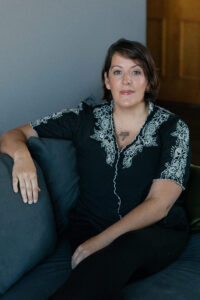
Amy Westervelt is an award-winning investigative climate journalist who has spent more than two decades covering climate issues for a wide array of outlets, including Inside Climate News, The Washington Post, The Guardian, The Nation, The Intercept, NPR, and others. She also founded and serves as executive editor of the Critical Frequency network, which hosts acclaimed podcasts such as Unfinished: Short Creek, This Land, and Drilled. The Drilled project has grown from a podcast into a climate-centric global newsroom, collaborating with The Guardian, ProPublica, Rolling Stone, and more. In 2023 Amy was named a Journalist of the Year by Covering Climate Now. She lives in Spain.
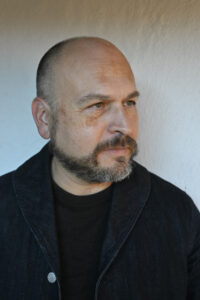
Gil Durán was born in Tulare, California, in 1976. The grandson of Mexican immigrant farmworkers, he first tasted fieldwork before discovering journalism when he won the local paper’s “My Mom Is the Best” contest in elementary school. In tenth grade, his family moved from California to Kentucky, where he briefly dropped out, later returning to complete school with the encouragement of a teacher who urged him to pursue college. He earned a degree from DePauw University in 1998 and began his journalism career at the San Jose Mercury News. As the newspaper industry faced upheaval, he shifted toward politics, serving as an advisor to figures such as Jerry Brown, Dianne Feinstein, and Kamala Harris for a decade. In 2018 he returned to journalism as California opinion editor of The Sacramento Bee, then became editorial page editor of the San Francisco Examiner. Today he works independently, publishing two newsletters: The Nerd Reich, which concentrates on extremist tech politics, and FrameLab, which focuses on political language.
______________________________
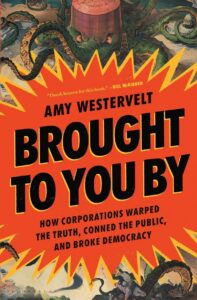
Brought to You By: How Corporations Warped the Truth, Conned the Public, and Broke Democracy by Amy Westervelt is available from Bloomsbury Publishing.
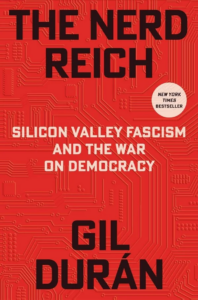
The Nerd Reich: Silicon Valley Fascism and the War on Democracy by Gil Durán is available from Avid Reader Press, an imprint of Simon & Schuster.