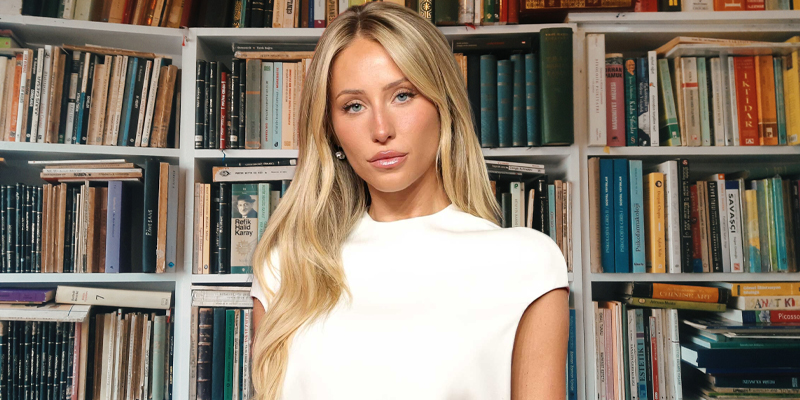
In a recent interview with Interview magazine, social media personality Alix Earle confessed that she has never picked up a book. From my view—and echoed by the Lit Hub Slack community—the claim was jolting. I’ve encountered folks who read only one book a year, or who haven’t touched a book since school homework, but a person who has never read a single book ever is on another level entirely.
If you’re wondering “Who is she exactly?” you’re not alone. A quick search reveals Earle as an influencer who first gained fame through TikTok videos showing how she gets ready. She now has a Netflix reality series, a podcast, and a following that dwarfs many urban populations.
And the question of how it happened is equally striking. It’s nearly astonishing that she navigated middle school, high school, and four years as a University of Miami marketing major without ever reading a book. I, too, have dodged homework assignments, but still—this is remarkable.
(A side note, if your own book is about to hit shelves, consider sending a copy to Earle—having your jacket copy declare it the first book she read would be a legendary endorsement.)
That said, this prompts a provocative thought experiment. If an adult you know possessed a complete literary blank slate, which volume would you place in their hands first? It shouldn’t necessarily be the finest work ever written or your personal favorite, but rather a doorway—a book capable of unlocking the entire library and launching someone into reading as an experience, revealing what literature can accomplish.
There’s also a tangential question worth contemplating—the quest for the quintessential novel, the one that might stand as an ideal exemplar of the form. That isn’t precisely what’s on the table here. I’m aiming to identify titles likely to attract a non-reader in particular. The aim isn’t refining taste so much as breaking a habit. So the inaugural read should be something that a non-reader will 1) start, 2) want to finish, and then as a bonus, 3) spark a craving for more books.
To put it in Lit Hub terms: here are ideas for shifting from zero pages to a Didion tote.
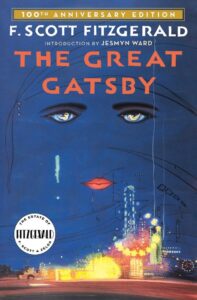 F. Scott Fitzgerald, The Great Gatsby
I don’t think every recommendation should boil down to reclaiming schoolwork, but Fitzgerald’s cornerstone remains an exception. Gatsby is a superb novella-length read, approachable and compact, with enduring resonance. Its themes—wealth’s hazards, the ache for love and belonging, and the oddities of party culture—continue to feel relevant.
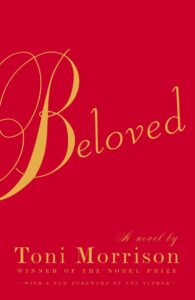 Toni Morrison, Beloved
I’m going to break my own rule here and propose a celebrated novel that is often taught in schools. But imagine if your inaugural read were a Toni Morrison work? There’s no shortage of Morrison to explore afterward, yet would that raise the bar impossibly high—or would it ignite a feverish drive to chase that first exhilaration?
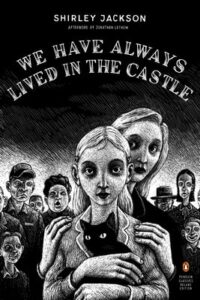 Shirley Jackson, We Have Always Lived in the Castle
I suspect many readers think books must be grand and solemn, and thus dismiss them as beyond reach. Yet writing can be eerie and uncanny as well. Jackson’s best work offers a richly layered narrative that shines on the sentence level, and it’s delightfully strange. A book can plunge you into another mind more deeply than most art forms—an unnerving, psychologically gripping experience—while also delivering a wild, cinematic ride that can feel surprisingly familiar to a new reader.
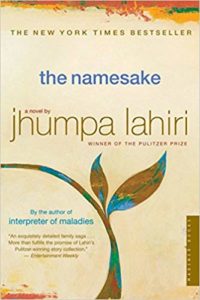 Jhumpa Lahiri, The Namesake
One of the distinct strengths of novels is their handling of time. A masterful book can condense the upheavals of entire generations into a handful of pages, just as a single day can blossom into sprawling, multi-volume sagas.
Lahiri stands among our greatest living authors, and The Namesake serves as an outstanding demonstration of the breadth a novel can encompass. Regardless of how much fiction you’ve consumed, Lahiri’s gift for precise, finely observed detail will leave you breathless.
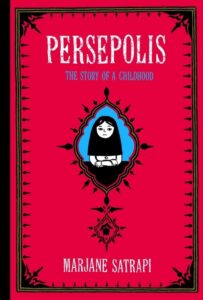 Marjane Satrapi, Persepolis
A graphic novel can be an excellent entryway to finishing a book—the reduced word-load helps. And images? They’re a bonus. In this vein, Satrapi’s Persepolis stands out as a funny, touching, and surprisingly smart coming-of-age tale.
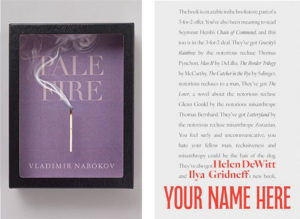 Vladimir Nabokov, Pale Fire or Helen DeWitt and Ilya Gridneff, Your Name Here
There’s a bolder, riskier route to this imagined scenario: a jolt of idiosyncrasy. You could ease someone into the experience with something sweet, or you could shock them with something entirely singular. This is the bucket method: present a work that can exist only on the page. The danger is that they might respond with, “What is this?” in frustration; the aim, however, is to evoke a response of, “What is this?” in astonishment.
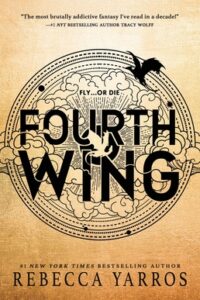 Rebecca Yarros, The Fourth Wing
Are Yarros’s books the pinnacle of the novel as an art form? Not really. But hear me out. One reason reading matters so deeply for me is the joy of talking about books. My closest relationships are with fellow readers, and I love belonging to a community of book lovers. The Fourth Wing attracts a huge audience because it’s provocative and filled with fantastical creatures, and also because it’s a title a massive crowd can discuss together. It acts as both a connector and a catalyst for disagreements.
I suspect a non-reader may perceive someone buried in a paperback as engaged in a solitary, sluggish pursuit. The reality is different: reading is never truly solitary. It is a pleasure, a passage to new perspectives and ways of thinking, and it can evoke awe at moments of artistic genius. Rather than isolating a reader, a book invites conversation, sharing, debate, flirtation, and companionship as you journey through its pages.
I’m reminded of Mark Twain’s description of Tom Sawyer and Becky Thatcher wandering through a never-ending Borgesian cavern: “No man ‘knew’ the cave. It was impossible to know entirely; most youths only knew a portion.” Sometimes the best reading comes when you follow a friend’s lead, or when you discover new regions of the vast literary map and light the way for those who come after you.
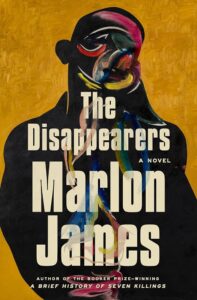 Marlon James, The Disappearers
And yet books can be deeply meaningful. They can be a lifeline, a reason to keep going. Perhaps we should take the plunge and dive into the rich, unfathomable depths of reading.
Image from People.com