On the Saturday morning of Labor Day weekend, my closest friend Dani, who also writes, reached out to tell me that Robin Morgan—the trailblazing American feminist organizer, advocate, and author—had passed away. Caught up in the hustle of wrapping up syllabi and preparing for the first week of classes, while my husband shepherded the kids into their sneakers and Crocs for one final back-to-school excursion, everything ground to a halt. I stood at the kitchen sink, watched light filter through the holly outside the window, and tears welled up as the news settled over me.
Born January 29, 1941, Robin’s impressive resume—23 books, her leadership in the famous 1969 Miss America Pageant protest (when feminists crowned and sashayed a sheep along the Atlantic City Boardwalk), and the founding of the National Network of Rape Crisis Centers—has been widely chronicled in obituaries around the world. Yet only a handful of these tributes acknowledge Robin’s deep impact on Sylvia Plath’s legacy, an influence that, in turn, profoundly shaped Robin’s own life and career. If mentioned at all, it often reduces to noting Robin’s poem “Arraignment,” which opens with lines such as
How can I
accuse
Ted Hughes
of… the murder of Sylvia Plath?
Indeed, even quoting the opening of “Arraignment” instantly signals that Robin’s relationship to Plath’s work cannot be separated from the bigger picture. Robin included “Arraignment” in her 1972 poetry collection Monster, but the version that appeared in print was not the one she intended. The original version began with “I accuse / Ted Hughes / of… the murder of Sylvia Plath.” In a 1973 essay for Feminist Art Journal, written before Monster went to press but after the galley proofs had already been printed, Robin was summoned to a meeting with Random House lawyers who demanded that the poem be withdrawn or rewritten. They argued that the line as published—claiming Hughes murdered and raped his wife—could expose the publisher to libel.
Robin’s response to these men was twofold: first, she insisted she hadn’t accused Hughes of physically murdering his first wife, who she accepted died by suicide on February 11, 1963. Rather, her point was that Hughes’s extreme (and well-documented) censorship of Sylvia Plath’s work after her death had effectively extinguished Plath’s artistic legacy and her radical politics. “Arraignment” used the word “murder” here as a satirical device, drawing on a long artistic lineage—Swift, Donne, Marvel. Second, through her research into Sylvia Plath, Robin uncovered a series of letters in which Plath described abuse—including sexual abuse—by Hughes; about twenty letters, she noted in Feminist Art Journal, making the rape accusation in “Arraignment” grounded in Plath’s own words. She even quoted one line: Why must the killing of me be so elaborate?—“a line pure to Plath,” she wrote.
The poem as it stood, she was told, accused Ted Hughes of raping and murdering his wife, and was grounds for libel.
Robin’s concise, perceptive argument did not persuade Random House’s lawyers, who—like many literary legal teams of that era—were wary of Hughes’s history of using the law to silence opponents who challenged his version of Plath’s life and work. So she rewrote the poem, changing “I accuse / Ted Hughes” to “How can I / accuse / Ted Hughes,” a deft rhetorical maneuver that keeps the conflict contained within the line breaks and punctuation. How can I do this and get away with it? she asks herself, and the second form of the poem did go to print, effectively allowing her to publish it without losing the point.
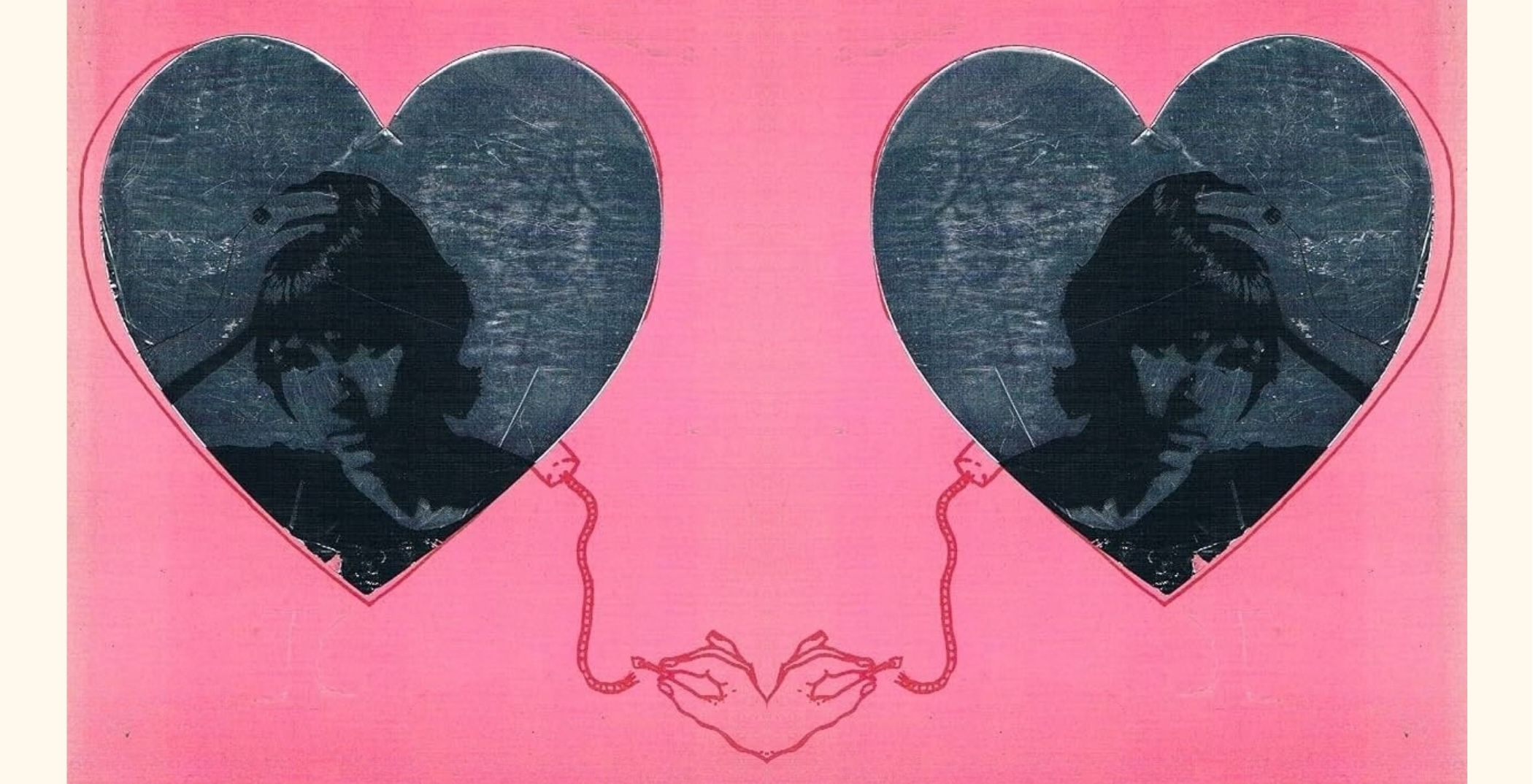
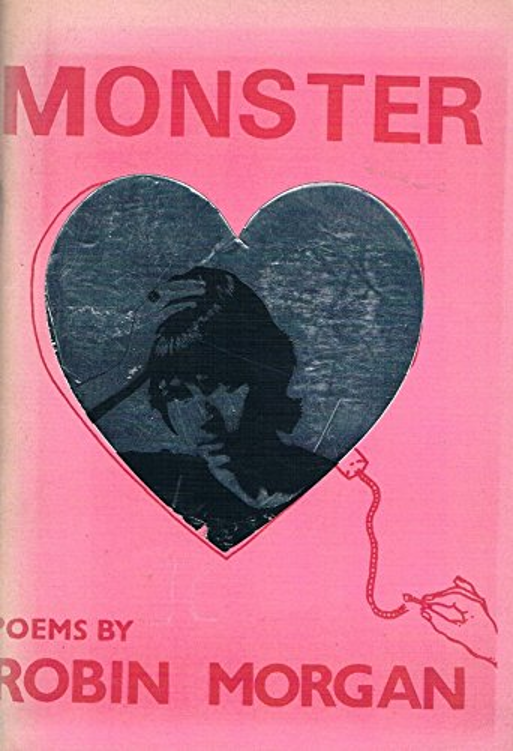
It was quintessential Robin—someone who once mocked women’s attempts to organize alongside leftist men as “the dream that being in the leadership collective will get you anything but gonorrhea.” Yet this act nearly broke her. She felt that Monster had been damaged, and that her ethics—creativity and political belief, inseparable in her view—had been compromised. She was plainly ill with worry, writing in Feminist Art Journal that she required Dramamine before meetings with Random House lawyers. But a reprieve arrived: in the original printing of “Arraignment” in Feminist Art Journal, women worldwide reprinted pirated editions of Monster restoring the first version of “Arraignment.” Their version of Monster appeared in hot pink, adorned with a silver sticker bearing Robin’s portrait. “Those women,” she recalled in a later conversation, “all those wonderful women,” her voice breaking as she described how they rallied around her.
“Arraignment” and the surrounding controversy helped cultivate one of the most durable Plath myths: the tale that Hughes began skipping readings in America because women would disrupt them by shouting “Arraignment” at the top of their lungs. Yet the Plath scholar Janet Badia’s foundational study, Sylvia Plath and the Mythology of Women Readers, definitively showed that those demonstrations never occurred. What actually occurred was that the literary establishment rallied to silence Robin Morgan, who, she told me, was contacted by Doris Lessing who urged her to simply stop. Archival evidence supported this claim—a letter from Hughes’s sister Olwyn, kept at Emory University, details her efforts to recruit Lessing to quiet Robin—and when Robin spoke about it on the phone with me, it felt as though the voice of someone long past could still reach through time.
The reach of Robin’s voice extended across generations, as I explored archives to write Loving Sylvia Plath: A Reclamation, a project born largely in response to “new” letters from Sylvia Plath that appeared in 2017. These letters weren’t new at all; they had simply been hidden for years. Fourteen letters, all addressed to Plath’s psychiatrist-turned-confidant, Dr. Ruth Barnhouse Beuscher, dated from 1960 to 1963, the last one within days of Plath’s suicide in 1963. They offered firsthand accounts of violence by Hughes, including a description of a beating that Plath believed contributed to her February 1961 miscarriage. The letters had been stolen from Ruth Beuscher in the late 1960s or early 1970s by Harriet Rosenstein, a young researcher hired by Knopf to craft a critical biography of Plath that never reached publication. In 2017 Rosenstein attempted to sell the letters; their appearance at the New York Antiquarian Book Fair made headlines, especially the suggestion that Plath’s charges against Hughes were startling.
Robin knew better than anyone that the personal is political (a slogan she helped to write!) and that art is the most vital expression of this.
As a veteran Plath scholar, I knew the revelations would not shock me in themselves, but when I probed the roots of my own understanding, I kept returning to Robin Morgan’s poem “Arraignment,” a piece I had once been told to overlook as a young student of literature. Reading it again while working on Loving Sylvia Plath revealed that Robin had already laid out substantial parts of my own radical argument about Hughes’s violence and his control over Plath’s life and legacy as early as 1972.
So I reached out to her to arrange an interview. Her assistant declined, yet she kindly sent me two archival items: an article she wrote reacting to the emergence of Plath’s Beuscher letters for The Times Literary Supplement, which the magazine planned to publish but then pulled at the last moment, and her 1973 piece in Feminist Art Journal, a publication long out of print. Reading it sent a chill down my spine—the line that asks, Why must the killing of me be so elaborate? appears verbatim in one of Plath’s Beuscher letters and nowhere else in her writings.
Robin had read those letters before they were stolen (she confirmed this later, though she declined to discuss the circumstances). When she argued against Hughes in “Arraignment,” it was both rhetorical and textual. The disappearance of those letters, which would vanish for decades, contributed to the literary establishment’s effort to cast Robin as a crazed figure in Plath studies. She later told me that this smear hurt the most—the idea that her poetry was mere inflammatory libel, when in fact she had conducted meticulous, trailblazing research to produce it. “Arraignment” did more than recount Hughes’s violence against Plath; it argued for a broader pattern of violence against women, by telling the world about Hughes’s partner, Assia Gutmann Wevill, who lived with him from 1961 to 1969 and who, like Plath, ended her own life, along with her child Shura. In 2006, the Plath scholar Judith Kroll claimed to be the first to name Wevill in her book Chapters In A Mythology, but it was Robin in 1972 who had already named her—whether she was understood or not at the time.
In 2009, Honor Moore wrote with accuracy about Plath’s role in second-wave feminism, describing her as “an avatar” for everything women were thinking, feeling, saying, and writing at the moment. This did not unfold by accident. Robin propelled Plath’s work to the forefront of the movement by including poems like “The Jailer,” which Hughes had removed from Ariel for the magazine RAT, a radical publication she helped edit in the late 1960s, and through her pivotal anthology Sisterhood Is Powerful, issued so early in Plath studies that it misdated Plath’s age in the short biography at the back of the volume. The closing line of that biography—“There was no women’s movement then”—stands as one of the earliest printed testimonies of Robin’s conviction that marital violence contributes to women’s deaths, whether by murder or by suicide. It is the argument I also make in Loving Sylvia Plath, one I could finally corroborate with the empirical research that Robin’s work on Plath had helped lay the groundwork for half a century earlier.
I sent Robin a copy of Loving Sylvia Plath when it appeared in July 2024. About a month later, I found a voicemail from her echoing with that unmistakable voice: “I am just calling to talk to you about your wonderful book, my dear. Call me back.” I had to summon Dani’s courage first, but I eventually dialed Robin’s Manhattan number. When she picked up, the first thing she said was, “Hold on, dear, I’m listening to these criminals at the Republican National Convention, I have to turn them down.”
That marked the beginning of numerous conversations by phone and email that continued into the spring. We had planned to meet in person twice for tea in her garden, but illness kept us apart both times. When I mentioned a new campus-violence project I was pursuing, she immediately connected me with several groups doing groundbreaking work in this persistently grim area. She embodied generosity and love, never divorcing these feelings from the righteous anger she carried toward the state of the world.
When I learned of her death, I found myself caught in the exhausting cadence of late summer—trying to prepare my courses, be a present mother, and pretend to relax—an overwhelming mix that left me frayed. For weeks, I wandered through days feeling split, with my hands in one place, my mind in another, and my heart elsewhere. The world’s crises—from natural disasters in distant lands to brutal acts of violence in other places—hummed under my skin, a reminder that the fight for justice stretches far beyond any single life.
No one understood this better than Robin, who dedicated her long career to honoring her deep love for her son by striving to improve life for mothers everywhere. This commitment was shaped, in no small part, by her engagement with Sylvia Plath’s final, searing poetry about art, motherhood, marriage, and violence. Robin understood more than anyone that the personal is political (a phrase she helped to draft) and that art remains the most potent form of political expression. Anyone who tells you otherwise is trying to sell you something or silence you—and sometimes both.