
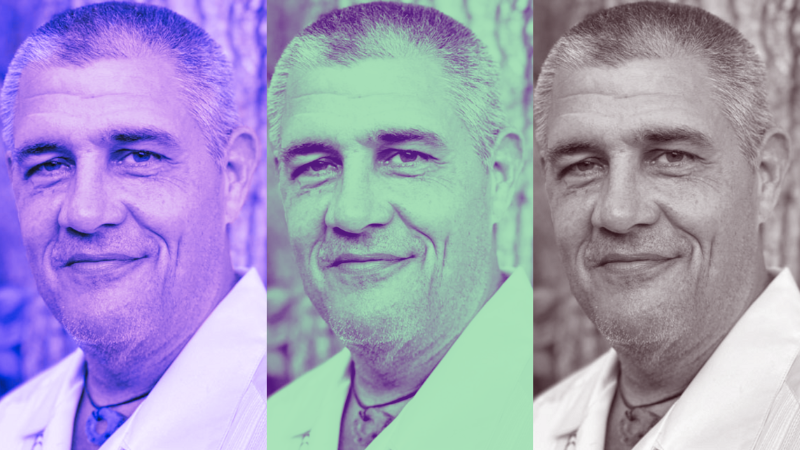
The Center For Fiction welcomed Pulitzer Prize-winning author Adam Johnson (The Orphan Master’s Son) this autumn to celebrate the release of his latest work, The Wayfinder. This highly anticipated novel invites readers to reflect on how the struggle for resilience shapes both personal identities and the broader legacies of cultures. Amitav Ghosh, author of The Ibis Trilogy, served as the evening’s moderator.
From the conversation:
[Audience Member]: As you noted, you’re writing from within, or toward, a culture that has a rich oral tradition. Of course, writing a novel is a distinctly modern act, and there’s the idea in some Eastern European and broader European thinking that there’s the story, and then there’s the story as your uncle tells it.
What I observed in numerous conversations is that people tend to present their histories in fragments.
You mentioned how moving from the oral tale to the written word can feel like a strange translation. Could you elaborate on that a bit more?
Adam Johnson: What a wonderful question. I firmly believe that narrative functions as a machine for making meaning, operating across several layers—linguistic expression, memory, emotion, chronology, causality, and the structure itself. All of these elements come together to produce significance. And, I think, when writers first engage this machine, we turn it toward ourselves.
It’s autobiographical in origin. Who am I? What does my life signify? You write about your family. You write about your journey, your culture, right? My first two books followed that pattern closely. Then the work begins to reveal that it might be time to explore something else—namely, fiction.
Not simply about me. And then the heavier questions emerge, at least for me. I recall drafting The Orphan Master’s Son, and whenever I spoke with defectors—North Korea is a topic I could discuss all night, truly—I formed an observation, first by reading their stories online—raw interviews before I even met my first defector who had been an orphan there.
Their story was incredibly powerful, yet it arrived in a fragmented, non-linear sequence. I understood it as a painful memory. What that man wanted was to share his narrative, to achieve catharsis by externalizing it. But every telling reconstitutes pain through the meaning-making process.
That’s the dilemma faced by someone who has been hurt. How can you recount your story without it causing further harm to you? When I endure a setback and tell a story, I cry. But what if the gravity of the story is so immense it could paralyze you? And in conversations with many others, I noticed one constant: people tell their histories in small, scattered pieces.
Think of a grandmother who intermittently shares glimpses of the old country during holidays. It becomes your job to assemble those pieces. She won’t disclose the entire history at once. Narratives arrive in chunks, shifting viewpoints, and non-linear order.
I’ll never forget a man describing the crossing of the Yellow River. He spoke in the first-person plural: we were frightened, there were guards, the timing was uncertain, the river roared, and we pressed on. A father stood nearby, his daughter started to drift away. I caught her on my back as we swam, but then she disappeared. On the far bank, he realized she was gone. And when I asked him who he was in that moment, he could not answer. It became clear that he could not fully grasp what he had done. Does that make sense?
So, to answer your question, when I set out to write about North Korea—and why I chose to pursue that path remains partly enigmatic—I knew I could never treat it with a neat Western arc of beginning, middle, and end.
The book had to fragment. It had to shift viewpoints. It had to leave room for readers to piece the story together. If I stayed faithful to the people who shared their experiences with me, the narrative would be harder to access. People have told me, Why did you make such a mess of it?
The book had to fragment. The book had to change point of view. It had to leave it to the reader to put the story together.
And I understand that sentiment, yet it felt true to me. As I began reading oral histories and even listening to them in a new way, I kept a simple reminder on my monitor: forget the word novel. That term belongs to a tradition, with conventions and histories. If I label or categorize what I’m doing, it might never approach the fullness of the material guiding it.
Amitav Ghosh: Very interesting.
*
Adam Johnson is the author of Fortune Smiles, which won the National Book Award and the Story Prize, and The Orphan Master’s Son, recipient of the Pulitzer Prize, the Dayton Literary Peace Prize, and the California Book Award. Additional honors include a Holtzbrinck Fellowship at the American Academy in Berlin, a Guggenheim Fellowship, a Whiting Award, an NEA Fellowship, and a Stegner Fellowship; he was a finalist for the New York Public Library’s Young Lions Fiction Award. His other works include Emporium, a collection of short stories, and the novel Parasites Like Us. Johnson was born in South Dakota and is an enrolled member of the Cheyenne River Sioux Tribe. He currently lives in San Francisco with his wife and children and teaches creative writing at Stanford University.
Amitav Ghosh is the author of the best-selling Ibis Trilogy, comprising Sea of Poppies (shortlisted for the Man Booker Prize), River of Smoke, and Flood of Fire. His other novels include The Circle of Reason, winner of the Prix Médicis étranger, and The Glass Palace. He has written extensively in non-fiction as well, with titles such as The Great Derangement, The Nutmeg’s Curse, and Smoke and Ashes. In 2018, Ghosh became the first English-language author to receive the Jnanpith Award, India’s highest literary honor. He resides in Brooklyn, New York.
______________________________
The Center For Fiction is a literary nonprofit based in Downtown Brooklyn. Our mission is to support readers and writers of all ages and backgrounds, and to foster community through fiction. We offer a broad spectrum of programming for local and national audiences, including Events, Reading Groups, and Writing Workshops. Our Brooklyn headquarters houses a Bookstore, a Café & Bar, a Library, and a Writers Studio. Members of The Center For Fiction receive invitations, discounts, access to our Library collection, and more. Join today.
