
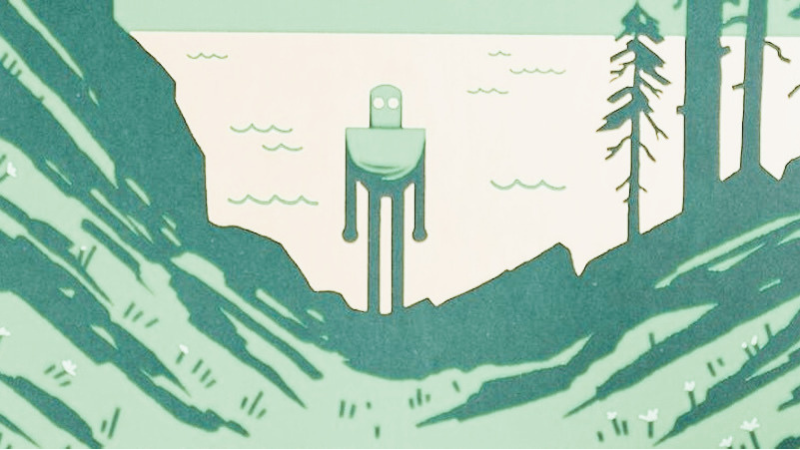
The tenth anniversary edition of Peter Brown’s middle-grade novel The Wild Robot is now available from Little, Brown Books for Young Readers, so we posed a few questions to him about reading aloud, responses from young readers, and what keeps him hopeful.
Literary Hub: What do you feel has shifted the most in the decade since you released The Wild Robot with regard to being a children’s author and illustrator?
Peter Brown: As more magazines and newspapers and animation studios have gone out of business, more artists have turned to children’s publishing for work. Now, with the rise of AI-generated art, that trend will only accelerate. The result is a flood of new, incredibly talented artists entering children’s publishing. In a sea of stunning kids’ books, standing out becomes tougher, and for many of us, this new reality adds a bit more stress to the work. Yet for readers, it also means a steady stream of remarkable new titles to discover.
LH: Your books are such a joy to read aloud, which I know firsthand isn’t easy when you’re sharing them with kids. Do you consider this while you’re crafting a story? What does it take to write a great read-aloud book?
PB: The most memorable read-aloud books feel like poetry—the cadence of the language, every syllable and sound treated with care, so the text is pleasing to say and to hear. That’s the goal I aim for in any format, whether it’s a picture book or a novel. I read my own writing aloud many times, and the work isn’t finished until I can smoothly read the whole thing from start to finish. It’s also true that oral storytelling is a special craft in its own right, and a seasoned storyteller can bring almost any text to life. When a skilled reader, such as a children’s librarian, performs a well-written text, the magic can be extraordinary.
LH: In The Wild Robot, Roz adapts to life on the island and moves toward a closer bond with nature, rather than drifting away from it—as many of us do, especially kids. The book radiates genuine hope. How do you stay hopeful in today’s world?
PB: Honestly, hope feels harder to hold onto these days. Fortunately, I write children’s books. It may sound cliché, but creating stories is, in a sense, an act of believing in a brighter outcome. Each time I sit down to work, I hope that a reader (or many readers) will connect with the story I’m shaping. Each time I sketch a new character, I hope it will grow into a tale I can share. For authors and illustrators of children’s books, hope threads through every stage of the creative process. I feel fortunate to pursue a hopeful vocation, especially during challenging times.
LH: As both writer and illustrator, do those two roles influence each other during the creation of a book (and does illustrating your own characters shape how you write them?)
PB: Absolutely. Doing both roles changes how I approach a project. A sketch in my notebook can nudge the storyline in a new direction. The words a character speaks, and their chosen dialogue, can steer how I position them in an illustration, and that pose can, in turn, influence the mood of the scene and prompt me to revise the wording. The most exciting moments come when I’m oscillating between writing and drawing, letting the words and pictures tighten and deepen together.
LH: Which books did you adore as a child?
PB: Arnold Lobel’s The Frog and Toad stories have always lingered in my memory. They’re wonderfully gentle yet deeply engaging, and the artwork is inviting and beautiful. It’s hard to imagine better children’s books.
LH: Is there a particular book you like giving as a gift to kids?
PB: I’m not immune to self-promotion, but the title I’ve given away most often is my own picture book Mr. Tiger Goes Wild. I have plenty of copies around, and I’m eager to find them homes! The story resonates with themes of wildness and acceptance… and it stars a tiger who is, shall we say, unadorned in the most literal sense.
LH: What’s the best feedback you’ve received from a young reader?
PB: A number of adoptive families—parents and children—have told me that reading about Roz and Brightbill, who form their own little adoptive family in the Wild Robot books, has helped them connect more deeply with one another. I never imagined my work could facilitate that kind of bonding, and thinking about it brings a lump to my throat.
_________________________________________________
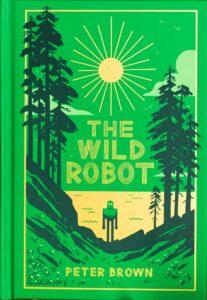
The Wild Robot: Collector’s Edition by Peter Brown is available via Little, Brown Books for Young Readers.
