
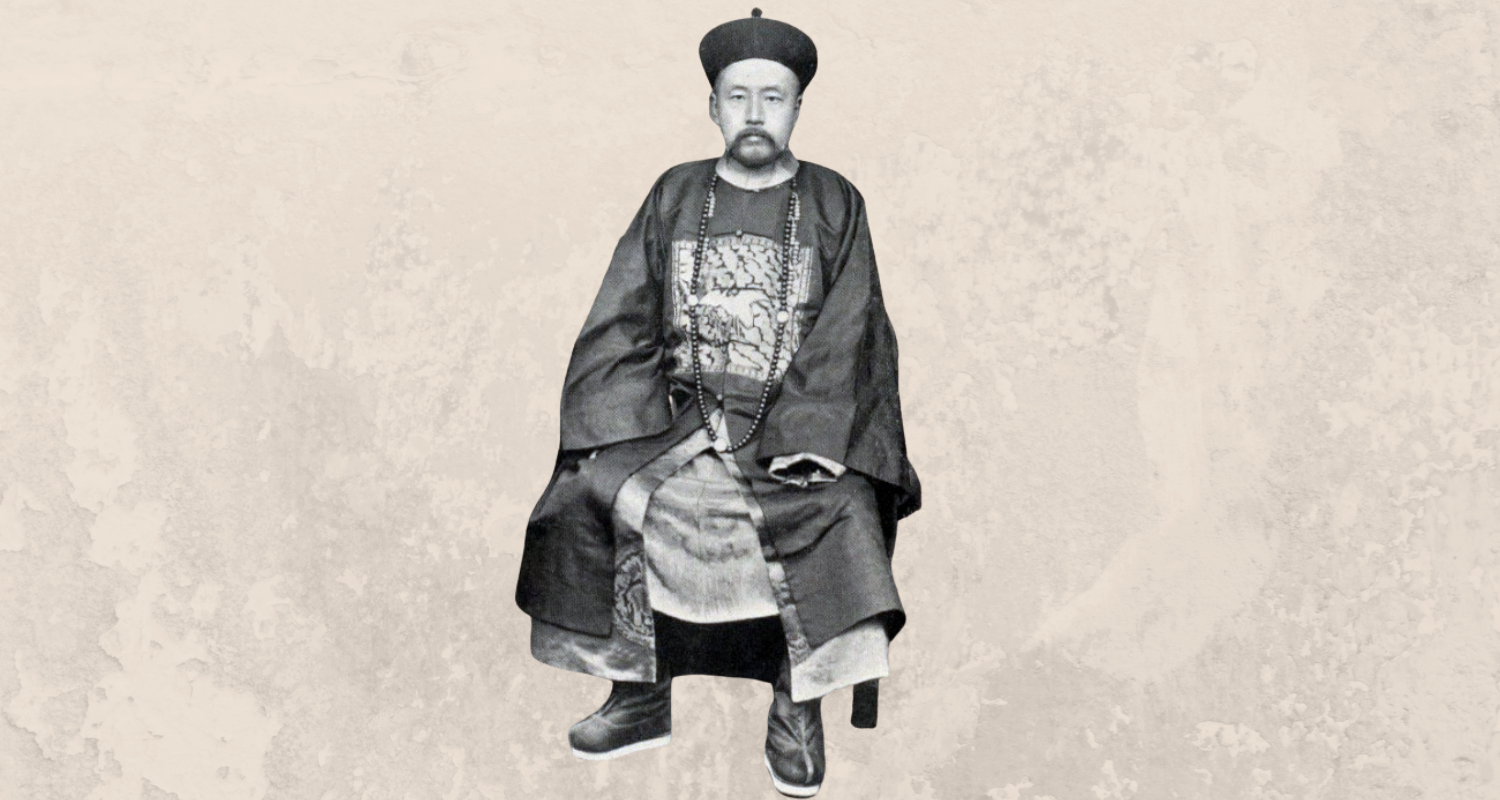
When I first encountered Duanfang—my infamous, assassinated forebear—I assumed his tale belonged to family lore, our own take on grim fairy tales. It felt unlikely that my great-great-great-grandfather had been a leading Manchu politician, had founded a university, had journeyed to America, had staunchly resisted foot binding, and was slain by his own army. Yet after my grandmother brought me to the Metropolitan Museum of Art to view his bronze artifacts in the Asian Art wing, and after cousins ventured to China to learn about the family’s supposed shared ancestor, I came to recognize that this celebrated late‑nineteenth‑century statesman was, in fact, kin.
And then, I immediately wanted to write about him.
But despite the numerous feats listed on Duanfang’s Wikipedia page, I still didn’t know who he truly was. What gave him the nerve to accomplish so much in such a brief lifetime? What did he mean to his family? To his children?
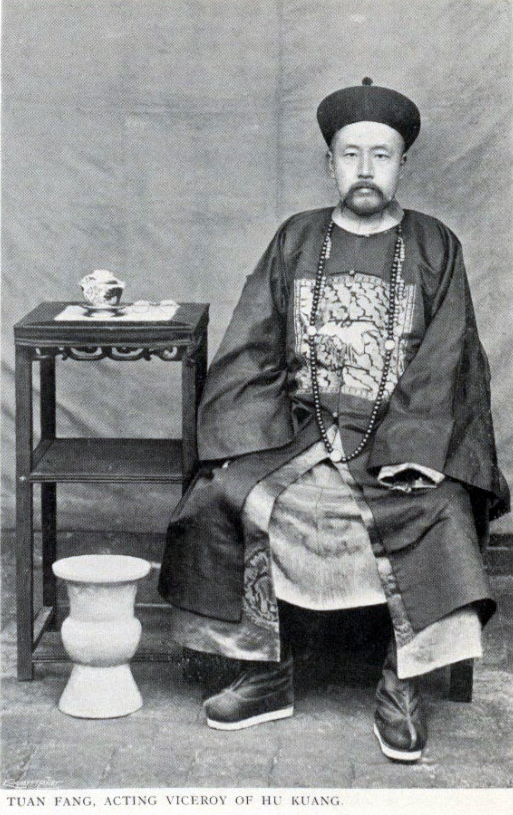 My ancestor, Duanfang, who was a prominent viceroy in China and plays a large role in Foreigners.
I learned a crucial twist to Duanfang’s story during my senior year of college, in the hours I spent with my Chinese history professor. We sat in a compact, carpeted room the size of a closet when she dropped a central secret about my forebear: he wasn’t Manchu by birth. He was Han Chinese and had merely presented himself as Manchu to ascend the ranks. And ascend he did—becoming one of China’s most respected and influential politicians until he retired. A few years later, the Han would revolt against the Manchus in the Xinhai Revolution. Duanfang left retirement to prove his worth once more, only to be killed by a Han army that mutinied against him. My professor told me that as Duanfang pleaded for his life, he disclosed his true ethnicity to them. Naturally, the Han soldiers did not believe him, suspecting that he was feigning to escape death. They still beheaded him. She said the army handed his head to his family, who fell into poverty after his death. And so I realized that my ancestor wasn’t merely a politician, a trailblazing feminist, or a bronze-collector. He was also a liar. He was ambitiously flawed.
I was struck by Duanfang’s clear flaws and the dire and long-term consequences of his great yet dangerous ambition.
A few years later, more intrigued than ever, I connected with Professor Elya Zhang from the University of Rochester after shooting off a cold email.
Professor Zhang noted that my ancestor had been her first “academic love,” who, much like Icarus, had flown too close to the sun. He aimed to become a memory in history, and perhaps that explains why he founded China’s first kindergarten and traveled to America to meet with international diplomats. She characterized him as charismatic and charming in public, yet introspective and exacting when alone; every detail of his work and journeys was carefully chronicled in his journals. She told me that after his death, some of his colleagues—though Han—conserved their positions of power. In light of this, had he remained in retirement, he might have persisted and even grown more powerful. Perhaps then our family wouldn’t have sold his antique collection to curators around the world, wouldn’t have left for Taiwan and later the United States, and perhaps I wouldn’t be writing this today.
As a writer, I found myself confronted by Duanfang’s evident flaws and the far-reaching consequences of his grand, perilous ambition. It led me to wonder what we all do to succeed: morally, what do we surrender? Whom do we pretend to be?
Duanfang’s life was undeniably dramatic, yet it felt surprisingly relatable. I reflected on all the disguises I’ve worn in my own life—from a child bending rules to secure a desired outcome, to presenting my best self during a work presentation, to hoping a stranger will like me. I admit openly to being a shape‑shifter—and at times an impostor—in order to achieve both small and large goals. And I suspect many others do the same. We all perform, and we cannot always predict when that performance will go too far. Ambition carries risk and an uncertain outcome.
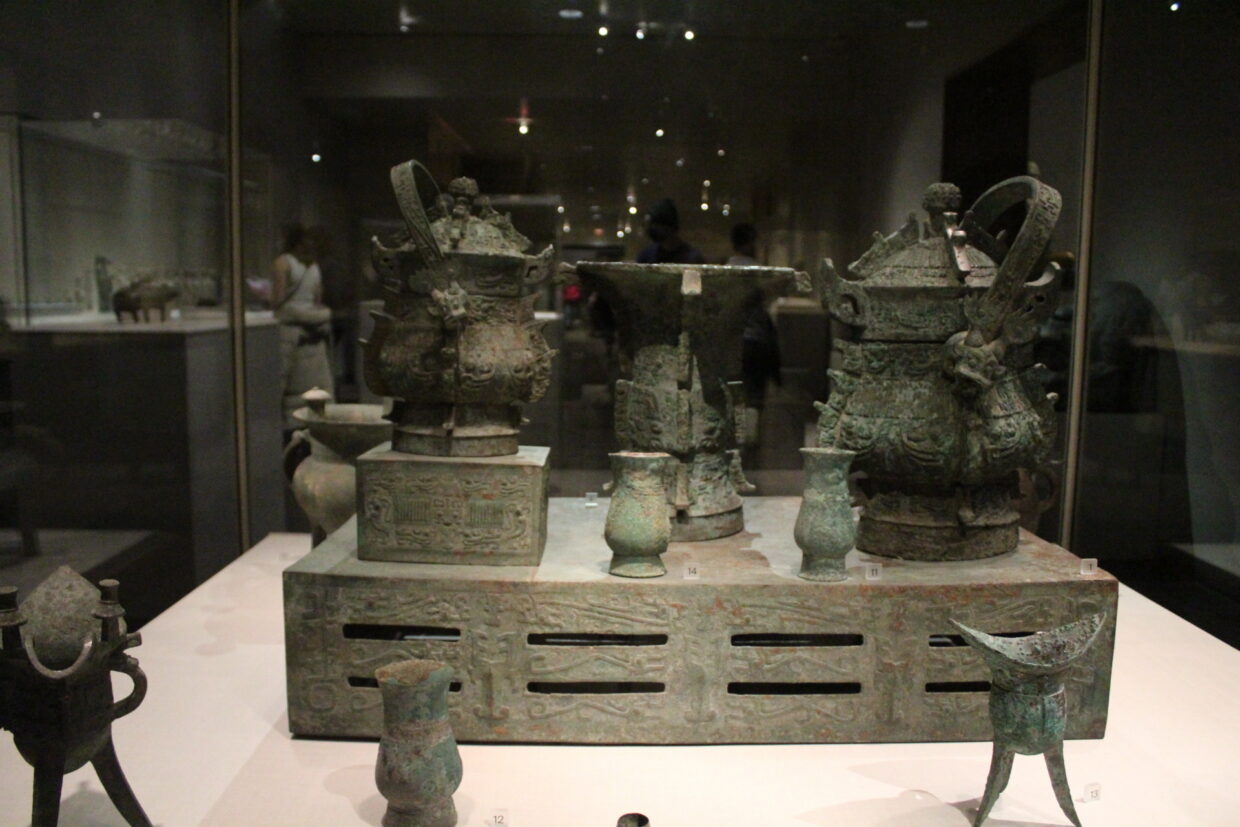 Duanfang’s bronze altar set at The Metropolitan Museum of Art.
This reflection, coupled with the arc of my ancestor’s life, wove together the threads of my novel, Foreigners. The impulse to be an impostor seeped into other storylines swirling in my mind. I invented my principal character, Yi, a Taiwan-born immigrant who arrives in America in 1965 and struggles to find her footing in a foreign land. Midway through the tale, she changes her name from Zheng Yi to “Audrey”—a pivotal moment that enables her to literally become someone else and to make sweeping, consequential decisions that reshape not only her life but the futures of her descendants. In the present, her granddaughter, Dawn, wrestles with a severe case of impostor syndrome as she feels out of place at her prestigious boarding school. When asked to interview a family member for a year-long history project, she reluctantly sits down with her estranged grandmother and unexpectedly discovers that her grandmother has been lying about her life history all along. Dawn’s confusion drives her to pursue the truth.
Interwoven through these two timelines is a folkloric strand about Duanfang, which supplies the thematic backbone for Dawn and Yi’s journeys. In the end, the choices he made force the other central characters to confront their own pretenses and the shame attached to them, a shame that is transmitted to later generations.
My original aim was to understand Duanfang more profoundly. Yet in the process, I examined every way in which I, my family, and my characters are imposters—foreigners in lands that do not fully belong to us, and inside bodies that sometimes feel illusory. In this sense I feel grateful to my ancestor and feel closer to him than ever, even with a hundred years between us.
I can now say with certainty that my ancestor is no longer a mere myth—nor a distant hero or a deceitful villain. He is a complex, flawed member of my family; he is simply a man.
______________________________
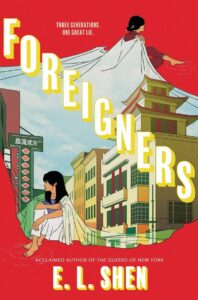
Foreigners by E. L. Shen is available from Quill Tree Books, an imprint of HarperCollins Publishers.
