
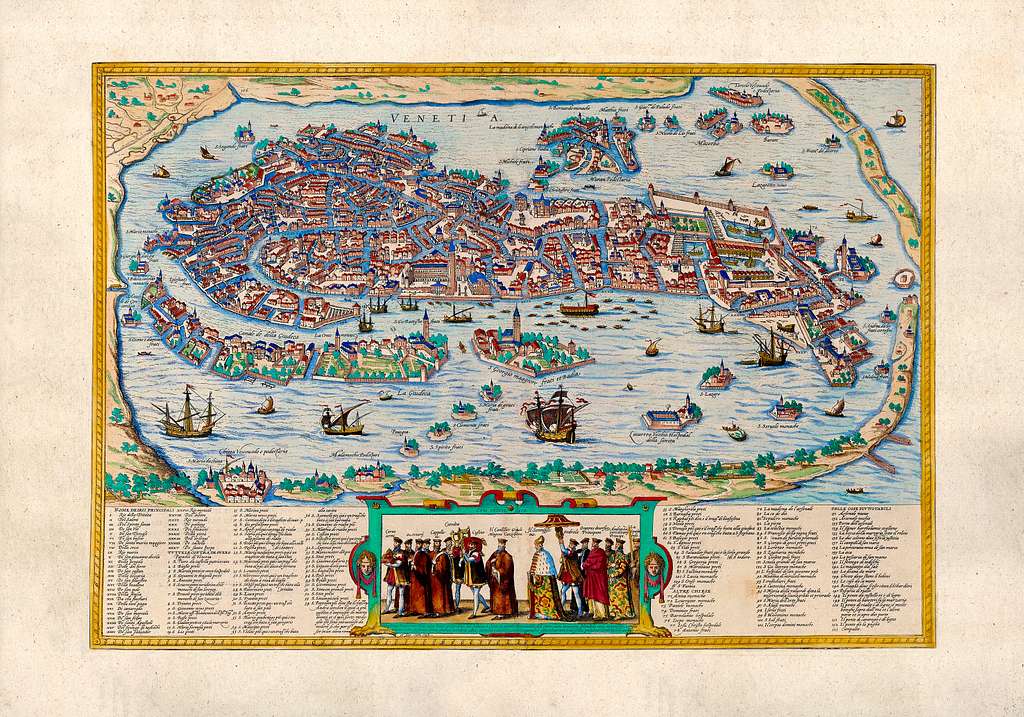
The Venetian Ghetto occupies a singular position in the history of segregation. When it was established on 29 March 1516, Jews had already been compelled to inhabit distinct districts elsewhere in Europe; yet the Venetian Ghetto stood out for inaugurating a wholly new way of thinking—and talking—about the confinement of Jewish communities. In the past, Jewish quarters bore a range of names (Judenstraße, Juiverie, etc.). These labels typically referred to a local feature (such as a street or square) or were intentionally vague, making them hard to apply to other Jewish assemblies elsewhere.
The term ‘ghetto’ was different. It had nothing to do with Jews at all. Its origin lies in the verb gettare, meaning “to throw” or “to cast”; and it was used as the designation for an island in Cannaregio, because that was where the communal copper foundry disposed of its rubbish. When the Venetian government confined the city’s Jews to that area in the early sixteenth century, the island—now lined with tenement houses—kept the name; and soon enough, ‘ghetto’ came to describe not merely the site, but the institution of Jewish confinement itself. This shift proved decisive. Since the word did not reference a street, a square, or any other fixed place, yet still evoked a sense of complete isolation by virtue of the ghetto’s location, it came to signify a very particular form of confinement. Consequently, it could be readily exported to describe Jewish quarters elsewhere—and, over time, adapted to depict sites of confinement or exclusion across the world.
When we picture the Venetian Ghetto, one of the first images that often comes to mind is Shylock from Shakespeare’s The Merchant of Venice. Yet Shakespeare never visited Venice, and contemporary scholars now regard Shylock’s caricature as more a reflection of anti‑Jewish hysteria in early seventeenth‑century London than of Italian reality. Still, the character proves useful for two reasons. On one hand, Shylock’s mistreatment in the play isn’t far removed from how Jews in Venice were treated in real life.
From the outset, Jews in Venice faced rigid and frequently demeaning restrictions and were subjects of violence and discrimination. On the other hand, Shakespeare’s choice to place Shylock in Venice underscores the Ghetto’s profoundly cosmopolitan character. It functioned as a microcosm of the Jewish world. Over time it came to comprise three interconnected yet distinct ghettos, hosting Jewish migrants and refugees from Germany, Spain, Portugal, the Ottoman realms, and areas of modern Ukraine and Russia—and beyond. Its networks stretched to Jewish communities as far afield as Amsterdam and Alexandria, and it helped shape broad perceptions of Jews—both their societies’ views of them and their own self-understanding.
In my book, The First Ghetto: Venice and the Jews, I aimed to highlight both of these dimensions. I sought to write a genuinely social history of the place, drawing on a wealth of contemporary testimony to show that the Jews of Venice did more than endure centuries of hardship and oppression—they flourished. I examine the surge of Hebrew printing and the spread of poetry, music, and intellectual life; and I attempt to reconstruct the everyday lives of ordinary people with as much detail as possible, bringing to life the sights, sounds, and smells of their daily existence.
But I also recognized that the ghetto’s story could be truly understood only by situating it within a broader frame. I set out to demonstrate how its existence was shaped by Venice’s changing fortunes: born out of migration and conflict, its endurance was secured even as Venice declined; and its legacy was bent by Napoleon’s campaigns in Italy, Austrian rule, Italian unification, and the tragedies of the Second World War.
The books I have chosen are meant to reflect these two core aspects of the Ghetto’s character. In researching them, I drew heavily on the rich body of Italian scholarship produced in recent years (including the essential works by Donatella Calabi, Riccardo Calimani, Ennio Concina, Ugo Fortis, and Renata Segre, to name a few). Yet there are also superb English-language works offering insight into both the Ghetto’s inner workings and its wider context. I have included one French novel that is particularly worthy of attention as well.
*
John Julius Norwich, A History of Venice (Vintage)
Although first published almost fifty years ago, this is still the best entry point for anyone eager to grasp the Venetian Republic. It is superbly written and meticulously researched, offering a sweeping overview of the Serenissima’s story—from its legendary founding in 421 to its ultimate dissolution in 1797. It makes clear why Venice emerged as a crucial conduit between East and West, how its once-dominant maritime power dissolved, and how those developments shaped its often fraught political landscape.
Margaret Plant, Venice: Fragile City 1797-1997 (Yale University Press)
This monumental study continues Venice’s narrative from the abolition of the republic through the end of the twentieth century. Unlike Norwich’s volume, it concentrates more on social and cultural dimensions, thus bringing to light the questions of Venetian and Italian identity that underpinned the experiences of Venice’s Jewish inhabitants.
Brian Pullan, Rich and Poor in Renaissance Venice: The Social Institutions of a Catholic State, to 1620 (Harvard University Press)
No survey of Renaissance Venice (and its dealings with Jews) would be complete without Brian Pullan’s classic examination. It explores how the Republic confronted the problem of poverty relief amid upheaval of a political, social, and economic kind—and how the state oscillated between relying on Jewish moneylenders to support the working poor and founding charitable lending banks (known as monti di pieta) in its own towns to reduce the need for Jewish lending.

Robert C. Davis and Benjamin Ravid, ed., The Jews of Early Modern Venice (Hopkins University Press)
This excellent volume comprises a compact set of authoritative chapters on pivotal aspects of the Ghetto’s early history, written by foremost specialists. It includes especially valuable discussions of Jews’ involvement in international commerce (and the founding of the second and third ghettos to accommodate merchants from Spain and Portugal), the persecution of Jewish conventicidal apostasies by the Inquisition, and the lives of Jewish women and family life. It is also a delightful book to dip into.
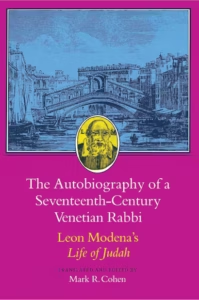
The Autobiography of a Seventeenth-Century Venetian Rabbi. Leon Modena’s Life of Judah (Princeton University Press)
Leon Modena (1571–1648) stood among the Ghetto’s leading figures in the early seventeenth century. A man of many talents, he was not only a prominent rabbi but also tried his hand at more than twenty other callings—from matchmaking and translation to selling amulets and teaching music. Yet above all, he was a literary powerhouse, producing dozens of works over a long and fruitful career. His autobiography remains one of the most vivid and engaging portraits of daily life in the Ghetto at its height—and this edition is superb. We glimpse the fraught dynamics with his wife, the overwhelming sorrow when his son Zebulun perished in the street, and his persistent worry about the state of the Ghetto’s relations with the Venetian authorities.
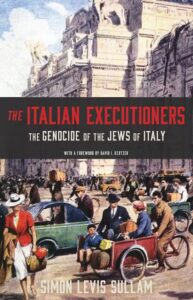
Simon Levis Sullam, The Italian Executioners: The Genocide of the Jews of Italy (Princeton University Press)
A professor at Ca’ Foscari, University of Venice, Simon Levis Sullam has written extensively on the history of Venice’s Jews during the interwar period. In this striking work, he offers a sharply revisionist view of Italy’s role in the Holocaust. By challenging the myth that the Holocaust was imposed on Italy from outside, he reveals the extent to which Italians themselves facilitated the deportation and annihilation of Jews in 1943–45, when Mussolini’s puppet Italian Social Republic was occupied by the Nazis. Some of the most harrowing passages recount the Segre family’s deportation from Venice. It is a gripping and revelatory read.

Jean d’Ormesson, Histoire du Juif errant (FOLIO)
Jean d’Ormesson, one of France’s most renowned literary figures, is in fine form in this ambitious historical novel. It tracks the journey of Simon, the “wandering Jew,” through the ages, and its Venice setting is no accident. As d’Ormesson explains, nowhere else do the Jewish past and present mingle as seamlessly as in Simon’s life, making the novel a compelling testament to the continuities of the Ghetto’s history and the enduring shadows it casts.
___________________________
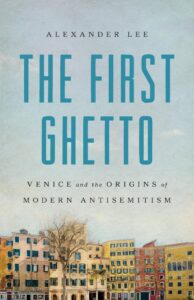
Alexander Lee’s The First Ghetto: Venice and the Origins of Modern Antisemitism, a finalist for the 2026 Cundill History Prize, is available now.
