
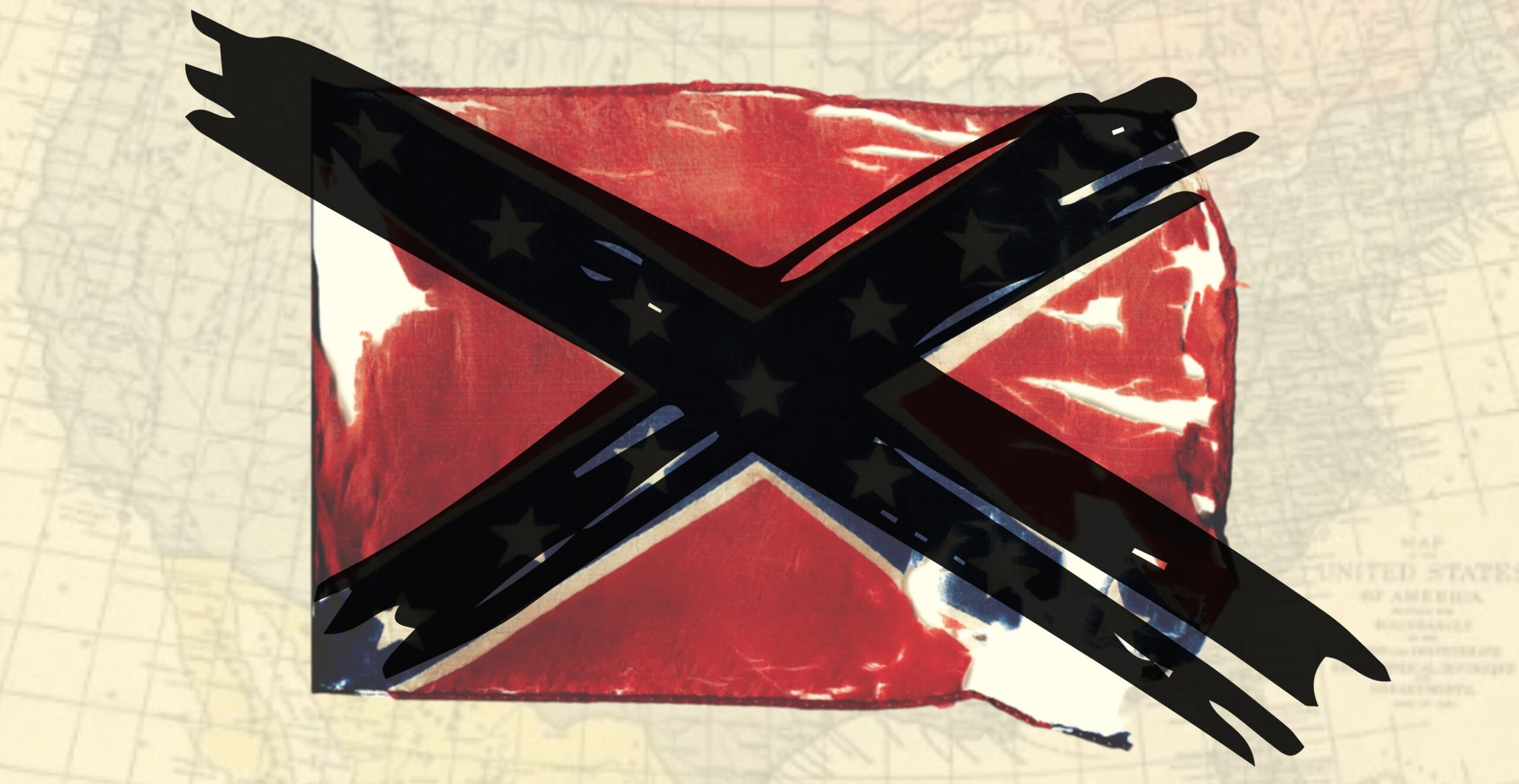
From Abraham Lincoln’s first day as president, he had declared secession unconstitutional, the Confederate movement an insurrection, and their cause inhumane. Secession, he remarked in an early message to Congress, was “rebellion thus sugar-coated,” based on “the farcical pretense of taking their state out of the Union.” As a legal and constitutional matter, secession did not and could not exist. In Lincoln’s and the great majority of Americans’ views, the unfolding insurrection had all the moral and legal legitimacy of a gang of robbers saying their heists were justified because they voted among themselves to commit them beforehand.
Moreover, this view of the war had proved remarkably steady. In Lincoln’s very first words as president, even before the firing on Fort Sumter, the rail splitter turned lawyer had expressed it in no uncertain terms. “No state upon its own mere motion can lawfully get out of the Union,” Lincoln had declared in his inaugural address. Therefore, “acts of violence within any State or States against the authority of the United States are insurrectionary or revolutionary, according to circumstances.”
Yet Lincoln’s logic had another side, too, far too often forgotten in our present day.
Those last three words—according to circumstances—put the matter most plainly and charted the stakes of the entire war that would follow. If the Confederates succeeded in dissolving the United States, they would have achieved a revolution—and created a new, perpetually pro-slavery nation in the process. However, if Confederates failed in their efforts, it would retroactively mean they had never formed their own country to begin with. They would forever remain insurrectionists, pure and simple, just like any number of past extremists who had committed treason by attempting to destroy their nations. Their magnitude might be greater than those other groups, but their status would be the same.
The war that followed, therefore, would be the crucible of these causes. “The States,” Lincoln argued at its start, “have their status in the Union, and they have no other legal status. If they break from this, they can only do so against law and by revolution.”4 And so the war came, fought to decide just what would happen to American democracy. It remains the world’s great good fortune that the Confederates lost. Anyone arguing otherwise either believes in human enslavement, has no grasp of history, or suffers from both afflictions.
Yet Lincoln’s logic had another side, too, far too often forgotten in our present day. Beyond calling and readying Americans for a fight against the insurrection, Lincoln also outlined the meaning and memory of the conflict about to commence. Confederates, he explained, could claim to be a nation all they wanted. They could claim to be a democracy, an oligarchy, or even a monarchy, for all it mattered. Because despite all their fervor, any such claims were immaterial until they won the war and established a nation—not in their own eyes but in the eyes of the world. The political reality needed to match the propagandistic rhetoric. Revolutions required recognition. Insurrections indicated illegitimacy.
To understand this, we need only look at the American Revolution itself. Combinations of the 1778 diplomatic victory of foreign recognition by France, the 1781 military victory at Yorktown, and the 1783 political victory in the Treaty of Paris that followed all made the United States a nation, dating back—retroactively—to when it had first declared its independence and existence: July 4, 1776.
But had King George III and Lord Cornwallis succeeded in defeating the patriots’ movement, had the French not recognized the colonies as a country, and had America remained within the British Empire, the Fourth of July would hold no significance whatsoever today. We would not expect the British to set off fireworks celebrating a past rebellion against it. We would not consider the United States as an independent nation, even during the seven years of its revolution. It would be just another day at Wimbledon.
After all, from 1773 to 1775, more than thirty-five thousand agriculturalist peasants made war against Russia, in what is commonly referred to as Pugachev’s Rebellion, after the name of its leader. We do not remember them as a nation. More recently, from 2014 to 2019, a group of insurrectionists variously calling themselves the Islamic State, ISIL, or ISIS seized territory from Iraq and Syria the size of Guatemala and imposed Sharia law on more than twelve million people within it, declaring that they were an independent caliphate. But instead of sending ambassadors, the world sent missiles; not a single nation recognized their movement. The same was true for the Confederates, who by all rights should join a long list of failed insurrectionists whose claims to nationhood went up in the smoke of their burning cities and the catastrophes of their failed campaigns.
Those were the facts of the war, as Lincoln had outlined them at its very beginning and continued to believe them until its very end.
Lincoln, of course, could not have known about ISIS. But as he walked through the streets of Richmond, he did know more than anyone how for the entire extent of his presidency this question of revolution or insurrection had played out on battlefields and home fronts all across the United States. The Confederates, Lincoln allowed throughout, had been fighting for a new nation. But that Confederate nation did not exist, could not exist, and never would exist until the United States and other nations agreed it existed. Lincoln refused to acknowledge that existence. No other nations did, either. They all knew what too many have forgotten today: that in wars of revolution, the outcome determines the outset.
In 1865, the Confederate outcome was clear: It had failed magnificently. Throughout the South, the people and movement calling itself the Confederacy lay in utter ruins. The ashes of Richmond provided a perfect metaphor for their entire extremist experiment: Falling far short of the revolution they sought to achieve, their fervor had burned it all to the ground instead. Five days later at Appomattox, Confederate armies would start surrendering to the United States. The Confederacy became, retroactive to its start, a failed insurrection.
Those were the facts of the war, as Lincoln had outlined them at its very beginning and continued to believe them until its very end. Jefferson Davis and Robert E. Lee may have genuinely seen themselves as heirs to George Washington, even though Washing-ton never sanctioned their style of secession. Quite to the contrary: Washington had spent his eight years in office and the final decade of his life working to create and maintain the stronger central government and “more perfect Union” that Lincoln had just saved. How Davis, Lee, and others convinced themselves of their cause, although instructive to the working of the human mind, is immaterial to the facts of American history. As the flames they set on their own citadel made clear, in a political, national, military, economic, and diplomatic sense, Confederates wound up as mere echoes of Guy Fawkes, Benedict Arnold, John Brown, and other failed insurrectionary instigators.
That statement would not surprise Lincoln, for he had championed that very view throughout the war. When United States General George Meade proudly reported after Gettysburg that he had successfully driven the enemy from “our soil” and back to Virginia, Lincoln furiously disagreed and declared to his secretary John Hay that “the whole country is our soil.” That exchange, and Lincoln’s exclamation especially, highlights historical facts we have collectively forgotten with extraordinary ease and that we need to start remembering with all possible speed:
The Civil War was not about bringing half the country back into the Union, because that half of the country had never actually left it.
Americans do not live in the re-United States. They live in the victorious United States.
Billy Yank and Johnny Reb were not equal combatants: One fought to save the nation, and the other to destroy it. Shared valor is a red herring. “Federal” and “Secesh” did not fight for equally noble causes; one fought for democracy and free soil, and the other fought for disunion and slavery.
In short: The Confederacy, as many Americans think of it, is simply a myth.
The nation did not, in fact, tear in two—especially in terms of population. Although textbooks conventionally list Confederate numbers at nine million, we often forget three and a half million of those people were enslaved African Americans with no say in the matter. Additionally, at least another half million southern whites detested their states’ secession and actively worked against the Confederate cause. For those inclined to see things mathematically, one-sixth provides a much more accurate measure to represent the willing Confederacy. And since their secession was impossible, even that sixth never technically tore away in the first place.
Even that smaller faction started to crumble quickly. By 1862, the Confederates’ largest city had already returned to United States control, and America’s armies already held footholds in every single Confederate state. By 1863, the United States had split the Confederacy in half. By 1864, they had crippled its transportation abilities, obliterated most of its armies across most of its remaining territory, and split it in half again. The only question remaining was how long the Confederate leaders would watch their people and soldiers starve.
And here, “starve” is the right word.
And perhaps most importantly of all, and by the most meaningful of metrics, the Confederate nation never existed. Only the Confederate insurrection did, a cause that Secretary of State William Seward once labeled, in agreement with Lincoln, as “our domestic enemy.”
In short: The Confederacy, as many Americans think of it, is simply a myth.
That is because ultimately, the American Civil War did not encompass the struggle between the United States and another nation called the Confederacy. Instead, it constituted a crusade to save every inch of the perpetual United States—from Tallahassee to Toledo, and New Orleans to New York—from subversive, insurrectionist citizens trying to destroy it. And by April 1865, Lincoln had successfully accomplished that task. Due to the tremendous sacrifices from United States soldiers, American democracy remained “the last, best hope of earth.” Victory had vindicated their vision.
These are the facts we must remember today and for all our tomorrows, out of duty to our soldiers’ sacrifice, for the proper education of our posterity, and to finally move our nation beyond the divisions of our Civil War.
This Lincolnian view of the war—that the United States was perpetual and that the Confederate States of America was a fictitious, farcical nation—has led to various historical interpretations ever since, among historians and laypeople alike.
The most cynical see it as Lincoln’s calculating, lawyerly way to have things his way by twisting law to his desire. They argue that keeping Confederates in insurrectionary status allowed him to forgo any number of constitutional requirements and safeguards tied to the peacetime rule of law, like formally declaring war or protecting habeas corpus. Yet such an interpretation fails to explain why more than two million American men and women, with the support of their families on the home front, were willing to volunteer and risk their lives for the perpetual union of the states in a war that would ultimately kill at least one out of every six of them. Most Americans don’t sign up to fight and die in those numbers for lawyers’ dodges, legal manipulations, or constitutional theories.
On the other hand, the most optimistic see it as Lincoln’s beyond-prescient mastery of the Constitution, executed by a man so skilled at the art of politics and with such preternatural powers of perception that he always stood three steps ahead of even his ablest and most intelligent advisers. As alluring as that all may be, it is also all roundly false. No one, not even one as respected and revered as Abraham Lincoln, could predict the future. For the truth of this, we can trust Lincoln himself. As he famously declared in 1864, even after emancipation and at a time when he had plenty of political capital and the future looked brighter than it had in years, “I claim not to have controlled events, but confess plainly that events have controlled me.”
Through it all, Lincoln walked deliberately to his destination, allegedly remarking that he did not want the enslaved to worship him or touch his boots.
As those exhausted yet jubilant soldiers walked through Richmond, other Americans walked among them, too, equally exhausted and equally jubilant: the Confederate capital’s formerly enslaved men, women, and children. Lincoln had declared them freed by the Emancipation Proclamation almost two and a half years earlier
But Confederates had continued their bondage, only ultimately ending it by abandoning the city and leaving them behind. For many, walking among Lincoln and the army literally represented the first free steps they had ever taken. When they recognized the president, they crowded him with so much affection that armed sailors needed to keep the crowd back, fearing a destructive stampede of joy.
Through it all, Lincoln walked deliberately to his destination, allegedly remarking that he did not want the enslaved to worship him or touch his boots. His lifelong feeling that “if slavery is not wrong, then nothing is wrong” meant he did not seek exaltation for simply having followed the only sane, legal, and humane courses he knew. He also just wanted to reach his goal, symbolic as much as it was strategic: the residence at 1201 East Clay Street.
For four years, common parlance had called it the White House of the Confederacy. Its inhabitants had claimed they governed a nation, even though they never achieved a single national hallmark. Abroad, their entreaties had remained unsuccessful, their diplomats had remained unrecognized, and their national existence had remained unrealized. At home, the United States had defeated their armies, destroyed their infrastructure, retaken their territory, emancipated their enslaved, and devastated their economy and society into a catastrophic mess. In every aspect signaling legitimate, stable nationhood, Confederates failed to meet the mark.
Now, 1201 East Clay Street was once again just another mansion. And Lincoln knew right where he was heading within it. After a quick tour of the ground floor, he ascended the stairs and entered the office of Jefferson Davis, the United States senator who had spent four years claiming to be a head of state while fighting against the same Constitution he had solemnly sworn to support. With little fanfare, Lincoln lowered himself into the comfort of Davis’s easy chair. As Lincoln sat in the seat of the man who had led the insurrection against our nation, he finally yielded to all the pressures he had faced during four years of horrific warfare to save it. “He lay back in the chair like a tired man whose nerves had carried him beyond his strength,” one onlooker remembered. “All he wanted was rest and a drink of water.” The water arrived promptly, and all present hoped the rest would shortly follow. Formal surrender seemed imminent. The horrible work of war was almost over.
Lincoln’s leadership and the supreme sacrifices of some 420,000 United States soldiers had ensured the United States survived as one nation, indivisible. Their efforts had also freed four million enslaved Americans from the horrors of human bondage. More major labor remained, of course—Lincoln still had an entire reconstruction process, transcontinental railroad, Homestead Act implementation, and second, peacetime term to think about. But on that particular day, he knew that his vision had succeeded. His cause—and the cause of twenty-six million other Americans against a small, fanatical minority one-sixth their size—had triumphed.
That day, Lincoln could rest, trusting that history would carry his nation’s triumph forward, forever, into the future. Like in all things, “Father Abraham” seemed to lead the nation in this outpouring of relief at the war’s end. After four years of existential conflict that kept him up past midnight and drained his energy on a daily basis, he could finally take a moment of peace.
He could even afford to spend more time at the theater.
__________________________________
From The Confederacy Myth: How an Insurrection of Slaveholders Tried to Destroy the United States by Connor Williams. Copyright © 2026 by the author and reprinted by permission of St. Martin’s Publishing Group.
