
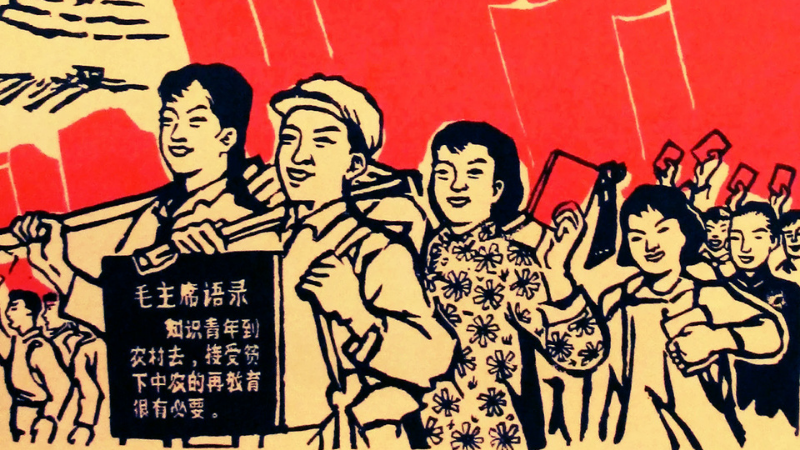
The world’s most powerful economy operates under a communist banner. The Communist Party of China (CPC), the most influential political organization on the planet, counts roughly 100 million members and has set its sights on steering the globe’s strongest state by 2049. By that time, it may become irrelevant whether one regards China as genuinely socialist or as a stark deviation from Marx’s original vision. If the CPC’s aspirations come to fruition, it will wield authority over both what we call things and how we narrate history. On that account alone, we should cease treating communism’s past as a closed chapter with no bearing on today’s choices.
A second, equally compelling reason to study communism’s history becomes clear when you scan the headlines: capitalism is faltering and liberal democracy is fraying. Climate change is intensifying social tensions; the Western model of growth is amplifying inequality; debt clogs the finances of once-dynamic nations; and the threat of nuclear conflict—unthinkable for generations—is now a present danger.
In the face of such a vast crisis during the 1930s, millions placed faith in communism for a straightforward reason: every other alternative to fascism had collapsed.
There is no guarantee this cannot recur. If you join any left-wing demonstration in the West—calling for human rights, climate justice, or higher wages—you will encounter a minority who advocate China’s system as a preferable model. Worse, while communist parties during the Cold War denied the crimes of the Soviet regime, some of today’s neo-Leninists openly defend them. On the far left, a new wave of activists is willing to admit that Stalin and Mao killed millions, yet argue that the deaths were justified by economic development or decolonization.
Yet the fact remains: capitalism is broken, chaotic, and spiraling toward authoritarianism, penury, and war, no matter how fast our semiconductors become.
If, like me, you yearn for a different future—a sustainable, egalitarian, technologically advanced, and democratic society grounded in universal values—then understanding what communism was, why millions embraced it, and why it failed is more than an academic exercise. It is our best safeguard against its return.
Karl Marx claimed the problem of communism was “solved” the moment he witnessed an electric railway engine displayed on London’s Regent Street. If he were reincarnated and shown an iPhone, he might ask: what prevents you from leveraging this immense wealth of knowledge and machinery to realize a society without property or hierarchy? My reply would address not only the power of billionaires and the atomization of organized labor, but also the fear of replaying an era when his portrait hung in places of torture.
The notion of communism predates Marx by centuries. The great thinkers of antiquity—from Gautama to Pythagoras to Jesus—taught the renunciation of private property or its communal sostenance. Some, like the Essene sect within Judaism, even created communal living within the slave-based economy that surrounded them. Equally significant, both Judaism and Christianity embedded in their theologies the idea of an “end of history”—a moment of redemption through upheaval which, as we will see, later became a guiding principle for modern communist movements. Then, beginning in the sixteenth century, Christian philosophers and social reformers repeatedly explored thought experiments about classless utopias.
As they engaged with these ideas, they drew upon the creation myths of major religions to argue that human society started out egalitarian. Yet modern anthropology shows that many contemporary hunter-gatherer societies reject private property and emphasize generosity, even as they rely on coercion and social pressure to enforce norms.
The claim that the absence of private property and systemic inequality automatically eliminates coercion—the core of Marxist history—has not been proven. Yet the same time, capitalism remains fractured, chaotic, and trending toward autocracy, poverty, and war, regardless of how fast our chips advance.
In such a context, it is natural for a new generation to ask whether a classless order, built on abundance and human flourishing, is possible. The answer is yes, but not in the way we have known it.
Marx argued that “history does nothing.” It does not fight battles, generate wealth, or spark revolutions; it is the outcome of individuals pursuing their aims. What he underestimated is the degree to which history can be steered by extraordinary people.
I have become convinced that to grasp cause and effect in the history of communism, chronology is your ally. The thematic approach, rightly dominant in academia, obscures the fact that by the 1920s communism had become a global organism, with its nervous system operating across borders in real time: an event in China could elicit a response in Moscow and a directive to Berlin in the time it takes to transmit a radio message. The analytical payload arrives in motion, as scenes jump between countries and continents, following events in their actual sequence.
When it comes to sources, there are stark asymmetries between those available to cover the USSR and the Comintern and those accessible from China. In the 1990s, researchers finally gained access to confessions extracted from Stalin’s victims and could see the bloodstains on the pages. By contrast, while official documents in China exist dating back to 1921, they function more as a mask than a window into reality. As a result, the Soviet experience can be reconstructed with high clarity, while Mao’s era remains frustratingly pixellated.
Far from being yesterday’s problem, the struggle for the truth about the history of communism may have only just begun.
I have taken to heart the philosopher Walter Benjamin’s admonition to historians: cease writing about the past as if we do not know how it ends. On the eve of the Nazi invasion of France in 1940, Benjamin urged us to write as if “taking control of a memory, as it flashes up in a moment of danger.” That is my aim here, because our own moment of danger is tangible.
I do not intend to “take control” of the memory of Marx any more than I aim to dominate the memory of the Russian Revolution or the Spanish Civil War. Yet I do want to prevent the Communist Party of China from seizing control of them.
Because, as Benjamin reminds us: “not even the dead are safe from the enemy.” Just as postwar fascism fought to erase the facts about the Holocaust, we now see—in Putin’s Russia, Xi’s China, and allied movements in the global south—systematic distortions of the episodes described here. And the trend will worsen.
In occupied Ukraine, new Lenin statues rise again. In Russia, plaques honoring victims of the Great Purge are being removed and the last Gulag museum has closed. In China, all critical writing about Mao is dismissed as “historical nihilism.”
As the PRC forges a new network of authoritarian states, I doubt this adversary will triumph without the thinkers who shaped my views—the Western Marxists, post‑Soviet historians, and Benjamin himself—being buried from sight (along with me).
I want you to imagine how this history could be written in a future dominated by the brain‑frozen clichés of Chinese communism. The Beijing propaganda complex has spent decades erasing the truth about the Tiananmen Square Massacre. What would it accomplish if it gained unchallenged license to curate the facts of 1848, 1917, or even 1789?
Far from being a bygone concern, the struggle to uncover the truth about the history of communism may have only just begun. If that is so, Benjamin’s words at the threshold of its darkest and brightest hours deserve repetition:
Every line we succeed in publishing today—regardless of the uncertain future we face—represents a victory wrested from the powers of darkness.
__________________________________
From Reds: A Global History of Communism. Used with the permission of the publisher, Scribner. Copyright © 2026 by Paul Mason
