
One pivotal moment in my early escapades with rock music arrived when I was roughly fourteen. I wandered into a brick-and-mortar record shop at the mall and lingered over the liner notes to Good Charlotte’s self-titled 1999 debut. The group is famously steered by twin brothers, lead singer Joel Madden and guitarist/vocal support Benji Madden. In the back of the CD booklet, every member had their own set of “thank yous.” Benji singled out “the egg for splitting, so I wouldn’t have to become the frontman.”
I’d long been intrigued by twins, yet Benji’s gratitude for a prenatal split launched my curiosity into overdrive. I imagined moving through life with a double who could share the path with me. That egg’s division felt, from Benji’s view, like a winning lottery: a constant songwriting partner, a genetically matched vocal partner, and a conspirator in the audacious dream of becoming a global alt-rock icon. At that age, I was beginning to sketch out how to start and sustain a rock band, while also navigating the early tremors of crushes. The two kinds of bonding fused in my mind in ways I’ve rarely untangled since.
Later in life I would encounter the punk-rock musical Hedwig and the Angry Inch, which gives us the song “The Origin of Love.” It suggests that when humans dared the gods, the divine response was to crush us by splitting us in two, the halves driving us to seek reunion and love. Whereas the Madden brothers’ split was a fortunate accident, the gods’ strike set us off on an endless quest to recover a once-whole self. Both visions—one personal, one mythic—echo in how I’ve approached heart-space and art-space alike.
The themes of rupture and reunion colored the year-and-a-half I spent shaping 99 Problems Finding the 1, a work of literary nonfiction built around the question of how to be more lovable and loving. One major takeaway is that, like politics, social life operates within an Overton window—a spectrum of ideas people deem acceptable or normal. The dread of appearing cringe, corny, or overly sentimental narrows that window, leaving us in a culture that feels emotionally frigid. A similar constraint arises from worrying about aging—rather than choosing actions that truly fulfill us, we chase the expectations tied to our particular life stage.
These patterns may earn brief peer approval but drain us over time. What might happen if we nudged that social Overton window toward a broader range of “normal” attitudes and behaviors that foster real affection? It would require embracing the possibility of seeming saccharine or overly earnest. We’d all need to grow more comfortable leaning into sincerity without self-consciousness, and perhaps shed any anxiety about appearing cringe. It could even mean choosing hobbies and pursuits for their own meaning rather than because they fit a given decade’s stereotype.
Boy bands are derided for being too accessible, as if something that’s palatable and fun necessarily lacks substance.
In writing the book, I also began to sense that the loneliness epidemic has primal roots. Lovelessness is amplified by a culture that overvalues resilience in a world that can feel perilous. After all, Earth’s history shows that most species have vanished, and that reality helps explain why many people prize toughness and the ability to survive. Those traits matter, and humanity wouldn’t survive the brutal realities of natural selection without them.
Yet humans also possess exquisitely delicate sensibilities, and we need folks who are attuned to, patient with, and wise about that fragility. That means championing gifts like gentleness, compassion, and patience—lest society’s loneliest and most attention-starved individuals become its most desperate and volatile. In an era of political polarization, fraying social connections, and rampant screen use, underestimating sensitivity carries a heavy price. Loneliness affects all genders, but men—traditionally praised for their stoicism and shamed for vulnerability—can be especially ill-prepared to navigate atomization. The trend toward stylish nonchalance and chilly detachment only makes genuine connection harder. When something as harmless as double-texting is treated as a cringe-worthy misstep, the drive toward authentic connection loses out to saving face.
I wanted my response to go beyond theory, so I started from Sartre’s warning that “literature is a bourgeois stand-in for real action in the world” as a launchpad for a personal challenge. How could I move from passive musings about becoming more lovable and loving to actively supporting that aim in the real world?
Whenever my faith in romance and possibility wanes, rock music has a way of lifting me up. While drafting early versions of 99 Problems Finding the 1, I remembered that many authors pair their books with playlists. I figured I could push that idea one notch further by writing and recording an original musical companion. A piece of music that mirrors the book’s themes felt intriguing. And I decided to begin with a straightforward Aristotelian notion: you are what you repeatedly do. If I want to cultivate lovability and love, perhaps I should start a boy band.
As I started to assemble members, I realized it was more than just pooling favors from friends. Building a boy band became a means of splitting the egg myself, a way to heal a wound inflicted by wrathful gods in a single act. Creating and performing with the group offers a twofold remedy to the so‑called male loneliness epidemic: it provides companionship and serves as an emotional outlet. We sing for one another and support one another through life’s trials.
The fruit of this effort is Uppity, an art-rock outfit that sounds paradoxical at first glance. Pop groups are often dismissed for being overly accessible, as if easy enjoyment automatically equates to a lack of depth. Art rock, by contrast, promises material for contemplation rather than mere dancing. Uppity extends the book’s core ideas into a living project that is meant to be thought-provoking yet approachable and enjoyable. Our debut EP, Code Ditching, embodies a commitment to shedding the shell of perpetual cool. It advocates not letting arbitrary standards govern how you live with energy and courage you need to free yourself. To invite the world to come along, you sometimes have to risk a touch of positive misfit against the status quo. You may need to abandon some entrenched expressive codes to model new ones.
Books and boy bands are a bard’s best balm.
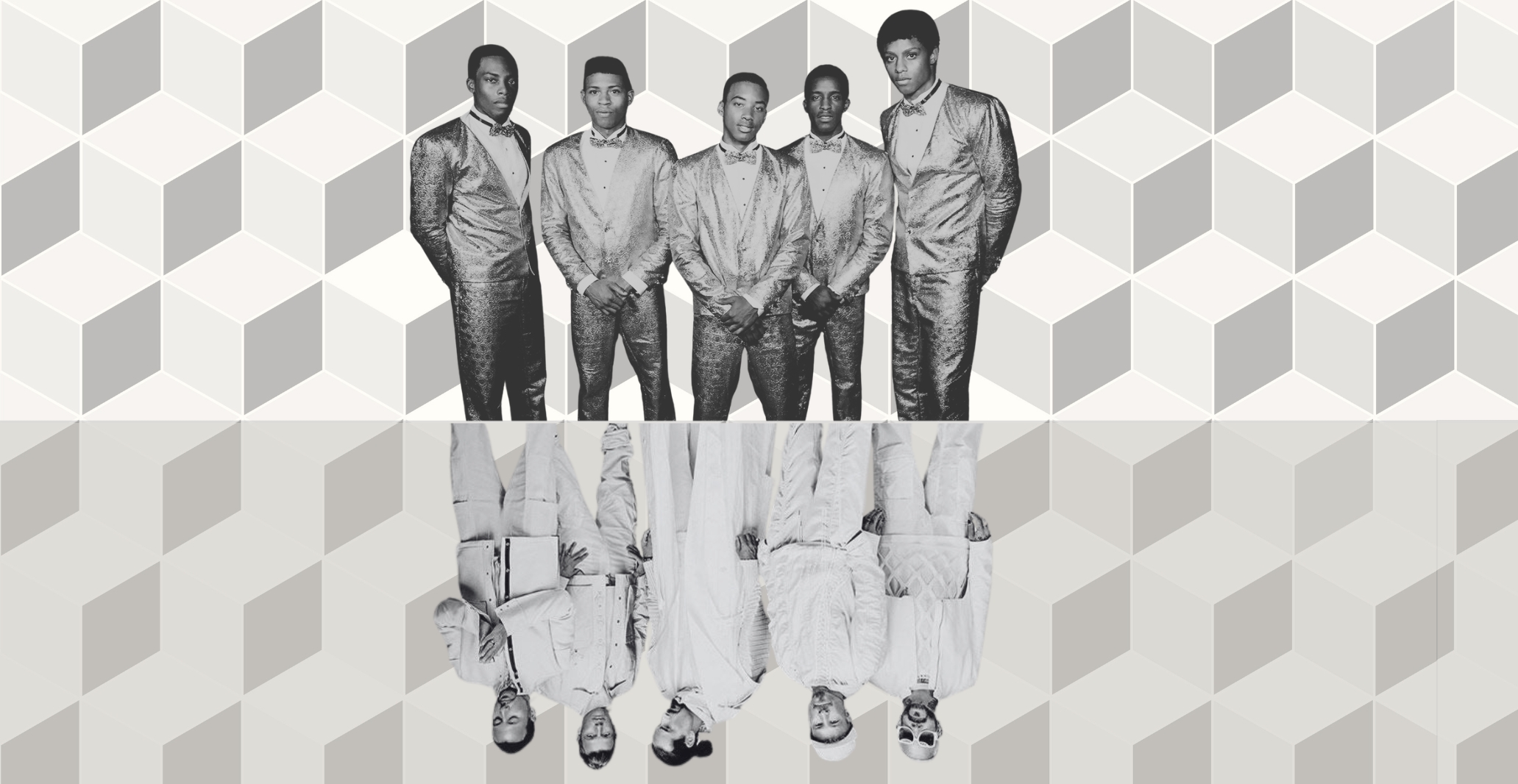
Racial dynamics shape how pop groups are marketed, and thus influence what forms of expression are deemed racially appropriate. The Backstreet Boys, for instance, can be read as a clean extension of New Edition, yet they’re typically branded as a boy band while New Edition is cast as a male R&B group—edgy, sexier, less innocent. For a Black artist like me, launching and writing songs for a boy band functions as code ditching, a way to claim aesthetics and timbres historically denied to my predecessors. This, too, is a form of healing.
Admittedly, labeling us a boy band is a touch tongue‑in‑cheek. We’re all in our thirties and far from pretending otherwise. Our lineup isn’t exclusively male. We simply stand for the idea that growing up doesn’t compel you to mute your vitality. In my imagination, I picture Uppity’s drummer Opus perched behind the kit, one stick tapping the hi-hat while the other twirls between his fingers, waiting for the moment to unleash the beat. It’s the sensation of the night before your break—a cutaway scene that teases the impending drop of rhythm. That image feels right for Opus, who embodies that mindset and attitude. He’s one of the kindest souls I’ve met. Years ago, when we first started spending time together, I suggested he try writing songs, because his sister, his then-girlfriend, and our new trio were all writers. He declined.
“What would I write about?” Opus wondered aloud. “There’s no conflict in my life.”
Uppity draws inspiration from Bikini Kill, the feminist punk group that helped lead the riot grrrl movement. They challenged misogyny through songs, zines, and workshops within the 1990s Pacific Northwest scene. Where Bikini Kill’s raw, aggressive, discordant sound unsettled cultural norms imposed on women, Uppity’s heartfelt and introspective jams push back against the self-defeating emotional sterility patriarchy often imposes on men. One of Bikini Kill’s many guiding creeds is their emblematic line in the 1992 track “Resist Psychic Death.”
It urges retaining ways of knowing, feeling, and relating that the dominant culture would rather erase. Psychic death, a term Patricia Williams coined to describe forms of racial violence that wound one’s humanity and dignity, acts as a beacon for healing and resilience in a black-fronted, temporally displaced boy band. The other Uppity members—three bright, guileless, and joy-filled souls—carry a level of buoyancy that’s rare at any age, especially in adulthood. Working with them preserves and strengthens these traits in me. Becoming more loving and lovable feels attainable when you cultivate that gentler voice and sing it at full volume.
Rather than chasing a twin or striking back at the gods, I’ve learned to trust time as a steadfast remedy for a broken heart. I’m lucky to have found a two‑pronged approach that competes with time itself: literature and music. Books and boy bands are a bard’s richest balm.
__________________________________
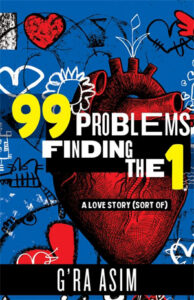
99 Problems Finding the 1, a work by G’Ra Asim, is published by Beacon Press.
