
Across many African literary traditions, the boundaries between the living and the dead, the seen and the unseen, are fluid rather than fixed. Ancestors, spirits, dreams, and myth are not simply fantastical devices but are unremarkable facts of lived realities, belief systems, and cultural histories.
In contemporary African literature, these spirit worlds influence how writers explore memory, identity, history, violence, belonging, and the unseen forces at play. Whether rooted in folklore, spiritual traditions, or the surreal, the ghostly often becomes another way of telling the truth.
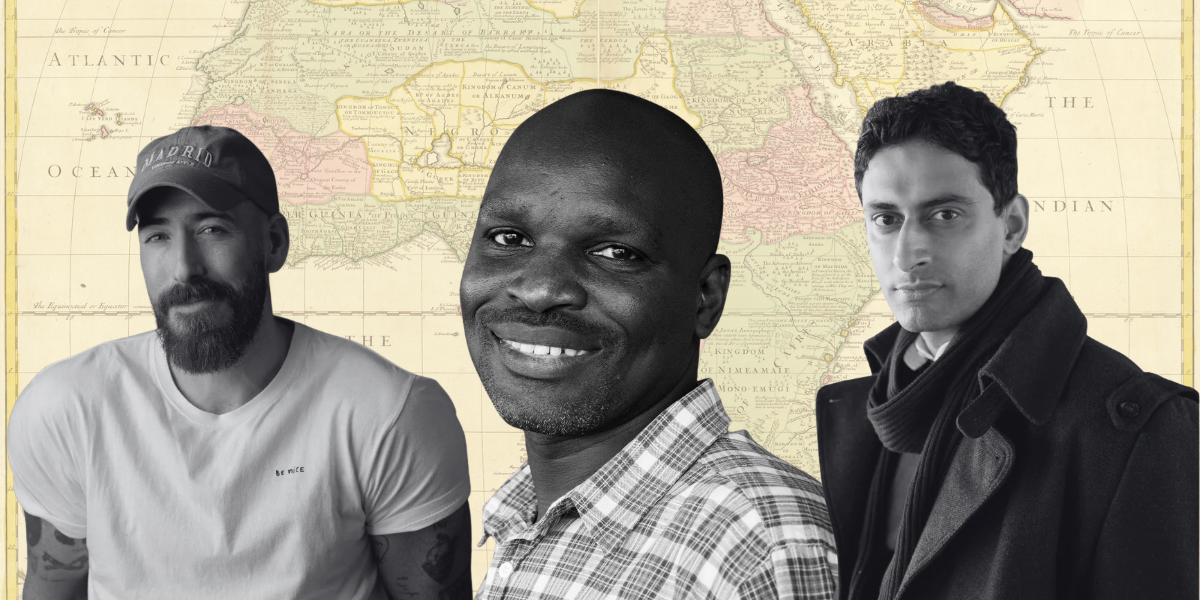
Our moderator is Karina M. Szczurek, an award-winning author, editor, publisher, and founder of Karavan Press. Joining her are Dilman Dila, a Ugandan writer and filmmaker whose work blends speculative fiction with folklore and spirituality; Sven Axelrad, the South African author of Buried Treasure, whose literary fiction draws on magical realism to blur the boundaries between the real and the uncanny; and Faraaz Mahomed, a South African writer who utilizes his background as a clinical psychologist and human rights researcher to examine both the emotional and spiritual dimensions of the human experience.
*
Can you describe how ghosts and spirits feature in your books and what they mean to you?
Dilman Dila: I’m not sure I ever label my characters as ghosts or spirits. If I do, it’s acknowledging a moment when the schooling I’ve absorbed has clouded my awakening. Calling them ghosts or spirits risks reducing what these beings actually are. When you picture a ghost or spirit, you might imagine a formless human-like shape that can drift through walls and float about. Spirits are often imagined in similar terms. Yet when you consider how many African worldviews understand the afterlife, you’ll find that there aren’t literal ghosts or spirits in the sense of transparent entities. The dead sometimes return not as spirits but as animals—often snakes, which is why snakes are not typically harmed in many African cultures—or as birds.
My ghosts are not omniscient narrators on life—we are still dealing with their flaws, their stubbornness, their self-centeredness, but they are capable of kindness, they value friendship, they feel humbled by their deaths, and they cheer for the living.
When I conceive a character, they often represent a facet of myself, and to me they are as alive as the ancestors and other beings who populate the spiritual frameworks of African cultures. Some may originate from the distant past or the future, bearing messages for us. This is one reason I welcomed solarpunk as a genre, seeing it as a form of activism that imagines a better world. So my solarpunk personas, I hope, will inspire others and perhaps, someday, someone will attempt to realize the utopias I dream about.
Faraaz Mahomed: I’m not sure whether the apparition in my story should be described as a ghost—it’s a possible reading, and from Salim’s perspective, Sawligha could be interpreted as one. She might be a hallucination or something for which we lack a word. I enjoy maintaining that ambiguity. The same inquiry applies to what we cannot directly perceive in the tangible world and how we relate to what lies beyond our senses. It served as a counterpoint to Salim in Mother/Land, given his rational, intellectual nature and the moment when one must question whether everything is simply logical. Ultimately, it’s about challenging logic and making room for mystery and oddity. Sawligha’s reappearance, in whatever guise, becomes a tribute to her, a way for her to claim ownership of her story.
Sven Axelrad: In South Africa, introductions often begin with a résumé. Within minutes you’re asked about your job, where you live, and so on. If you push me, I’d tell you that I’m an accountant at a factory that produces tampons. If you ask about my passions, the answer is far more engaging. I’m a writer, and I’m teaching myself Spanish while also learning to smoke for a novel I’m drafting called The Nicotine Gospel, in which cigarettes become the core of religious belief. I might also mention my dog. We could have a genuine conversation and discover the people we really are, not just the roles we play. The ghosts in my novel have been buried in the wrong grave and have forgotten their names. They drift around the Treasury, chatting with one another. With the usual conventions stripped away, they interact as they truly are. I created this to revisit the idea of identity—what it means and how we would relate to one another if conventional norms vanished.
My ghosts are not omniscient narrators on life—we are still dealing with their flaws, their stubbornness, their self-centeredness, but they are capable of kindness, they value friendship, they feel humbled by their deaths, and they cheer for the living.
Ben Okri writes in A Way of Being Free, “Magic becomes art when it has nothing to hide.” How do you respond to the notion of “magic realism” and its rich literary traditions in Africa and beyond? Which writers shape and/or illuminate this aspect of your own craft?
Sven Axelrad: Magical realism isn’t so much a style as a way of perceiving the world. Songs can be rendered onto a page with all their musical notation, yet that doesn’t actually convey the sensation of driving through the night with the window down, the city lights blurring into a whirl as your favorite tune plays. Realism is fine, but it isn’t for me. It is hard to narrate life by simply listing facts. A touch of magic helps bridge the gap between the facts and the tenderness of first loves, the death of a pet, the tense moment before stepping onto a stage, and all the complicated emotions we experience daily. Life is inherently mysterious and fraught with danger; our fates remain uncertain. Magical realism offers a more vivid means of interpreting what that feels like. In Africa we seem to embrace this, as do writers in Latin America, though the reach of the style extends far beyond. I count many inspirations among my heroes: Alejandro Zambra, Mariana Enriquez, Roberto Bolaño, Siphiwe Gloria Ndlovu, and more. I wish we could listen to records with all of them, to hear the music inside their minds.
Faraaz Mahomed: People sometimes ask whether my novel Mother/Land can be labeled magical realism. My understanding is that magical realism blurs the line between the real and the unreal, so I can claim that mantle for my writing. In terms of who I look to for guidance in those elements, Ben Okri stands out as a major influence. I’m also an admirer of Olga Tokarczuk and Jonathan Safran Foer, who use magical realism to explore weighty themes.
Dilman Dila: I don’t mind labels in general, though “magical realism” doesn’t quite fit. It remains a form of fantasy, science fiction, horror, or simply literature, and tagging it as “magical realism” feels reductionist. African cultures already live with the spiritual alongside the ordinary, so naming it fantasy or horror can separate it from the everyday reality of life on the continent. I prefer to call it fantasy or horror rather than a scholarly anthropological lens.
I read Amos Tutuola’s The Feather Woman of the Jungle during university and realized I could write stories in that vein. Another major influence was Octavia Butler’s Wild Seed, which featured Black protagonists at the center—an experience I found transformative. Before that, I hadn’t been surprised to see Black characters in Tutuola, but Butler’s work showed me Black characters as central figures. Those two works helped steer me toward speculative fiction, though I draw substantial inspiration from Stephen King, especially Christine and The Tommyknockers.
Humor and wit often appear in your work as a way to address the heart’s truths or critique social and political wrongs. Could you discuss how wit crosses genre boundaries and borders and how you employ it in your writing?
Fiction offers us an entry point into a much more truthful world.
Faraaz Mahomed: I treat the real world as incredibly silly at times, so I regularly indulge in humor. We have created ridiculous institutions, absurd regulations, and silly norms to maintain order and keep the world functioning. I wish Mother/Land left more room for humor, because there were moments when I wanted to push the world to be even funnier (Sven and Dilman are fantastic sources of inspiration in that regard).
Sven Axelrad: During my university years I worked weekends at a bar and weekdays at a DVD store. To fill the time, I watched nearly every film there. That job taught me the value of contrast and storytelling around 1999. Buried Treasure and all my novels carry serious stakes and imply existential darkness waiting in an alley, loneliness that could wipe you off the board if you’re not careful. All that darkness serves to highlight beauty—kindness, friendship, love, and, of course, dogs. Humor is the ultimate contrast. I remember attending a funeral, then heading out with the family for dinner, sharing stories, crying and laughing in equal measure. Humor lives everywhere, and it’s especially vital when it’s most needed.
Do you believe fiction can play a unifying role in a world where the truths of history and politics are frequently weaponized to divide people?
Faraaz Mahomed: Fiction opens a doorway to a more honest and shared world. I recall reading The Idiot and sensing its activist undercurrents, and I’d argue it has indeed accomplished meaningful impact. My daily work in human rights—advocacy, litigation, policy—matters, but fiction also possesses real power to bring about change. I’m proud of the company I keep in the literary world.
Sven Axelrad: Absolutely. When I created the fictional town of Vivo, I was wrestling with personal despair, gradually losing hope. I built Vivo’s stage without a plan for how my characters would respond, and what emerged changed my life. Each character is flawed, driven by petty priorities and self-interest, yet when faced with hard choices, most choose acts of kindness—flawed, sometimes reluctant, yet kindness nonetheless. Kindness can act as a beacon of light in darkness. I believe that reading fiction, and engaging with people who live differently and think differently, is a gift to both the world and the reader. Empathy, after all, is contagious. It reduces anger. You might live longer by reading. And it’s enjoyable too.
Dilman Dila: Fiction resonates differently with each reader, shaped by personal experiences and histories. Perhaps it broadens horizons, fosters empathy for those unlike us, or fills gaps in our knowledge of other cultures. Through solarpunk tales, for instance, we can envision and work toward a hopeful future. But if fiction were to unify too completely, it could risk creating a homogenized world, which is a dangerous outcome. Humanity thrives on diversity, and a more diverse world is less vulnerable to manipulation by those in power.
__________________________________
#ReadingAfrica Week is an annual celebration of Africa Literature organized by Catalyst Press and runs from November 2 through November 7.
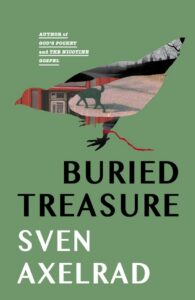
Buried Treasure by Sven Axelrad will be released from Catalyst Press on January 26, 2027.
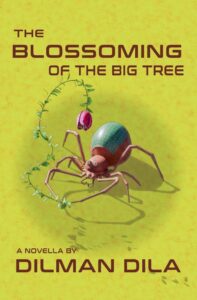
The Blossoming of the Big Tree by Dilman Dila is available from Ododo Press.
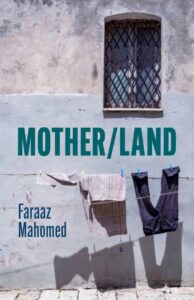
Mother/Land by Faraaz Mahomed is available from Catalyst Press.
