
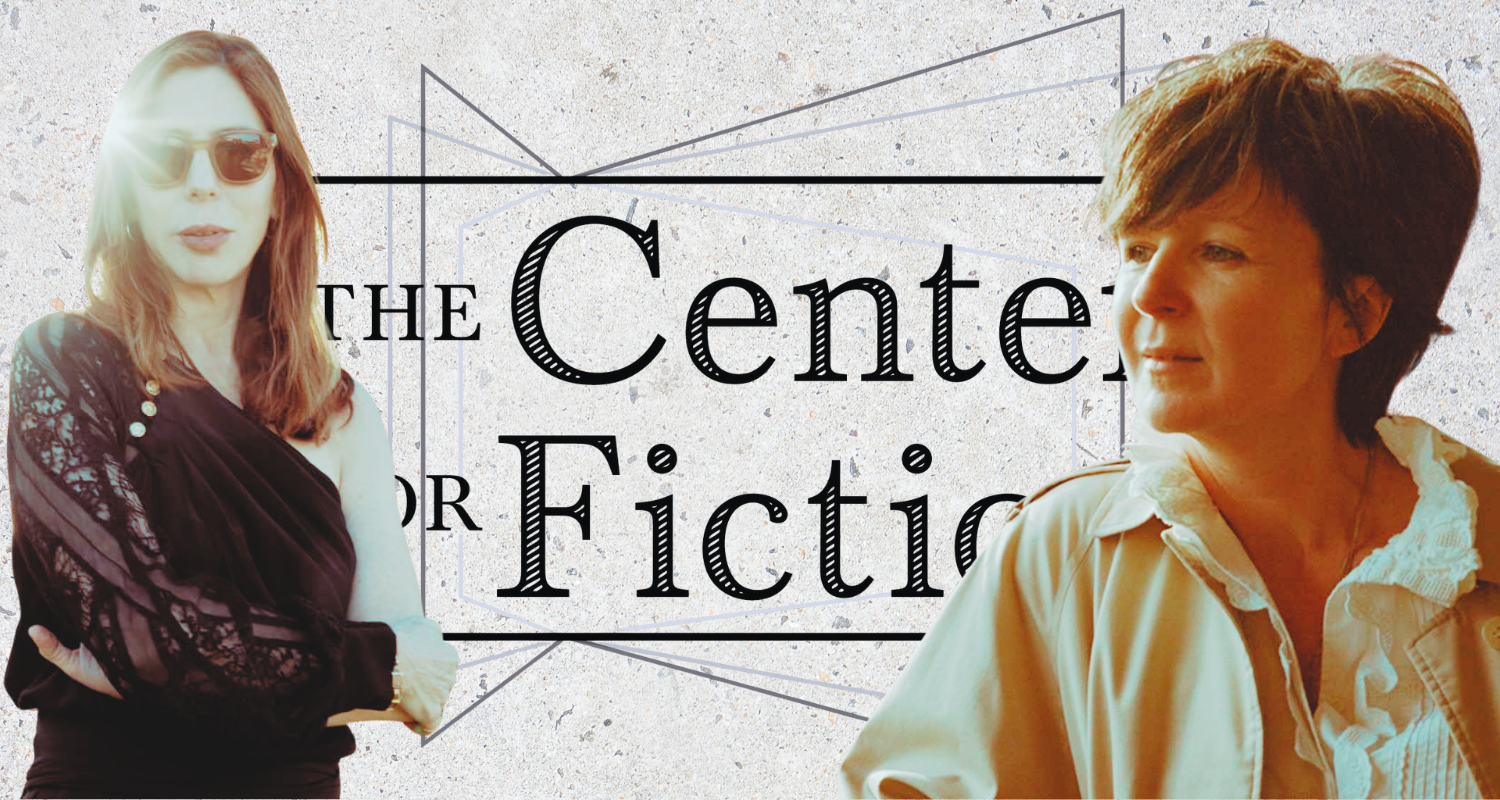
Step into the world of The Silver Book with Olivia Laing, award-winning author of The Lonely City, Everybody, and Funny Weather, as they discuss their spellbinding new novel of art, queer love, and illusion. Laing was joined in conversation by acclaimed novelist Rachel Kushner, author of The Flamethrowers and The Mars Room.
Laing, celebrated for their acclaimed nonfiction and deep engagement with art and culture, brings their signature insight and lyricism to this haunting work of historical fiction. Blending truth and imagination, intimacy and spectacle, The Silver Book is both a love story and a meditation on the moral power of art.
Kushner shares Laing’s fascination with artists working in the shadow of political and personal upheaval. Both writers explore the charged space where art collides with power and desire. Join Laing and Kushner for a journey behind the curtain of illusion, as they reflect on the politics of beauty, the intimacy of art, and the dangerous seduction of storytelling.
From the conversation:
Rachel Kushner: I really do think that the book is a real homage to the magic of people making things, just descriptions of the materiality. Actually, I have no idea if this would be a reference for you, but, in reading those passages especially, it reminded me of a book by a writer I really like a lot, Maylis de Kerangal. Do you know her novel Painting Time?
Olivia Laing: Oh, no.
RK: Oh, see, that’s wonderful. Then you two are just kindred spirits without overt connection. Her novel is about a woman who enters the Beaux-Arts Academy in Brussels, and it’s all about painting trompe l’oiel. And it just struck me reading The Silver Book, that it’s not that common that I read a novel that knows how to render people doing and making.
I wanted that to feel like time stops. It’s the fulcrum of the novel and everything slows right down.
Then you get to the part where Danilo, among the doing and making, is also cooking. And Danilo prepares this incredible meal on New Year’s Eve, which I saw in one of the reviews, they said, the real, libidinal thrill of this novel is dedicated to the culinary arts or something like that.
But the description of the food reminded me of reading MFK Fisher, there’s a real attention to the deliberate ritual of preparation.
OL: And that really felt like a very important portrait of him. That’s very important, but also time. I wanted that to feel like time stops. It’s the fulcrum of the novel and everything slows right down. He is putting together this very elaborate feast in an extraordinarily slow and patient way, and we’re almost taking a breath before we head into the kind of catastrophes of the second half of the book.
And it felt really key to me that there was this pause and that that pause involved sensuality and lusciousness, but also conviviality. He does it alone, which is true of Donati. He did always cook these feasts alone. Wouldn’t let anybody help him. But then everybody comes pouring in and there’s this very jolly and very fast dinner. The dinner is over in seconds, whereas the preparation takes days and days.
RK: How did you learn these details about Donati? Is there a book about him, or was it in the larger biography of Pasolini?
OL: I pieced it together from every single source that I could find and there’d be three references to him in the massive index of a Fellini book, and I’d kind of ferret through and find little tiny bits. So he was really an enigma. It wasn’t that he resisted me.
I felt like the material kept coming, but he really had to be tracked down. And sometimes I watched documentaries like that fantastic one, Ciao, Federico, which is about Fellini, and Donati would walk past the back of the shot. So they’d be interviewing Fellini and I’d be like, freeze frame, freeze frame, take a screenshot. What’s he wearing on his feet? So it was like a kind of ghost that I was chasing down. It was very exciting.
RK: The most productive and thrilling subject is somebody who remains a cipher, so you can use your intuition, which I think deployed very well in this book. There are also these descriptions of Pasolini, and the way that he moves through society, the way that he maybe talks to intellectuals versus the way that he will play soccer with the “ragazzi de vita” on the pitch and the way that you depicted things reminded me exactly of what Ninetto Davoli later says in some of his interviews about Pasolini.
And so I wondered, how deep did you go in your research of Pasolini? Because that can be an engulfing lifetime’s enterprise.
OL: Yeah, and I was very wary of that. Really, there’s no way I could have done this book if Pasolini had been the central character. He’s somebody who’s glimpsed out of the corner of people’s eyes, and he’s not central to Nico’s interest. He’s not really central to Donati’s interest. So they’re seeing him in peripheral glimpses.
Nico becomes more fascinated by him, so you get a real sense of him. But again, I tried to build stuff up from especially seeing him in films, but also still photos, like the amazing photos of him and his mother Susanna in his apartment in the EUR neighborhood, which is just so strange. And he’s tucked in like a little bird and she’s sort of patting him and there’s so much encoded in that.
So, I did read all the biographies, but I felt like I didn’t want to be bound by the thousands and thousands of interpretations of Pasolini. I wanted him to kind of pass like a cat through different scenes.
RK: That makes sense to me. And I think it’s a wise way to approach things just based on my own cursory, glimpses of Pasolini in essence, which I do declare to have had. And I’m remembering them when you mentioned the EUR, which is this architectural work completed under Mussolini, from what I understand, on the outskirts of Rome. I was driven past it by an Italian friend who was taking me to Ostia to see the site of Pasolini’s murder, and first to go to the restaurant, where he stopped off and had a beer.
I didn’t want to be bound by the thousands and thousands of interpretations of Pasolini. I wanted him to kind of pass like a cat through different scenes.
And there, the waiter is waiting to talk to you. They’re all sort of part of sanctifying and recreating and memorializing Pasolini. But going past the EUR, I thought, wow, this architecture really holds up in a quite haunting way. It looks incredible. And then we got to the site of Pasolini’’s murder, and I did this really cheap thing, which is I checked my email on my iPhone, but I had received a message from Ed Halter of Light Industry asking if I would participate in an homage to Pasolini.
OL: Oh, wow.
RK: Still never met him. And I wrote him back and I said, “I’m at the site of his death right now.” It was very strange.
OL: How strange. That’s a funny place because it retains its haunted quality. I’m not a big fan of death site tourism, but that one felt important to go to. And it didn’t feel like it had become anything hokey. It just felt very powerful and very sad. And I guess attached to that, it was really important to me to not actually describe the moment of Pasolini’s murder. I thought that there was something kind of grotesque about that.
So it was really important to have the moments leading up to it. So you get him to Ostia, and then the aftermath as it appears on the radio, in the newspapers. But to not have that moment and not imagine that moment of horrendous, really beyond horrific violence.
*
Olivia Laing is an internationally acclaimed writer and critic. They’re the author of eight books, including The Lonely City, Everybody, and the Sunday Times number one bestseller The Garden Against Time. Laing’s first novel, Crudo, won the James Tait Black Memorial Prize, and in 2018 they were awarded the Windham-Campbell Prize for nonfiction. Their books have been translated into twenty-one languages.
Rachel Kushner is the author of the New York Times bestseller Creation Lake, her latest novel; The Hard Crowd, her acclaimed essay collection; and the internationally bestselling novels The Mars Room, The Flamethrowers, and Telex from Cuba, as well as a book of short stories, The Strange Case of Rachel K. She has won the Prix Médicis and been a finalist for the National Book Critics Circle Award, the Folio Prize, and was twice a finalist for the Booker Prize and the National Book Award in Fiction. Creation Lake was also longlisted for the National Book Award. She is a Guggenheim Foundation Fellow and the recipient of the Harold D. Vursell Memorial Award from the American Academy of Arts and Letters. Her books have been translated into twenty-seven languages.
______________________________
The Center for Fiction is a literary nonprofit based in Downtown Brooklyn. Our mission is to support readers and writers of all ages and histories, and to build community through fiction. We offer a wide range of programming for local and national audiences, including Events, Reading Groups, and Writing Workshops. Our home in Brooklyn features a Bookstore, Café & Bar, Library, and Writers Studio. Members of The Center for Fiction enjoy invitations, discounts, access to our Library collection, and more. Join today.
