
“There is no such thing as an ugly language. Today I hear every language as if it were the only one, and when I hear of one that is dying, it overwhelms me as though it were the death of the earth.”
– Elias Canetti
*
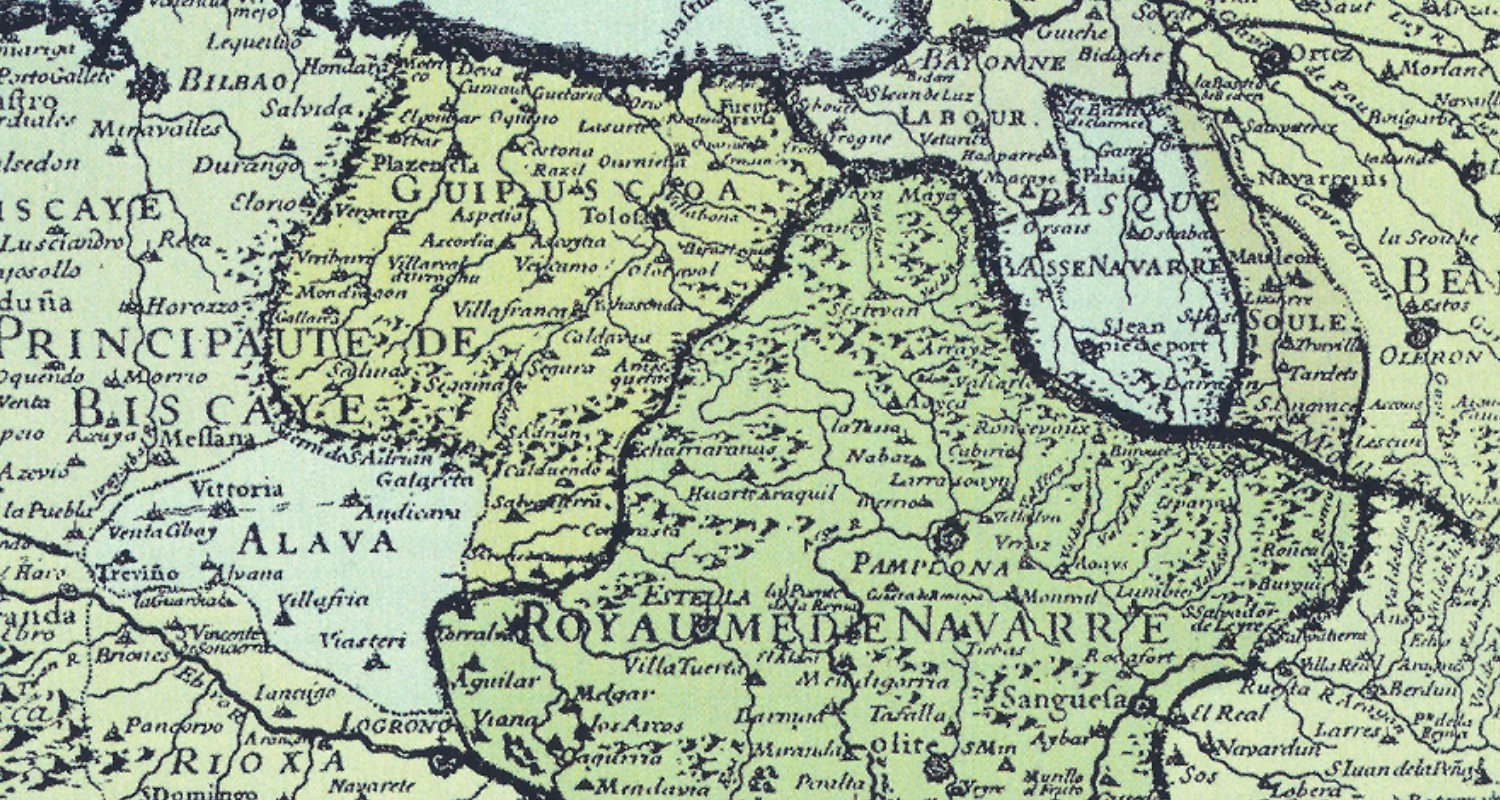
I did not carry a name during the earliest months of my life. I entered the world in the Basque Country in the early 1970s, at a moment when Franco—the tyrant—was ailing but still living.
My mother went to the courts to register me. The clerk asked for a name.
“Kirmen,” she replied.
The clerk insisted that it was not a proper name and insisted that Basque names were proscribed. “Why not name him José María, or something similar—like everyone else?”
My mother rejected this twofold naming system: I was Kirmen, and that was that.
She persisted week after week, and each time they offered another refusal. “And if you name him Kirmen María?” the secretary proposed. “It would be easier to approve the name if you appended something Spanish.”
In the end, the secretary surrendered. Thus my name stands: Kirmen, simply Kirmen.
Back then, many households lived with two names: the Basque one used at home and among friends, and the Spanish one required for official documents. My mother refused this split. She would not permit the language of intimacy to become a private code while another name stood in its place before the state.
I also recall another memory from those years. Franco lay near death, and shootings had occurred only days before. Police roamed the streets, checking apartments. At our door, they arrived with certainty, convinced they would uncover something. Drawers were emptied, closets overturned, every crack scrutinized.
It is something magical: the language itself growing with you—small when I was small, larger as I grew.
One room remained. “It’s my daughter’s room,” my mother explained in Spanish. “She’s sick.” My sister lay feverish in bed, and they searched there as well.
Suddenly a guard found something in a drawer beside the bed and signaled to his chief. My mother froze. Had she forgotten a document? Had she overlooked something?
“Don’t worry, Mum, they’re songs,” my sister whispered in Basque. Lasai ama, kantak dira.
The chief asked what the child had uttered.
“She has a fever. She wants water,” my mother answered in Spanish.
The guardias left without uncovering anything.
In those years, Basque was not only a language of affection; it was a language of secrets. It granted my mother and sister the ability to speak openly in the face of power. It shielded them.
The anecdote illustrates the precarious situation the Basque language endured then, and how much has changed since. I belong to the first generation to receive a complete Basque education—through primary, secondary, and university levels. As I grew, the language grew with me. From an intimate tongue spoken at home and in small villages, it stretched into society, gaining room and confidence.
We learned in apartments because there was no official Basque education—everything was fueled by idealism and altruism. At first, we did not even possess printed schoolbooks. Everything had to be created from scratch. Gradually, institutions appeared. A Basque radio station emerged. Then Basque television followed.
We matured almost in parallel, almost hand in hand. It is something magical: the language evolving with you—small in childhood, broader as you grow. Not every writer can claim that. Most are born into a language that is already strong and complete.
*
The Basque language, Euskera, numbers about a million speakers, even though nearly two and a half million people reside within the Basque Country. It remains a minority tongue on its own soil, with Spanish predominating to the south and French to the north.
Basque is not an Indo-European language. A form of Euskera similar to today’s speech existed in Europe long before the Indo-European migrations began from the East around 4,500 years ago. No one knows for certain where it originated. Perhaps someone settled in the Basque valleys thousands of years ago, and the language endured—not by chance but through a shared sense of community. Theories abound, yet none satisfy fully. Sometimes I wonder: are we speaking a tongue as old as the Neanderthals? We Basques can be stubborn—and rough—yet also lyrical.
What fascinates me is not the mystery of Basque’s past but its present—its vitality, its spoken form. If we clung to the oldest words alone, we could not express affection, shop for groceries, or speak on the phone. Words like ur (water), hotz (cold), or bihotz (heart) are ancient, yes—but the rest are borrowed, adopted. Maite, the word for love, traces to Indo-European roots. The Romans left us terms tied to technology and cooking—matters dear to Basques—and even words like libertate (freedom), though they did not always live it. They also left liburu, book. Alkandora (shirt) derives from Arabic. Xarma (charm) from French. Kixote (dreamer) from Spanish. And now gugleatu, “to google”—a pure Californian import.
Languages endure not through purity, but through contact.
*
I studied philology. At university, I entertained the idea of composing a serious phonology paper on sibilants. I was convinced the “s” in my hometown of Ondarroa was ancient—a fossil preserved by oral tradition. I drafted what I believed to be a rigorous study and hoped to publish it in a respected journal.
Then I faced the truth: the odd “s” was not ancient. It came from dentures. Older generations had altered their pronunciation because of dental prosthetics.
That realization made me aware that science was not my métier.
I leaned toward storytelling. Half of what I said rang true; the rest leaned toward myth. I couldn’t memorize dates or numbers for exams. My thoughts wandered.
One professor told me, “You simply aren’t rigorous.”
That was true. Yet I excelled at something else: telling stories. So I chose to become a writer.
Of course, I wrote in Basque. It is my mother tongue. I absorbed songs and tales from my grandmother, my mother, my aunts—an oral tradition that bewitched me. One childhood tale lingers: a black cat visited a woman every night while she spun thread. One evening her husband, disguising himself in her clothing, waited. When the cat entered and saw him spinning, it exclaimed, “What? A man spinning?” And the man responded, “What? A cat speaking?”
That story stayed with me because it fuses fantasy with linguistic playfulness—the enchantment of language itself. I believe I write fiction because of narratives like that—because language can be both wondrous and strange.
I also felt different as a Basque speaker. I sensed that by keeping the language alive, I was contributing to a more diverse and more just world.
Yet with time I learned that diversity without empathy can harden into another form of exclusion. A language does not become generous simply by surviving. It becomes generous when it welcomes those who did not inherit it. Lasting social changes are those that persuade rather than compel, that broaden belonging rather than narrow it.
In the democratic era, Basque has grown. A thousand more people now speak it than in the 1970s. Much of that expansion came from people choosing to learn it—children and adults alike. Many were not born within the Basque Country. That gesture still moves me. They did not receive the language as an inheritance; they adopted it. They widened it.
In Basque, the term for someone who speaks the language is euskaldun. That is all. No passport, no ethnic proof, no borders. My Japanese translator is euskaldun. Anyone who claims the language—even imperfectly—is euskaldun.
*
Here is another story.
I carry an excess of iron in my blood—a hereditary condition common among Basques. Every four months, the hospital draws out half a liter to stabilize my iron levels.
My hematologist once told me, “This used to be an advantage—it protected your ancestors from bleeding to death.”
Today, however, it harms the organs.
“Your blood is too pure,” the doctor joked. “Your forebears did not mix enough.”
With every needle prick, I reflect on inheritance—on what travels through our bodies without our consent.
Hemochromatosis has made me wary of purity—of the fantasy of a pure bloodline or a pure people. I place greater trust in language. Language has nothing to do with genetics. It is a choice. A shared space. A bridge.
Basque literature has long faced obstacles. It first appeared in print in 1545 when a priest in Bordeaux published the earliest Basque book. He rejected celibacy and penned autobiographical and erotic verses—some written from prison. Later, the first Basque Bible appeared in Navarre, thanks to Queen Joana de Albret, a Protestant monarch who championed education in the vernacular. True to form, we chose a precarious path: a rebellious priest and a Protestant queen.
In Mutriku, a coastal town, a statue honors Txurruka, a Basque naval commander who lost the Battle of Trafalgar. Admiral Nelson has a monument in London; we Basques erected one for the underdog. We have a fondness for the outmatched.
Today Basque literature stands in a luminous era. Several generations of strong writers are producing work simultaneously. Yet I sometimes worry about its fragility. What happened to Valencian Catalan or Provençal could also happen to us.
*
In 2005, during a poetry reading in Estonia, we read in six European languages. An observer described it as “the sound of six species of birds.”
Languages are living beings that require care. Like ecosystems or civil rights, neglect is damaging.
Recently, I was asked to write the preface for a new translation of A Room of One’s Own.
At first, I declined. “Shouldn’t a woman do it?”
The editor answered, “I want you to write it—both as a man and as someone from a small language.”
Returning to Woolf, I perceived anew how contemporary she remains. She does not prescribe answers. She allows ideas to unfold. Her style is accessible, literary, gently humorous—and revolutionary.
Woolf did not speak solely for women. She spoke for anyone who had been silenced. I believe that small literatures can perform that service as well. They bring not only fresh narratives but new forms.
Being small is not inherently a disadvantage. It can cultivate humility, curiosity, and daring. Claudio Magris once proposed that borderlands—multilingual and mixed traditions—often perceive reality with greater acuity than dominant cultures.
Nevertheless, impact requires moving beyond personal besetments. We must seek connection, not enclosure.
It has not always been easy.
Authors working in minority languages are frequently read through the lens of their origin. Innovation from margins can be harder to recognize than that from metropolises. Texts written within these traditions are not always encountered within their fullest literary context.
There have been moments when I felt reduced to being “the Basque writer.” Not simply a man who writes in Basque, but a symbol—an emblem. Invitations came less for the quality of a novel or a poem and more to fill a space. I was not read as a writer in conversation with others but positioned as a token.
It took me a while to realize that this reduction is not always malicious. It is usually administrative. Institutions classify, they oversimplify what is complex. Yet literature resists reduction. A book written in Basque is not an argument about Basque; it aims to broaden the horizons of storytelling.
Moving between languages carries the text into a territory that is neither entirely one nor the other. It is a space in between.
And yet that label has benefited me as well. In a larger tradition, I might have disappeared among countless others. Smallness can provide visibility as well as constrain it.
Small literary traditions can resemble families—intimate, affectionate, protective. Yet as Milan Kundera noted about Czech literature, they can also demand obedience. Translation matters because it opens another universe—a universe of readers drawn not by shared origin but by curiosity and affection for language.
In Spain, in some circles, I was sometimes reduced to “the Basque writer.” I was not Kirmen Uribe but a gesture toward inclusivity. Rarely was I afforded equality with Spanish writers.
Once, in a moment of frustration, I spoke to Basque—the language itself—“You made me small.”
And Basque replied, “But I made you.”
It felt true.
*
Now I reside in New York. At home I speak Basque. I teach in Spanish at NYU. I navigate daily life in English. My language use spans diverse contexts, constantly crossing boundaries.
English stands as the broadest of my languages. It moves with ease through institutions. Spanish is vast as well, yet here its voice carries a different tint—immigration, labor, resilience; it sounds distinct in Queens from Madrid. Basque, the smallest of the trio, mirrors many of the six hundred tongues spoken in this city: the ones carried quietly in kitchens, on building sites, and in small shops.
All three languages hold a special place for me. Basque roots me to the soil; Spanish offers a refined prose tradition; English provides extraordinary flexibility. Consider the phrase, “Fly me to the moon.” Such a construction would be unthinkable in Basque or Spanish. English allows a boldness others do not.
Today I write in all three. Major works usually begin in Basque, but I also render them in Spanish and English. At first, I believed I was translating myself—faithfully recreating my own words. Soon I realized I was rewriting. Each version breathed with its own life. It is not just a self-translation; I call it self-writing. Sometimes I work in two or three languages simultaneously. The end result is not one original and two copies, but siblings—texts shaped by varied cadences, pressures, and possibilities. Translation, for me, is not a later step; it is an integral element of composition itself.
Translingual writing functions like an X-ray of a text. When I revise a work in another language, I begin to notice what did not work before—where I leaned too much on clarity, where I stressed too strongly, where I repeated myself. We often write close to speech; intuition tempts us toward excess. But when a thought must pass through another language, it cannot rely on habit. It must justify itself anew. The superfluous falls away. The image clarifies. The scene becomes sharper.
Moving across languages transports the text into a space that is neither wholly one nor wholly the other. It is a threshold, where meaning loosens from its initial form and is reborn. In that movement, I sometimes feel as if I am tracing a path from leaves back toward roots. Writing across tongues is not merely a technique; it is a way of discovering oneself—someone who exists between languages, not divided by them but formed through their crossing.
Living in New York reshaped my understanding of this practice. I once thought writing across Basque, Spanish, and English was unusual. But New York operates in hundreds of languages. It is home to more than six hundred voices. Crossing from one to another does not feel extraordinary here—it feels routine. To live here is to inhabit a translingual mode. Language becomes less a fixed home and more a network of doors, all open at once.
One afternoon in the city, we visited Zabar’s for bread. The baker offered bagels for sixty cents—cheaper late in the day when bread must pass on.
Perceiving our accents, he asked where we were from.
“Basque Country,” we replied.
“Ah,” he said. “Euskara.”
He had learned about Basque from books.
Then he added softly, “I write too—two novels, though I have never published them.”
After a pause, he offered a rueful truth: “Writing a novel is always a failure. You never feel it’s finished. You declare it complete, but it’s never truly done.”
That migrant baker left me with three insights. One: novels stay open, like life, so change remains possible. Two: the Basques are not as obscure as we sometimes imagine—even in Manhattan. And three: bagels are cheaper in the afternoon.
*
Do you know what “Kirmen” means? It translates to “loyal.”
As a child, I carried that as a burden. Loyal to what, precisely? To everything I had inherited?
Today I hold loyalty differently. Not as obedience to roots, but as a willingness to stay open—to the world those roots made possible.
That professor’s remark—“You just aren’t rigorous.”—was true in a way. He was right.
I remain the boy who shut the door to his room, invented stories, and imagined another world.
______________________________
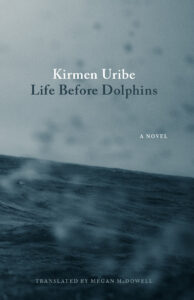
Life Before Dolphins by Kirmen Uribe is available from Coffee House Press.
