
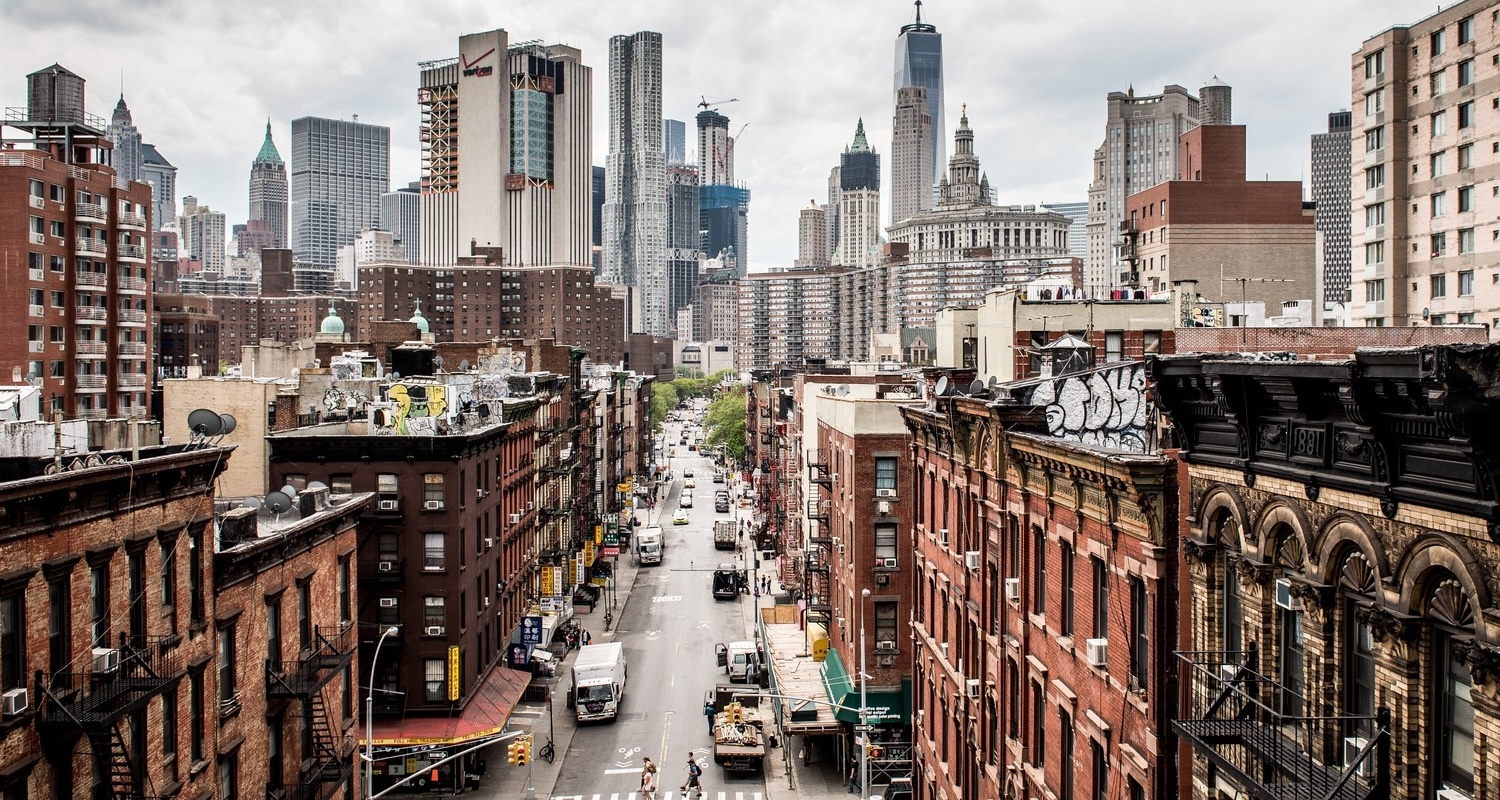
New York has never been shy about honoring the people who built it. Their names are carved into brick and stone, linked to parks and libraries, and retold in stories about how a modest colonial port grew into one of the world’s great cities. We can easily name the financiers, politicians, and philanthropists who accumulated fortunes, reshaped neighborhoods, and founded enduring institutions that continue to influence the city today.
But it wasn’t only these figures who shaped New York. They may have financed the skyline and the subway, yet others dug the tunnels, kept the lights on, ran the shops, erected the homes, and brought the streets to life. Their lavish parties earned headlines, yet it was domestic workers—including my own ancestors—who laid the table. Their names seldom appear on deeds or facades, yet their labor, dreams, and daily existence helped define the city’s character and formed the basis of what New York has become.
Even in this recounting, I default to generalities, and that in itself is part of the problem. The specific contributions of these New Yorkers are often absent from our histories because their stories are harder to recover. As a historian, I am bound by the limitations of the surviving sources. I can reconstruct a scene from letters, testimony, and other records, but I cannot conjure up details that the sources do not preserve.
To complicate matters further, archives and newspapers are not neutral archives of the past. Wealthy families and powerful institutions frequently leave behind extensive collections of correspondence and papers, preserving their side of the story with remarkable detail, while the materials of workers, tenants, and neighborhood organizers often survive only in fragments, sometimes interpreted by the very institutions that controlled them. The danger is mistaking the abundance of documentary traces for the true importance of a life.
I confronted this imbalance directly while spending more than a decade researching the aftermath of the 1911 Triangle Shirtwaist fire for my book, Fire in the Heart of the City. The archives preserve abundant records of influential figures like Adolph Ochs, publisher of The New York Times, and Jacob Schiff, the financier and philanthropist, who helped shape the city’s response to the catastrophe. But uncovering the perspectives of immigrant workers and organizers such as Rose Schneiderman and Pauline Newman, who challenged their vision, required tracing a far more scattered trail.
Assembling those workers’ stories revealed not merely a narrative of tragedy and reform, but a contest over who would define justice in the fire’s wake: those with the means to offer relief, or workers demanding the power to alter the conditions of their lives. The process of writing this book reinforced a belief I have come to hold about history: the tidiest narrative often signals that crucial voices have been left out.
The books that follow have helped me approach New York in that vein. Spanning history, memoir, fiction, and urban criticism, they illuminate both the institutions that shaped the city and the everyday worlds and relationships that surviving records can only partially reveal. Some have earned major literary and historical prizes; others remain less widely known.
Together, these works remind us that New York was never the product of a handful of great men. It has always been the result of countless people who have fought over the kind of city they want to live in.
*
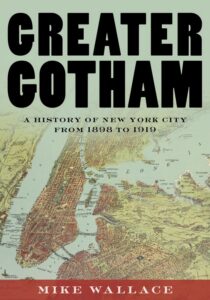
Mike Wallace, Greater Gotham: A History of New York City from 1898 to 1919
Few historians have captured the extraordinary scale and human complexity of modern New York as powerfully as Mike Wallace. In Greater Gotham, Wallace reconstructs two decades when skyscrapers rose, subways expanded, immigrant communities transformed neighborhoods, and competing political movements vied to steer the city’s future. Yet Wallace’s interest went beyond the city’s spectacular growth. A proponent of what he termed radical history, he placed the experiences of workers, women, Black New Yorkers, and immigrants alongside those of financiers and political leaders. Wallace, who passed away this year, arrived at Columbia in 1960 intending to fulfill his mother’s dream that he become a physician. We are fortunate that history proved more compelling than organic chemistry.
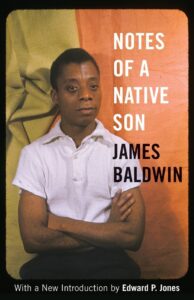
James Baldwin, Notes of a Native Son
And, of course, James Baldwin belongs on this list. The challenge lies in choosing which of his works to feature. In Notes of a Native Son, Baldwin traverses autobiography, literary criticism, and reflections on race and belonging, revisiting Harlem of his youth and the contradictions within American democracy. He demonstrates how family, identity, and personal experience can illuminate much larger historical forces. There remains a lot to learn from the clarity of Baldwin’s prose and his refusal to simplify the people or places he writes about.
For anyone attempting to write seriously about a city they love, Baldwin offers a crucial lesson: affection for a place does not require accepting the narratives it tells about itself. Sometimes it demands interrogating them. I keep—at my desk—a line from a later Baldwin essay: “…people who suppose history flatters them (as it does, since they wrote it) end up pinned to their own history like a butterfly on a pin, unable to see or change themselves or the world.”

Eric Foner, Gateway to Freedom: The Hidden History of the Underground Railroad
Long before New York became a beacon of opportunity for newcomers arriving through Ellis Island, it was a city deeply bound up with slavery. In Gateway to Freedom, Eric Foner recovers the remarkable networks of Black New Yorkers, abolitionists, and ordinary people who aided enslaved individuals in their journey toward liberty. Drawing on archival records, Foner reconstructs a history of resistance that unfolded alongside the city’s growing commercial prosperity. What emerges is not merely a collection of brave acts, but a tapestry of communities creating their own systems of protection, mutual aid, and solidarity. It’s a powerful reminder that New York’s long tradition of social reform did not descend from affluent benefactors alone; it was also built from the ground up, often in defiance of the city’s established authorities.
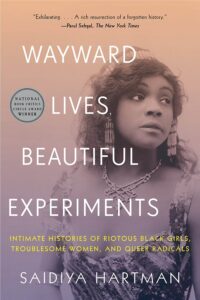
Saidiya Hartman, Wayward Lives, Beautiful Experiments: Intimate Histories of Riotous Black Girls, Troublesome Women, and Queer Radicals
What happens when the people who helped create modern New York appear in archives primarily through institutions that sought to regulate them? In Wayward Lives, Beautiful Experiments, Saidiya Hartman follows young Black women through tenements, rented rooms, dance halls, and streets of early-twentieth-century New York. By challenging the era’s conventions, these actual women opened up new possibilities for freedom and urban life.
Yet their stories survive largely in police reports, prison records, social investigations, and photographs rather than personal correspondence. To reconstruct the lives they infused into the city, Hartman reads these records against the grain, blending archival research with literary imagination to recover the aspirations and lives that “official” accounts often obscure.
One example among many concerns a young woman who migrated from Virginia to New York in 1913. Hartman writes, “For Mattie, it was nearly impossible to separate the city from the idea of freedom itself. Like the provincial types Dunbar mocked in The Sport of the Gods, intoxicated by the allure of urban life, she transformed Bowery into romance, Broadway into lyric, and Central Park into a pastoral—yet she failed to read the city for what it truly was or to match its rhythms and hazards.”
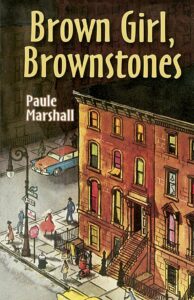
Paule Marshall, Brown Girl, Brownstones
Marshall’s novel follows a Barbadian immigrant family in Brooklyn during the 1930s and 1940s, exploring competing dreams of belonging, independence, and homeownership. Growing up in Brooklyn, Marshall portrays the everyday conversations, tensions, and ambitions through which immigrant families transformed their neighborhoods. Like Hartman’s work, her fiction underscores why literature remains essential for understanding New York. Property records can tell us who owned a building, but they don’t capture the full richness of the people who gave it meaning. When I stroll along a street of brownstones, I recall her line: “Glimpsing the long Brooklyn block, you see those joined houses as one, reflected through a line of mirrors, walls between houses seemingly gone, only vast rooms still connected. Yet, when you look closely, you notice that under the ivy each house has its own distinct character.”
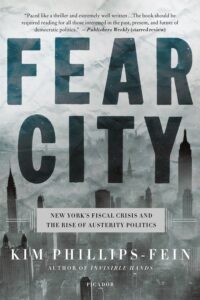
Kim Phillips-Fein, Fear City: New York’s Fiscal Crisis and the Rise of Austerity Politics
By the 1970s, generations of New Yorkers had helped assemble a remarkable array of public institutions and services, reflecting decades of debate over the proper role of government and the meaning of the public good. Then came the fiscal crisis. In Fear City, Kim Phillips-Fein reconstructs the dramatic events of 1975, when New York stood on the brink of bankruptcy and financiers, politicians, workers, and residents contended over the city’s future. With vivid, careful detail, she shows how decisions framed as economic necessities fundamentally rewired the city’s political and social order. It’s a stark reminder that the institutions and reforms built by earlier generations are neither guaranteed nor permanent. New York has always been made and remade through battles over whose vision of the city should prevail.
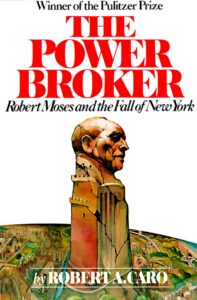
Robert Caro, The Power Broker: Robert Moses and the Fall of New York
Few works have shaped my sense of narrative history as profoundly as Robert Caro’s The Power Broker. Its subject, Robert Moses, might appear to contradict the premise of this list: he embodies the very type of influential figure who rebuilt New York from above, often with little accountability to those affected. Yet Caro’s real achievement lies in exposing the mechanics of power—how it accumulates, how it is defended, how it is wielded—and what it costs those who possess little of it. When a lengthy day in the archive tempts me toward the next box, I remember the editor’s stern instruction: “Turn every page.” More than half a century after its release, the book remains a pressing reminder that comprehending how a city was built requires asking not only what was accomplished, but who paid the price.
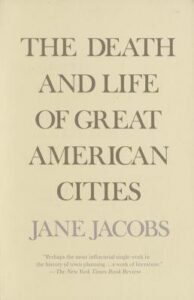
Jane Jacobs, The Death and Life of Great American Cities
Not every book that helps us grasp who created New York was written after the fact. In 1961, Jane Jacobs looked out on her Greenwich Village neighborhood and noticed something many of the city’s most powerful planners had overlooked: the intricate relationships that allowed streets and communities to flourish. The “sidewalk ballet” of urban life involved shopkeepers, children, neighbors, and strangers alike. Drawing on her own observations rather than archival materials, Jacobs challenged the prevailing belief that cities could be improved by tearing down neighborhoods and rebuilding them from above. Caro has credited her with influencing his understanding of the human costs embedded in Moses’s projects. He later regretted that a chapter detailing Jacobs’s opposition to the Lower Manhattan Expressway was removed from The Power Broker. Jacobs’s book did more than alter how people viewed New York; it helped catalyze a shift in how residents advocated for the city’s future, showing that books themselves can become part of the political struggle.
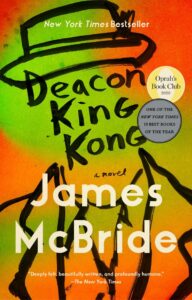
James McBride, Deacon King Kong
One of the great pleasures of James McBride’s Deacon King Kong, much like New York itself, is the sheer number of characters it holds. Set in a Brooklyn housing project in 1969, the novel starts with an aging church deacon shooting a local drug dealer, and then blossoms into an entire world of churchgoers, immigrants, police, and longtime residents whose lives entwine in surprising ways.
McBride writes with exceptional humor, warmth, and tenderness for his people. What resonates most is his conviction that neighborhoods are not simply clusters of buildings or products of planning and political will. They are formed through friendships, quarrels, rituals, and everyday troubles of those who dwell in them. Having lived in many New York apartments over the years, I’ve witnessed how each building and street carries its own universe, its own tempo. McBride makes one of those worlds feel as vast and consequential as the wider city around it.
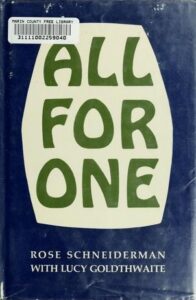
Rose Schneiderman, All for One (with Lucy Goldthwaite)
Rose Schneiderman deserves perhaps the greatest recognition among New Yorkers. A Jewish immigrant who began as a garment worker and became a labor organizer, she helped secure protections at work, shorter hours, minimum wages, and union rights that continue to benefit countless people today. She advised Franklin and Eleanor Roosevelt, helped shape New Deal labor legislation, and eventually served as secretary of the New York State Department of Labor, to name a few of her achievements. A leader of the women’s labor movement in early 20th-century New York, her autobiography, All for One, proved invaluable for my Triangle Shirtwaist book project.
The survival of her autobiography matters more than readers may realize. Arthritis prevented Rose from writing by hand, so she recorded memories on reel-to-reel tapes. Years later, however, relatives erased much of them, not grasping their historical significance, leaving only a few precious minutes of her voice. Other parts of her history were lost by design. After Rose’s death, her close friend and fellow labor organizer Pauline Newman removed and cut passages from letters she had written decades earlier, including expressions of romance and criticisms of union leaders. Other letters from Pauline and other garment workers were also destroyed by families uneasy with the reality that many early women labor organizers maintained intimate relationships with other women.
Fortunate for me, I have known Rose’s great-niece, Annie Schneiderman Valliere, who has dedicated years to researching and safeguarding her remarkable aunt’s story. Annie’s work reminds us that history does not preserve itself, and that recovering the lives of people who changed the world can be a demanding pursuit in its own right.
All for One offers the viewpoint of a woman who was as central to the making of modern New York as anyone else. The building where the Triangle fire claimed 146 workers now bears the name of the philanthropist who later donated it to New York University. Rose’s name may not (yet) adorn a grand edifice, but whenever I stroll by that building, or glimpse a lit fire exit sign, I think of the protections she and generations of largely forgotten New Yorkers fought to secure.
______________________________
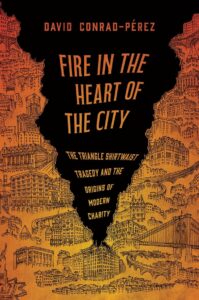
Fire in the Heart of the City: The Triangle Shirtwaist Fire and the Origins of Modern Charity by David Conrad-Pérez is available from NYU Press.
