
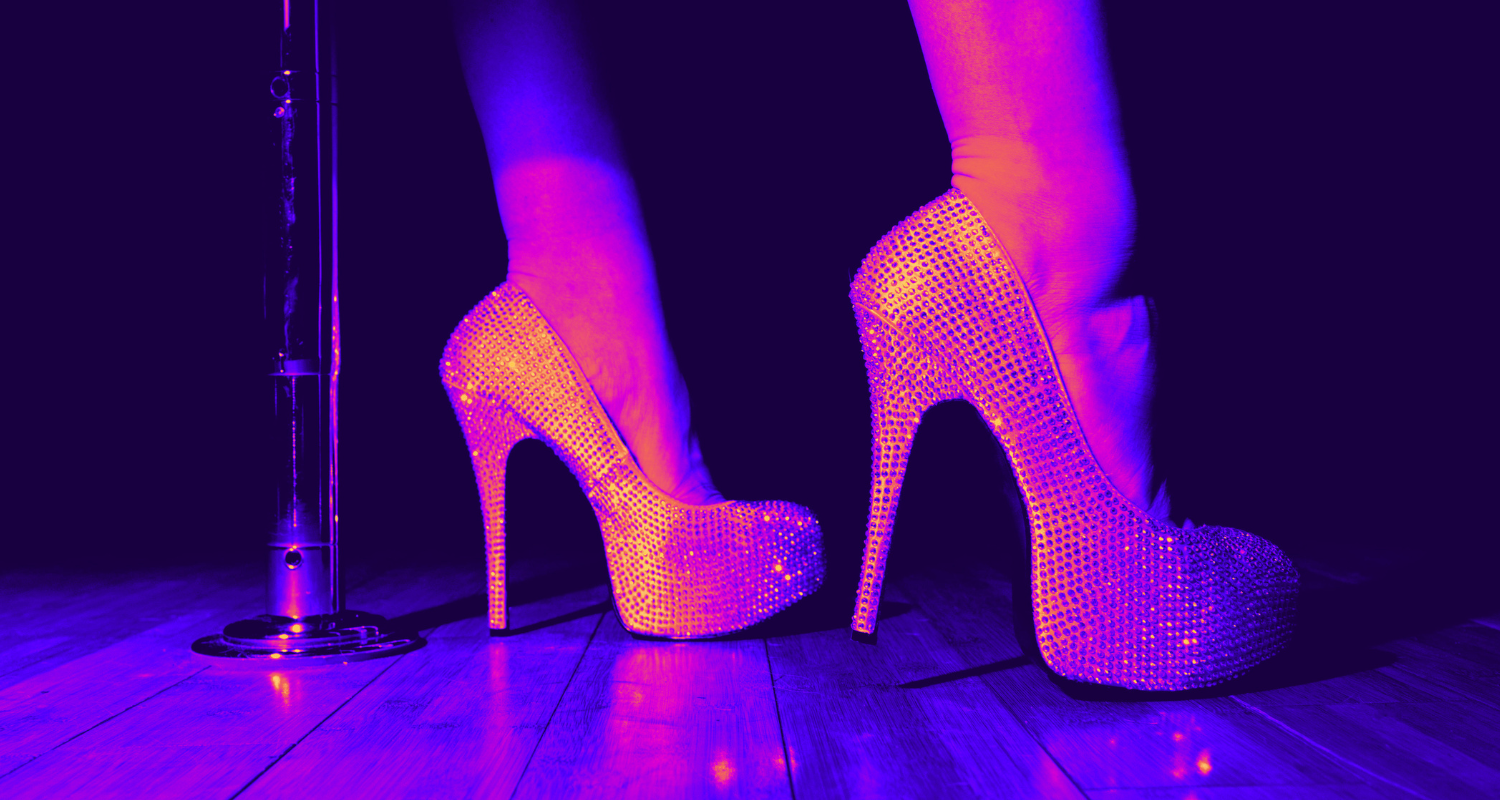
“What’s your real name, not your stripper name?”
– Lil Wayne on Juicy J’s Bandz A Make Her Dance
*
Azra Liaqat Khan isn’t the name I would use, though imagine if it were:
My students might come across my memoir and discover the plainly unappealing client who nonetheless managed to push me to climax merely through the motion of a lap dance. They’d learn that I once found myself locked inside a hotel room, showering before an unstable patron in exchange for a bag of cocaine, and that even in my late twenties, terrified of my parents, I spent a sizable portion of my earnings traveling to Charlotte, where Ammi and Abbu introduced me to yet another set of unimpressive would-be husbands. So much for my unwavering no-AI policy and my careful teaching notes.
If Azra Liaqat Khan had been my actual name, my university wouldn’t hesitate to remove me from its roster of speakers for local high-school outreach, barred as sex workers are from contact with youth. Invitations to keynote at colleges would wither away, because “Here’s the moment I deceived a client by making it seem as if my parents were slum-dwellers in India” doesn’t exactly read as a Serious Political Scientist. (Despite all the anxious chatter about radical left professors, higher education remains a bastion of conservatism.) I’d become nothing more than a Muslim-Stripper-Turned-Professor. So much for my professional reputation.
The question isn’t why I wrote Mona under a pseudonym. The question is, how else could I have written it?
If Azra Liaqat Khan were a real name, those I irritate in my book (the right-wing Indian nationalists and the religious zealots and the Islamophobes—a veritable roll-call of online trolls) would know exactly how to locate me, dox me, and harass me for what I’ve written. So much for my peace of mind.
But the most crushing consequence of writing Mona under my own name would be the one understood by every South Asian daughter who believes her missteps will register on the elder’s ECG. When Ammi-Abbu ruled by fear, I worried about being taken away, sent abroad, and married off (the fate of many women I knew whose boyfriends or wardrobes were enough to derail their lives). Decades later, I no longer fear they’ll ruin mine, but the thought that I could ruin theirs—that Mona could trigger the expulsion of two octogenarian Indian immigrants with walkers from their mosque and a rift with their siblings—feels almost cruel.
The question isn’t why I wrote Mona under a pseudonym. The question is, how else could I have written it?
*
During Algeria’s struggle for independence, women managed to slip grenades and pistols past French checkpoints while wearing their flowing haik. (The French, steeped in their own Orientalism, never considered that a Muslim woman could hold such political agency.) I would never claim that evading marriage proposals from Lockheed Martin executives in my parents’ Charlotte dining room while secretly moonlighting as a New York City stripper was as revolutionary as the FLN’s tactics, but I also recognize that there is something liberating about staying hidden.
It’s a place that famous anonymous writers like the Brontë sisters and the queer Muslim author Lamya H. have understood. Behind a forged identity, we can be bawdy. We can command authority. We can remain “respectable” and still keep the affection of our husbands or parents.
Veiled, we can finally be taken seriously in our craft.
At its heart, Mona is a meditation on false identities. For seven years, I inhabited a stripper persona—one moment a doe-eyed doll, the next a discounted therapist. Simultaneously, I wore another invented role: a dutiful daughter to parents who only wanted me to marry well.
And I wasn’t the only one pretending. My customers, feigning business trips so their spouses wouldn’t suspect a thing as they spent from their portfolios at the club, did much the same. Ammi-Abbu and the extended family, watching a tightening Salafi Islam take hold, amplified their own piety to fit appearances, living double lives of their own. Everyone was performing a role.
Meanwhile, I manufactured one smokescreen after another to carve out a degree of autonomy away from my parents’ watchful eyes and delay the inevitability of marriage. Subterfuge became a skill of survival, and that is precisely why I had a memoir to write.
“Azra Liaqat Khan” is as much a fixture of the narrative as it is the author’s name.
*
Perhaps I (not Mona, not Azra, but the real me) possess twenty thousand followers on TikTok or a friend who arranges events at a major city library. I might even have a professional contact at a major news outlet. I could already have a public platform as an author. But that would avail me little if anonymity matters. I can’t tell the women’s-studies department at my university that a book is on the way. In a market built on moving copies, where an author’s platform is essential to a memoir’s appeal, I must instead rely on word of mouth.
Perhaps, through the networks that have long linked us, Mona will discover its own quiet channels to readers who have also lived more than a few lives underground.
I post occasionally on the Instagram account I created for Mona. The algorithm ignores it.
Like the strip club stage, the algorithm loves cleavage, hair, and outfits. Since those are off-limits for me, I share quotes. I craft a pink-and-purple snippet of my Kirkus review, set it to Ginuwine’s Pony, and post it to my Stories.
I’m not the only one navigating these constraints. My publicist, who doesn’t know my true identity, arranges off-camera media interviews and guides me on how to answer questions with enough information to satisfy curiosity without exposing too much—a throughline in my life, it seems. My agent, editor, and I communicate using the same email address I used back when I was stripping, the one I gave clients instead of a phone number. What used to be a repository of unsolicited dick pics and desperate requests to meet outside the club has been revived for cover design and copy edits. Just like sneaking out to my senior prom (when teachers handed me fake field trip forms and a classmate created a bogus website for the “leadership conference” I had fabricated for the weekend), today’s fictions also require collaborators.
I contemplated posting an old photograph I took in the dressing-room mirror at Scandals, a Queens strip club now long closed. From the early days of iPhone cameras, the image is grainy. I’m surrounded by backstage clutter: duffel bags, unplugged curling irons, a dirty ashtray. I’m wearing clear Pleasers heels and a tiny black tube dress with cutouts along the sides. I look tacky and hot. Maybe I could lay a cheeky “censored” banner over my face. I opened the app to post it and found two messages waiting.
“Sister,” one read, “you’ve lost your moral compass. You’ve gone astray.” It came from a man who clearly hasn’t read the book. He never will. He’ll never grasp how I worried about making sure Mona didn’t become fodder for Islamophobes, how careful I was to present my people with depth and care.
The other message, bearing an American-flag profile, said: “Jihadi communist. You’re not fit to be near students.”
I deleted both messages and blocked the senders. Vindicated, I closed the app without posting my photo.
For me, there will be no author photo or bookstore event or “unboxing” video of my hardcovers. I’ll spend publication day teaching and grading quizzes, with colleagues and students none the wiser. I’m well acquainted with this practice.
Perhaps, through the networks that have long connected us, Mona will find its own quiet channels to readers who have also lived more than a few lives underground.
___________________________
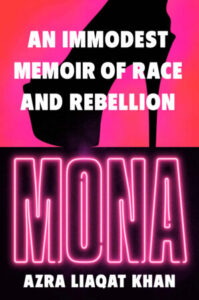
Mona: An Immodest Memoir of Race and Rebellion by Azra Liaqat Khan is available from Tiny Reparations Books, an imprint of Penguin Publishing Group, a division of Penguin Random House, LLC.
