
Come morning, everyone slept except Grandma and me. I lay awake between my cousin Rhonda and girl-aunt Sheila, listening for Grandma to rise in the quiet darkness. Aware that she preferred to be alone at the start of the day, I waited until the kettle sang, the toilet flushed, and the oven door opened and closed before making my way downstairs. The kitchen carried the scent of sugar, coffee, butter, and bread.
I stood in the doorway while she was in the middle of committing a Bible verse to memory.
“Nik-’em-Hick-’em-Slick-’em Ball,” she greeted me with a song in her gravelly alto. “Do you want toast?”
I replied with a simple nod. Grandma wasn’t fond of a lot of chatter first thing in the morning, and I was infamous around the house for asking too many questions and forming strong opinions. If I started, I tended to ramble, and she would sigh, “Oh, Nik, can you just be quiet for once? My goodness.”
I rested my head on the table while she prepared my breakfast, my feet barely brushing the linoleum. She moved through the kitchen at a steady pace, still sipping her coffee. I gleaned fragments of her thoughts as she spoke softly to herself and organized the day ahead. The more I stayed quiet, the more she opened up.
Grandma sang a funny song from her childhood. She knew I loved when she sang it in her high, playful voice.
Turkey in the straw
Turkey in the straw
Roll ’em up and twist ’em up
A high tuck a-haw
And hit ’em up a tune called
Turkey in the Straw
This she followed with amusing animal sounds. A minstrel song, I would understand years later.
“Where are my friends Bob and Joe?” she wondered, peering out the window for the cardinal and blue jay that had made the willow and apple trees in the backyard their home.
Sleepily, I listened as she croaked out another tune. I needed to use the bathroom, but I worried that another family member would descend and take my place at the table. This was my favorite part of the day: time alone with her. Behind me the washing machine churned in a soothing rhythm. Later that day, Grandma would hang laundry in the backyard on lines strung between the trees, softly singing a song like “Peace, Be Still” to herself. She rose and headed to the bathroom, leaving a few sips of sweetened coffee on the kitchen table. I drank them down and felt lightheaded from the sugar and caffeine.
I wanted to understand my grandmother’s spiritual devotion and how she found peace and calm amid the chaos of our lives.
When she returned from the bathroom, the house fell louder. Someone had turned on the television. Movement could be heard as aunts and cousins ironed clothes, packed bags, and styled their hair. I pulled myself away from the table, brushed my teeth, and prepared to walk to school with my cousins.
*
At home, Grandma spent most of her time in the kitchen. At church, she could be found at the piano or organ. At dawn, she whistled and hummed along with the birds in the yard. At dusk, she rested in her recliner, or on the porch enjoying a cool breeze she called “loverly,” the touch of air on her damp skin. “Thank you. Thank you, Jesus. God is good,” she whispered quietly.
Grandma spoke little, yet she sang all day. She carried with her a living catalog of hymns, gospel music, blues tunes, folk songs, work songs, and nursery rhymes—a collection rooted in our family’s history of slavery and sharecropping in Alabama. Her mother, Edna Matthews, was born around 1905 on a farm in Wetumpka, Alabama, into a large family.
In the early 1900s, Wetumpka was a place where Black people sought to escape. While its population was just over five hundred in 1900 in Elmore County, the area had drawn national attention for its lynching of Black people. In 1898, four Black men—Solomon Jackson, Lewis Spier, Jessie Thompson, and Camp Reese—were lynched near Wetumpka. Two years later, in Eclectic, a small town east of Wetumpka, a man named Winfield Townsend was burned at the stake after his nephew was hanged in the Wetumpka jail.
Sharecropping fields were everywhere, with few other job options. Edna joined her older siblings as they moved north to Ohio in the late 1910s and early 1920s, hoping to escape racial terror and find opportunity. The Matthews siblings initially found housing and work in Cincinnati. In 1920, Edna, then fifteen, lived on Mill Street in Cincinnati’s Sixteenth Ward with her mother, two sisters, and two other boarders. She worked in a factory as a packer.
The jobs were better in Ohio, but the conditions remained harsh, and cross burnings and lynchings extended beyond Alabama and the Deep South. The winters were cold, and Black migrants were forced into cramped quarters on a few narrow streets heavily patrolled by racist officers. Black migrants to Ohio, like the Matthewses, found work but faced wage discrimination from employers, hostility and exclusion from unions and white workers, and widespread housing discrimination.
In 1922, Edna married her first husband, William Buchanan Gordon, and a year later had her first child, Louise. Their marriage was brief.
By 1926, she met and married Sylvester Troutman, a recent migrant from Georgia who lived in Hamilton’s Second Ward with his older siblings. The young family settled on Monument Street, in a stately home that had been subdivided into multifamily units as the city grew with new laborers, many of them poor. Monument Street had become a hub for Black workers arriving in search of affordable housing. It lay near the police station, the river, and the railroad tracks.
Three years after marrying, Bobby Jean Troutman—my grandmother—was born on November 26, 1929, followed by four more siblings. Grandma never liked her name; she felt it sounded boyish and rustic. As a young adult, one of her first acts of self-determination was to change her name to Barbara Jean. For most of her adult life, she would be known as Barbara Jean Fleetwood, and she would become synonymous with all that the Fleetwood name stood for in Hamilton, Ohio.
*
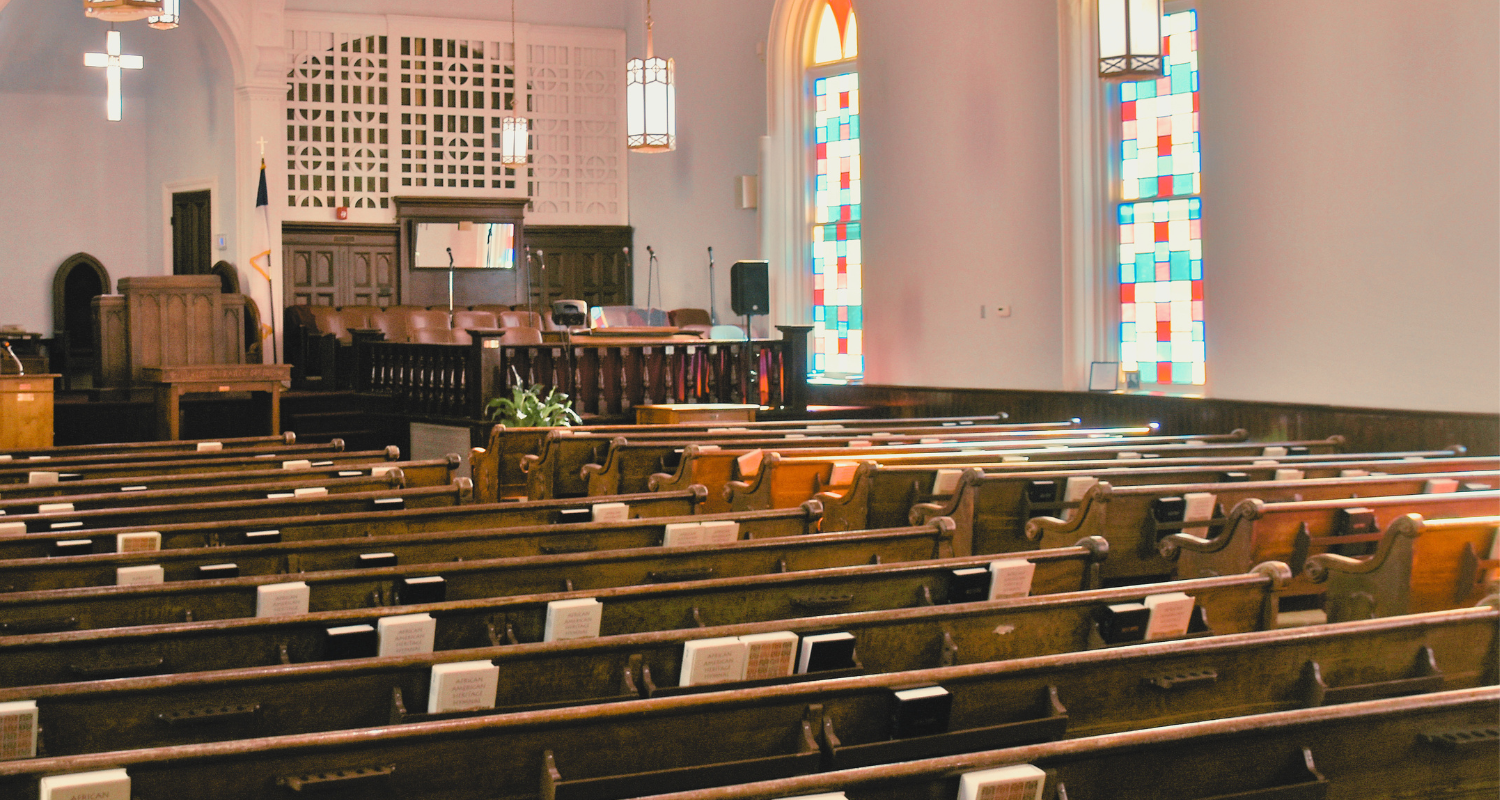
The first whispers of my grandmother’s life came to me through her songs. Music held sacramental value for her, and although she worked as a cleaner, like her mother before her, in households of white families, music was her true vocation. My grandmother served as choir director at Mount Ebal United Holy Church, part of the oldest Black Holiness-Pentecostal tradition in the country. Grandma played the piano and organ by ear and instinct, listening to someone sing a few lines and then accompanying them as if she knew the music by heart.
She had not always lived with such devoutness. The family lore says that, as a teenager, Bobby Jean was popular in the Second Ward for her curves and dancing. She moved in mixed company—girls and boys at a time when the church elders frowned upon it. She smoked cigarettes and slipped away from church to dance at juke joints.
When she was nineteen, however, something shifted. She attended a neighborhood tent meeting with her older sister, Louise. Black preachers from the region delivered impassioned sermons, and the crowd offered spontaneous testimonies. Bobby Jean felt the Holy Spirit overwhelm her. Soon after, she received a divine visitation from an angel who told her she would dedicate her life to God through music and caring for children.
Around the house, Grandma sang to God all day long. “Blessed Assurance,” one of her favorite hymns, was written by Fanny Crosby, a blind woman in the 1800s who, over the years, composed thousands of hymns by dictating them to a pianist friend. Even if Grandma did not know Fanny Crosby by name, blindness served as her spiritual metaphor. She treasured the tale of Saul blinded by God on the road to Damascus and reborn as Paul. For her, the transformation from spiritual blindness to divine light epitomized grace. While cooking or washing clothes, she created melodies to lyrics like, “I once was blind, but now I see.” It was her own narrative. Grandma had renounced adornment, vanity, and spiritual blindness. She now wore long cotton dresses and practical shoes. For Sundays she rotated a collection of dresses—lovely, elegant, and subdued—organized by the season.
I sensed that her inner life operated apart from us. Her singing formed part of an internal monologue, only partly externalized. She sang the tune and tapped out the harmony on whatever surface was near in the kitchen. She stretched and shortened phrases, repeated words, shared revelations, and let her voice rise to a high pitch and then fall in a free cascade: This is my story, this is my song / praising my Savior all the day long.
I wanted to understand my grandmother’s spiritual devotion and how she found peace amid the chaos of our lives, how she orchestrated her small, everyday miracles. The stacks of coins on the dining room table that added up to enough lunch money for all the children. The rides to medical appointments for aging relatives and church members. How did she know what to do and when to do it?
Tell me, Grandma, what you know about God and grace. Does God judge? Are prayers answered? Does God understand our fears? How did you, dear Granny, perform that miracle, turning two dollars—coins gathered from pockets and the corners of your purse—into enough to feed this growing brood? Who taught you to chant, “This too shall pass”? How you wield it like a potion.
Grandma sits on the porch, singing softly:
Blessed assurance, Jesus is mine!
O, what a foretaste of glory divine!
I loved Grandma’s devotion. My mother joined her in a daily spiritual discipline. As a child, I watched them with awe: two formidable Black women, sitting at the Beckett Street kitchen table, studying their Bibles every morning and night with a careful attention to detail, underlining, annotating what they believed to be God’s will for them. They believed in cultivating an intimate relationship with the Word so that God would speak directly to their hearts. They taught me to be a lifelong learner and to develop a hermeneutical habit of reading slowly so that truth reveals itself through interpretation.
For more than fifty years, Grandma served as the music director at Mount Ebal, and that church produced some of Hamilton’s finest music. In the 1960s and ’70s, bands practiced on every block and often invited neighbors to listen in. Live music—from churches, bars, homes, and parks—reverberated throughout the Second Ward.
Mount Ebal was a small church building whose congregants consisted of a few intergenerational families from the neighborhood. The children called it Mount Evil; I interpreted the name as a mountaintop for conquering temptation. For decades it was led by Reverend Berger and his wife, Sister Berger, the church’s matriarch, who wore her hair in a style reminiscent of Coretta Scott King.
Grandma’s friend Mrs. Watley sat at the door greeting every parishioner. She looked at me—a tall, lanky figure with shoulders like a tree—and said, “Hi, little Niki. How’s your fat shaking?” and let out that phlegmy laugh of hers. I’d heard her greet other girls and women this way, but I was mortified to have my body become public conversation, though later, in the safety of Mom’s car, I found myself laughing too.
Grandma brought the congregation to a place of serenity; the battle could not be fought by ego alone. It was through surrender.
The church sat at the corner of Front and Hurm Streets, a crossroads where people aired grievances, across the street from a sprawling two-story government-housing complex we called the New Homes, and from another set of housing projects named the Bambo Harris Homes after a free Black man who built the region’s first gristmill in 1795.
A short walk from the church stood the police station, whose sirens met Reverend Berger’s calls to repent. A stone’s throw away lay Gabe’s Bar, where Grandpa spent most of his off-work hours. On many evenings Grandma and Grandpa could be found on opposite sides of the street in their favorite spots. Grandma would never enter a bar, and Grandpa would rarely enter a church.
Three times a week, she walked the five-block route from home to church with her daughters, their dresses covering their knees. They grew up in that church, praising God, washing feet, passing notes, and receiving the Holy Spirit. Yet the constant achievement was the music they produced—music that could be heard blocks away, inviting even the most downtrodden soul to peer inside and witness what was happening within those walls.
At Mount Ebal we spoke in tongues. We shouted and danced. Each Sunday seemed to bring miracles. At any moment, someone might interrupt Reverend Berger with, “I just need to say that God is good,” or, “I gotta testify about how the Lord God delivered me from Lucifer’s hands,” or simply, “I’m here to praise His name. Jesus! I say Jesus.” On Sundays when my mother and I visited Grandma’s church, usually after our more subdued Baptist service, I sat on the pew’s edge to see who would be first to break into testimony or song.
One Sunday, Sister Elissa, a church elder, rose in the middle of the service with a deep, guttural shout. “Lord and Savior, you know my struggles. You know my trials and tribulations. I’m hurting, Lord, and only you can comfort me.” She braced herself on the pew, hand unsteady, then lifted her arms toward the ceiling with open palms. “Lord, I surrender. I surrender, Lord. Lord, I surrender all. I turn it all over to you, Holy Savior.”
Sister Elissa stepped into the aisle, hopping rhythmically on the heel of one of her pumps. She moved toward the front where Reverend Berger stood with a bottle in hand. He anointed her with holy oil. She cried and cried.
I was transfixed. I had never seen an adult so overtaken by something unseen. What force possessed her? Was God within her, making her move this way? Was God speaking to her, but I could not hear?
“Pentecostals not only believe in baptism by immersion—where the whole body is covered by water—but they also practice what they call the baptism of the Holy Spirit. You must be submerged in the Spirit, fully within it,” writes scholar and artist Ashon Crawley. He grew up Pentecostal, later studied Black culture and philosophy, and authored a book on the aesthetics of Black Pentecostalism.
The recurring themes of sermons, Bible study, and music were meant to prepare parishioners for a struggle with temptation. The flesh exposed us to sin. Temptation was cunning, seductive, and could outmaneuver you at any moment. It could disguise itself and fool you into thinking your actions aligned with God when they did not. The body and the spirit were in battle; they could not coexist in harmony. One had to be suppressed, which meant constant self-scrutiny and questioning of motives.
Grandma’s organ accompaniment, her clattering of keys and stomping on the pedal, dramatized this relentless struggle. She shed her light cotton house dress and house slippers and became a masterful conductor of gospel music and the waves of a spiritual journey. Her back stiffened, her long fingers stretched and flew, then held a note as long as Sandy or Sharon could harmonize. And then Grandma led the congregation to a place of peace; the fight could not be won by ego alone. It was through surrender.
This spiritual battle I would see echoed in the lives of adults around us, among loved ones wrestling with addiction and mental illness. It would also give rise to another musical tradition in which our family played a part: funk. Grandma’s son Sherman and her nephews learned to make music in the Second Ward’s churches. In the 1970s, they used their training to craft a secular sound drawn from their Pentecostal roots. Indeed, funk and Pentecostal music share a common aesthetic and sacred lineage: the body in service to the call of the music.
On Sundays when Mom and I joined Grandma’s church, I sat on the edge of the bench, fists clenched, utterly absorbed by the dramatic theatricality emanating from my tiny grandmother. The congregation sweated and wore themselves out in ecstatic praise within the heat of that single-room church.
______________________________
From Between the River and the Railroad Tracks: A Memoir by Nicole R. Fleetwood. Courtesy of Little, Brown and Company, an imprint of Hachette Book Group. Copyright © 2026 by Nicole R. Fleetwood.
