
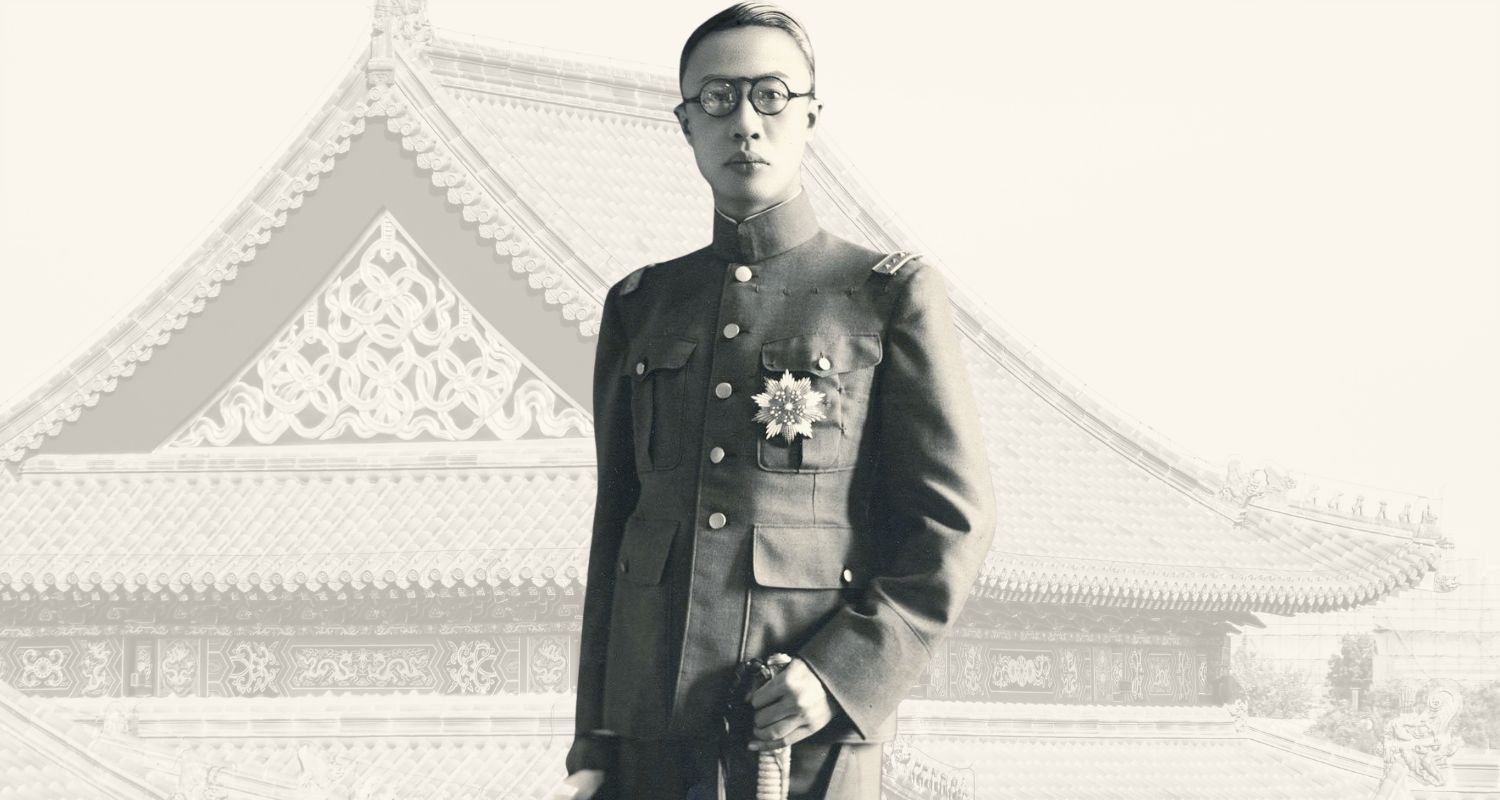
Spring 1923: The Imperial Garden, Forbidden City, Peking
A Peking spring is usually brief yet can shine with exceptional brilliance. After a lengthy, frosty winter, the air warms, the sky becomes a clear blue, and the distinctive citrus fragrance of magnolia drifts through the hutongs, the city’s narrow lanes. Inhabitants of Peking cast off their bulky winter coats and relish the renewed warmth on their skin.
In the heart of Peking lies the Forbidden City, a fortified residence encircled by a broad moat, housing China’s emperors since 1420. This vast complex of grand halls, ornate pavilions, and formal gardens spans about 178 acres, roughly twice the size of Vatican City. The northern precincts, known as the Inner Court, were historically reserved for the emperor, his closest family, a collection of concubines, dowagers, near relatives and clan members, together with trusted aides and palace eunuchs. Within the Inner Court lies the Imperial Garden (Yu Huayuan), situated behind the Palace of Earthly Tranquility (Kunning Gong), a site where the Qing dynasty conducted weddings and other imperial rites. The gardens are intimate rather than sprawling, with secluded walkways winding along small streams crossed by tiny footbridges.
It was precisely here, in the bright spring of 1923, that four people—very different yet inextricably linked—spent their midday picnics together. Of the quartet, two were Manchu royals: Emperor Puyi and his new Empress Wanrong. They were joined by Reginald Johnston, the young emperor’s tutor, and Isabel Ingram, the empress’s English teacher.
They formed an unlikely group: a Manchu ruler who would never govern his domain again, his newly married wife, a fifty-year-old Scottish colonial official, and a young American woman who happened to be the daughter of devout Pennsylvania missionaries. Yet Johnston, a skilled sinologist with a refined appreciation of Chinese tradition, was a practical and affable man who, thanks to Puyi’s regard, attained a position of considerable influence within the imperial household. Ingram had become a close confidante of the empress from the outset of her tenure, was younger than the couple, and injected a sense of vitality and modern sensibility into the ritualized and restricted life inside the Forbidden City.
*
Puyi and Wanrong, in 1923, were acutely aware of their status as the terminus of the Qing line. China had been a republic since 1912, just over a decade earlier. Puyi had been proclaimed emperor in December 1908 at the age of barely two and had been forced to abdicate in name only, confined within the Forbidden City’s crenellated walls since. The couple’s wedding in 1922 was to be the last grand imperial spectacle Peking would witness. Tens of thousands lined the streets at dawn to witness Wanrong’s entry into the Forbidden City as empress. Both were only sixteen.
That night, for the first time in more than five centuries—spanning the Ming and Qing dynasties to the republic—the Forbidden City closed its gates with no emperor ruling China.
Puyi and Wanrong were thrust into a life of seclusion within the gilded limits of the so‑called “Great Within” (Da Nei). The city’s clamor rarely penetrated its walls, yet Puyi knew little of the upheavals and the noisy political wrangling that roiled his country beyond the gates.
From then on, the young couple attempted to fashion a life together, isolated save for the remnants of the imperial household—Puyi and Wanrong’s brothers, a handful of aging dowagers who had once served as consorts to emperors who had long since passed, and Puyi’s own consort Wenxiu. Their closest advisers were a handful of trusted courtiers, a small contingent of palace guards, roughly a thousand eunuchs, and the two royal tutors. It was a peculiar, cloistered existence while outside China’s fledgling republic fought to establish its footing, resisting external meddling and the internal chaos of warlordism.
*
That spring of 1923, the improvised picnics in the Imperial Garden became a new pastime. Wanrong spent hours dressing Ingram in a Manchu ensemble, arranging her hair into the traditional liangbatou (a two-handed headdress) with two tresses perched atop a frame to evoke a winged silhouette. Puyi and Johnston would join them for tea and dim sum, often both dressed in the robes of learned scholars. They would order cream cakes from a German bakery in the Legation Quarter, where the city’s foreign residents congregated. When Peking’s humidity rose, they preferred barley water to tea. They photographed one another—an interest Johnston had introduced to Puyi and which grew into a shared passion among the four. They grinned for the camera, occasionally joined by Wenxiu, appearing at ease and savoring happiness in their constrained circumstances.
Johnston described the years from 1919, when he began tutoring Puyi, to the emperor’s expulsion from the Forbidden City in 1924 as a “twilight period.” He expanded upon his recollections in his frequently reprinted memoir Twilight in the Forbidden City (first published in 1934). In Bernardo Bertolucci’s 1987 film The Last Emperor, Peter O’Toole brought Johnston to life as a central figure in the tale of Puyi. Yet the unpublished portions of Johnston’s personal correspondence with Ingram suggest that his portrayal in that memoir may be somewhat self-serving. He presents himself as the sole foreign presence near the emperor and empress, yet that claim clearly oversimplifies the reality. Ingram’s letters reveal a different dynamic: she was a vivacious, educated, and warm young woman whom Johnston clearly admired, and their relationship was evidently more significant to him than the memoir acknowledges.
As this narrative will show, their bond clearly mattered to Johnston far beyond what Twilight in the Forbidden City implies. It becomes evident that they met regularly outside the Forbidden City—either at Johnston’s Western Hills retreat just beyond the city walls or for midday meals at the Grand Hôtel des Wagons-Lits in the Legation Quarter—where they discussed the welfare of their young charges, planned social events for the guests, and organized garden gatherings to alleviate the claustrophobia of life within the Great Within.
*
Only two years after their wedding, Puyi, Wanrong and Wenxiu were expelled into the harsh world of feuding warlords and a faltering Republican government, and into the oncoming orbit of Japan, which was already outlining plans to subjugate China. Their tutors were cast out as well, their ties to the royal couple severed overnight. Isolated from Johnston and Ingram—their lone link to the outside world—they were ill-prepared for the trials that lay ahead.
Warlord fighting around Peking intensified through the autumn and winter of 1924. A mosaic of competing factions and fragile alliances formed a volatile coalition of warlords who had held sway in Peking since 1912, each maneuvering for power. One faction replaced another through schemes, betrayals, or assassinations. In the end, Feng Yuxiang, popularly dubbed the “Betrayal General,” orchestrated a coup and seized the capital on the night of October 23, 1924.
Feng quickly removed the widely disliked President Cao Kun (the “Bribing President,” who had essentially bought his post with bribes) and placed him under house arrest. Cao Kun’s brother committed suicide upon hearing the news. Troop forces blocked access to the Legation Quarter to prevent enemies from seeking refuge in foreign embassies. They sealed the main avenues leading out of Peking in every direction and severed telegraph lines to Tianjin, effectively cutting off all communications with the outside world. The Peking Leader called it “one of the most extraordinary coup d’états in Chinese history.” Johnston described the Forbidden City as gripped by “astonishment.”
Foreigners and wealthy Chinese sheltered in their homes, hired private guards, and checked into the city’s foreign hotels—the Grand Hôtel de Pékin, the Grand Hôtel des Wagons-Lits, and the Hôtel du Nord. Others retreated to weekend villas in the Western Hills or at Paomachang just beyond the city to ride out the upheaval, bracing for inevitable bloodshed as loyalties and alliances swayed unpredictably.
What Feng might do to Puyi, Wanrong, and the Little Court occupied everyone’s thoughts. Rumors swirled through the hutongs: Feng’s troops would storm the Forbidden City and massacre those inside; they would loot the treasury in the Great Within; they would treat the Aisin-Gioro clan as the Bolsheviks treated the Romanovs. It was easy to believe such stories. Feng’s aim was to eradicate the monarchy within the Forbidden City, which he saw as an obstacle to a fully realized Chinese Republic. He had well‑placed contacts with the Soviet Union and the Bolsheviks, opposed the Articles of Favorable Treatment, and had no patience for monarchy in any form.
*
Puyi was immersed in the mourning ceremonies for Lady Tatara, the Dowager Imperial Noble Consort Duankang. Lady Tatara had infamously criticized Puyi’s mother Youlan in 1921, which had driven her to suicide, yet the emperor was still expected to lead the lengthy funeral rites.
Johnston was summoned to the palace on November 2 for a meeting with Puyi, Prince Chun, Zheng Xiaoxu, and Wanrong’s father, Rongyuan. There was anxiety that General Feng might strike into the Inner Court. Indeed, Feng’s troops stood atop Coal Hill overlooking the Forbidden City. Johnston suggested evacuating the emperor and empress to safety in the Legation Quarter, but Zheng assured them that the gates were shut and guarded by Feng’s men from the outside, while the Imperial Guards remained inside. Puyi handed Johnston a case containing Lady Tatara’s ornate rings and jewelry, claiming it would be safer to deposit them in a bank than leave them in her palace.
Johnston returned to the Inner Court on November 3, finding it “ghostly and forlorn.” He saw Puyi peering at Coal Hill through a telescope, while staff members hid or vanished. Some assisted with the funeral rites for Duankang, while others appeared in mourners’ white garb. He and Zheng and the empress visited the Palace of Gathered Elegance. They discussed a plan to smuggle the emperor and empress out of the Forbidden City the next day, disguises in place.
As Johnston wrote: “The long twilight in the Forbidden City was deepening into darkness.”
Yet the plans never came to fruition. On Wednesday, November 5, 1924, the telephone lines into the Forbidden City were severed. Feng’s troops surrounded the citadel, disarmed the Imperial Guards, and moved into the Inner Court to occupy it. Johnston learned of the crisis while breakfasting at Zhangwang Hutong and hurried to the gates, flashing his imperial pass, only to be blocked by Feng’s soldiers.
*
Inside the Inner Court that morning the expulsion unfolded with astonishing speed and disorder. The long anticipation of a decisive strike had left everyone stunned when it finally occurred. Although many officials had stayed away, the Imperial Household Department still functioned poorly, and troops hauled cannons up onto Coal Hill, pointing toward the Inner Court. Puyi later recalled being frightened and aware that the day’s events could end his life. As troops arrived, he and Wanrong were in the Palace of Gathered Elegance, where they were led out to the courtyard to await a fate that was not yet clear. Servants fled; the imperial apartments were left in disarray, with juvenile novels, martial-arts stories, and toys scattered about the rooms.
*
The terms of expulsion were laid down with the gun’s barrel pressed to the situation: the imperial title would be abolished, the royal stipend would be reduced to $500,000 annually, a factory would be created in Peking to employ any struggling Manchu nobles, and the emperor’s person and property would be safeguarded by the Republic. The arrangement effectively hinged on a noon deadline; if accepted, the royal couple could leave. If not, the threat of guns on Coal Hill loomed. Puyi accepted, and the couple—along with Wenxiu—were given only three hours to depart the Forbidden City, with permission to carry no more than what a servant could manage.
[Puyi] had hoped leaving would open a new world for him. It only passed him from one set of captors to another.
When news reached the palace that Puyi had signed away the 1912 Articles of Favorable Treatment, and that the royal couple had already departed, Prince Chun reportedly ripped off his hat with the peacock feather that signified his rank and flung it to the floor, crying, “It’s all over, it’s all over; I shall not need this again.”
Puyi departed for his father’s residence, the Northern Mansion. Feng’s troops provided five automobiles for the royal party: the first carried the exiled emperor, the second held Wanrong and Wenxiu, and two cars formed the rear guard with armed escorts. As they moved toward Beifu, the chief of Feng’s forces, Lu Zhonglin, shook Puyi’s hand and asked: “Mr. Puyi, do you intend to be emperor again, or will you live as an ordinary citizen?”
Puyi replied: “From today I want to be simply a citizen.”
“Very well,” Lu answered, “then we will protect you.”
The cortege exited through the Gate of Divine Prowess into the Great Outside.
*
Ingram later recalled that on the morning of November 5 her rickshaw had arrived as usual to take her to the empress for daily lessons. Yet when she reached the Gate of Divine Prowess, she found the Forbidden City surrounded by stern-faced troops, bayonets fixed outward. Wary for Wanrong’s safety, she stepped forward, insisting that she be admitted. She proclaimed, “My business is with the Empress.” The soldiers laughed nervously, kept their bayonets aimed, and informed her that the empress had already left the city. Wanrong had departed “hatless, coatless and baggageless.” Ingram had no choice but to return to Dengshikou and await news of Wanrong, Puyi, and their fate. She later told the Philadelphia Record, “That day was the end of my beautiful China.”
When the day finally ended, darkness fell upon Peking. For the first time in more than five centuries—the span from the Ming to the Qing and into the republic—the Forbidden City closed its gates without an emperor residing within.
*
Late that evening, Johnston went to the Northern Mansion. He remembered finding Puyi calm and resigned, while Prince Chun was typically unsettled and disorganized. With little practical recourse, there seemed to be no immediate recourse. He would not see Puyi again for more than three weeks.
Then, on November 29, Johnston arranged for Puyi to move from the Northern Mansion to the Legation Quarter, seeking sanctuary there. Wanrong and Wenxiu remained behind; the plan was to smuggle them out to the Legation Quarter later, once the emperor was secure.
Johnston tried to secure asylum for Puyi at first with Willem Oudendijk at the Dutch Legation, but Oudendijk was absent. He then went to the Japanese Legation on Canal Street, but Ambassador Kenkichi Yoshizawa was out for the night. He hurried across the street to the British Legation, the largest foreign diplomatic mission, only to be told by the British ambassador, Sir Ronald Macleay, that the legation would not offer sanctuary to political refugees. He turned back to the Japanese mission, which historically had absorbed Chinese refugees when it aligned with its own strategic aims.
That night, Britain’s refusal to shelter Puyi closed off the last hopeful option. A young man educated under a Scotsman, who had dreamed of studying at Oxford and adopted the name Henry after an English king, and whose wife had taken the name Elizabeth after an English queen, was pushed toward Japanese protection—a choice that would prove fateful and tragic.
Ambassador Kenkichi Yoshizawa returned to the embassy and accepted Puyi on November 30. The era of the Last Emperor of China thus entered a long exile.
*
That moment marked the end of a shared era for Reginald Johnston and Isabel Ingram as well. Johnston, after the expulsion, resumed his Colonial Service duties with the British government in China, yet he kept up intermittent contact with Puyi over the ensuing years, visiting him in the foreign concessions of Tianjin and in Japanese-occupied Manchuria. They corresponded, though most of their letters have been lost. Ingram would never lay eyes on the empress again.
Puyi had always hoped to leave the Forbidden City; the expulsion, however, proved to be the beginning of the end for the royal couple. He believed leaving would unlock a new world for him, but instead he moved from one captor to another.
Could a marriage sustained by mutual dependence in exile and the stubborn endurance of an imperial household survive? The answer is no. It had no chance once the royal couple was expelled from the Forbidden City. From the moment Puyi and Wanrong passed through the Meridian Gate for the last time, leaving the Great Within for the Great Without, their fate was sealed.
___________________________
From The Last Emperor of China: Twilight of the Forbidden City by Paul French. Copyright © 2026 by the author and reprinted by permission of St. Martin’s Publishing Group.
