This first appeared in Lit Hub’s Literary History newsletter— sign up here.
This week, we’re in the kitchen—and more importantly, at the table. And as ever, we’re turning pages at the same time. To mark the start of the feasting season, here is a curated slice of some of the finest food writing Lit Hub has published over the year:
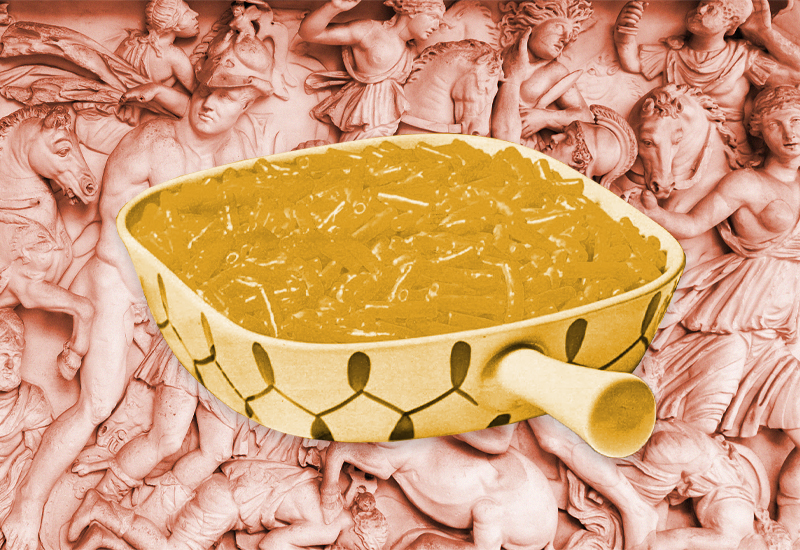
On the Ancient Roman version of macaroni and cheese (and how to cook it yourself) • Historian Katherine Harvey guides us through a handful of quirky medieval notions about food (no wet fish here!) • A concise yet essential history of what many consider the most influential food ever created—the pickle • On the grains and crops that helped shape America (many of which trace their roots to Africa) • The science behind why roasted chicken delivers such a satisfying flavor • A thorough examination of the indisputable monarch of dairy: Parmigiano Reggiano • The urgent call to dismantle food apartheid within the United States • The idea that a simple cup of tea could alter the world • Reflections on food as an emblem of love in Nigerian culture • Techniques for achieving a flawless poached egg • And, if you’re in the mood for baking, a tour of delicious banana bread.
If that isn’t enough—and if you’re seeking ideas for the week’s menu—here’s a set of classic recipes that come from literary history:
Maya Angelou’s Momma’s caramel cake • Leo Tolstoy’s macaroni and cheese • Beatrix Potter’s gingerbread • Ntozake Shange’s “Collard Greens to Bring You Money” (and more) • Alice B. Toklas’ Haschich Fudge • Emily Dickinson’s “lawless” cakes, breads, and doughnuts • Kathy Acker’s Christmas custard • H.P. Lovecraft’s Boston baked beans.
Enjoy your meals!