
Last week, The Paris Review announced the winners of its annual literary awards. In 2027, Australian author Helen Garner will be honored with the Hadada, a prize that recognizes a writer’s lifelong literary contributions. I stand here as an independent voice to champion this selection.
Garner—a novelist, journalist, and diarist—crafts generous-hearted heroines who frequently hover near moments of crisis. Her admirers include Lauren Groff, Lily King, Rumaan Alam, and Ben Lerner, among many others. You may wonder why this resonance endures.
Emma Brockes, in a recent piece for The Guardian, praised Garner’s capacity to fuse sharp perceptiveness and scholarly polish with a voice that can feel wonderfully down-to-earth. And it’s true—that grounded quality is a hallmark of her work, yet it merely hints at a much larger depth.
Here are three of Garner’s most famous titles, along with reasons to grab them without delay.
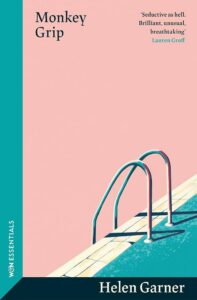
Monkey Grip, Garner’s debut from 1977, sent tremors through the Australian literary scene. The novel tracks a woman’s ill-fated, initial-attraction relationship with a heroin addict who fascinates her intermittently as they drift within a shared communal living space.
Not unlike Susie Boyt’s quiet triumph Loved and Missed, it deftly renders the recurring heartbreak of loving someone who uses, without slipping into sentimentality or moral self-righteousness.
Set against a bohemian Melbourne milieu that mirrors the author’s own circle at the time, Garner’s nonjudgmental portrait of free-spirited radicals provoked moralizing critics at publication. Nora, the central figure, stirred controversy by portraying ambivalent parenthood under a lax approach to caregiving. All adults in the book are driven by desire. Drugs and sex function as forces that shape the world.
What is most striking is how naked the prose is about all that longing. In Garner’s plainspoken voice, Nora’s craving for the roguish Javo becomes tender, desolate, holy, and pitiable in turn. She reads as a real, vulnerable person with a powerful human flaw—the mark of the best kind of heroine.
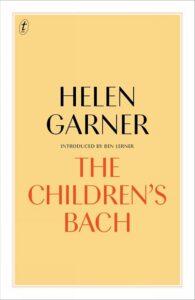
My favorite of Garner’s novels is The Children’s Bach. It continues the pattern of domestic upheaval sparked by a charismatic disruptor, tracing Athena Fox’s infatuation with a past flame. Against all reason, she deserts her partner and two young children for… a rock star.
What follows may feel a touch predictable, but, as with Monkey Grip, the joy lies in watching that slow march toward ruin. (Or is it ecstasy?)
The third-person perspective lends texture to everyone affected by Athena’s choices. She reads as a modern Nora, in the spirit of Ibsen.
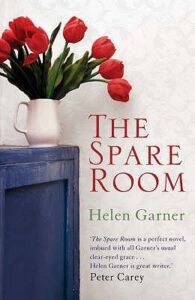
The Spare Room remains a cool, compact, pointed book that still gnaws at me. It follows two long-estranged friends who fuse again when one seeks shelter after a terminal diagnosis, portraying the unpleasant side of caretaking and the indignities of illness.
This work raises some truly prickly questions. For instance, what should you do when your patient is delusional—and/or you want them out of your house?
As in Garner’s other novels, the narrator resents conventionality and the burdens of mutual obligation. Her blunt honesty lands like a splash of cold water. There’s always a nakedness to a Garner subject. She does not flinch from portraying ugly emotions or intrusive thoughts.
In a review for the Times, Daphne Merkin once compared Garner to other “laconic and wayward” women who cultivate the “art of artlessness,” naming Jean Rhys, Jane Bowles, and Paula Fox.
I share the sense of waywardness, yet I believe that discerning eye belongs to a class of its own. Do yourself a favor and join the Helen hive today.