
Revolutions inevitably begin with unwelcome, misfit kin. Our younger sister did not fit that trope—she was neither hideous nor a budding insurgent. Who can say what shadows rested in her soul when she strapped on a device and set it off?
The curtain rises: disaster and ruin creep from the stage into the audience, spreading into homes and hospital waiting rooms. Then into your bedroom, into your bed. They fill spaces with choking smoke, with rubble and splintered glass, with frantic firefighters, with civilians pressed against the police line, their necks craned upward. Voices cry out: Make way. Coming through. Ya Allah, Ya Allah. Amid the march, there are screams and wails; the asphalt lies strewn with fragments of bodies, blurred for the screen.
This is the first explosion.
Annisa is not present. Only after two more blasts do we uncover her—the radiant sister, the devout one, the cherished daughter in Papa’s eyes.
Annisa, our little sister, yours and mine—the reason our faces bear the stain of blood, a stain that ablution cannot cleanse, a debt that demands greater restitution: her two elder sisters must turn back and determine where she slipped from sight.
You will be a beautiful bride.
Nana’s forecast to the young Annisa, remember? Tell me, what sort of bride did you imagine her becoming?
The surviving sisters exchange wary glances, wondering: if we had known Annisa would end up here, at this moment, this day, perhaps we wouldn’t have felt remorse or doubted ourselves. Maybe we should have cast her into the well long ago, as in those old tales when brothers betray their kin, as Yusuf’s brothers did to him. We should have taken her life before she deprived others of theirs. But who could have foreseen it? Even Nana could not have predicted such a Ramadan—explosions ringing in our ears, flames and burnt flesh blazing in our sight. The stench, alas, cannot be captured on camera. You must be there, in that city, at the sites of tragedy, to lose your mind in the memory.
This is a tale of three sisters. Isn’t that always the case? And who among us hasn’t grown up hearing stories about home, family, us. Yet this is also the tale you didn’t ask for—a chronicle of what is unseen, unheard, unremembered. The two remaining sisters search for clues—why, who is to blame, when did it happen? For the shame and regret become unbearable, and perhaps there is a way out, as Nana suggested during that game, the hunt for the hidden key. The three granddaughters scour every corner of Victoria’s House—familiar terrain. The dark kitchen with its black cement floor; the enormous pots and pans swinging from sturdy hooks; the well out back—goading, goading; the forbidden chamber; and the soft lullabies of some presence neither alive nor dead, drifting through the walls. Whoever finds my key shall travel far, Nana once whispered, though others murmured that the road to her house never ends. You’re always on the same path, going in circles. You never arrive.
There is no answer to be found in this story, no magic pill, perfectly rounded, to be split or crushed and swallowed. It is a chronicle of those who fail, who fall into debt, who alter their shapes. In the course of our search we fixate on trifles. Everything else, so soft and smooth, slips beyond our grasp. Like our little sister.
What color did Annisa wear on that day? Surely no one paid it much heed—her garments had been blown to pieces. The newspapers called her the woman in black. Yet black never attracted Annisa. Only white, jasmine-white, pure and immaculate; the white of her wedding day, when guests lined the hall, left and right, waiting eagerly, eyes fixed on the radiant bride advancing toward the dais, the long hem of her gown and the embroidered lace veil skimming the floor, with the rest of the procession bringing up the rear, rosy-cheeked nieces and nephews, the bride’s father and mother, and her envious sisters, all clad in white; a perfume that seemed to drift in, as if from Paradise. Or from the grave.
Annisa, celestial maiden, crowned with jasmine, has now departed. For Jannah, she crafted Jahannam—for Heaven, she forged Hell.
__________________________________
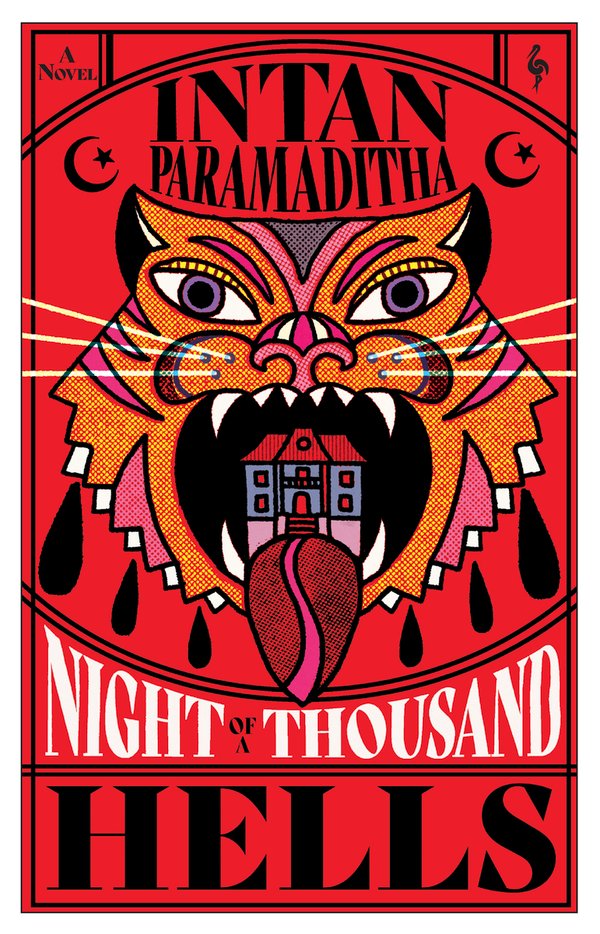
From Night of a Thousand Hells. Translated from Indonesian by Stephen Epstein and Tiffany Tsao. Used with permission of the publisher, Europa Editions. Copyright © 2026.
