
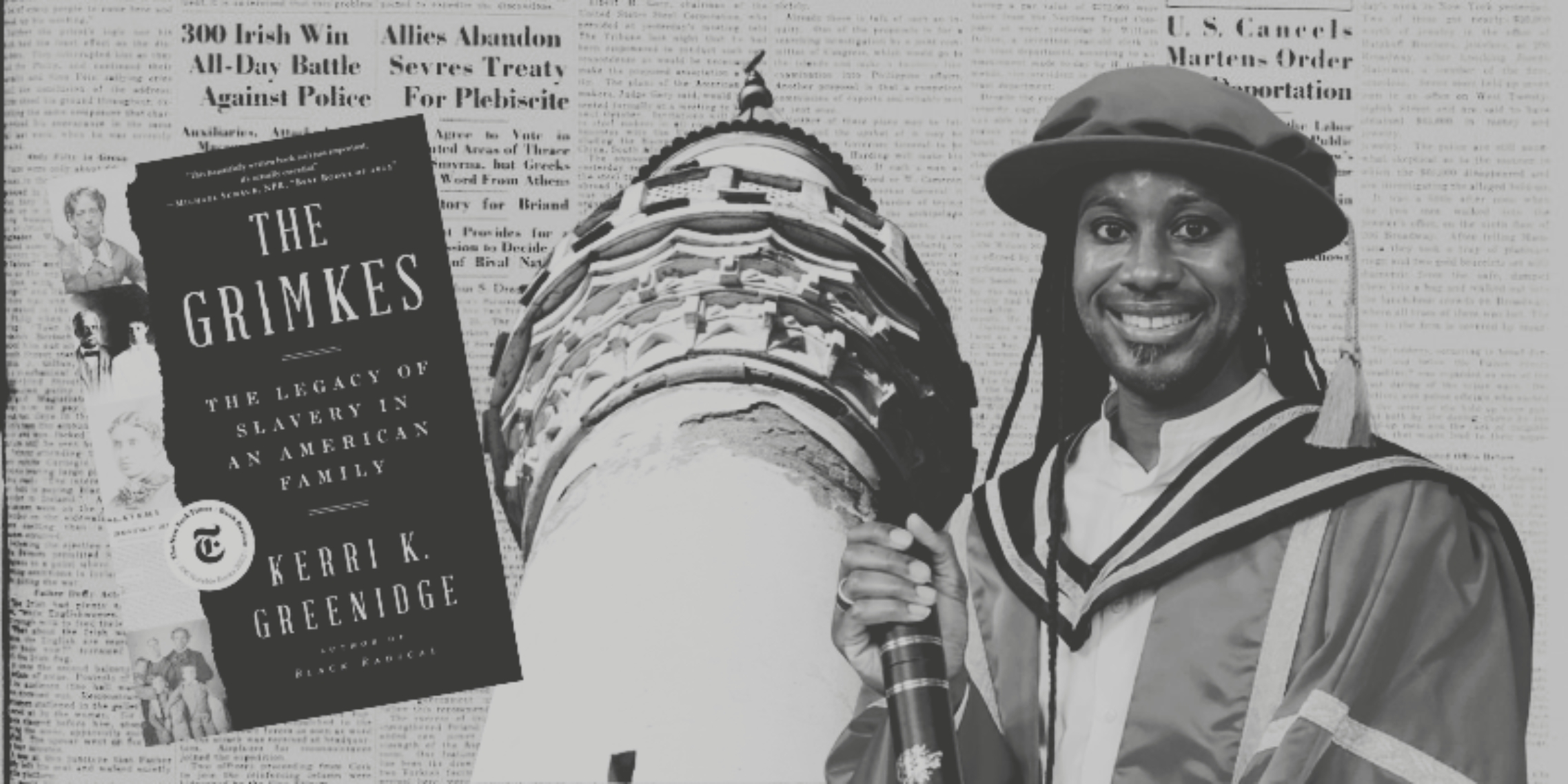
This week, the British academy was rocked by a scandal that curdled into a tragedy.
Jason Arday, a Black Cambridge professor who is neurodivergent and was hailed by some as a prodigy while denounced by others as a fabulist, stepped down earlier this month amid plagiarism allegations.
After weeks of relentless press scrutiny in the UK—including dog-whistle insinuations that his appointment was merely a DEI gesture and that he was under-qualified from the outset—Arday was discovered dead at his residence last Friday, reportedly by his own hand. He was 41.
In
an editorial
published today explaining their role in the investigation,
The Guardian positioned the professor’s death as an alarming bellwether. Whatever his intellectual indiscretions, editors wrote, Arday, the youngest Black professor in Cambridge’s 800 year history, “became an exhibit in an ideological, almost Trumpian campaign against diversity and inclusion.”
In his death, the editors insisted, we must locate a lesson. But of what, exactly?
And who is ‘we?’
*
Arday’s case became the subject of international fascination in part because it rhymes with a conversation happening on this side of the Atlantic.
For the past year, the Trump administration and its ready-to-serve fellow travelers in higher education have been aggressively dismantling Black and Africana Studies programs on charges of “woke ideology.” (Northwestern University’s program is the latest on the chopping block, as of this week.)
The scapegoating is singular, but convenient in the same breath. Where English racists cry DEI hire, American ones cry DEI curriculum. All with the same net effect: diminishing the work of Black and people of color scholars. And alas, the villains are winning. Big time. Even the liberal backlash against DEI programs begins to adopt the rhetoric and tone of those initial conservative critics.
In truth, it’s a difficult era for all who once identified as woke. Though the din can make it hard to hear amid the broader decline of American higher education, generally speaking.
Across the United States, college enrollments are shrinking while tuition bills rise. Meanwhile, slumping working conditions—illustrated by the so-called adjunctification debate—render professional academic paths less and less sustainable. This financial reckoning aligns with the ongoing ideological assault. And the bottom line looks bleak for today’s seniors.
As Joel A. Schlosser and Tommaso Bardelli noted in a recent analysis for the Los Angeles Review of Books, skepticism about the value of a four-year college education in the United States is no longer a strictly partisan issue.
“Whether driven by rising tuition costs and student debt or ideological polarization on campus,” Bardelli and Schlosser observed, “a growing number of both Democratic and Republican voters have become less certain of the value of a four-year college education.”
All this makes for fragile ground to defend, and a climate that’s all too welcoming to reactionary explanations. It’s easy to envision the academy’s defense: When students can’t afford the sticker price, how do we justify fields like Black Studies? Always precarious, in a country built on racism?
And if you embrace that grievance-based line of thought, and accept the terms of the debate laid out by those in power, how could you possibly pardon someone who appears to be cheating within a rigged system?
Goat, meet scapegoat.
*
The Guardian editors were more candid about the role that racism played in Arday’s downfall. While some allegations appear credible, the story is also about the relentless harassment he endured within a prejudiced framework.
White scholars are not similarly scrutinized. Arday might have had questions to answer; that did not justify making Black scholars collectively answerable for him. A society committed to equality must grant Black people the same latitude as everyone else: to be flawed, to err, and even to fail, without their failure becoming a condemnation of their race.
This Blackademic reads these defenses with a heavy sigh. The language feels so worn, so obvious that it could have been written fifty years ago. And that very sense underscores the problem with accepting debate terms dictated by a racist nation or institution in the first place.
If you’re a Black scholar accused of cheating the (rigged) system, somehow you end up defending your entire humanity. Instead of simply apologizing for a mistake.
*
Plagiarism is a provocative accusation because of the unique moral stain it carries. As seen in cases like Arday’s or Greenidge’s, the charge itself often signals guilt. The burden of proof is inverted: you must demonstrate your innocence to the peer audience and public opinion. Meanwhile, the accusation of intellectual theft has frequently been leveled at those with the least power. And as Coe implies, that is far from coincidental.
In a recent newsletter, the political theorist Corey Robin contemplated how plagiarism accusations have been weaponized against those many still labeled as “DEI hires.”
“There are cases of plagiarism where people don’t bat an eye or the person gets exonerated (the ones I am thinking of involve white men) and others where people, often of color, are brought down,” Robin noted.
Like Coe, he manages to hold two ideas in tension when untangling crime and context.
I am not—I repeat, I am not—saying that plagiarism differs by the race of the scholar; it does not, and it should be treated as the serious breach that it is. Yet I believe the cultural valence that is provoked, disrupted, and rebalanced by these cases differs for scholars of color—the plagiarism scandals spark a comparable crisis about authenticity for scholars of color—the implicit message being, essentially, you don’t belong here in academia.
And this, I fear, is the “lesson” too many will take from these unsettling stories, in this extraordinarily unsettled time. Arday and Greenidge are distinct individuals, each with their own lives. They have also (and with ease) been turned into symbols—ideological exhibits. Proof, for either side in a bad-faith debate, that the invitation to the Ivory Tower remains conditional for most people.
We will talk about the ways they did or did not bend the rules for longer than we will scrutinize the ways the game remains rigged.