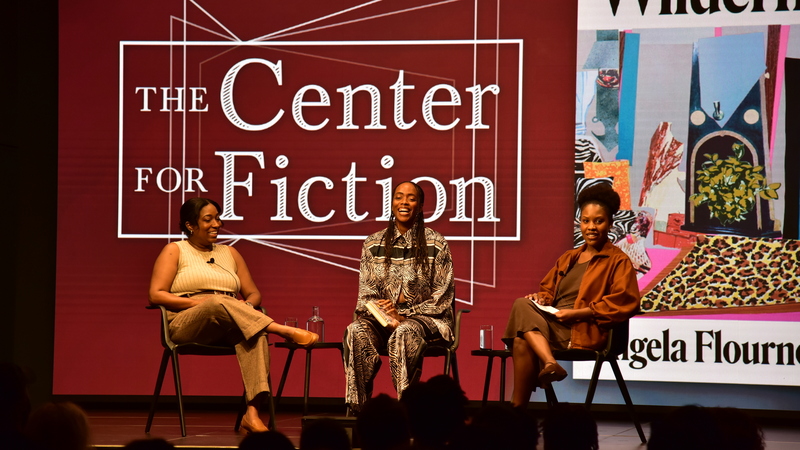
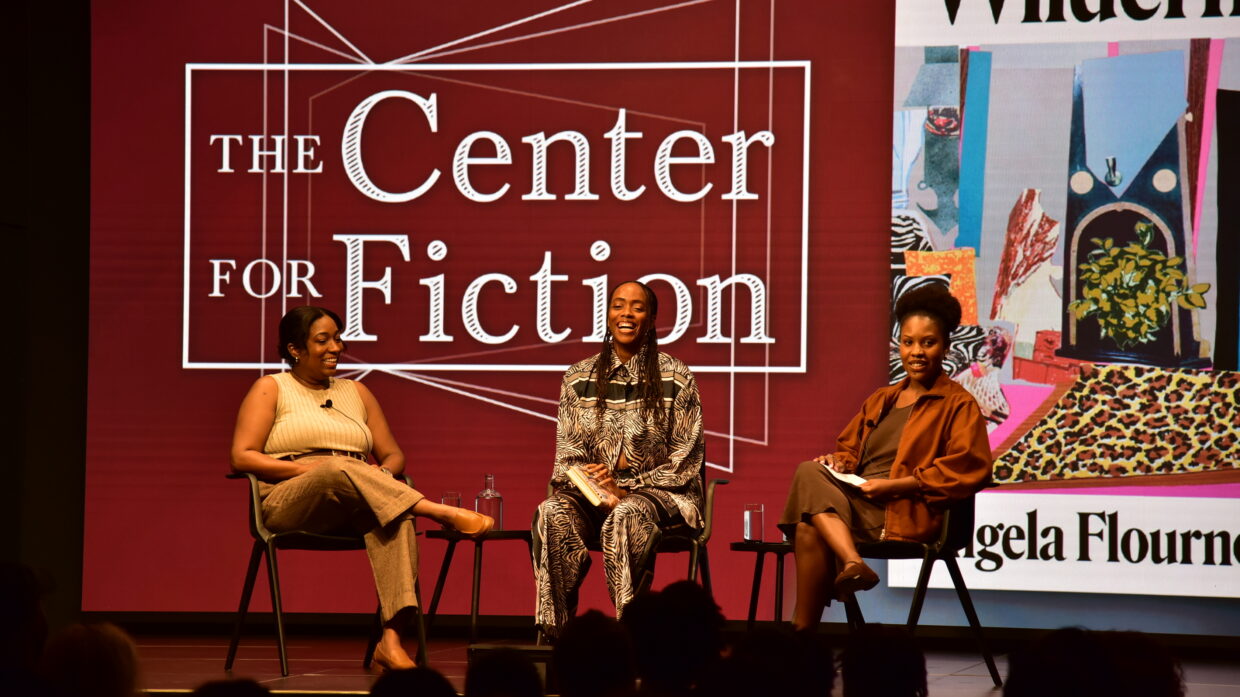
Angela Flournoy, critically acclaimed author of The Turner House, joined The Center For Fiction to celebrate the highly anticipated release of her new novel, The Wilderness.
The Wilderness centers on five twenty-something Black women—Desiree, Danielle, January, Monique, and Nakia—as they grapple with weighty questions shaping their lives: how to balance the pursuit of purpose and direction with the evolving pressures of growing up, and how to prioritize friendship amid these changes. Spanning the landscapes of New York and Los Angeles from the late 2000s through the 2020s, the narrative traces the uncertain evolution of contemporary adulthood.
Flournoy was joined in conversation by Brit Bennett, author of the New York Times best-selling novel The Vanishing Half, and Raven Leilani, author of the Center for Fiction First Novel Prize-winning book Luster. Don’t miss this intimate examination of modern connection and coming of age.
From the conversation:
Angela Flournoy: Money is real. And I think a lot of people treat fiction as if it exists only for a middle-class readership, as if writers should avoid certain topics or steer away from depicting money. That mindset might have made sense a century ago, but I don’t share it, and I didn’t grow up that way.
Lots of us are financially strapped. Yet we also attend to many other concerns. We simply don’t want to be the ones footing the bill at the end of every meal.
And I never thought that my stories should shy away from money or, on the flip side, make poverty the sole feature of a character—because money has always been a factor in life, and fiction has room for multiple chords at once. A person can be broke and still carry a spectrum of other concerns.
They don’t have to be defined solely by their lack of funds; plenty of us are broke, but we also think about many other things. We just don’t want to be the ones paying the bill at the end of the meal. I intended to render money as a present, ongoing presence in these lives.
And as I imagined how friendships would shift, I also considered how this generation confronts a future whose security is not guaranteed in the way previous generations’ was. How does that shape the mind, and how does it affect how people relate to one another? Some friends hustle, pivot toward influencing or other quick-money avenues, while others, who grew up with money, feel a greater sense of responsibility to make their lives meaningful and to give back.
And then you have a character who inherited money due to a succession of tragedies, yet prefers not to dwell on it. There’s also someone who has a financially secure partner but still finds that it isn’t enough. I wanted to portray a varied spectrum of how money influences relationships, with some changes developing as the story unfolds.
Brit Bennett: Certainly. I know we should move to the Q&A, but let me pose one last question. Please prepare your inquiries. I’m curious about your approach to writing about the internet. I’m asking from a personal place, since we originally connected online—we met through Twitter as mutuals.
When you came to town, you were touring for Turner House, and that was our first in-person meeting. You’re one of the best things to come from my time on Twitter, though I’m no longer there. I’m grateful we crossed paths. Could you discuss your method for writing about the internet, especially as social media evolved during the time you crafted this novel?
AF: There’s a character named Monique who experiences a moment of viral exposure. She previously worked as a librarian, but she decides there might be more to explore, perhaps a way to monetize it.
Writing about the online world is incredibly cringeworthy. The most challenging sections to compose are the Monique chunks—each tiny slice—because I wanted to investigate how constant self-narration online can erode one’s sense of self.
I aimed to reveal what it looks like to sustain that over time. Monique starts with a blog-like format and gradually shifts to more continual postings; by the end, she hosts a podcast and has moved through various digital platforms while continuing to publish on the web.
I also wanted to capture that moment when you meet a hyper-online person and, at a first encounter, you’re struck by their online persona—perhaps a bit off in real life. Sometimes subsequent impressions soften the awkwardness, but not always.
The core idea I wanted to probe is that, if you spend life publicly narrating yourself, you can lose touch with your true self.
It’s interesting to reflect on how, back when Facebook was still called something like Updates, people would post mundane notes like, “I just had coffee.” You didn’t always know what you were supposed to share. Now, everyone publishes their lives, self-narrating at every turn.
Recently, I spoke with a dad at a playdate who noted that even with a modest following, some people post threats like, “If you don’t like my content, there’ll be consequences.” Do they even have content, or are they just staying in touch with friends?
The lines have blurred, and many people with only a few hundred followers might feel compelled to chase virality, partly because it can be a viable career path in 2025, and partly because it often seems to be the ultimate purpose of sharing so much.
I wanted to explore that dynamic while inviting readers to cringe a little while reading Monique’s scenes. It’s intentional; I’m fascinated by how people currently experience life.
Over twenty years, we witness her life online evolve. Early on, she seems to believe no one is paying attention, reflected in her posture. Later, her stance shifts—she frequently self-references and may even coin a term or run a Patreon—illustrating a credible, modern means of earning a living online. I’m not judging anyone who pursues these avenues; I simply want to consider what such a lifestyle means for real-life relationships, including how she argues about who counts as “IRL” with people who knew her before the digital era.
*
Angela Flournoy’s new novel, The Wilderness, became a bestseller for Mariner Books in fall 2025. It was longlisted for the National Book Award and a finalist for the Kirkus Prize. Flournoy is also the author of The Turner House, which was a National Book Award finalist, a Center for Fiction First Novel Prize finalist, a Barnes & Noble Discover Great New Writers selection, an Indie Next Pick, and a New York Times Notable Book of the Year. Her fiction has appeared in the Paris Review, and she has written for the New York Times, the New Yorker, the Los Angeles Times, and other outlets. A graduate of the Iowa Writers’ Workshop, Flournoy has taught at the University of Iowa, Princeton University, and UCLA. She resides in New York.
Born and raised in Southern California, Brit Bennett earned her MFA in fiction from the University of Michigan. Her debut novel The Mothers became a New York Times bestseller, followed by The Vanishing Half, which also topped the list. Her essays have appeared in the New Yorker, the New York Times magazine, the Paris Review, and Jezebel.
Raven Leilani is the author of Luster. Leilani has been recognized as a National Book Foundation 5 Under 35 honoree, and she has received the 2020 Kirkus Prize, along with the VCU Cabell Prize, NBCC John Leonard Prize, Dylan Thomas Prize, Clark Fiction Prize, and Center for Fiction First Novel Prize. Leilani’s work has appeared in the New Yorker, N+1, Granta, the Yale Review, and The Cut, among other publications.
______________________________
The Center for Fiction is a nonprofit literary organization based in Downtown Brooklyn. Our aim is to support readers and writers of all backgrounds and ages, and to foster community through fiction. We offer an array of programs for local and national audiences, including Events, Reading Groups, and Writing Workshops. Our Brooklyn home features a Bookstore, a Café & Bar, a Library, and a Writers Studio. Center for Fiction members enjoy invitations, discounts, access to our Library collection, and more. Join today.